Business Notebook Set
CN → US| HS Code | Tariff Rate | Origin | Destination | Doc |
|---|---|---|---|---|
| 4820102010 | 35.0% | CN | US | Official Doc |
| 4820102060 | 35.0% | CN | US | Official Doc |
| 9017900160 | 0.0% | CN | US | Official Doc |
| 9017900105 | 0.0% | CN | US | Official Doc |
| 4817300000 | 35.0% | CN | US | Official Doc |
| 4817202000 | 35.0% | CN | US | Official Doc |
Product Images
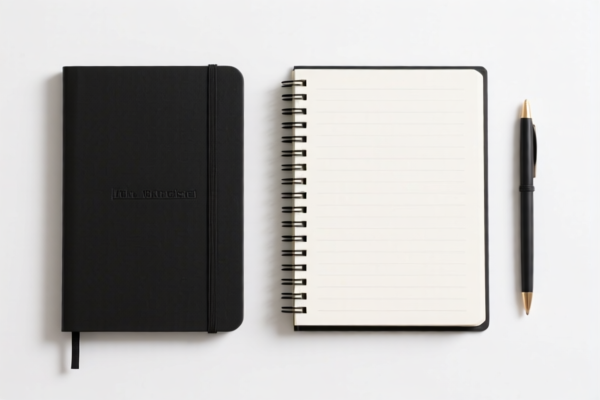
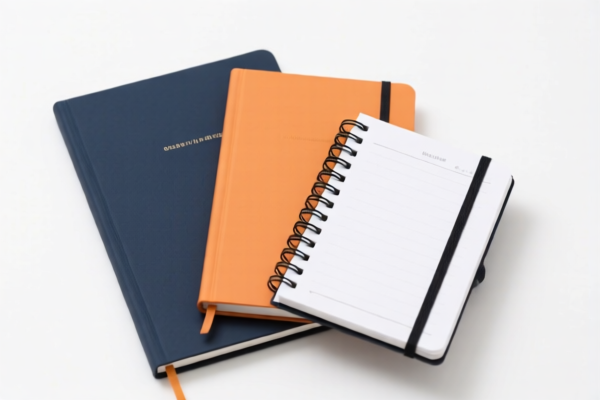
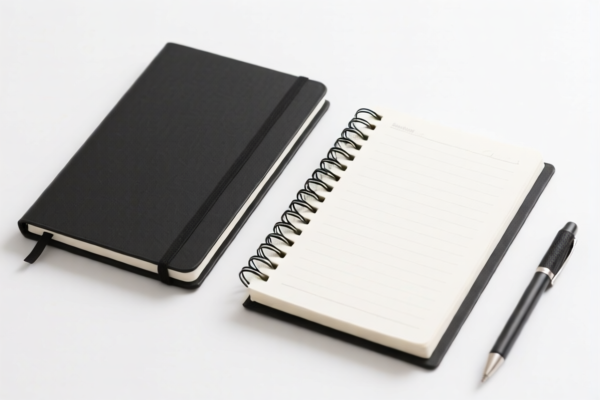

AI Analysis
📒 Business Notebook Set (Office Stationery & Writing Compendiums)
🌐 HS Code Reference & Customs Clearance Guide | 2026 Latest Tariff Analysis | Professional Clearance Strategy
📌 I. Product Definition & Classification: What Exactly Is a "Business Notebook Set"?
In international trade, a "Business Notebook Set" is not a single, rigidly defined item. It is a broad category that depends heavily on physical structure and content. Customs officers will scrutinize the item to determine if it is:
- Bound Diaries/Notebooks: Loose pages bound together, often with covers, containing ruled lines or grids.
- Writing Compendiums: Boxes, pouches, or wallets containing an assortment of stationery items (e.g., a notebook + pen + notepad + business card holder).
- Loose-leaf Accessories: Binders, loose-leaf folders, or refill pads (less likely to be called a "set" in the final assembled sense, but possible).
⚠️ Critical Distinction Point:
- If it is a single bound book (diary/notebook) → It falls under HS Code 4820.10.
- If it is a box/pouch containing multiple different stationery items → It falls under HS Code 4817.30.
- Do not confuse with "parts of instruments" (HS 9017.90), which are technical measuring tools, not office supplies.
📦 II. HS Code Classification Details (2026 Official Tariff Cross-Reference)
Based on the provided data, here are the precise HS Codes applicable to "Business Notebook Sets" depending on their specific composition:
| HS Code | Product Description | Application Scenario | Key Feature |
|---|---|---|---|
4820.10.20.10 |
Diaries, notebooks and address books, bound; memorandum pads, letter pads and similar articles | Diaries and Address Books | Bound format, likely used for personal or business scheduling |
4820.10.20.60 |
Other (Registers, account books, notebooks, etc.) | Other Notebooks/Registers | Account books, order books, receipt books, or other non-diary notebooks |
4817.30.00.00 |
Boxes, pouches, wallets and writing compendiums... containing an assortment of paper stationery | Stationery Sets/Kits | A box/pouch containing multiple items (e.g., notebook + pens + cards) |
4817.20.20.00 |
Sheets of writing paper, with border gummed or perforated... prepared for use as combination sheets and envelopes | Letter Cards/Combination Sheets | Pre-perforated sheets that can be used as both note and envelope |
9017.90.01.60 |
Parts and accessories of measuring instruments | Non-Applicable (Caution) | Technical parts for drafting/measuring tools. Do NOT use unless your "notebook" is actually a technical measuring accessory. |
9017.90.01.05 |
Parts of articles of subheading 9017.10.40 | Non-Applicable (Caution) | Technical parts. Do NOT use for general office stationery. |
🔍 Focus Alert:
- For a standard Business Notebook Set, the primary candidates are4820.10.20.10/60(if it's just books) or4817.30.00.00(if it's a gift set/box).
- Ignore9017unless you are selling technical drafting accessories. Using9017for regular paper products is a common classification error that leads to delays.
💰 III. 2026 Latest Tariff Rate Breakdown
✅ Applicable Country: United States (US)
✅ Origin: China (CN)
✅ Effective Date: Current Trade Policies (Section 301 & IEEPA)
🎯 1. 4820.10.20.10 & 4820.10.20.60 (Bound Notebooks/Diaries)
| Item | Content |
|---|---|
| Base Tariff | 0.0% (Ad Valorem) |
| Additional Tariff (Section 301) | 25.0% |
| Total Tax Rate | 25.0% |
| Tax Calculation | CIF Value × 25% |
| De Minimis Exemption | ❌ Not Applicable (Section 301 goods are excluded from de minimis relief) |
| Legal Basis | USITC Footnote for HTS 4820.10.20 |
📌 Explanation:
- Although the base duty for paper notebooks is 0%, the 25% additional tariff applies due to the Section 301 trade action against Chinese goods.
- This is a high tariff for low-value items. Cost planning must include this 25% markup.
🎯 2. 4817.30.00.00 (Writing Compendiums/Stationery Sets)
| Item | Content |
|---|---|
| Base Tariff | 0.0% (Ad Valorem) |
| Additional Tariff (Section 301) | 25.0% |
| Total Tax Rate | 25.0% |
| Tax Calculation | CIF Value × 25% |
| De Minimis Exemption | ❌ Not Applicable |
| Legal Basis | USITC Footnote for HTS 4817.30 |
📌 Explanation:
- Same tax structure as bound notebooks. The "assortment" nature does not reduce the tariff burden under current US-China trade rules.
🎯 3. 4817.20.20.00 (Letter Cards/Combination Sheets)
| Item | Content |
|---|---|
| Base Tariff | 0.0% |
| Additional Tariff (Section 301) | 25.0% |
| Total Tax Rate | 25.0% |
| Tax Calculation | CIF Value × 25% |
| De Minimis Exemption | ❌ Not Applicable |
📌 Explanation:
- Even though these are simple paper sheets, they are still subject to the same 25% additional tariff if originating from China.
🚫 Note on 9017.90 Codes (Technical Parts)
| Item | Content |
|---|---|
| Base Tariff | 0.0% |
| Additional Tariff | 0.0% |
| Total Tax Rate | 0.0% |
| ⚠️ Warning | DO NOT USE for notebook sets. These codes are for parts of measuring instruments. Misclassification here is considered fraud or severe error, leading to penalties. Only use if you are exporting technical drafting equipment parts. |
🛠️ IV. Customs Clearance Practical Advice (Avoid Pitfalls)
✅ 1. Documentation Checklist (Non-Negotiable)
| Document | Required? | Notes |
|---|---|---|
| Commercial Invoice | ✔️ Must Provide | Clearly state "Business Notebook Set" or "Stationery Compendium". List individual items if using 4817.30.00.00. |
| Packing List | ✔️ Must Provide | Detail contents: e.g., "1x Leather Diary, 2x Notepads, 1x Pen". |
| Product Photos | ✔️ Strongly Recommended | Show the exterior and interior to prove it is a bound book or a box of stationery, NOT a technical instrument. |
| Material Composition | ✔️ Recommended | Specify paper type (e.g., 100% Wood Pulp). Helps avoid confusion with plastic-bound items. |
| Origin Certificate | ✔️ Optional | If you have a Free Trade Agreement (e.g., with other countries), but note that US tariffs (25%) still apply regardless of origin if shipped from China. |
✅ 2. Classification Strategy (Key Mnemonic)
🔥 "Bound Books = 4820, Boxed Sets = 4817, Technical Parts = 9017 (NO!)"
| Scenario | Correct HS Code | Tax Rate | Common Mistake |
|---|---|---|---|
| A single leather-bound diary | 4820.10.20.10 |
25% | Misclassifying as gift set to lower value (risky) |
| A box with notebook + pen + card holder | 4817.30.00.00 |
25% | Splitting invoice into separate lines to avoid "set" classification |
| Technical drafting ruler parts | 9017.90.01.60 |
0% | Using this for regular notebooks (Fraud/Error) |
✅ 3. Special Handling for "Sets"
| Situation | Handling Advice |
|---|---|
| Mixed Materials | If the set includes a leather cover or metal binding, the paper content still dominates classification under Chapter 48. |
| Gift Packaging | Even in luxury gift boxes, if the primary purpose is stationery, it remains 4817.30.00.00. The packaging cost is included in the CIF value for tax calculation. |
| Sample vs. Bulk | Both are taxed at 25%. Do not mark as "Sample" to avoid duty; CBP (Customs and Border Protection) will reject this unless it meets specific low-value samples criteria, which is rare for commercial sets. |
🌍 V. Global Market Comparison (2026 Snapshot)
| Country/Region | Recommended HS Code | Tariff (China Origin) | Key Requirement |
|---|---|---|---|
| 🇺🇸 USA | 4820.10.20.10 / 4817.30.00.00 |
25% (Total) | Strict Section 301 enforcement. No de minimis. |
| 🇪🇺 EU | 4820.10 / 4817.30 |
0% - 6% (Varies) | CE marking not required for paper, but EPR (packaging waste) registration needed. |
| 🇨🇳 China | 4820.10 / 4817.30 |
0% - 5% | Import duty is low, but VAT (13%) applies. |
| 🇬🇧 UK | 4820.10 / 4817.30 |
0% - 4% | UKCA marking not needed for paper, but post-Brexit rules apply. |
📌 Conclusion:
- The US market is the most expensive due to the flat 25% additional tariff.
- EU/UK/Asia markets are significantly more favorable regarding duty costs, though environmental compliance (EPR) is critical.
📌 VI. Common Errors & Pitfall Guide (Lessons Learned)
❌ Error 1: Classifying a "Business Notebook Set" under 9017.90 (Technical Parts) to pay 0% tax.
👉 Consequence: Severe penalties, audit, and potential seizure of goods. CBP experts can easily identify paper products vs. technical instruments.
❌ Error 2: Claiming "De Minimis" for shipments under $800.
👉 Consequence: Rejected. Goods subject to Section 301 tariffs (like these paper products) are explicitly excluded from the $800 de minimis exemption. You must pay the 25% tax even on small shipments.
❌ Error 3: Vague Description "Office Supplies".
👉 Consequence: High risk of manual examination, delays, and misclassification. Always specify "Diary", "Notebook", or "Stationery Set".
✅ Correct Practice:
HS Code:
4817.30.00.00
Description: "Business Stationery Set, consisting of 1 leather-bound diary and 2 memo pads, cardboard box packaging, Made in China"
Duty: 25% applied to total CIF value.
🎯 VII. Conclusion: Professional Clearance, Cost Efficiency
🎯 Remember the Rule:
🔹 "Paper Products from China = 25% Duty in the US."
🔹 "No De Minimis for Section 301 Goods."
🔹 "Be Specific: Diary vs. Set vs. Technical Part."
📌 Pro Tip:
If you are exporting to the USA, factor the 25% tariff into your pricing model. If you are exporting to Europe or other regions, focus on EPR (Extended Producer Responsibility) packaging compliance instead of high tariffs.
📣 Immediate Action:
📞 Confirm the exact contents of your "Set".
📦 Prepare a detailed packing list.
📝 Use the correct HS Code (4820.10for books,4817.30for sets).
🚀 Clear customs smoothly and protect your profit margins!
✨ Professional Customs Clearance Starts with Precise Classification!
💼 Every dollar of tariff counts. Get it right the first time!
Customer Reviews
About HS Code Classification
The Harmonized System (HS) is an internationally standardized nomenclature developed by the World Customs Organization (WCO) to classify traded products. Over 200 countries use the HS system as the basis for customs tariffs, trade statistics, and import/export regulations.
Each HS code follows a hierarchical structure:
- Chapter (2 digits) — Broad category of goods (e.g., Chapter 84: Machinery and Mechanical Appliances)
- Heading (4 digits) — More specific grouping within the chapter
- Subheading (6 digits) — Internationally standardized breakdown, used by all WCO member countries
- National subdivisions (8-10 digits) — Country-specific extensions for further classification, such as US HTSUS 10-digit codes
Correct HS code classification is essential for smooth customs clearance, accurate duty payment, and compliance with trade regulations. Misclassification can lead to customs delays, overpayment of duties, or penalties.
When importing from CN to US, the applicable tariff rates may include:
- Most-Favored-Nation (MFN) rate — The standard duty rate applied to WTO members
- General rate — Applied to countries without trade agreements
- Trade remedy duties — Additional tariffs such as Section 301 (anti-dumping), Section 232 (national security), or countervailing duties
The information provided on this page is for reference purposes only. For official classification, please consult with your local customs authority or a licensed customs broker.