Bus专用公路外轮胎
CN → US| HS Code | Tariff Rate | Origin | Destination | Doc |
|---|---|---|---|---|
| 4016996010 | 37.5% | CN | US | Official Doc |
| 4012128050 | 38.4% | CN | US | Official Doc |
| 4011201035 | 39.0% | CN | US | Official Doc |
| 4012206000 | 35.0% | CN | US | Official Doc |
| 4011205050 | 38.4% | CN | US | Official Doc |
Product Images
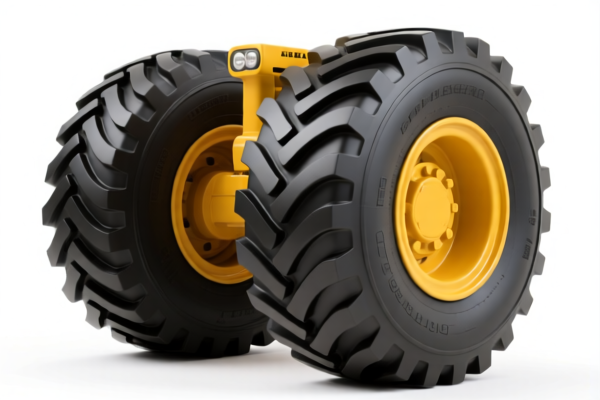
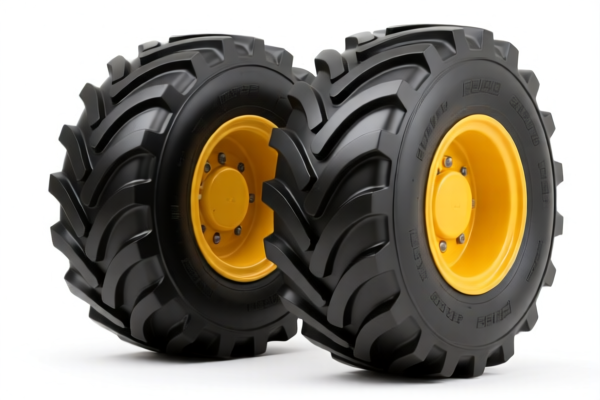
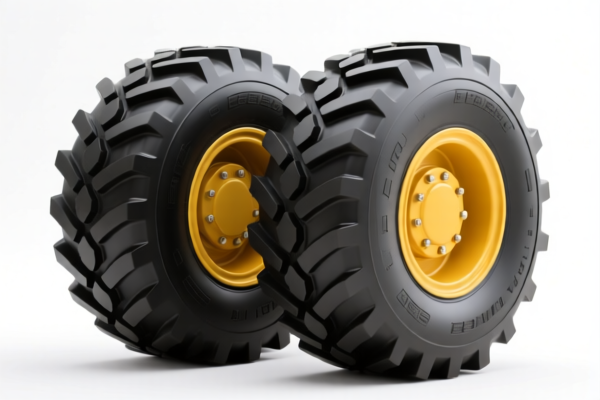
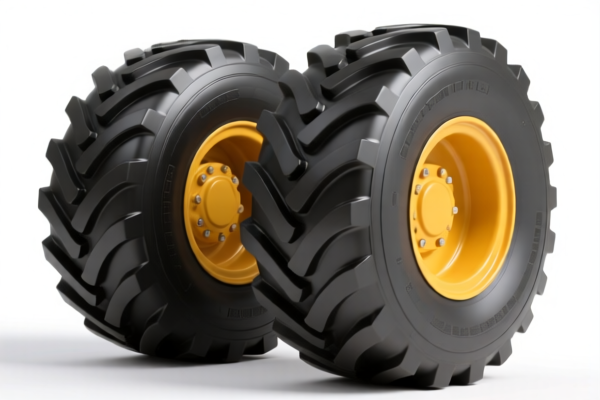
AI Analysis
🚛 Bus专用公路外轮胎 (Off-Road Tires for Buses)
🌐 HS Code Reference & Customs Clearance Guide | 2026 Latest Tariff Analysis | Professional Clearance Strategy
📌 I. Product Definition & Classification: Do You Really Understand "Bus Tires"?
"Off-road tires for buses" (Bus专用公路外轮胎) are a specialized category of rubber products designed for heavy-duty commercial vehicles. In international trade, the classification depends heavily on three factors: 1. New vs. Retreaded: Are they brand new or refurbished? 2. Usage Scenario: Are they for public highways or off-road/off-highway use? 3. Material Composition: Solid rubber vs. Pneumatic (air-filled).
⚠️ Key Distinction:
- Off-Road/Non-Road Use: Tires designed for construction, mining, or mixed terrain not primarily for public highway transport → Often classified under 4011.20.
- Retreaded Tires: Used tires recapped with new tread → Classified under 4012.20.
- General Rubber Parts: Non-specific rubber components → Classified under 4016.99.
📦 II. HS Code Classification Details (2026 Latest Tariff Authority Comparison)
Based on the provided data, here are the five most likely HS Codes for "Bus Off-Road Tires," along with their tax implications.
| HS Code | Product Description | Applicability Logic | Total Tax Rate (China Origin → US) |
|---|---|---|---|
4011.20.10.35 |
Pneumatic tires of rubber, new, for buses | Match Success: Explicitly covers "Bus" (巴士) and "Off-road" (越野). Material inferred as rubber. | 39.0% |
4011.20.50.50 |
Pneumatic tires of rubber, new, for buses (Alternative) | Match Success: Similar to above, covers Bus/Off-road. Material inferred as rubber. | 38.4% |
4012.12.80.50 |
Retreaded pneumatic tires of rubber | Possible Match: Based on "Bus" application. Assumes retreaded status or fallback classification due to ambiguity. | 38.4% |
4016.99.60.10 |
Other articles of vulcanized rubber other than hard rubber | Match Basis: Treated as a "mechanical part." Material inferred as vulcanized rubber. Used as a fallback if specific tire codes don't apply. | 37.5% |
4012.20.60.00 |
Retreaded pneumatic tires of rubber, for buses | Match Basis: Specific for "Old/Retreaded" tires for public transport vehicles. | 35.0% |
🔍 Critical Note:
-4011.20series is for New pneumatic tires. -4012.20series is for Retreaded pneumatic tires. -4016.99is a general fallback for rubber parts not elsewhere specified. -4012.12typically refers to retreaded tires but may be used as a broader fallback if4012.20is deemed inapplicable.
💰 III. 2026 Latest Tariff Rate Breakdown (Including Surtaxes & Policy Add-ons)
✅ Applicable Country: United States (US)
✅ Origin: China (CN)
✅ Effective Date: From November 10, 2025 (including subsequent imports)
🎯 1. 4011.20.10.35 & 4011.20.50.50 —— New Pneumatic Tires for Buses
These codes represent the most direct classification for new off-road tires for buses.
| Item | Content |
|---|---|
| Base Tariff | 4.0% (for .10) / 3.4% (for .50) |
| Section 301 Surtax (USITC) | +25.0% |
| IEEPA Surtax | +10.0% (Targeting China/HK products) |
| Total Tariff | 39.0% (4011.20.10) / 38.4% (4011.20.50) |
| Calculation Basis | CIF Value × Total Rate |
| De Minimis Exemption | ❌ Not Eligible (deny_de_minimis) |
| Legal Path | IEEPA:9903.01.25 → USITC:4011.20.10.35 → FOOTNOTE:9903.88.01 |
📌 Explanation:
- The 25% Section 301 tariff is standard for Chinese rubber products. - The 10% IEEPA tariff is an additional layer for specific Chinese imports. - Total Cost Impact: Nearly 40% of the product value is tax, significantly affecting profit margins.
🎯 2. 4012.12.80.50 —— Retreaded Tires (Fallback Classification)
If the tires are retreaded or if the "off-road" specification triggers this broader category.
| Item | Content |
|---|---|
| Base Tariff | 3.4% |
| Section 301 Surtax (USITC) | +25.0% |
| IEEPA Surtax | +10.0% |
| Total Tariff | 38.4% |
| Calculation Basis | CIF Value × Total Rate |
| De Minimis Exemption | ❌ Not Eligible |
| Legal Path | IEEPA:9901.25 → USITC:4012.12.80.50 |
📌 Note:
- Retreaded tires often face similar or slightly lower base rates than new tires, but the 25%+10% surcharges remain strict. - This code is a "catch-all" if specific bus tire codes are disputed.
🎯 3. 4012.20.60.00 —— Retreaded Tires for Buses (Specific)
This is the most targeted code for used/retreaded tires for public transport.
| Item | Content |
|---|---|
| Base Tariff | 0.0% |
| Section 301 Surtax (USITC) | +25.0% |
| IEEPA Surtax | +10.0% |
| Total Tariff | 35.0% |
| Calculation Basis | CIF Value × Total Rate |
| De Minimis Exemption | ❌ Not Eligible |
| Legal Path | IEEPA:9903.01.24 → USITC:4012.20.60.00 |
📌 Advantage:
- Lower Total Rate (35%): Due to the 0% base tariff for retreaded tires for buses. - Crucial Requirement: Must prove the tires are retreaded (not just used new tires). Misclassification can lead to heavy penalties.
🎯 4. 4016.99.60.10 —— Other Vulcanized Rubber Articles (Fallback)
Used when the tire cannot be clearly classified as a standard pneumatic tire.
| Item | Content |
|---|---|
| Base Tariff | 2.5% |
| Section 301 Surtax (USITC) | +25.0% |
| IEEPA Surtax | +10.0% |
| Total Tariff | 37.5% |
| Calculation Basis | CIF Value × Total Rate |
| De Minimis Exemption | ❌ Not Eligible |
| Legal Path | IEEPA:9903.01.24 → USITC:4016.99.60.10 |
📌 Risk:
- Using this code for tires may be challenged by Customs as "incorrect classification" if it clearly fits under Chapter 4011 or 4012.
🛠️ IV. Customs Clearance Practical Advice (Battle-Tested Pitfall Guide)
✅ 1. Required Documentation List (Non-negotiable)
| Document | Must Provide | Explanation |
|---|---|---|
| ✅ Product Specification Sheet | ✔️ | Details: Size, ply rating, tread pattern, speed rating, load index. |
| ✅ Product Photos (with Label) | ✔️ | Must show DOT code, manufacturing date, brand, and "Off-Road" markings. |
| ✅ Commercial Invoice | ✔️ | Clearly state "Pneumatic Tires for Bus (Off-Road Use)" or "Retreaded Tires." |
| ✅ Packing List | ✔️ | Show unit counts, weights, and dimensions. |
| ✅ Certificate of Origin (CO) | ✔️ | Required for any potential tariff relief (though limited for China). |
| ✅ Retreading Certificate (if applicable) | ✔️ | For 4012.20 codes, proof of retreading is critical to justify 0% base rate. |
✅ 2. Declaration Tips (Key Mnemonic)
🔥 "New vs. Old, Road vs. Off-Road, Name It Right, Taxes Don't Raid!"
| Scenario | Correct Declaration | Wrong Practice | Consequence |
|---|---|---|---|
| New Tires | 4011.20.10.35 or 4011.20.50.50 |
Declare as "Retreaded" | Fraud penalty + 39% tax |
| Retreaded Tires | 4012.20.60.00 |
Declare as "New" | Under-declaration + back taxes |
| Off-Road Tires | Specify "Off-Road/Non-Road" in description | Generic "Bus Tire" | Risk of misclassification |
| Mixed Shipment | Separate HS Codes for New/Retreaded | Mix all under one code | Customs hold + audit |
✅ 3. Special Case Handling
| Situation | Handling Advice |
|---|---|
| OEM Custom Tires | Provide client order + design specs. Avoid generic names. |
| Tires with Valve Stems | Declared as part of the tire, not separate. Do not split HS codes. |
| Tires for Military/Export | If for US military, may qualify for exemptions, but requires strict documentation. |
| Tires with "Solid Rubber" | If solid (not pneumatic), may fall under 4016.99. Must confirm material. |
🌍 V. Global Market Clearance Comparison (2026 Latest)
| Country/Region | Recommended HS Code | Tariff (China) | Certification | Notes |
|---|---|---|---|---|
| 🇺🇸 USA | 4011.20.10.35 |
39.0% | DOT Certification | High tariff due to 301/IEEPA |
| 🇨🇳 China | 4011.20.10.35 |
10-12% | CCC | Lower import duty |
| 🇪🇺 EU | 4011.20.10.00 |
0-4% (varies) | E-Mark | Check for eco-labeling |
| 🇦🇺 Australia | 4011.20.10.00 |
5% | RCM | No high surtaxes |
| 🇯🇵 Japan | 4011.20.10.00 |
0-4% | JIS | No surtaxes |
📌 Conclusion:
- USA is the most expensive market due to 301 & IEEPA tariffs. - EU/AU/JP offer significantly lower entry costs. - China Origin is heavily penalized in the US. Consider transshipment avoidance or tariff engineering.
📌 VI. Common Errors & Pitfall Guide (Blood & Tears Lessons)
❌ Error 1: Declaring Retreaded Tires as New Tires
👉 Consequence: Overpayment of 3-4% (base rate difference) + Risk of fraud accusation.
❌ Error 2: Declaring New Tires as Retreaded Tires
👉 Consequence: 35% vs 39%. If caught, fines for undervaluation + potential seizure.
❌ Error 3: Ignoring "Off-Road" Specification
👉 Consequence: If tires are for highway use but declared as off-road, misclassification leads to 301 tariff disputes.
❌ Error 4: Using 4016.99 for Standard Tires
👉 Consequence: Customs may reject it as "not elsewhere specified," delaying clearance for weeks.
✅ Correct Practice:
"Pneumatic Off-Road Tires for Buses, New, Size 315/80R22.5, DOT Certified, Model XYZ"
🎯 VII. Conclusion: Professional Declaration Saves Money!
🎯 Remember the Mnemonic:
🔹 "New Tires ~39%, Retreaded ~35%, Fallback ~37.5%, All pay 301/IEEPA!"
🔹 "HS Code is Destiny, 4% Difference Matters, Declare Right, Clear Smoothly!"
📌 Tips:
- If your tires are retreaded, ensure you have proof of retreading to claim the 0% base rate under 4012.20.60.00.
- For new tires, 4011.20.10.35 is the most accurate for "Bus/Off-Road."
- Always apply for an Advance Ruling if the classification is ambiguous.
📣 Immediate Action:
📞 Contact a licensed customs broker + Provide Product Specs + Apply for HS Code Advance Ruling
🚀 Let your tires clear smoothly, avoid delays, and maximize profit!
✨ Professional Clearance Starts with Precise Classification!
💼 Every cent of tax cost deserves to be calculated precisely!
Customer Reviews
About HS Code Classification
The Harmonized System (HS) is an internationally standardized nomenclature developed by the World Customs Organization (WCO) to classify traded products. Over 200 countries use the HS system as the basis for customs tariffs, trade statistics, and import/export regulations.
Each HS code follows a hierarchical structure:
- Chapter (2 digits) — Broad category of goods (e.g., Chapter 84: Machinery and Mechanical Appliances)
- Heading (4 digits) — More specific grouping within the chapter
- Subheading (6 digits) — Internationally standardized breakdown, used by all WCO member countries
- National subdivisions (8-10 digits) — Country-specific extensions for further classification, such as US HTSUS 10-digit codes
Correct HS code classification is essential for smooth customs clearance, accurate duty payment, and compliance with trade regulations. Misclassification can lead to customs delays, overpayment of duties, or penalties.
When importing from CN to US, the applicable tariff rates may include:
- Most-Favored-Nation (MFN) rate — The standard duty rate applied to WTO members
- General rate — Applied to countries without trade agreements
- Trade remedy duties — Additional tariffs such as Section 301 (anti-dumping), Section 232 (national security), or countervailing duties
The information provided on this page is for reference purposes only. For official classification, please consult with your local customs authority or a licensed customs broker.