Butadiene Rubber Sheet
CN → US| HS Code | Tariff Rate | Origin | Destination | Doc |
|---|---|---|---|---|
| 4005910000 | 35.0% | CN | US | Official Doc |
| 4008210000 | 35.0% | CN | US | Official Doc |
| 4005990000 | 35.0% | CN | US | Official Doc |
| 3926909989 | 22.8% | CN | US | Official Doc |
| 4008115000 | 38.3% | CN | US | Official Doc |
| 3911901000 | 35.0% | CN | US | Official Doc |
Product Images
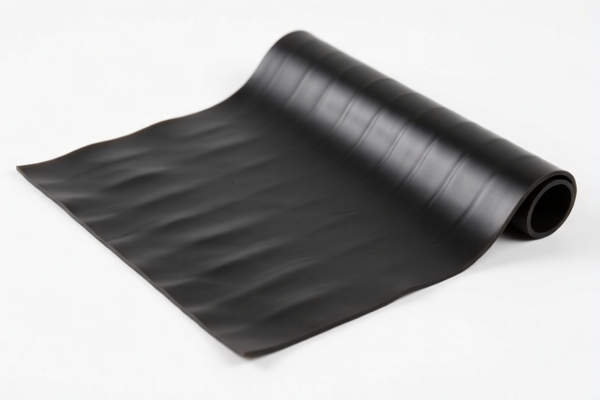
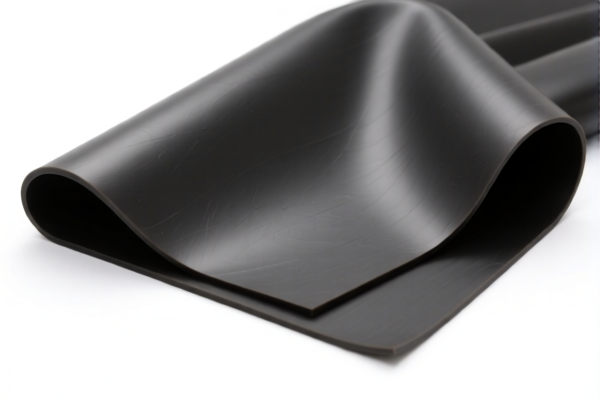
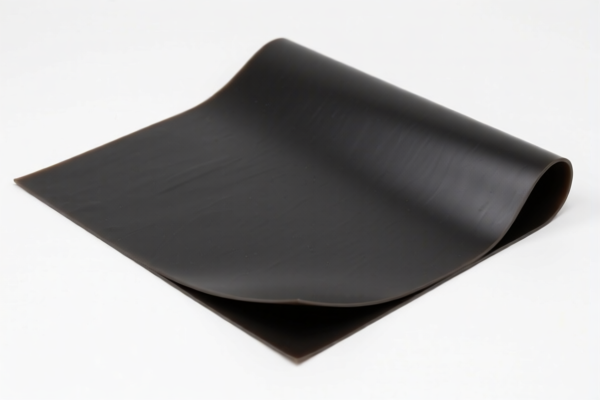
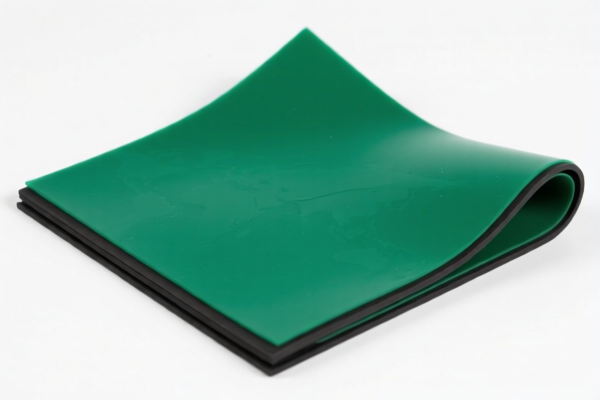
AI Analysis
🧪 Butadiene Rubber Sheet (SBR & Synthetic Rubber Products)
🌐 HS Code Reference & Customs Clearance Guide | 2026 Latest Tariff Breakdown | Professional Clearance Strategy
📌 1. Product Definition & Classification: What Exactly is "Butadiene Rubber Sheet"?
Butadiene Rubber (BR) or Styrene-Butadiene Rubber (SBR) sheets are critical raw materials and semi-finished goods in the manufacturing industry, widely used in tires, conveyor belts, seals, and industrial mats. In international trade, classification depends heavily on the state of vulcanization (curing) and the physical form.
Key Distinctions: * Unvulcanized (Raw/Mix): Rubber that has been compounded but not yet chemically hardened. Often sold as sheets for further processing. * Vulcanized (Cured): Rubber that has been heated/pressurized to harden. Classified by shape (sheet, strip, tile). * Articles vs. Raw Material: If it’s just a sheet of raw rubber, it’s a raw material (Chapter 40). If it’s a specific manufactured article (e.g., a gasket), it might fall under Chapter 39 or 40 depending on specificity.
⚠️ Critical Classification Point:
- If it is Unvulcanized Mixed Rubber in Sheets → HS 4005
- If it is Vulcanized Rubber in Plates/Sheets → HS 4008
- If it is a Specific Synthetic Rubber Article not elsewhere specified → HS 3926 (Use with caution, usually for specific items)
- If it is Raw Synthetic Rubber in Primary Forms → HS 3911
📦 2. HS Code Classification Details (2026 Latest Tariff Authority Mapping)
Based on the provided data, here is the exact mapping for Butadiene Rubber Sheets:
| HS Code | Product Description | State/Form | Application Scenario |
|---|---|---|---|
4005.91.00.00 |
Unvulcanized mixed rubber, in sheets | ❌ Unvulcanized | Raw rubber sheets for molding, calendering |
4008.21.00.00 |
Vulcanized rubber plates, sheets, strips | ✅ Vulcanized | Hardened rubber sheets for industrial use |
4005.99.00.00 |
Unvulcanized milled rubber in sheets | ❌ Unvulcanized | General unvulcanized rubber sheets (other than specific types) |
3926.90.99.89 |
Other articles of plastics/rubber (Synthetic Rubber Articles) | ✅ Manufactured | Specific finished/specialized rubber articles (if not raw/vulcanized sheet per 4005/4008) |
4008.11.50.00 |
Vulcanized rubber plates, strips | ✅ Vulcanized | Vulcanized rubber in strip or plate form |
3911.90.10.00 |
Synthetic rubber, primary forms (Industrial Use) | ⚠️ Primary Form | Bulk raw synthetic rubber (less common for "sheet" form, usually blocks/bales, but included in data) |
🔍 Key Insight:
- The majority of standard "Butadiene Rubber Sheets" fall under Chapter 40 (Rubber and Articles Thereof).
- Chapter 39 entries (3926,3911) are typically for specific plastic/rubber articles or primary forms that don't fit the standard "rubber sheet" definitions in Chapter 40. Verify if your product is a "primary form" or a "sheet" to avoid misclassification.
💰 3. 2026 Latest Tariff Rate Breakdown (Including Surtaxes, Policy Surcharges)
✅ Applicable Country: United States (US)
✅ Origin: China (CN)
✅ Effective Time: Current rates as per 122 Clause & Section 301/IEEPA provisions
🎯 1. 4005.91.00.00 & 4005.99.00.00 & 4008.21.00.00 & 3911.90.10.00
Unvulcanized/Raw & Specific Vulcanized Sheets (Most Common)
| Item | Detail |
|---|---|
| Base Tariff | 0.0% (Ad Valorem) |
| Section 301 Surtax | +25.0% (USITC Footnote 9903.88.01) |
| 122 Clause Tariff | +10.0% (Specific trade remedy duty) |
| Total Rate | 35.0% |
| Calculation Base | CIF Value × 35% |
| De Minimis Exemption | ❌ Not Eligible (deny_de_minimis) |
| Legal Reference Path | Section 301:9903.88.01 → 122 Clause → HS:4005/4008 |
📌 Explanation:
- These HS codes attract the highest standard surtaxes for rubber products from China.
- The 35% total burden includes the base 0%, the 301 Section 25%, and the 122 Clause 10%.
- Warning: Do not underestimate this cost. It significantly impacts profitability.
🎯 2. 3926.90.99.89
Synthetic Rubber Articles (Other)
| Item | Detail |
|---|---|
| Base Tariff | 5.3% |
| Section 301 Surtax | +7.5% |
| 122 Clause Tariff | +10.0% |
| Total Rate | 22.8% |
| Calculation Base | CIF Value × 22.8% |
| De Minimis Exemption | ❌ Not Eligible |
| Legal Reference Path | Section 301:9903.88.01 → 122 Clause → HS:3926 |
📌 Explanation:
- This code has a lower total rate (22.8%) compared to the 35% for standard rubber sheets.
- Caution: Only use this if your product strictly qualifies as an "article of plastic/rubber" under Chapter 39 and not as a raw/vulcanized sheet under Chapter 40. Misclassification here can lead to severe penalties.
🎯 3. 4008.11.50.00
Vulcanized Rubber Plates/Strips
| Item | Detail |
|---|---|
| Base Tariff | 3.3% |
| Section 301 Surtax | +25.0% |
| 122 Clause Tariff | +10.0% |
| Total Rate | 38.3% |
| Calculation Base | CIF Value × 38.3% |
| De Minimis Exemption | ❌ Not Eligible |
| Legal Reference Path | Section 301:9903.88.01 → 122 Clause → HS:4008 |
📌 Explanation:
- This is the highest tariff rate (38.3%) in the dataset.
- Despite a low base rate (3.3%), the high surtaxes make it very costly.
- Ensure the product is correctly identified as "plates/strips" and not general "sheets" to avoid over-taxing or misclassification disputes.
🛠️ 4. Customs Clearance Practical Advice (Pitfall Avoidance Guide)
✅ 1. Required Documentation Checklist
| Document | Mandatory? | Notes |
|---|---|---|
| ✅ Product Specification Sheet | ✔️ | Must specify: Unvulcanized vs. Vulcanized, SBR/BR content, thickness, dimensions. |
| ✅ Composition Declaration | ✔️ | Detail the percentage of Butadiene, Styrene, additives. |
| ✅ Photos (Clear & Labeled) | ✔️ | Show the sheet texture, edges, and any labeling. |
| ✅ Commercial Invoice | ✔️ | Clearly state "Butadiene Rubber Sheet, Unvulcanized/Vulcanized, HS Code: [XXX]" |
| ✅ Packing List | ✔️ | Include weight, dimensions, and packaging material. |
| ✅ Certificate of Origin (CO) | ✔️ | Required for origin verification; may help in dispute resolution. |
✅ 2. Declaration Tips (Key Rules)
🔥 “State Clearly: Vulcanized or Not? Sheet or Article?”
| Scenario | Correct HS Code | Incorrect Approach | Risk |
|---|---|---|---|
| Raw, Unvulcanized Sheet | 4005.91.00.00 / 4005.99.00.00 |
Declaring as "Vulcanized" | Wrong rate, penalty |
| Hardened, Vulcanized Sheet | 4008.21.00.00 |
Declaring as "Unvulcanized" | Wrong rate, penalty |
| Specific Rubber Article | 3926.90.99.89 |
Declaring as "Raw Sheet" | Potential under-taxing (if audited) |
| Bulk Raw Material | 3911.90.10.00 |
Declaring as "Sheet" | Misclassification |
📌 Important:
- Be Explicit: Use terms like "Unvulcanized SBR Sheet" or "Vulcanized Rubber Plate" in the description.
- Avoid Ambiguity: Do not just write "Rubber Sheet." Customs may assign a default code with higher penalties.
- 122 Clause Impact: All these codes are subject to the 122 Clause tariff. Ensure your supplier is aware of this cost burden.
✅ 3. Special Cases & Mitigation
| Situation | Recommendation |
|---|---|
| Mixed Shipment (Vulcanized & Unvulcanized) | Split the declaration! Use 4005 for unvulcanized and 4008 for vulcanized. Do not mix in one line item. |
| OEM Custom Sheets | Provide customer specifications and drawings to prove the product’s nature (vulcanized state). |
| Small Sample Shipments | No De Minimis Exemption! All shipments from China are subject to these duties, regardless of value. |
| Re-export from Third Country | If rubber is processed in Vietnam/Mexico, it may qualify for exemption. However, simple cutting/sheeting of Chinese rubber usually does NOT qualify for origin change. |
🌍 5. Global Market Comparison (2026 Latest)
| Market | Recommended HS Code | Tariff Rate | Notes |
|---|---|---|---|
| 🇺🇸 USA | 4005.91.00.00 / 4008.21.00.00 |
35.0% | Includes 301 & 122 Clause. High cost. |
| 🇨🇳 China | 4005.91.00.00 |
~10-15% | Import duty to China (varies). |
| 🇪🇺 EU | 4005.91.00.00 |
~6.5% | No Section 301 equivalent, but anti-dumping may apply. |
| 🇬🇧 UK | 4005.91.00.00 |
~6.5% | Post-Brexit tariff alignment with EU. |
📌 Conclusion:
- USA is the most expensive market for Butadiene Rubber Sheets due to 35-38.3% total duties.
- Consider supply chain diversification or value-added processing in third countries if possible.
📌 6. Common Errors & Pitfalls (Lessons Learned)
❌ Error 1: Declaring "Unvulcanized" sheets as "Vulcanized" to try a different code
👉 Consequence: Customs inspection will reveal the rubber is soft/pliable. Penalty + Back Taxes.
❌ Error 2: Ignoring the "122 Clause"
👉 Consequence: Under-declaring duties by 10%. Audit leads to fines and seizure.
❌ Error 3: Using "Plastic Sheet" HS Codes for Rubber
👉 Consequence: Rubber and Plastic are different chapters. Misclassification leads to rejection.
❌ Error 4: Assuming De Minimis Exemption for Small Orders
👉 Consequence: All shipments from China are taxed. No $800 exemption.
✅ Best Practice:
"Styrene-Butadiene Rubber (SBR) Sheet, Unvulcanized, 2mm Thickness, For Tire Manufacturing, HS: 4005.91.00.00"
🎯 7. Conclusion: Precise Classification, Cost Control, Efficient Clearance
🎯 Remember the Mantra:
🔹 "Unvulcanized = 35%, Vulcanized = 35% or 38.3%, Article = 22.8%."
🔹 "No De Minimis for China! Declare Clearly! Avoid 122 Clause Traps!"
📌 Pro Tip:
If your product qualifies as a "specific article" under 3926.90.99.89, the tariff is 22.8%, which is 12.2% lower than the standard rubber sheet rate. However, this is risky and requires strong evidence that it is not a "sheet of rubber" but a distinct "article."
📣 Immediate Action:
📞 Consult a Customs Broker for Pre-Ruling if unsure about Vulcanized vs. Unvulcanized status.
📦 Ensure your Commercial Invoice explicitly states the HS Code and Product State.
🚀 Optimize Your Supply Chain to mitigate the 35%+ tariff burden.
✨ Professional Clearance Starts with Accurate Classification!
💼 Every Percent of Tariff Counts – Protect Your Profit Margin!
Customer Reviews
About HS Code Classification
The Harmonized System (HS) is an internationally standardized nomenclature developed by the World Customs Organization (WCO) to classify traded products. Over 200 countries use the HS system as the basis for customs tariffs, trade statistics, and import/export regulations.
Each HS code follows a hierarchical structure:
- Chapter (2 digits) — Broad category of goods (e.g., Chapter 84: Machinery and Mechanical Appliances)
- Heading (4 digits) — More specific grouping within the chapter
- Subheading (6 digits) — Internationally standardized breakdown, used by all WCO member countries
- National subdivisions (8-10 digits) — Country-specific extensions for further classification, such as US HTSUS 10-digit codes
Correct HS code classification is essential for smooth customs clearance, accurate duty payment, and compliance with trade regulations. Misclassification can lead to customs delays, overpayment of duties, or penalties.
When importing from CN to US, the applicable tariff rates may include:
- Most-Favored-Nation (MFN) rate — The standard duty rate applied to WTO members
- General rate — Applied to countries without trade agreements
- Trade remedy duties — Additional tariffs such as Section 301 (anti-dumping), Section 232 (national security), or countervailing duties
The information provided on this page is for reference purposes only. For official classification, please consult with your local customs authority or a licensed customs broker.