Butterfly Lamp
CN → US| HS Code | Tariff Rate | Origin | Destination | Doc |
|---|---|---|---|---|
| 9503000073 | 10.0% | CN | US | Official Doc |
| 9503000090 | 10.0% | CN | US | Official Doc |
| 8541410000 | 35.0% | CN | US | Official Doc |
| 8541430080 | 60.0% | CN | US | Official Doc |
| 9405416000 | 41.0% | CN | US | Official Doc |
Product Images
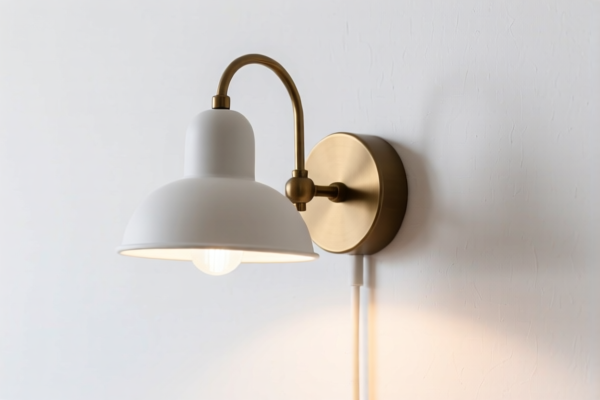
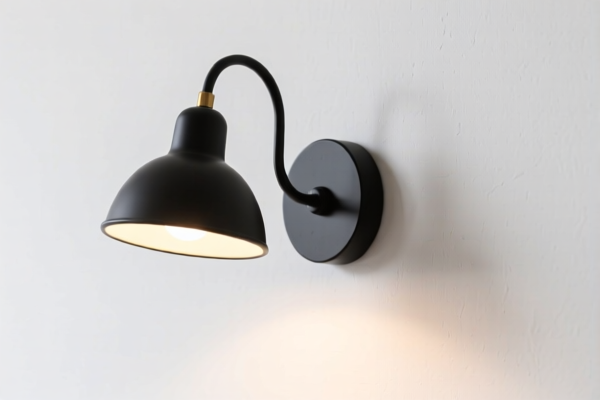
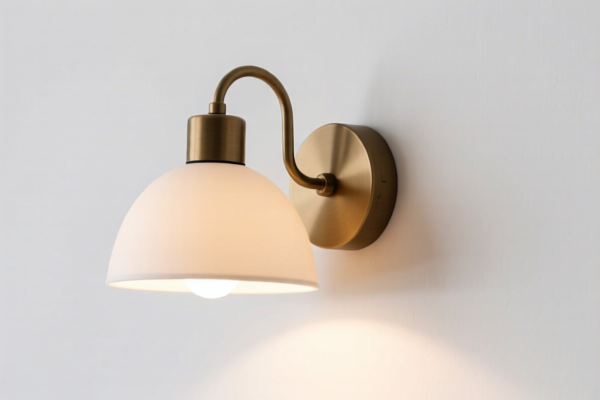
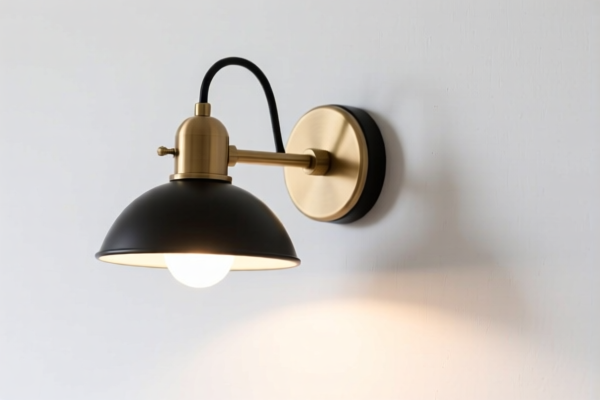
AI Analysis
🦋 Butterfly Lamp (Solar LED Decorative Light)
🌐 HS Code Reference & Customs Clearance Guide | 2026 Latest Tariff Analysis | Professional Clearance Strategy
📌 I. Product Definition & Classification: What Exactly is a "Butterfly Lamp"?
The Solar Butterfly Lamp is a decorative lighting product, typically used for garden landscaping, outdoor decoration, or as a children's toy. It combines aesthetic forms (butterfly shape) with functional components (solar panels and LEDs).
In international trade, its classification depends heavily on primary function and physical structure: * As a Toy/Entertainment Model: If marketed primarily for play or decorative amusement, it falls under Chapter 95. * As a Decorative Lamp: If marketed primarily for illumination or ambient lighting, it falls under Chapter 94. * As an Electronic Component: If imported as bare solar cells or LED assemblies without the lamp housing, it falls under Chapter 85.
⚠️ Key Classification Distinction:
- If it is a complete assembled product (lamp + solar panel + battery + housing) → Chapter 94 (Lamps) or Chapter 95 (Toys).
- If it is bare electronic components (only solar cells or LEDs) → Chapter 85 (Electrical Machinery).
- Misclassification here leads to massive tariff differences (from 0% to 60%!).
📦 II. HS Code Classification Details (2026 Latest Tariff Authority Comparison)
Based on the provided data, here are the five possible classifications with their corresponding tax implications:
| HS Code | Product Description | Logic/Summary from Data | Total Tax |
|---|---|---|---|
9503.00.00.73 |
Toys / Entertainment Models | Classified as decorative lamps/toys; form matches entertainment model attributes. | 10.0% |
9503.00.00.90 |
Other Toys / Leisure Decor | Classified as decorative lamps/toys; fits "other unlisted leisure decorative items." | 10.0% |
8541.41.00.00 |
LEDs & Components | Contains solar cells & LEDs; logic follows "Light Emitting Diodes & Components." | 35.0% |
8541.43.00.80 |
Photovoltaic Assemblies | Inferred as PV cell assemblies for lighting; non-amorphous silicon PV application. | 60.0% |
9405.41.60.00 |
Electric Lamps (Solar) | Solar-powered lamp; material is base metal/plastic frame; fits "Other Electric Lamps." | 41.0% |
🔍 Critical Analysis:
- Lowest Tax (10%): Classification under Chapter 95 (Toys/Decorative Models). This is ideal if the product is marketed as a toy or decorative novelty.
- Highest Tax (60%): Classification under Chapter 85 (Electronic Components). This is the worst-case scenario if customs views the product as mere solar/LED components rather than a finished lamp.
- Middle Ground (41%): Classification under Chapter 94 (Lamps). This is the most technically accurate for a "lighting fixture," but carries a higher tariff than the toy classification.
💰 III. 2026 Latest Tariff Rate Breakdown (Including Surcharges & Policy Add-ons)
✅ Applicable Country: United States (US)
✅ Country of Origin: China (CN)
✅ Effective Date: From November 10, 2025 (and subsequent imports)
🎯 1. 9503.00.00.73 & 9503.00.00.90 —— Toys / Decorative Models (Lowest Risk)
| Item | Content |
|---|---|
| Base Tariff | 0.0% (ad valorem) |
| USITC Surcharge (Section 301) | 0.0% |
| Section 122 Tariff (China-specific) | +10% |
| Total Tax Rate | 10.0% |
| Calculation Method | CIF Value × 10% |
| De Minimis Eligibility | ❌ Not Eligible (Section 122 tariffs generally exclude de minimis exemptions for certain Chinese goods, check specific EO updates) |
| Legal Basis | Section 122 Tariff provisions |
📌 Explanation:
- This classification offers the lowest total tax burden (10%).
- It applies when the item is deemed a "toy" or "decorative model."
- Strategy: Market the product as a "Garden Decor Toy" or "Entertainment Model" to leverage this lower rate.
🎯 2. 9405.41.60.00 —— Electric Lamps (Solar Powered)
| Item | Content |
|---|---|
| Base Tariff | 6.0% |
| USITC Surcharge (Section 301) | +25.0% |
| Section 122 Tariff (China-specific) | +10.0% |
| Total Tax Rate | 41.0% |
| Calculation Method | CIF Value × 41.0% |
| De Minimis Eligibility | ❌ Not Eligible |
| Legal Basis | USITC Footnote 9903.88.01 + Section 122 |
📌 Explanation:
- This is the "standard" classification for solar lamps.
- The 25% Section 301 tariff is the main cost driver here.
- While technically correct for a "lamp," it is significantly more expensive than the toy classification.
🎯 3. 8541.41.00.00 —— LEDs & Components
| Item | Content |
|---|---|
| Base Tariff | 0.0% |
| USITC Surcharge (Section 301) | +25.0% |
| Section 122 Tariff (China-specific) | +10.0% |
| Total Tax Rate | 35.0% |
| Calculation Method | CIF Value × 35.0% |
| Legal Basis | USITC Footnote 9903.88.01 + Section 122 |
📌 Explanation:
- Applies if the product is seen as just "LEDs with solar cells."
- Avoid this classification if possible, as it lacks the finished-goods benefit and still incurs high tariffs.
🎯 4. 8541.43.00.80 —— Photovoltaic Assemblies (Highest Risk)
| Item | Content |
|---|---|
| Base Tariff | 0.0% |
| USITC Surcharge (Section 301) | +50.0% |
| Section 122 Tariff (China-specific) | +10.0% |
| Total Tax Rate | 60.0% |
| Calculation Method | CIF Value × 60.0% |
| Legal Basis | USITC Footnote 9903.88.01 (Enhanced) + Section 122 |
📌 Explanation:
- DO NOT USE unless the product is purely unmounted solar cells.
- The 50% Section 301 surcharge is punitive.
- Misclassifying a finished lamp as a "PV assembly" is a major red flag for customs auditors.
🛠️ IV. Customs Clearance Operational Advice (Practical Pitfall Avoidance)
✅ 1. Document Preparation Checklist (Non-Negotiable)
| Document | Required? | Notes |
|---|---|---|
| ✅ Product Brochure/Marketing Material | ✔️ | Must emphasize "Toy," "Decorative Model," or "Novelty" to support HS 9503 classification. |
| ✅ Technical Diagram | ✔️ | Show the integrated nature: Solar Panel + LED + Housing = One Unit. |
| ✅ Product Photos | ✔️ | Clear shots of the butterfly shape, usage context (garden, play). |
| ✅ Bill of Lading / Commercial Invoice | ✔️ | Description must match HS code logic (e.g., "Solar Butterfly Toy Light" vs. "Solar LED Assembly"). |
| ✅ Certificate of Origin | ✔️ | To confirm CN origin and apply correct Section 122 rates. |
✅ 2. Classification Strategy (Key Mantra)
🔥 "Toy Logic Wins, Lamp Costs Rise, Components Crush You!"
| Scenario | Recommended HS Code | Why? |
|---|---|---|
| Marketed as Garden Decor/Toy | 9503.00.00.73 or 9503.00.00.90 |
10% Tax. Best for cost savings. Justify as "decorative model" or "toy." |
| Marketed as Outdoor Lighting | 9405.41.60.00 |
41% Tax. Technically accurate for "lamps," but expensive. |
| Imported as Loose Parts | 8541.41.00.00 or 8541.43.00.80 |
35%-60% Tax. Avoid unless necessary. High risk of reclassification and penalties. |
✅ 3. Special Handling Tips
| Situation | Advice |
|---|---|
| OEM Customization | Ensure marketing materials label the product as "Toy" or "Novelty Item" to support Chapter 95 classification. |
| Mixed Containers | If shipping both toys and electronic components, separate shipments to avoid complex tariff calculations. |
| Customs Inquiry | If asked, emphasize the aesthetic and recreational purpose (butterfly shape) rather than just the lighting function. |
| Section 122 Applicability | All classifications above include the 10% Section 122 tariff. Ensure your supplier is aware this is non-negotiable for CN origin. |
🌍 V. Global Market Comparison (2026 Latest)
| Market | Recommended HS Code | Estimated Total Tax (CN Origin) | Key Certification |
|---|---|---|---|
| 🇺🇸 USA | 9503.00.00.73 (Toy) |
10.0% | FCC, CPSIA (if toy) |
| 🇺🇸 USA | 9405.41.60.00 (Lamp) |
41.0% | UL, ETL, Energy Star |
| 🇨🇳 China | 9405.41.00.00 |
Low (~5-8%) | CCC (if applicable) |
| 🇪🇺 EU | 9405.41.00 |
0-3.7% | CE, RoHS, WEEE |
| 🇬🇧 UK | 9405.41.00 |
0-3.7% | UKCA, RoHS |
📌 Conclusion:
- The USA is the most complex market due to Section 301 and Section 122 tariffs.
- Chapter 95 (Toys/Models) offers a massive 31-50% tax advantage over Chapter 94 (Lamps) or Chapter 85 (Components) in the US.
- Strategy: If the product can be reasonably justified as a "decorative toy" or "novelty item," strongly recommend HS Code 9503.
📌 VI. Common Mistakes & Pitfalls (Lessons Learned)
❌ Mistake 1: Classifying a "Solar Butterfly Lamp" as a standard "Solar Lamp" (9405)
👉 Consequence: Pay 41% tax instead of 10%. Lose 31% profit margin.
❌ Mistake 2: Classifying it as "LED Components" (8541)
👉 Consequence: Pay 35-60% tax. Customs may reject this as incomplete goods, leading to delays.
❌ Mistake 3: Ignoring Section 122 Tariff
👉 Consequence: All classifications above include a 10% add-on. Failing to account for this leads to budget shortfalls.
❌ Mistake 4: Using generic descriptions like "Light" in commercial invoices
👉 Consequence: Customs may guess the classification, often choosing the higher-tariff option (Chapter 94 or 85).
✅ Correct Practice:
"Solar-Powered Decorative Butterfly Toy/Light, Model XYZ, for Garden Decoration, FCC Certified."
Use words like "Toy," "Novelty," or "Decorative Model" to support HS 9503.
🎯 VII. Conclusion: Precision Classification for Maximum Profit
🎯 Remember the Mantra:
🔹 "Toy Logic = 10% Tax. Lamp Logic = 41% Tax. Component Logic = 60% Tax."
🔹 "Every percentage point matters in the US market!"
📌 Pro Tip:
If your product is intended for children or has play value, definitely classify under 9503.00.00.73. If it is strictly for ambient lighting, you may be forced into 9405.41.60.00.
Recommendation: Consult a customs broker to review your product marketing materials to ensure the "Toy/Decorative Model" narrative is strong and consistent.
📣 Immediate Action:
📞 Contact a Customs Broker to apply for an Advance Ruling if volume is high.
🚀 Align Marketing Materials with HS Code9503.00.00.73to save 31% in tariffs.
✨ Professional Clearance Starts with Accurate Classification!
💼 Your Bottom Line Depends on This 10-Digit Code!
Customer Reviews
About HS Code Classification
The Harmonized System (HS) is an internationally standardized nomenclature developed by the World Customs Organization (WCO) to classify traded products. Over 200 countries use the HS system as the basis for customs tariffs, trade statistics, and import/export regulations.
Each HS code follows a hierarchical structure:
- Chapter (2 digits) — Broad category of goods (e.g., Chapter 84: Machinery and Mechanical Appliances)
- Heading (4 digits) — More specific grouping within the chapter
- Subheading (6 digits) — Internationally standardized breakdown, used by all WCO member countries
- National subdivisions (8-10 digits) — Country-specific extensions for further classification, such as US HTSUS 10-digit codes
Correct HS code classification is essential for smooth customs clearance, accurate duty payment, and compliance with trade regulations. Misclassification can lead to customs delays, overpayment of duties, or penalties.
When importing from CN to US, the applicable tariff rates may include:
- Most-Favored-Nation (MFN) rate — The standard duty rate applied to WTO members
- General rate — Applied to countries without trade agreements
- Trade remedy duties — Additional tariffs such as Section 301 (anti-dumping), Section 232 (national security), or countervailing duties
The information provided on this page is for reference purposes only. For official classification, please consult with your local customs authority or a licensed customs broker.