Butterfly Wood Slice
CN → US| HS Code | Tariff Rate | Origin | Destination | Doc |
|---|---|---|---|---|
| 4421919880 | 38.3% | CN | US | Official Doc |
| 4420908000 | 38.2% | CN | US | Official Doc |
| 4414900000 | 21.4% | CN | US | Official Doc |
| 4421999880 | 38.3% | CN | US | Official Doc |
| 4420190000 | 13.2% | CN | US | Official Doc |
Product Images


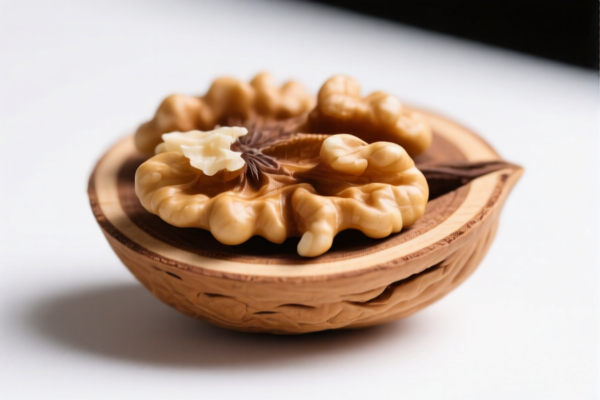

AI Analysis
🦋 Butterfly Wood Slice: The Ultimate HS Code & Duty Guide (2026 Edition)
🌐 HS Code Reference & Customs Clearance Strategy | Complete Tax Analysis | Professional Clearance Tactics
📌 One: What is a "Butterfly Wood Slice"? Understanding the Product
The Butterfly Wood Slice is a versatile wooden component, typically a thin, flat slice of wood cut into a butterfly shape. Its classification in international trade depends entirely on its intended use and structural integrity:
- As a Raw Component/Part: If it is a generic unfinished piece intended to be assembled into a larger object (like a puzzle, toy, or furniture part), it falls under "parts" or "other wood articles."
- As a Decorative Item: If it is finished, painted, or specifically shaped for ornamentation (e.g., wall hanging, keychain, craft), it is classified under "wooden ornaments" or "statues."
- As a Structural Part: If it serves a specific mechanical function within a larger wooden assembly (e.g., a specific joint piece), it may be classified as a "part."
⚠️ Critical Distinction: * General "Other Wood Articles" → High Tariff (38.3%) due to "Add-on" taxes. * Specific Wooden Ornament → Lower Tariff (13.2%) if strictly defined as a decorative statue. * Generic "Other" Parts → Medium Tariff (21.4%) if categorized as a component of another item.
📦 Two: HS Code Breakdown & Tax Details (2026 Official Data)
| HS Code | Product Description | Classification Logic | Total Tax Rate | Tax Detail Breakdown |
|---|---|---|---|---|
| 4421.91.98.80 | Wooden Butterfly Slice Other wood articles (General Category) |
Treated as a generic "other wood article" or miscellaneous item not fitting specific ornament categories. | 38.3% | Base: 3.3% + Add-on: 25.0% + Section 122: 10% |
| 4420.90.80.00 | Wooden Butterfly Slice Wooden Ornament |
Classified specifically as a "wooden ornament or similar wooden article" (decoration). | 38.2% | Base: 3.2% + Add-on: 25.0% + Section 122: 10% |
| 4414.90.00.00 | Wooden Butterfly Slice Wooden Part/Component |
Treated as a "part" or "component" for another category of wooden articles (not the final product itself). | 21.4% | Base: 3.9% + Add-on: 7.5% + Section 122: 10% |
| 4421.99.98.80 | Wooden Butterfly Slice Other Specific Shapes |
Categorized under "other articles of wood" with specific shape constraints, treated as a distinct "other" item. | 38.3% | Base: 3.3% + Add-on: 25.0% + Section 122: 10% |
| 4420.19.00.00 | Wooden Butterfly Slice Decorative Statue/Art |
Classified strictly as a "wooden statue and other ornament" (the lowest tax bracket for this item). | 13.2% | Base: 3.2% + Add-on: 0.0% + Section 122: 10% |
🔍 Key Insight: * The "13.2%" Trap: Only 4420.19.00.00 offers a significant tax advantage (saving ~25% in "Add-on" tax). This classification requires the product to be a finished decorative statue or ornament. * The "38%" Reality: Codes like 4421.91.98.80 and 4421.99.98.80 trigger the full 25% "Add-on" tariff (Section 301), making them the most expensive options. * The "Part" Loophole: 4414.90.00.00 applies only if the butterfly slice is sold strictly as a spare part for a larger wooden assembly, not as a standalone decorative item.
💰 Three: 2026 Tax Rate Deep Dive (Detailed Policy Analysis)
✅ Applicable Market: United States (US)
✅ Origin: China (CN)
✅ Policy Context: Includes Section 301 (25% Add-on) and Section 122 (10% Reciprocal/Countermeasures).
🎯 Scenario A: The "High Cost" Route (HS 4421.91.98.80 / 4421.99.98.80)
- Why?: Classified as "Other Articles of Wood" (General).
- Tax Calculation:
- Base Duty: 3.3%
- Section 301 Add-on: 25.0% (Mandatory for Chinese wood products)
- Section 122 (10%): 10.0% (Reciprocal tariff)
- Total: 38.3%
- 💥 Impact: This is a Heavy Duty scenario. If your value is $10,000, you pay $3,830 in taxes immediately.
- Legal Path:
Section 301→122 Countermeasures→General Wood Articles.
🎯 Scenario B: The "Decorative" Route (HS 4420.90.80.00)
- Why?: Classified as "Wooden Ornament."
- Tax Calculation:
- Base Duty: 3.2%
- Section 301 Add-on: 25.0%
- Section 122 (10%): 10.0%
- Total: 38.2%
- 💥 Impact: Slightly better than Scenario A, but still carries the full 25% penalty.
- Legal Path:
Section 301→122 Countermeasures→Wooden Ornaments.
🎯 Scenario C: The "Component" Route (HS 4414.90.00.00)
- Why?: Classified as a "Part/Component" for another article.
- Tax Calculation:
- Base Duty: 3.9%
- Section 301 Add-on: 7.5% (Reduced Add-on for parts/components)
- Section 122 (10%): 10.0%
- Total: 21.4%
- 💥 Impact: Significant Savings. You save 16.8% compared to the "Other Articles" route.
- Warning: You must prove the item is a part and not a final decorative product.
🎯 Scenario D: The "Golden Ticket" (HS 4420.19.00.00)
- Why?: Classified strictly as a "Wooden Statue/Ornament" (Finished Decorative Item).
- Tax Calculation:
- Base Duty: 3.2%
- Section 301 Add-on: 0.0% (No 301 penalty for this specific sub-heading)
- Section 122 (10%): 10.0% (Base reciprocity tax remains)
- Total: 13.2%
- 💥 Impact: Massive Savings. You save 25.1% compared to the "Other" routes.
- Requirement: The product must be finished and clearly identifiable as a decoration/statue, not a raw part or "other" article.
🛠️ Four: Practical Customs Clearance Advice (Avoiding Pitfalls)
✅ 1. Product Definition Strategy (Crucial)
- Do NOT label generic butterfly slices as "Ornaments" if they are raw/unpainted wood.
- DO ensure that if you claim 4420.19.00.00, the product is finished (sanded, stained, painted, or varnished) and marketed as a decorative item.
- DO if selling as a part for a larger project, provide a bill of materials showing it is a component.
✅ 2. Documentation Checklist
| Document | Requirement | Why? |
|---|---|---|
| Commercial Invoice | Must specify "Wooden Butterfly Slice" + HS Code | Prevents "misdeclaration" flags. |
| Product Photos | Clear shots of the item (finished vs. raw) | Customs officers verify if it's a "statue" (4420.19) or "other" (4421). |
| Material Certs | Wood species, treatment (kiln-dried) | Required for all wood products to prevent pest issues. |
| Usage Declaration | "For decoration" vs. "For assembly" | Determines if you get 13.2% or 38.3%. |
✅ 3. Declaration Tips (The "Golden Rule")
🔥 "Finish it to Decorate, or Part it to Save!"
If Your Product Is... Correct HS Code Resulting Tax Raw, unfinished slice (generic) 4421.91.98.80or4421.99.98.8038.3% (High) Finished, painted decoration 4420.19.00.0013.2% (Lowest!) Part for a larger wooden toy/furniture 4414.90.00.0021.4% (Medium) Ornament but not a statue 4420.90.80.0038.2% (High)
✅ 4. Special Cases
- Customized vs. Mass Produced: If the butterfly slice is custom-made for a specific art piece, argue for
4420.19.00.00(Custom Ornament). - Bulk vs. Retail: If shipped in bulk as raw material for a manufacturer,
4414.90.00.00(Part) is safer. - Packaging: If the product is sold with a display stand or frame, it strengthens the claim for
4420.19.00.00(Decorative).
🌍 Five: Global Market Comparison (US Focus)
| Market | Recommended HS Code | Total Duty | Key Constraint |
|---|---|---|---|
| 🇺🇸 USA | 4420.19.00.00 (Finished Ornament) |
13.2% | Must be finished/decorative. |
| 🇺🇸 USA | 4421.91.98.80 (Raw/General) |
38.3% | High risk, high cost. |
| 🇨🇳 China | 4420.19.00.00 |
~3.2% | No Section 301 tax. |
| 🇪🇺 EU | 4420.19.00.00 |
~5-7% | No Section 301, but CE rules apply. |
📌 Conclusion: The US market is the most critical. The difference between 13.2% and 38.3% is a 25% margin killer. * Strategy: Always try to classify as 4420.19.00.00 (Wooden Statue/Ornament) if the item is finished. * Fallback: If raw, use 4414.90.00.00 (Part) to avoid the 25% add-on, but ensure you can prove it's a part.
📌 Six: Common Mistakes & How to Avoid Them
❌ Mistake 1: Declaring a finished, painted butterfly slice as "Other Wood Article" (4421).
* Result: Paying 38.3% instead of 13.2%.
* Fix: Re-declare under 4420.19.00.00 with photos of the finish.
❌ Mistake 2: Declaring a raw, unfinished slice as "Wooden Ornament" (4420).
* Result: Customs may reject the claim, forcing a re-classification to 4421 (38.3%) + Penalties.
* Fix: Be honest. Use 4421 or 4414 for raw parts.
❌ Mistake 3: Using vague descriptions like "Wooden Cutout." * Result: Customs assigns the highest possible rate (38.3%) due to uncertainty. * Fix: Be specific: "Finished Wooden Butterfly Ornament, Painted, 2x3 inches."
🎯 Seven: Final Verdict & Action Plan
🎯 The Bottom Line:
* Best Case: 13.2% (4420.19.00.00) → Only for finished, decorative items.
* Worst Case: 38.3% (4421.91.98.80) → For raw or generic items.
* Middle Ground: 21.4% (4414.90.00.00) → For parts/components.
💡 Pro Tip: If you are an exporter, invest in finishing your product (sanding, staining, painting) before export. The cost of finishing is often less than the 25% savings in customs duties!
📣 Immediate Action Required:
1. Audit your inventory: Are your butterfly slices raw or finished?
2. Update your Invoice: Use the correct HS Code (4420.19.00.00 if finished).
3. Consult a Broker: If unsure, request a Binding Ruling from US Customs to confirm your classification.
✨ Precision in Classification = Profit in Your Pocket!
💼 Don't let 25% tax eat your margin. Get it right today!
Customer Reviews
About HS Code Classification
The Harmonized System (HS) is an internationally standardized nomenclature developed by the World Customs Organization (WCO) to classify traded products. Over 200 countries use the HS system as the basis for customs tariffs, trade statistics, and import/export regulations.
Each HS code follows a hierarchical structure:
- Chapter (2 digits) — Broad category of goods (e.g., Chapter 84: Machinery and Mechanical Appliances)
- Heading (4 digits) — More specific grouping within the chapter
- Subheading (6 digits) — Internationally standardized breakdown, used by all WCO member countries
- National subdivisions (8-10 digits) — Country-specific extensions for further classification, such as US HTSUS 10-digit codes
Correct HS code classification is essential for smooth customs clearance, accurate duty payment, and compliance with trade regulations. Misclassification can lead to customs delays, overpayment of duties, or penalties.
When importing from CN to US, the applicable tariff rates may include:
- Most-Favored-Nation (MFN) rate — The standard duty rate applied to WTO members
- General rate — Applied to countries without trade agreements
- Trade remedy duties — Additional tariffs such as Section 301 (anti-dumping), Section 232 (national security), or countervailing duties
The information provided on this page is for reference purposes only. For official classification, please consult with your local customs authority or a licensed customs broker.