Button Switch
CN → US| HS Code | Tariff Rate | Origin | Destination | Doc |
|---|---|---|---|---|
| 8473309100 | 35.0% | CN | US | Official Doc |
| 8536509033 | 35.0% | CN | US | Official Doc |
| 8473305100 | 85.0% | CN | US | Official Doc |
| 8536509031 | 35.0% | CN | US | Official Doc |
| 8536509031 | 35.0% | CN | US | Official Doc |
Product Images
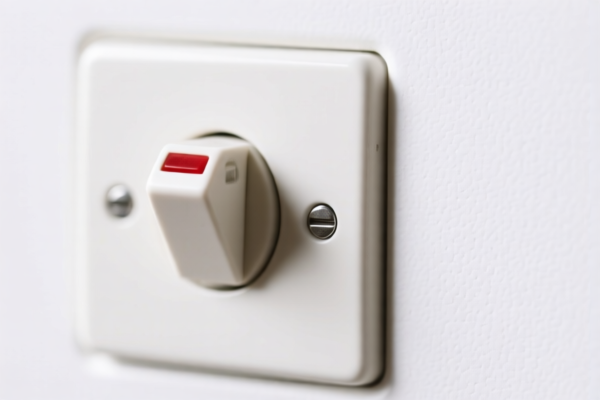
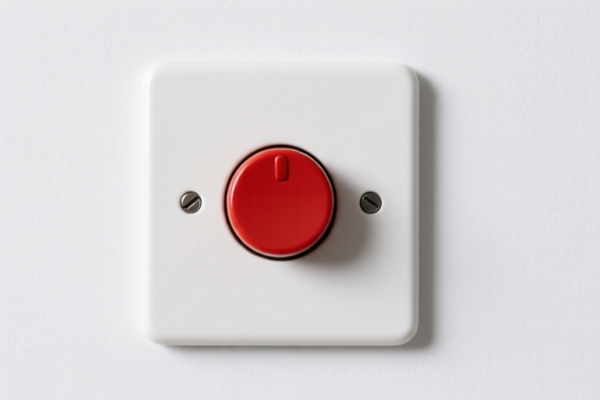
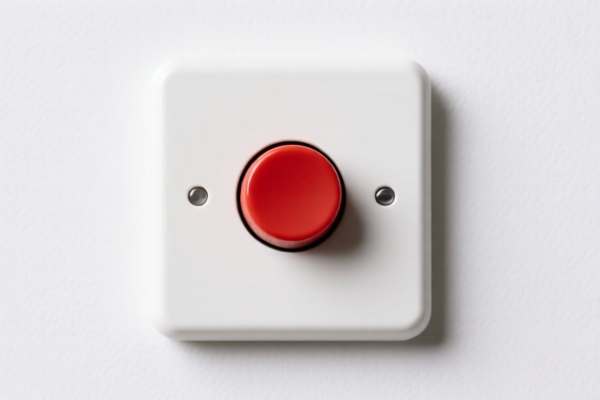
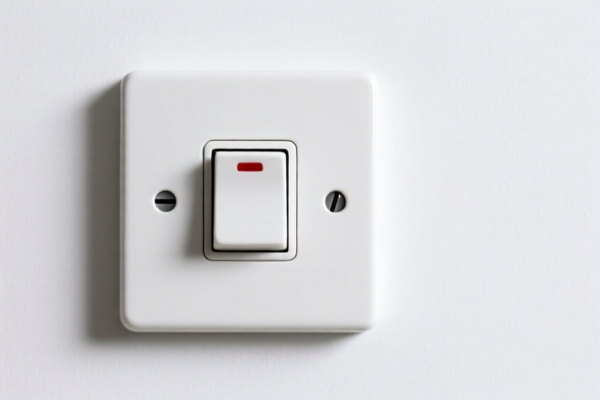
AI Analysis
🎛️ Button Switches (按键开关)
🌐 HS Code Reference & Clearance Guide | 2026 Latest Tariff Analysis | Professional Customs Strategy
📌 I. Product Definition & Classification: Do You Really Understand "Button Switches"?
Button switches are fundamental electronic components used to control electrical circuits. In international trade, they are generally classified based on whether they are treated as independent switches or parts/accessories of electronic machines. The classification determines the tariff rate significantly, especially under current US trade policies.
⚠️ Key Distinction Point:
- If the switch is an independent component (standalone electrical switch) → Classified under Chapter 85 (Electrical Machinery) as "Other Switches" (8536.50).
- If the switch is a part/accessory of a specific electronic machine (like a computer or processing unit) → Classified under Chapter 84 (Nuclear Reactors, Boilers, Machinery) as "Parts and Accessories" (8473.30).
📦 II. HS Code Classification Details (2026 Latest Tariff Authority Match)
Based on the provided data, here are the specific HS Code matches and their rationales:
| HS Code | Classification Logic | Summary Explanation | Total Tax Rate |
|---|---|---|---|
8473.30.91.00 |
Parts of Electronic Machines | Button switches are classified as components of electronic machines, fitting the "Parts and Accessories of Automatic Data Processing Machines" category. | 35.0% |
8536.50.90.33 |
Other Switches (General) | The form matches "button-type" switches, falling under the residual category of "Other Switches." | 35.0% |
8473.30.51.00 |
Parts of Electronic Machines (Metal Penalty) | Similar to .91.00, but subject to additional penalties for steel, aluminum, or copper products. | 85.0% |
8536.50.90.31 |
Parts/Components (Switch Type) | Matches the principle of parts/components for button switches. | 35.0% |
8536.50.90.31 |
Switch Covers/Parts | Specifically for button switch covers, matching the parts/accessories principle. | 35.0% |
🔍 Important Note:
- Most standard plastic/electronic button switches fall under the 35% total tax bracket (8473.30.91.00or8536.50.90.31/33).
- Avoid8473.30.51.00if your product contains significant steel, aluminum, or copper components, as this triggers a penalty rate of 85%.
💰 III. 2026 Latest Tariff Rate Details (Including Add-ons)
✅ Applicable Country: United States (US)
✅ Origin: China (CN)
✅ Effective Date: Current applicable rates based on 301/122 Section tariffs.
🎯 1. Standard Cases: 8473.30.91.00, 8536.50.90.31, 8536.50.90.33
These three codes share the same tax structure in the provided data.
| Item | Content |
|---|---|
| Basic Duty Rate | 0.0% (ad valorem) |
| Section 301 Additional Tariff | +25.0% |
| Section 122 Tariff | +10.0% |
| Total Effective Tax Rate | 35.0% |
| Calculation Method | CIF Value × 35% |
| De Minimis Eligibility | ❌ Not Eligible (Due to high additional tariffs) |
| Legal Basis | Standard Section 301 list + Section 122 add-on |
📌 Explanation:
- The 0% basic duty is offset by substantial punitive tariffs.
- Total 35% applies to most standard electronic button switches and their covers.
- This is a high-cost import, requiring careful margin calculation.
🎯 2. Penalty Case: 8473.30.51.00 (Metal Content Trigger)
| Item | Content |
|---|---|
| Basic Duty Rate | 0.0% |
| Section 301 Additional Tariff | +25.0% |
| Section 122 Tariff | +10.0% |
| Steel/Aluminum/Copper Penalty | +50.0% |
| Total Effective Tax Rate | 85.0% |
| Calculation Method | CIF Value × 85% |
| Risk Level | 🔴 CRITICAL |
📌 Warning:
- If the button switch is made of or contains steel, aluminum, or copper parts, customs may apply the 50% metal penalty.
- This results in a massive 85% total tax rate, which can destroy profit margins.
- Prevention: Ensure product descriptions clearly state material composition (e.g., "Plastic Housing, Electronic Contact") to avoid misclassification into metal-specific sub-headings.
🛠️ IV. Customs Clearance Practical Advice (Real-World Pitfall Avoidance)
✅ 1. Required Documentation Checklist
| Document | Mandatory? | Explanation |
|---|---|---|
| ✅ Product Specification Sheet | Yes | Must include: Material (Plastic/Metal), Electrical Ratings (Voltage/Current), Mounting Type. |
| ✅ Technical Diagram/Schematic | Yes | Proves it is an electrical component/switch, not a general mechanical part. |
| ✅ Product Photos | Yes | Clear images of the button, housing, and mounting mechanism. |
| ✅ Commercial Invoice | Yes | Describe as "Electronic Button Switch, Plastic Housing" or "Switch Part, Cover." Avoid generic terms like "Hardware." |
| ✅ Bill of Lading/Packing List | Yes | Ensure quantity and value match invoice exactly. |
✅ 2. Declaration Tips (Key Mantras)
🔥 "Declare Material Clearly, Avoid Metal Traps, Specify Function!"
| Scenario | Correct Declaration | Incorrect Action |
|---|---|---|
| Standard Plastic Switch | 8473.30.91.00 or 8536.50.90.31Description: "Plastic Electronic Button Switch" |
Declare as "General Hardware" or omit material → Risk of audit. |
| Switch with Metal Base/Contact | 8536.50.90.33 (Preferred) |
Declare as 8473.30.51.00 without justification → 85% Tax! |
| Switch Cover Only | 8536.50.90.31Description: "Replacement Cover for Button Switch" |
Declare as "Plastic Part" → May be misclassified as general plastic goods. |
| Switch Part of a PC | 8473.30.91.00Description: "Part for Automatic Data Processing Machine" |
Declare as standalone switch if intended for PC only → Potential classification dispute. |
✅ 3. Special Case Handling
| Situation | Recommendation |
|---|---|
| OEM Switches for Computers | Use 8473.30.91.00. Provide end-product documentation showing it is used in ADPMs (Automatic Data Processing Machines). |
| Industrial Panel Switches | Use 8536.50.90.33. Emphasize "Electrical Switch" function, not "Part of Machine." |
| Metal-Heavy Switches | CRITICAL: If >50% value is metal, consult a broker. Consider if 8536.50.90.33 is safer than 8473.30.51.00 to avoid the 50% penalty, depending on specific country of origin rules and metal content thresholds. |
| Mixed Packages | Do not split shipments to avoid detection. Declare accurately per item. |
🌍 V. Global Market Clearance Comparison (2026 Outlook)
| Country/Region | Recommended HS Code | Est. Tariff (China Origin) | Certification | Note |
|---|---|---|---|---|
| 🇺🇸 USA | 8473.30.91.00 / 8536.50.90.31 |
35% (Standard) 85% (Metal Penalty) |
None Specific | High tariff barrier due to Section 301 + 122. |
| 🇨🇳 China | 8536.50.90.99 |
0% - 5% | CCC (if applicable) | Low barrier for domestic import. |
| 🇪🇺 EU | 8536.50.90 |
2.7% | CE | No Section 301/122 equivalent. |
| 🇬🇧 UK | 8536.50.90 |
2.7% | UKCA | Post-Brexit independent rates. |
| 🇨🇦 Canada | 8536.50.90.99 |
0% - 6.5% | IC | FTA benefits may apply. |
📌 Conclusion:
- The US market is the most challenging due to the 35%-85% tariff range.
- EU and other regions have minimal barriers, making them more attractive for cost-sensitive products.
- Strategy: For US imports, consider supply chain diversification (e.g., Vietnam, Mexico) to avoid Section 301 tariffs.
📌 VI. Common Errors & Pitfall Guide (Lessons Learned)
❌ Error 1: Declaring a metal-heavy switch under 8473.30.91.00 without disclosing material.
👉 Consequence: Customs audit → Reclassification to 8473.30.51.00 → 85% tax + penalties!
❌ Error 2: Using vague terms like "Button" or "Keycap" in description.
👉 Consequence: Customs may classify as general plastic or hardware → Delay + Potential misclassification.
❌ Error 3: Ignoring the "122 Section" tariff.
👉 Consequence: Underpaying duties by 10% → Back taxes + Interest.
❌ Error 4: Splitting a single shipment into "Switch" and "Cover" to lower value per line.
👉 Consequence: Customs view as "Avoidance" → Seizure or Fine.
✅ Correct Approach:
"Electrical Button Switch, Plastic Housing, 12V DC, for Industrial Control Panel, Model XYZ, Made in China"
🎯 VII. Conclusion: Professional Declaration, Save Costs!
🎯 Remember the Mantra:
🔹 "35% is standard, 85% is metal trap!"
🔹 "Specify 'Plastic' to avoid metal penalties!"
🔹 "Section 301 + 122 = 35% Minimum!"
📌 Pro Tip:
If your button switches are made in Vietnam, Thailand, or Malaysia, you may be eligible for 0% Section 301 tariffs. Consider assembly or sourcing shifts to mitigate the 35% US tariff burden.
📣 Immediate Action:
📞 Contact a Licensed Customs Broker
📄 Provide Detailed Material Breakdown (Plastic vs. Metal %)
🚀 Apply for Advance Ruling if volume is high.
✨ Professional Clearance Starts with Accurate Classification!
💼 Every Percent Counts in Tariff Savings!
Customer Reviews
About HS Code Classification
The Harmonized System (HS) is an internationally standardized nomenclature developed by the World Customs Organization (WCO) to classify traded products. Over 200 countries use the HS system as the basis for customs tariffs, trade statistics, and import/export regulations.
Each HS code follows a hierarchical structure:
- Chapter (2 digits) — Broad category of goods (e.g., Chapter 84: Machinery and Mechanical Appliances)
- Heading (4 digits) — More specific grouping within the chapter
- Subheading (6 digits) — Internationally standardized breakdown, used by all WCO member countries
- National subdivisions (8-10 digits) — Country-specific extensions for further classification, such as US HTSUS 10-digit codes
Correct HS code classification is essential for smooth customs clearance, accurate duty payment, and compliance with trade regulations. Misclassification can lead to customs delays, overpayment of duties, or penalties.
When importing from CN to US, the applicable tariff rates may include:
- Most-Favored-Nation (MFN) rate — The standard duty rate applied to WTO members
- General rate — Applied to countries without trade agreements
- Trade remedy duties — Additional tariffs such as Section 301 (anti-dumping), Section 232 (national security), or countervailing duties
The information provided on this page is for reference purposes only. For official classification, please consult with your local customs authority or a licensed customs broker.