Buttons
CN → US| HS Code | Tariff Rate | Origin | Destination | Doc |
|---|---|---|---|---|
| 9606212000 | 35.0% | CN | US | Official Doc |
| 9606214000 | 0.0% | CN | US | Official Doc |
| 7116205000 | 17.5% | CN | US | Official Doc |
| 7116204000 | 28.0% | CN | US | Official Doc |
| 7117909000 | 28.5% | CN | US | Official Doc |
Product Images
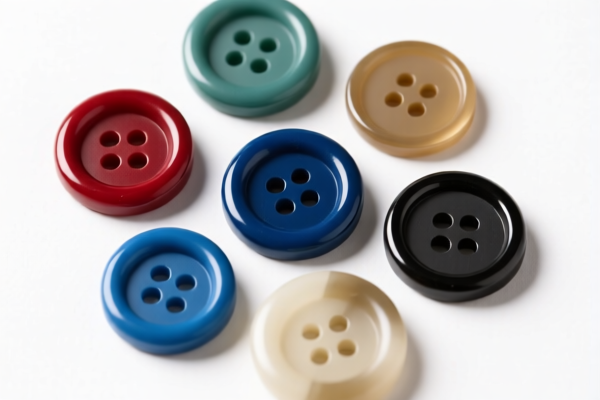
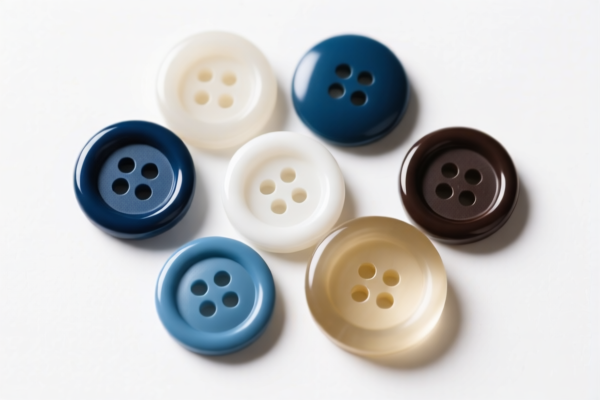
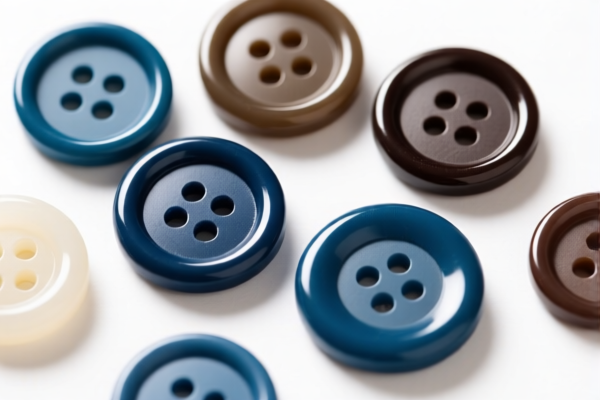
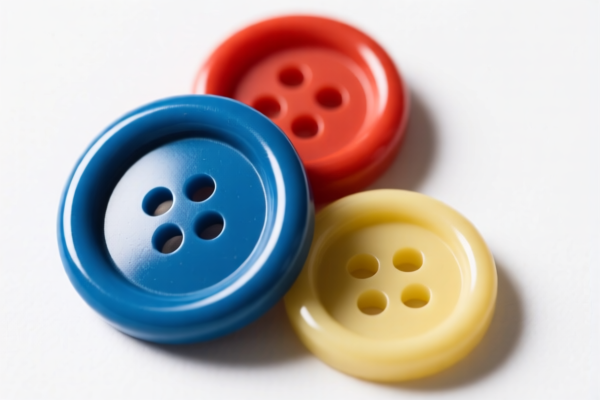
AI Analysis
🧵 Buttons (Fasteners for Garments & Articles)
🌐 HS Code Reference & Customs Clearance Guide | 2026 Latest Tariff Analysis | Professional Clearance Strategy 📌 I. Product Definition & Classification: Do You Really Understand “Buttons”?
Buttons are ubiquitous fastening devices used in clothing, shoes, bags, and other articles. In international trade, their classification heavily depends on material composition and function. Misclassification is common because buttons can be made of precious stones, plastics, metals, or shells, each falling under different tariff regimes.
⚠️ Key Distinction Points: - Precious/Semi-Precious Material: Buttons made from gems or semi-precious stones → Chapter 71 - Non-Precious Materials (Plastic/Metal/Shells): Standard fashion buttons → Chapter 71 or 96 depending on specific sub-headings - Imitation Jewelry: If material is unclear or generic → Chapter 71 (Imitation Jewelry) - Purely Functional Plastic Buttons: Often misclassified as jewelry or generic plastic items → Chapter 96
📦 II. HS Code Classification Details (2026 Latest Tariff Authority Comparison)
| HS Code | Product Description | Applicable Scenario | Material/Feature |
|---|---|---|---|
7116.20.50.00 |
Buttons made of precious or semi-precious stones | Luxury fashion, jewelry-grade buttons | ✅ Gem/Semi-gem |
7116.20.40.00 |
Other buttons (plastic, metal, shells) | Standard commercial buttons | ✅ Plastic/Metal/Shells |
7117.90.90.00 |
Imitation jewelry (catch-all for unclear material) | Generic buttons where material is undefined | ❓ Unclear/Generic |
9606.21.20.00 |
Plastic buttons (general category) | Inferred plastic/similar material buttons | ✅ Plastic |
9606.21.40.00 |
Plastic buttons (catch-all/fallback) | Fallback for plastic buttons without specific detail | ✅ Plastic |
🔍 Key Reminder: - Chapter 71 applies if the button is made of or includes precious/semi-precious stones, or is considered imitation jewelry. - Chapter 96 applies if the button is purely functional and made of base materials like plastic, metal, or wood, without precious elements. - Misclassification Risk: Declaring plastic buttons as "Imitation Jewelry" (7117) or vice versa can lead to significant tariff differences.
💰 III. 2026 Latest Tariff Rate Breakdown (Including Surtaxes & Policy Add-ons)
✅ Applicable Country: United States (US) ✅ Origin: China (CN) ✅ Effective Time: 2025 November 10 onwards (including subsequent imports)
🎯 1. 7116.20.50.00 —— Buttons of Precious/Semi-Precious Stones
| Item | Content |
|---|---|
| Base Tariff | 0% (ad valorem) |
| Section 301 Surtax | +7.5% |
| IEEPA Surtax | +10% (Section 122) |
| Total Tariff | 17.5% |
| Tax Calculation | CIF Value × 17.5% |
| De Minimis Eligibility | ❌ No (High tariff risk) |
| Legal Basis Path | IEEPA:9903.01.24 → USITC:7116.20.50.00 |
📌 Explanation: - Although the base tariff is 0%, the addition of Section 301 (7.5%) and IEEPA Section 122 (10%) results in a 17.5% total duty. - This category is for luxury/high-end buttons. Ensure you have material certification to justify this classification.
🎯 2. 7116.20.40.00 —— Other Buttons (Plastic, Metal, Shells)
| Item | Content |
|---|---|
| Base Tariff | 10.5% |
| Section 301 Surtax | +7.5% |
| IEEPA Surtax | +10% (Section 122) |
| Total Tariff | 28.0% |
| Tax Calculation | CIF Value × 28.0% |
| De Minimis Eligibility | ❌ No |
| Legal Basis Path | IEEPA:9903.01.24 → USITC:7116.20.40.00 |
📌 Note: - This is the standard classification for non-precious buttons that fall under Chapter 71 due to their form or composition. - Higher base tariff makes this category more expensive than the gemstone category!
🎯 3. 7117.90.90.00 —— Imitation Jewelry (Fallback Category)
| Item | Content |
|---|---|
| Base Tariff | 11.0% |
| Section 301 Surtax | +7.5% |
| IEEPA Surtax | +10% (Section 122) |
| Total Tariff | 28.5% |
| Tax Calculation | CIF Value × 28.5% |
| De Minimis Eligibility | ❌ No |
| Legal Basis Path | IEEPA:9903.01.24 → USITC:7117.90.90.00 |
📌 Warning: - This is a catch-all for imitation jewelry. If your button's material is ambiguous, customs may assign this code. - It is the most expensive chapter-based option. Avoid this by providing clear material declarations.
🎯 4. 9606.21.20.00 —— Plastic Buttons (General)
| Item | Content |
|---|---|
| Base Tariff | 0% |
| Section 301 Surtax | +25.0% |
| IEEPA Surtax | +10% (Section 122) |
| Total Tariff | 35.0% |
| Tax Calculation | CIF Value × 35.0% |
| De Minimis Eligibility | ❌ No |
| Legal Basis Path | IEEPA:9903.01.24 → USITC:9606.21.20.00 |
📌 Analysis: - Despite a 0% base tariff, the 25% Section 301 surtax pushes the total to 35%. - This applies to standard plastic buttons. Ensure the description clearly states "Plastic."
🎯 5. 9606.21.40.00 —— Plastic Buttons (Fallback/Catch-all)
| Item | Content |
|---|---|
| Base Tariff | $0.3¢/line/gross + 4.6% |
| Section 301 Surtax | +25.0% |
| IEEPA Surtax | +10% (Section 122) |
| Total Tariff | Complex Mix: $0.3¢/line/gross + 4.6% + 25% + 10% |
| Tax Calculation | Specific Duty + Ad Valorem Rates |
| De Minimis Eligibility | ❌ No |
| Legal Basis Path | IEEPA:9903.01.24 → USITC:9606.21.40.00 |
📌 Note: - This is the fallback for plastic buttons. - The tariff structure is complex: It includes a specific duty ($0.3¢ per line/gross) plus ad valorem rates. - Total effective rate is approximately 39.6% (4.6% base + 25% + 10%) plus the per-unit fee.
🛠️ IV. Customs Clearance Practical Advice (Battle-Tested Pitfall Avoidance)
✅ 1. Preparation Checklist (Non-Negotiable)
| Document | Must Provide | Explanation |
|---|---|---|
| ✅ Material Declaration | ✔️ | Explicitly state material (e.g., "Polyester," "Zinc Alloy," "Acrylic"). |
| ✅ Product Photos | ✔️ | Clear images showing buttons, packaging, and any branding. |
| ✅ Commercial Invoice | ✔️ | Describe as "Plastic Buttons for Garments" or "Stone Buttons," not just "Buttons." |
| ✅ HS Code Justification | ✔️ | Provide reasoning for HS Code selection (e.g., Material Safety Data Sheet). |
| ✅ Packing List | ✔️ | Ensure quantity matches invoice. |
✅ 2. Declaration Tips (Key Mnemonic)
🔥 “Material First, Code Second, Don’t Guess, Pay Later!”
| Scenario | Correct Declaration | Wrong Action |
|---|---|---|
| Plastic Buttons | 9606.21.20.00 |
Declaring as "Imitation Jewelry" → 28.5% |
| Gemstone Buttons | 7116.20.50.00 |
Declaring as "Plastic" → 35% (if caught) |
| Unclear Material | 7117.90.90.00 |
Guessing → 28.5% |
| Mixed Materials | Analyze main component | Mixing codes randomly → Audit Risk |
✅ 3. Special Case Handling
| Situation | Handling Advice |
|---|---|
| OEM Custom Buttons | Provide design specs to prove material composition. |
| Buttons with Embellishments | If gems are dominant, use Chapter 71. If plastic base, use Chapter 96. |
| Bulk vs. Retail | Ensure description matches end-use (garment fasteners). |
| High-Value Luxury Buttons | Consider if the duty difference (17.5% vs 28%) justifies precise classification. |
🌍 V. Global Market Comparison (2026 Latest)
| Country/Region | Recommended HS Code | Tariff | Certification | Notes |
|---|---|---|---|---|
| 🇺🇸 USA | 9606.21.20.00 |
35% (Plastic) | FCC (if electronic) | High surtaxes apply. |
| 🇨🇳 China | 9606.21.00.00 |
9% | None | Lower base tariff. |
| 🇪🇺 EU | 9606.21.00.00 |
6% | CE (if applicable) | No Section 301 equivalent. |
| 🇬🇧 UK | 9606.21.00.00 |
6% | UKCA | Post-Brexit rules apply. |
| 🇯🇵 Japan | 9606.21.00.00 |
6% | PSE (if electronic) | Stable tariff. |
📌 Conclusion: - USA is the most expensive market due to Section 301 and IEEPA surtaxes. - Plastic buttons face 35% total duty, while Gemstone buttons face 17.5%. - Imitation Jewelry classification (28.5%) is a middle ground but risky.
📌 VI. Common Errors & Pitfalls (Lessons Learned)
❌ Error 1: Declaring plastic buttons as "Imitation Jewelry" (7117.90.90.00)
👉 Consequence: You pay 28.5% instead of potentially lower rates if correctly classified, or risk audit for misdeclaration.
❌ Error 2: Declaring gemstone buttons as "Plastic" (9606.21.20.00)
👉 Consequence: Customs may reject the low value, reassess at 35% or higher, and impose fines for undervaluation/misclassification.
❌ Error 3: Vague description "Buttons"
👉 Consequence: Customs assigns the highest possible duty (often the fallback code 9606.21.40.00 or 7117.90.90.00).
✅ Correct Practice:
“Plastic Buttons, Polyester, 12mm, Black, Model XYZ, for Garments” OR “Semi-Precious Stone Buttons, Agate, 10mm, Brown, Model ABC, Luxury Accessory”
🎯 VII. Conclusion: Precise Classification Saves Money!
🎯 Remember Mnemonic:
🔹 “Plastic 35, Gem 17.5, Jewelry 28.5, Guessing Costs You Plenty!” 🔹 “HS Code is King, Tariff is Queen, Declaration is the Sword, Clear Materials are the Shield!”
📌 Pro Tip: If your buttons are originated from Vietnam, Mexico, or Thailand, you may qualify for IEEPA Exemptions or lower Section 301 rates. Apply for Advance Ruling before shipping to avoid clearance delays and unexpected costs.
📣 Immediate Action:
📞 Contact a Professional Customs Broker + Provide Product Photos + Request HS Code Advance Ruling 🚀 Let your buttons Clear Smoothly, Export Efficiently, and Maximize Profits!
✨ Professional Clearance Starts with Accurate Classification! 💼 Every Cent of Cost Deserves Precision Calculation!
Customer Reviews
About HS Code Classification
The Harmonized System (HS) is an internationally standardized nomenclature developed by the World Customs Organization (WCO) to classify traded products. Over 200 countries use the HS system as the basis for customs tariffs, trade statistics, and import/export regulations.
Each HS code follows a hierarchical structure:
- Chapter (2 digits) — Broad category of goods (e.g., Chapter 84: Machinery and Mechanical Appliances)
- Heading (4 digits) — More specific grouping within the chapter
- Subheading (6 digits) — Internationally standardized breakdown, used by all WCO member countries
- National subdivisions (8-10 digits) — Country-specific extensions for further classification, such as US HTSUS 10-digit codes
Correct HS code classification is essential for smooth customs clearance, accurate duty payment, and compliance with trade regulations. Misclassification can lead to customs delays, overpayment of duties, or penalties.
When importing from CN to US, the applicable tariff rates may include:
- Most-Favored-Nation (MFN) rate — The standard duty rate applied to WTO members
- General rate — Applied to countries without trade agreements
- Trade remedy duties — Additional tariffs such as Section 301 (anti-dumping), Section 232 (national security), or countervailing duties
The information provided on this page is for reference purposes only. For official classification, please consult with your local customs authority or a licensed customs broker.