Butyl rubber inner tubes
CN → US| HS Code | Tariff Rate | Origin | Destination | Doc |
|---|---|---|---|---|
| 4013905010 | 38.7% | CN | US | Official Doc |
| 4002390000 | 35.0% | CN | US | Official Doc |
| 4013905050 | 38.7% | CN | US | Official Doc |
| 8714100050 | 17.5% | CN | US | Official Doc |
| 8714998000 | 27.5% | CN | US | Official Doc |
Product Images
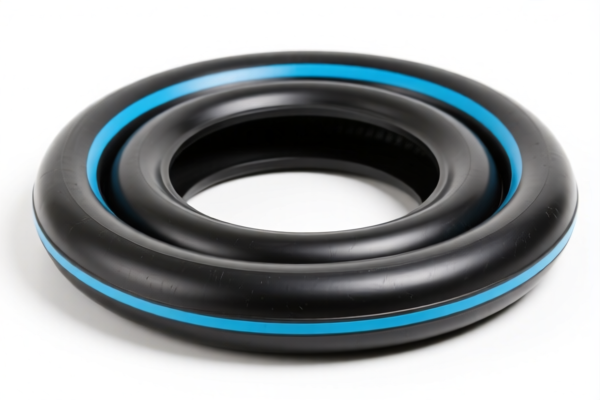
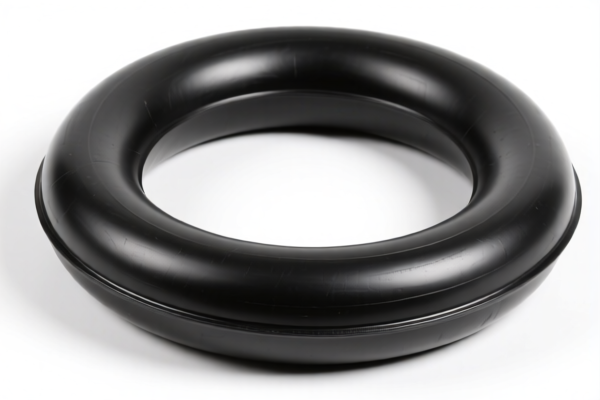
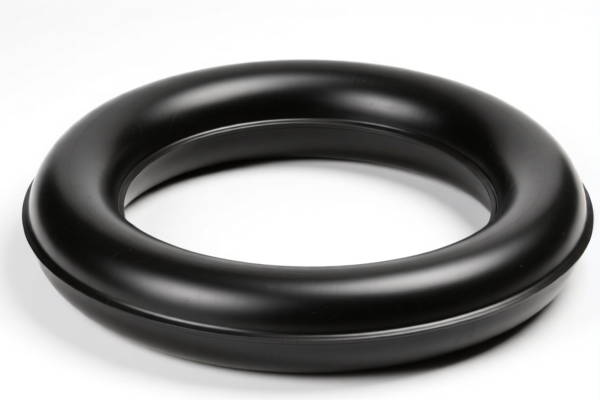
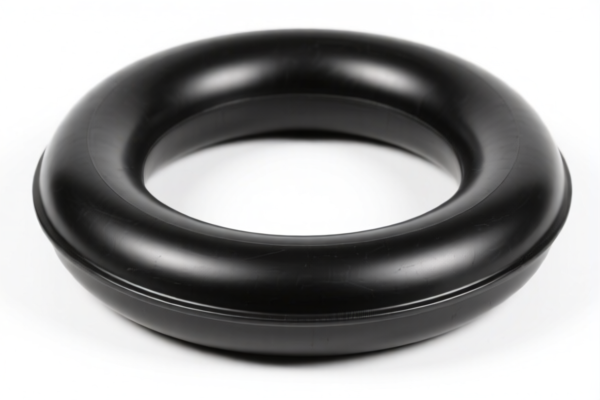
AI Analysis
🛞 Inner Tubes (Butyl Rubber)
🌐 HS Code Reference & Customs Clearance Guide | 2026 Latest Tariff Analysis | Professional Strategy
📌 I. Product Definition & Classification: Understanding "Butyl Rubber Inner Tubes"
Butyl rubber inner tubes are critical components for pneumatic tires, widely used in motorcycles, bicycles, and automobiles. Their classification depends heavily on their specific form and intended application (e.g., general rubber goods vs. specific vehicle parts). In international trade, they are primarily split into two categories:
- General Rubber Articles (Ch. 40): Classified as standalone rubber products, typically for motorcycles or general use.
- Vehicle Parts (Ch. 87): Classified strictly as spare parts/accessories for specific vehicles (e.g., motorcycles or general vehicles).
⚠️ Key Distinction Point:
- If declared as a general rubber good or specifically for motorcycles under Chapter 40/87 distinctions, different tax rates apply.
- Misclassification Risk: Declaring a motorcycle part under general vehicle parts (Ch. 87) when it should be Ch. 40 can lead to significant tariff discrepancies.
📦 II. HS Code Classification Matrix (Data Extract)
Based on the provided dataset, here are the 5 possible classifications with their corresponding tax details.
| HS Code | Product Description | Tax Rate (Total) | Tax Breakdown Details |
|---|---|---|---|
| 4013.90.50.10 | Butyl rubber inner tube, classified as a rubber article. Matches the definition of rubber-made inner tubes. | 38.7% | Base: 3.7% Additional (Section 301): 25.0% IEEPA (Section 122): 10.0% |
| 4002.39.00.00 | Butyl rubber inner tube, classified under "Other" materials/forms. Belongs to the general category for this material. | 35.0% | Base: 0.0% Additional (Section 301): 25.0% IEEPA (Section 122): 10.0% |
| 4013.90.50.50 | Butyl rubber inner tube, classified as a rubber article. Fits the definition of rubber inner tubes. | 38.7% | Base: 3.7% Additional (Section 301): 25.0% IEEPA (Section 122): 10.0% |
| 8714.10.00.50 | Butyl rubber inner tube, declared as a motorcycle part. Classified under "Other parts and accessories". | 17.5% | Base: 0.0% Additional (Section 301): 7.5% IEEPA (Section 122): 10.0% |
| 8714.99.80.00 | Butyl rubber inner tube, declared as a vehicle part. Classified under "Other vehicle accessories". | 27.5% | Base: 10.0% Additional (Section 301): 7.5% IEEPA (Section 122): 10.0% |
🔍 Critical Observation:
- Cheapest Option:8714.10.00.50(17.5%) if the product is specifically a motorcycle part.
- Most Expensive Options:4013.90.50.10and4013.90.50.50(38.7%) due to the higher base duty (3.7%).
- Risk Area:4002.39.00.00(35.0%) has 0% base duty but is often considered a "catch-all" that may trigger scrutiny if not properly justified as "other materials."
💰 III. 2026 Tariff Rate Breakdown & Legal Basis
✅ Applicable Market: United States (US)
✅ Origin: China (CN) (Inferred from "Section 122" and high total tax rates typical of US-China trade)
✅ Effective Date: Current (Post-2025 updates)
🎯 1. The "Motorcycle Part" Strategy (Best for Cost)
HS Code: 8714.10.00.50
Total Tax: 17.5%
| Component | Rate | Legal Basis / Note |
|---|---|---|
| Base Duty | 0.0% | Free trade rate for certain motorcycle parts |
| Section 301 Add-on | 7.5% | Standard retaliatory tariff for vehicle accessories |
| IEEPA (Sec 122) | 10.0% | Additional tax on Chinese goods |
| Total | 17.5% | Lowest available rate in dataset |
📌 Why this works:
- By declaring the item specifically as a Motorcycle Part (not just a general "inner tube"), you benefit from the lower base duty (0%) and lower Section 301 rate (7.5%).
- Requirement: Must be compatible exclusively or primarily with motorcycles.
🎯 2. The "General Vehicle Part" Option
HS Code: 8714.99.80.00
Total Tax: 27.5%
| Component | Rate | Legal Basis / Note |
|---|---|---|
| Base Duty | 10.0% | Standard duty for "Other" vehicle parts |
| Section 301 Add-on | 7.5% | Standard retaliatory tariff |
| IEEPA (Sec 122) | 10.0% | Additional tax on Chinese goods |
| Total | 27.5% | Moderate cost |
📌 Note:
- This is used if the inner tube is for cars, trucks, or general vehicles not covered under motorcycle-specific codes.
- Higher base duty (10%) makes it more expensive than the motorcycle classification.
🎯 3. The "Rubber Article" Options (Highest Cost)
HS Codes: 4013.90.50.10 / 4013.90.50.50
Total Tax: 38.7%
| Component | Rate | Legal Basis / Note |
|---|---|---|
| Base Duty | 3.7% | Duty for "Other rubber articles" |
| Section 301 Add-on | 25.0% | High retaliatory tariff for rubber goods |
| IEEPA (Sec 122) | 10.0% | Additional tax on Chinese goods |
| Total | 38.7% | Highest cost option |
📌 Why avoid?
- Chapter 40 classifications attract a 25% Section 301 tariff, which is significantly higher than the 7.5% for vehicle parts.
- Only use this if the item is not considered a vehicle part (e.g., loose stock for retail packaging without vehicle branding).
🎯 4. The "Material Only" Option
HS Code: 4002.39.00.00
Total Tax: 35.0%
| Component | Rate | Legal Basis / Note |
|---|---|---|
| Base Duty | 0.0% | Free for certain synthetic rubber articles |
| Section 301 Add-on | 25.0% | High retaliatory tariff |
| IEEPA (Sec 122) | 10.0% | Additional tax on Chinese goods |
| Total | 35.0% | High due to Section 301 |
📌 Note:
- Despite 0% base duty, the 25% Section 301 rate makes this more expensive than the motorcycle part option.
🛠️ IV. Customs Clearance Best Practices
✅ 1. Documentation Checklist
| Document | Requirement | Description |
|---|---|---|
| Commercial Invoice | ✔️ Must Specify | Must clearly state "Inner Tube for Motorcycle" or "Inner Tube for Automobile" to justify Chapter 87. |
| Product Specification | ✔️ Mandatory | Include material (Butyl Rubber), size, valve type, and intended vehicle type. |
| Material Safety Data Sheet (MSDS) | ✔️ Recommended | Proves Butyl Rubber composition. |
| Packing List | ✔️ Mandatory | Detail net/gross weight, quantity, and packaging type. |
| Certificate of Origin | ✔️ If Claiming Preferences | Not applicable for US-China (no FTA), but required for proof of origin. |
✅ 2. Declaration Strategy (The "Golden Rule")
🔥 "Specify the Vehicle, Save the Tax!"
| Scenario | Recommended HS Code | Tax Rate | Action |
|---|---|---|---|
| Selling to Motorcycle Brands/Retailers | 8714.10.00.50 |
17.5% | BEST OPTION. Explicitly declare as "Motorcycle Inner Tube." |
| Selling to Car Repair Shops | 8714.99.80.00 |
27.5% | Declare as "Automotive Inner Tube." |
| Selling Generic/Unbranded Bulk | 4013.90.50.10 |
38.7% | High risk. Avoid unless necessary. |
| Misclassification (Risk) | 4002.39.00.00 |
35.0% | Avoid. Customs may argue it's a vehicle part, leading to penalties. |
✅ 3. Common Pitfalls & How to Avoid Them
❌ Pitfall 1: Vague Description
Error: "Rubber Tube" or "Inner Tube" without specifying the vehicle type.
Consequence: Customs may default to the highest tax rate or the most generic Chapter 40 code (38.7%).
Fix:* Always include "For Motorcycle" or "For Car" in the description.
❌ Pitfall 2: Confusing "Part" vs. "Article"
Error: Declaring a vehicle part under Chapter 40 (Rubber Articles).
Consequence: You pay 25% Section 301 instead of 7.5%.
Fix:* Use Chapter 87 (Vehicle Parts) whenever possible for functional components.
❌ Pitfall 3: Ignoring Section 122 (IEEPA)
Error: Assuming "Base Duty" is the only cost.
Consequence: Unexpected 10% IEEPA tax on all Chinese-origin goods.
Fix: Factor in Base + 301 + IEEPA* for all cost calculations.
🌍 V. Global Comparison (Quick Reference)
| Market | Recommended HS Code | Est. Total Duty | Notes |
|---|---|---|---|
| 🇺🇸 USA | 8714.10.00.50 |
17.5% | Best rate for motorcycle parts. |
| 🇺🇸 USA | 8714.99.80.00 |
27.5% | For car/truck parts. |
| 🇨🇳 China | See Local Tariff | Varies | China imports often have different base rates (usually lower). |
| 🇪🇺 EU | See Harmonized Code | ~4-6% | EU does not typically apply Section 301-style tariffs. |
📌 Conclusion for US Importers:
- Optimize for8714.10.00.50(17.5%) by clearly declaring the product as a Motorcycle Part.
- Avoid Chapter 40 codes (4013...,4002...) unless you have a specific reason, as the 25% Section 301 tariff is prohibitive.
📌 VI. Final Clearance Advice
- Pre-shipment Consultation: If you are unsure whether your inner tube is considered a "Motorcycle Part" or "General Rubber Article," request a Binding Ruling from US Customs and Border Protection (CBP).
- Labeling: Ensure the product label or packaging states the intended vehicle type (e.g., "For Motorcycle Tires Only") to support the Chapter 87 classification.
- Valuation: Ensure the declared value includes all costs (CIF) to avoid under-valuation flags, which can trigger additional audits.
🎯 Pro Tip:
"Don't just ship a 'Tube'. Ship a 'Motorcycle Part'. The difference is 21.2% in tax savings!"
From 38.7% → 17.5%
✨ Professional Customs Clearance Starts with Precise Classification!
💼 Save Costs, Speed Up Clearance, Stay Compliant!
Customer Reviews
About HS Code Classification
The Harmonized System (HS) is an internationally standardized nomenclature developed by the World Customs Organization (WCO) to classify traded products. Over 200 countries use the HS system as the basis for customs tariffs, trade statistics, and import/export regulations.
Each HS code follows a hierarchical structure:
- Chapter (2 digits) — Broad category of goods (e.g., Chapter 84: Machinery and Mechanical Appliances)
- Heading (4 digits) — More specific grouping within the chapter
- Subheading (6 digits) — Internationally standardized breakdown, used by all WCO member countries
- National subdivisions (8-10 digits) — Country-specific extensions for further classification, such as US HTSUS 10-digit codes
Correct HS code classification is essential for smooth customs clearance, accurate duty payment, and compliance with trade regulations. Misclassification can lead to customs delays, overpayment of duties, or penalties.
When importing from CN to US, the applicable tariff rates may include:
- Most-Favored-Nation (MFN) rate — The standard duty rate applied to WTO members
- General rate — Applied to countries without trade agreements
- Trade remedy duties — Additional tariffs such as Section 301 (anti-dumping), Section 232 (national security), or countervailing duties
The information provided on this page is for reference purposes only. For official classification, please consult with your local customs authority or a licensed customs broker.