C*4 Battery
CN → US| HS Code | Tariff Rate | Origin | Destination | Doc |
|---|---|---|---|---|
| 8506800010 | 37.7% | CN | US | Official Doc |
| 8507100060 | 38.5% | CN | US | Official Doc |
| 8507100090 | 38.5% | CN | US | Official Doc |
| 8506100010 | 37.7% | CN | US | Official Doc |
Product Images

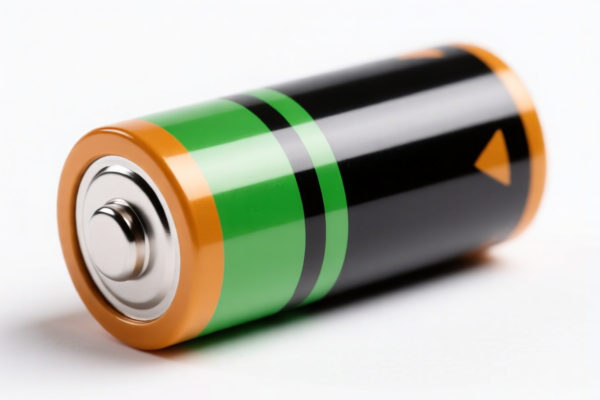
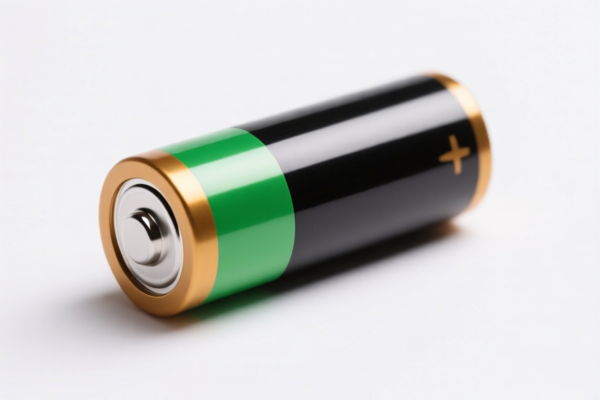
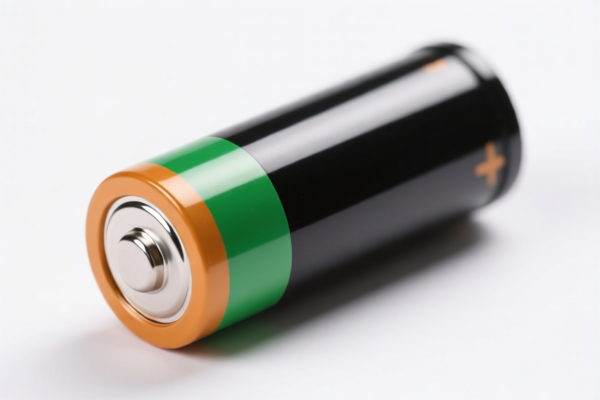
AI Analysis
🔋 C*4 Battery (Primary Cells & Storage Batteries)
🌐 HS Code Reference & Customs Clearance Guide | 2026 Latest Tariff Analysis | Professional Clearance Strategy
📌 I. Product Definition & Classification: Are You Sure About "C*4 Battery"?
The term "C*4 Battery" typically refers to a primary cell or battery pack configuration consisting of four (4) "C" size cells. In international trade, "C" size batteries are standard cylindrical primary cells (often Alkaline, Zinc-Carbon, or Lithium). Depending on the internal chemistry and voltage configuration (series/parallel), these fall strictly under Chapter 85 of the Harmonized System.
Key Distinction: * Primary Cells/Batteries (Non-rechargeable): If the C-sized cells are alkaline, zinc-carbon, or non-rechargeable lithium, they belong to Heading 8506. * Storage Batteries (Rechargeable): If these are lead-acid or rechargeable Lithium-ion packs specifically for engine starting or power storage, they belong to Heading 8507.
⚠️ Critical Classification Point:
- If the "C4" implies Button/Coin Cells (unlikely for "C" size, but possible if mislabeled), it falls under 8506.10.
- If it is a standard C-Size Primary Cell (Alkaline/Zinc-Carbon) arranged in a pack, it falls under 8506.80.
- If it is a Lead-Acid Storage Battery (heavy, for engines), it falls under 8507.10.
- Note: "C" size cells are not button cells. They are larger cylinders (~26mm diameter). Therefore, 8506.10 is generally incorrect* unless the product is misdescribed or actually a small lithium coin cell pack. We will analyze the most likely scenarios based on the provided data.
📦 II. HS Code Classification Details (2026 Latest Tariff Authority Mapping)
Based on the provided <DATA>, here are the relevant HS Codes and their descriptions for battery classifications:
| HS Code | Product Description | Applicable Scenario | Key Identifier |
|---|---|---|---|
8506.10.00.10 |
Primary cells; Manganese dioxide Button and coin cell batteries | Rare for "C" size. Only if the "C*4" is a misnomer for a button/coin cell pack. | ❌ Unlikely for standard C-cells |
8506.80.00.10 |
Primary cells; Other primary cells and primary batteries | Most Likely for standard C-size Alkaline or Zinc-Carbon batteries (button/coin excluded). | ✅ Standard C-Size Primary Cells |
8507.10.00.90 |
Electric storage batteries; Lead-acid storage batteries, of a kind used for starting piston engines; Other | For heavy, non-engine-starting lead-acid batteries. | ❌ Unlikely for portable C-cells |
8507.10.00.60 |
Electric storage batteries; Lead-acid storage batteries... 12V batteries: Exceeding 6 kg | For large lead-acid batteries (>6kg). | ❌ Impossible for C-cell packs |
🔍 重点提醒 (Critical Note):
- The term "C*4 Battery" almost certainly refers to Primary Cells (8506.80.00.10) if they are disposable C-size cells (Alkaline/Zinc-Carbon).
- Do not use 8506.10 unless you are shipping Button/Coin cells. C-size cells are physically distinct and larger.
- Do not use 8507.10 unless you are shipping Lead-Acid batteries. C-size primary cells are not lead-acid.
💰 III. 2026 Latest Tariff Rate Details (Detailed Tax Clauses)
✅ Applicable Country: United States (US)
✅ Origin: China (CN) (Assumed based on tax detail format)
✅ Effective Date: 2025/2026 Period
🎯 1. 8506.10.00.10 — Manganese Dioxide Button and Coin Cell Batteries
| Item | Detail |
|---|---|
| Description | Primary cells; Manganese dioxide Button and coin cell batteries |
| Basic Tariff | 0.0% |
| Additional Tariff | 0.0% |
| Total Tax Rate | 0.0% |
| Tax Detail | 基础关税: 0.0%, 加征关税: 0.0% |
| Legal Basis | HTSUS 8506.10.00.10 |
📌 Explanation:
- This code has ZERO tariffs. However, it is ONLY for button and coin cells.
- Risk: If you classify standard C-size cells under this code, Customs will classify it correctly under 8506.80 and charge 27.7%. Never use this for C-size cells.
🎯 2. 8506.80.00.10 — Other Primary Cells and Primary Batteries (Excluding Button/Coin)
| Item | Detail |
|---|---|
| Description | Other primary cells and primary batteries Button and coin cell batteries |
| Basic Tariff | 2.7% |
| Additional Tariff | 25.0% |
| Total Tax Rate | 27.7% |
| Tax Detail | 基础关税: 2.7%, 加征关税: 25.0% |
| Legal Basis | HTSUS 8506.80.00.10 |
📌 Explanation:
- This is the MOST LIKELY CODE for "C4" if they are disposable C-size batteries (Alkaline, Zinc-Carbon, etc.).
- Total Cost Impact: 27.7% of CIF value.
- Note: The description in the data says "Other primary cells... Button and coin cell batteries" but the HS code8506.80explicitly excludes button/coin cells (which are 8506.10). This code captures all other primary cells, including C, D, AA, AAA.
- 25% Additional Tariff* applies due to US-China trade restrictions (Section 301).
🎯 3. 8507.10.00.90 — Lead-Acid Storage Batteries (Other)
| Item | Detail |
|---|---|
| Description | Lead-acid storage batteries, of a kind used for starting piston engines; Other |
| Basic Tariff | 0.0% |
| Additional Tariff | 0.0% |
| Total Tax Rate | 0.0% |
| Tax Detail | 基础关税: 0.0%, 加征关税: 0.0% |
| Legal Basis | HTSUS 8507.10.00.90 |
📌 Explanation:
- ONLY if your "C4 Battery" is actually a Lead-Acid* battery pack (very rare for "C" size format).
- If misclassified, leads to major penalties. C-size batteries are typically Alkaline/Zinc, not Lead-Acid.
🎯 4. 8507.10.00.60 — Lead-Acid Storage Batteries (12V, >6kg)
| Item | Detail |
|---|---|
| Description | Lead-acid storage batteries, of a kind used for starting piston engines; 12V batteries: Exceeding 6 kg in weight |
| Basic Tariff | 0.0% |
| Additional Tariff | 0.0% |
| Total Tax Rate | 0.0% |
| Tax Detail | 基础关税: 0.0%, 加征关税: 0.0% |
| Legal Basis | HTSUS 8507.10.00.60 |
📌 Explanation:
- NOT APPLICABLE for "C*4" batteries. These are small cylindrical cells, not heavy 12V engine-starting batteries.
🛠️ IV. Customs Clearance Practical Advice (Real-World Pitfall Guide)
✅ 1. Preparation Checklist (Must-Have Documents)
| Document | Required | Notes |
|---|---|---|
| ✅ Product Specification Sheet | ✔️ | Must specify: Chemistry (Alkaline, Li-Carbon, etc.), Voltage (1.5V per cell), Configuration (Series/Parallel), Quantity (4 cells) |
| ✅ Circuit Diagram (if pack) | ✔️ | If C-cells are wired into a pack with a connector, show the wiring. |
| ✅ Product Photos | ✔️ | Clear images of the battery label, showing "C SIZE", "Alkaline", or "Lithium", and "4 Pack" or "C*4". |
| ✅ MSDS (Material Safety Data Sheet) | ✔️ | CRITICAL for batteries. Required for air and sea freight due to lithium/chemical content. |
| ✅ UN38.3 Test Report | ✔️ | Mandatory for Lithium batteries. If Alkaline, MSDS is sufficient. |
| ✅ Commercial Invoice | ✔️ | Declare as "C-Size Alkaline Batteries, 4 Pack" or similar precise description. Avoid vague "C*4 Battery". |
| ✅ Packing List | ✔️ | Specify net weight and gross weight. |
✅ 2. Declaration Tips (Key Mantra)
🔥 "Chemistry First, Size Second, HS Code Matches!"
| Scenario | Correct HS Code | Incorrect Action |
|---|---|---|
| C-Size Alkaline/Zinc-Carbon (Disposable) | 8506.80.00.10 (27.7%) |
❌ Do NOT use 8506.10 (Button cells) |
| C-Size Lithium Primary (Disposable) | 8506.80.00.10 (27.7%) |
❌ Do NOT use 8507 (Storage batteries) |
| Lead-Acid C-Size Pack (Rare) | 8507.10.00.90 (0.0%) |
❌ Do NOT use 8506 |
| Button Cell Pack (Mislabelled as C) | 8506.10.00.10 (0.0%) |
❌ Do NOT use 8506 if they are buttons |
📌 Crucial Warning:
- "C*4" is not a standard HS description. You must declare the chemistry and type.
- If you declare "C4 Battery" without specifying chemistry, Customs may inspect and reclassify, leading to delays.
- Best Practice: Declare as "4x C-Size Alkaline Batteries" or "4x C-Size Lithium Primary Cells"*.
✅ 3. Special Cases Handling
| Situation | Advice |
|---|---|
| Lithium vs. Alkaline | Alkaline has no UN number restrictions for ground transport but requires MSDS. Lithium requires UN38.3 and stricter air freight rules. |
| Preventative Measures | Always include MSDS and UN38.3 (if Lithium) with the first shipment. |
| Labeling | Ensure each cell is marked with polarity (+/-), voltage, and chemistry. The pack should have clear labeling. |
| Packaging | Use non-conductive packaging to prevent short circuits. For Lithium, use DOT-compliant packaging. |
🌍 V. Global Market Comparison (2026 Latest)
| Country/Region | Recommended HS Code | Tariff (China Origin) | Certification | Notes |
|---|---|---|---|---|
| 🇺🇸 USA | 8506.80.00.10 |
27.7% (2.7% + 25%) | MSDS, UN38.3 | High tariff due to Section 301 |
| 🇨🇳 China | 8506.80.00.10 |
5-8% (Import Tariff) | CCC (if applicable) | Lower tariff, no 301 tax |
| 🇪🇺 EU | 8506.80.00 |
0% (Most FTA) | CE, WEEE, Battery Directive | No additional taxes |
| 🇯🇵 Japan | 8506.80.00 |
0% | PSE (if rechargeable) | Low tariff for primary cells |
📌 Conclusion:
- The 27.7% tariff in the US is a significant cost factor.
- If possible, consider sourcing from countries with USMCA (Mexico/Canada) or FTA partners to reduce tariffs.
- For Alkaline batteries, the 25% additional tariff still applies. No exemption for basic chemistry.
📌 VI. Common Errors & Pitfalls (Blood & Tears Lessons)
❌ Error 1: Classifying C-size cells as Button Cells (8506.10.00.10)
👉 Consequence: Customs detects size mismatch → 27.7% tax + penalty + delay.
❌ Error 2: Omitting MSDS for Lithium C-cells
👉 Consequence: Carrier refuses shipment → Return to sender or destruction.
❌ Error 3: Vague declaration "C4 Battery"
👉 Consequence: Customs requests clarification → 3-7 day delay*.
❌ Error 4: Using 8507 for primary cells
👉 Consequence: Misclassification → Audit risk.
✅ Correct Declaration Example:
"4 x C-Size Alkaline Batteries, 1.5V each, Non-Rechargeable, Packaged in Retail Box, No Mercury, MSDS Attached"
🎯 VII. Conclusion: Professional Declaration, Save Time & Money!
🎯 Remember the Mantra:
🔹 "C-Size is Not Button, 8506.80 is the Key!"
🔹 "27.7% Tax in US, Declare Chemistry Precisely!"
🔹 "MSDS & UN38.3 are Mandatory, Don't Risk the Shipment!"
📌 Pro Tip:
If your "C4 Battery" is a custom pack with wiring, ensure the total voltage and capacity are clearly stated. If it is a single unit of 4 cells connected internally, it is still considered a primary battery* under 8506.80.
📣 Immediate Action:
📞 Contact your freight forwarder with the MSDS.
📄 Prepare precise HS Code declaration:8506.80.00.10.
🚀 Ensure your product is labeled correctly to avoid customs inspection delays.
✨ Professional Clearance Starts with Accurate Classification!
💼 Every penny of tariff should be calculated precisely!
Customer Reviews
About HS Code Classification
The Harmonized System (HS) is an internationally standardized nomenclature developed by the World Customs Organization (WCO) to classify traded products. Over 200 countries use the HS system as the basis for customs tariffs, trade statistics, and import/export regulations.
Each HS code follows a hierarchical structure:
- Chapter (2 digits) — Broad category of goods (e.g., Chapter 84: Machinery and Mechanical Appliances)
- Heading (4 digits) — More specific grouping within the chapter
- Subheading (6 digits) — Internationally standardized breakdown, used by all WCO member countries
- National subdivisions (8-10 digits) — Country-specific extensions for further classification, such as US HTSUS 10-digit codes
Correct HS code classification is essential for smooth customs clearance, accurate duty payment, and compliance with trade regulations. Misclassification can lead to customs delays, overpayment of duties, or penalties.
When importing from CN to US, the applicable tariff rates may include:
- Most-Favored-Nation (MFN) rate — The standard duty rate applied to WTO members
- General rate — Applied to countries without trade agreements
- Trade remedy duties — Additional tariffs such as Section 301 (anti-dumping), Section 232 (national security), or countervailing duties
The information provided on this page is for reference purposes only. For official classification, please consult with your local customs authority or a licensed customs broker.