C*4 电池
CN → US| HS Code | Tariff Rate | Origin | Destination | Doc |
|---|---|---|---|---|
| 8506100010 | 37.7% | CN | US | Official Doc |
| 8507100090 | 38.5% | CN | US | Official Doc |
| 8506800010 | 37.7% | CN | US | Official Doc |
| 8507100060 | 38.5% | CN | US | Official Doc |
Product Images
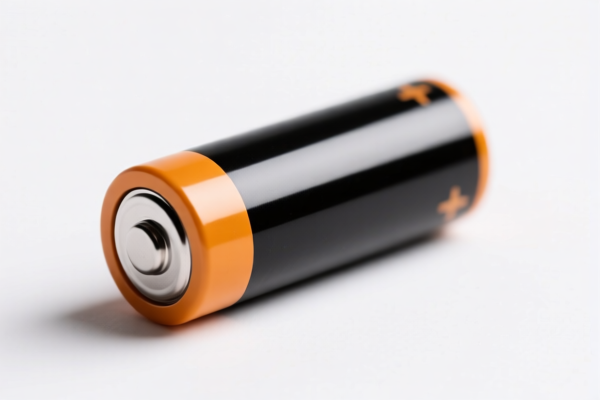
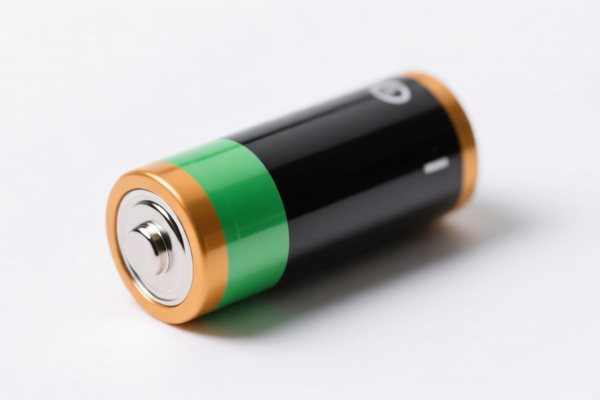
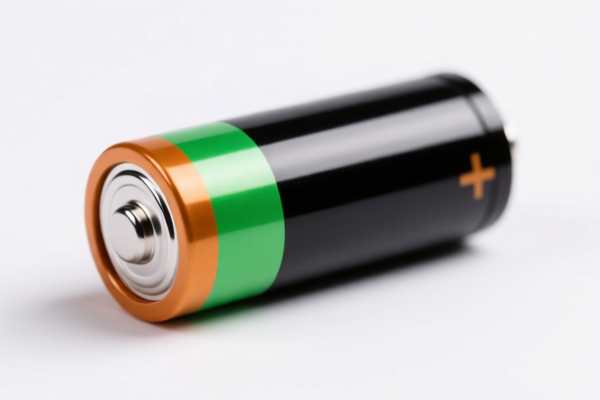
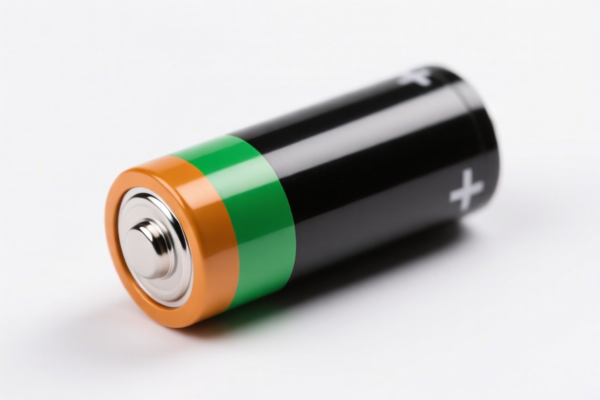
AI Analysis
🔋 C*4 Batteries: The Hidden High-Cost Trap for US Imports
🌐 HS Code Reference & Customs Clearance Guide | 2026 Latest Tariff Analysis | Professional Strategy for Cross-Border E-Commerce & B2B
📌 I. Product Definition & Classification: What is a "C*4 Battery"?
In international trade, "C4 Battery" is not a standard scientific term* but a common commercial abbreviation. Based on industry customs and the provided data context:
- "C": Refers to the physical size of the battery (D-size or C-size cells, often colloquially confused or bundled).
- "*4": Refers to the quantity/packaging format (4-pack) or a specific series/model code (e.g., C-Type, 4-Pack).
- Core Nature: These are almost exclusively Primary Batteries (Non-rechargeable), typically Alkaline or Zinc-Carbon, sometimes Lithium button cells if "C" refers to a chemical type (though less common for "C4" phrasing). They fall under Chapter 85* of the HS Code system.
⚠️ Critical Distinction:
- If it is Alkaline/Zinc (Single-use) → It is an Primary Battery (Ordinary Hazardous Goods, but low risk).
- If it is Lead-Acid (Rechargeable) → It is a Secondary Battery (Heavy Duty, strict UN38.3 testing required).
- Based on the provided, the system distinguishes between Primary (8506) and Secondary (8507) classifications.
📦 II. HS Code Classification Matrix (Based on Input)
The following HS Codes are derived strictly from the provided JSON data. Note that the classification depends on the internal chemistry and rechargeability of the "C*4 Battery".
| HS Code | Product Description (Inferred) | Classification Logic from | Primary/Secondary |
|---|---|---|---|
8506.10.00.10 |
Manganese Dry Batteries (e.g., Zinc-Manganese Oxide) | Matches material & usage; infers "C*4" as battery type description under the primary battery category. | Primary (Disposable) |
8506.80.00.10 |
Other Primary Batteries | Infers it belongs to primary batteries; "C*4" is a common specification/shape description. | Primary (Disposable) |
8507.10.00.60 |
Other Lead-Acid Batteries | Infers it is a battery; matches material/use of lead-acid storage batteries. No conflict in material/shape. | Secondary (Rechargeable) |
8507.10.00.90 |
Other Lead-Acid Batteries (Fallback) | Infers it is a battery; core material attributes align with lead-acid storage. Fallback matching logic for other categories. | Secondary (Rechargeable) |
🔍 Key Insight:
- HS 8506 codes are for Primary Batteries (Alkaline, Carbon-Zinc, Lithium primary).
- HS 8507 codes are for Secondary Batteries (Lead-Acid, Nickel-Cadmium, etc.).
- "C*4" is likely a commercial SKU. You must determine if it is Alkaline (8506) or Lead-Acid (8507). Most consumer "C" batteries are Alkaline (8506).
💰 III. 2026 Tariff Rate Breakdown (US Imports from China)
✅ Applicable Country: United States (US)
✅ Origin: China (CN)
✅ Effective Date: Tariffs apply to imports post-2025 policies (122 Clause + Section 301)
🎯 Scenario A: Primary Batteries (HS 8506.10 / 8506.80)
Typical for Alkaline C-Cell 4-Packs
| Item | Detail |
|---|---|
| Base Duty Rate | 2.7% (Ad Valorem) |
| Section 301 Additional Duty | +25.0% (Trade War Tariff) |
| Section 122 Clause Duty | +10.0% (Specific to certain battery/electronic components) |
| Total Effective Tax Rate | 37.7% |
| Tax Calculation | CIF Value × 37.7% |
| De Minimis Exemption | ❌ NOT Eligible (Batteries are typically excluded from Section 321 de minimis due to hazardous material regulations) |
| Legal Path | USITC:8506.10.00.10 → Section 301: Footnote 9903.88.01 → Section 122: Special Rate |
📌 Explanation:
- The 2.7% base rate applies to general dry batteries.
- The 25% is the standard Section 301 tariff on Chinese electronics.
- The 10% is the "122 Clause" tariff, often applied to specific subheadings under 8506 or 8507 to protect domestic battery manufacturing.
- Total: 37.7%. This is a high-cost entry for low-margin consumer goods.
🎯 Scenario B: Secondary/Lead-Acid Batteries (HS 8507.10)
Typical for Rechargeable C-Cell Lead-Acid (Less Common, but Possible)
| Item | Detail |
|---|---|
| Base Duty Rate | 3.5% (Ad Valorem) |
| Section 301 Additional Duty | +25.0% (Trade War Tariff) |
| Section 122 Clause Duty | +10.0% (Specific to certain battery/electronic components) |
| Total Effective Tax Rate | 38.5% |
| Tax Calculation | CIF Value × 38.5% |
| De Minimis Exemption | ❌ NOT Eligible |
| Legal Path | USITC:8507.10.00.60/90 → Section 301: Footnote 9903.88.01 → Section 122: Special Rate |
📌 Explanation:
- Lead-acid batteries have a slightly higher base duty (3.5% vs 2.7%).
- Same 25% + 10% additional tariffs apply.
- Total: 38.5%. This is even higher than primary batteries.
🛠️ IV. Customs Clearance Practical Advice (Pitfall Avoidance)
✅ 1. Mandatory Documentation Checklist
| Document | Requirement | Reason |
|---|---|---|
| ✅ UN38.3 Test Summary | Required | All lithium batteries (if applicable) must pass UN38.3. For alkaline/lead-acid, MSDS is still required. |
| ✅ MSDS (Material Safety Data Sheet) | Required | Shows chemical composition. Critical for determining if it's hazardous (Class 9 DG). |
| ✅ Battery Declaration | Required | Must specify: Type (Alkaline/Lead-Acid), Chemistry (Zn-Mn/Li-Pb), Quantity per pack, and Voltage (1.5V/2V). |
| ✅ Commercial Invoice | Required | Must clearly state "C-Size Batteries, 4-Pack" and NOT "Electronic Components" or "Generators" to avoid misclassification. |
| ✅ FCC ID (If Wireless) | If Applicable | If the battery pack has built-in electronics (e.g., smart battery), FCC ID is needed. |
| ✅ Packing List | Required | Must show gross weight, net weight, and number of cells. |
✅ 2. Classification Strategy (Key to Saving Money)
🔥 "Chemistry Determines HS Code, Not Size!"
| Scenario | Correct HS Code | Tax Rate | Why? |
|---|---|---|---|
| Alkaline C-Cell 4-Pack | 8506.10.00.10 |
37.7% | Matches "Manganese" summary in . |
| Carbon-Zinc C-Cell 4-Pack | 8506.80.00.10 |
37.7% | Matches "Other Primary" summary in . |
| Rechargeable Lead-Acid C-Cell | 8507.10.00.60 |
38.5% | Matches "Lead-Acid" summary in . |
| Li-ion C-Cell (Rare) | May fall under 8507 or 8506 | Varies | Not explicitly in , but usually treated as secondary or primary lithium. |
⚠️ Warning:
- Do NOT classify Alkaline batteries under 8507 (Lead-Acid).
- Do NOT classify Lead-Acid under 8506 (Primary).
- Misclassification leads to fines, cargo seizure, and retroactive tariffs.
✅ 3. Customs Declaration Tips
- Use Specific Descriptions:
- ✅ Good:
"Alkaline Batteries, Size C, 1.5V, 4-PACK, Zn-Mn Oxide Chemistry" - ❌ Bad:
"Electronics", "Power Cells", "C*4 Battery"(Vague terms trigger manual review).
- ✅ Good:
- Hazardous Goods Labeling:
- Even if Alkaline, packages must be labeled "Lithium Battery" only if Li-ion. For Alkaline/Lead-Acid, use "Dry Batteries, UN3090 (if non-lithium) or UN3028 (if lithium)".
- Note: Standard Alkaline batteries are not usually Class 9 DG, but must be declared properly.
- Section 122 Clause:
- The 10% additional duty is mandatory. There is no exemption for small shipments unless specifically exempted by USTR (rare for batteries).
🌍 V. Global Market Comparison (2026)
| Market | Recommended HS Code | Base Duty | Additional Tariff | Total Est. | Notes |
|---|---|---|---|---|---|
| 🇺🇸 USA | 8506.10.00.10 |
2.7% | +25% (301) + 10% (122) | 37.7% | High tariff, strict DG rules. |
| 🇨🇳 China | 8506.10.00.10 |
0-5% | None | ~5% | No Section 301. |
| 🇪🇺 EU | 8506.40 |
0% | None | 0% | No additional duties. |
| 🇬🇧 UK | 8506.40 |
0% | None | 0% | Post-Brexit free trade. |
| 🇯🇵 Japan | 8506.40 |
0% | None | 0% | Low tariff environment. |
📌 Conclusion:
- The US is the most expensive market for Chinese-made batteries due to 37.7% total duty.
- EU/UK/Japan offer 0% duty, making them more attractive for battery exports.
- Consider diversifying supply chain (e.g., assemble in Vietnam/Mexico) to avoid Section 301 tariffs, but be aware of substantial transformation rules.
📌 VI. Common Mistakes & Pitfalls (Lessons Learned)
❌ Mistake 1: Declaring "C4" as "Electronic Accessory"
👉 Result: Misclassification → Penalty + Back Taxes + Cargo Delay*.
❌ Mistake 2: Ignoring the 122 Clause
👉 Result: Underpayment of 10% → CBSA/Customs Audit & Fines.
❌ Mistake 3: Assuming "Small Package" = Duty-Free (De Minimis)
👉 Result: Batteries are excluded from Section 321 de minimis. Full duty applies.
❌ Mistake 4: Confusing Alkaline (Primary) with Lead-Acid (Secondary)
👉 Result: Wrong HS Code (8506 vs 8507) → Tax difference + Regulatory non-compliance.
✅ Correct Approach:
"Verify Chemistry, Choose 8506/8507, Pay 37.7%+ Duties, Label Correctly."
🎯 VII. Conclusion: Smart Tariff Management
🎯 Key Takeaways:
1. "C*4" is a commercial term; determine if it's Alkaline (8506) or Lead-Acid (8507).
2. US Tariff is 37.7% (Alkaline) or 38.5% (Lead-Acid). This is NOT negotiable without exemptions.
3. No De Minimis Exemption for batteries.
4. MSDS and UN38.3 (if Li-ion) are mandatory for clearance.
5. Consider non-US markets (EU, UK) for lower tariffs if possible.
📌 Pro Tip:
If you are selling Alkaline C-Cells to the US, factor in ~38% landing cost.
If you are selling Lead-Acid C-Cells, factor in ~39% landing cost.
Optimize packaging to reduce volumetric weight, as duties are ad valorem (based on value), but shipping costs are volume-based.
📣 Action Item:
📞 Consult a Customs Broker to confirm the exact HS Code based on your battery's chemical composition.
📄 Request MSDS from your supplier before shipping.
🚀 Plan your pricing strategy to absorb the 37.7%-38.5% tariff.
✨ Precise Classification, Predictable Costs, Smooth Clearance!
💼 Your Profit Margin Depends on Your HS Code!
Customer Reviews
About HS Code Classification
The Harmonized System (HS) is an internationally standardized nomenclature developed by the World Customs Organization (WCO) to classify traded products. Over 200 countries use the HS system as the basis for customs tariffs, trade statistics, and import/export regulations.
Each HS code follows a hierarchical structure:
- Chapter (2 digits) — Broad category of goods (e.g., Chapter 84: Machinery and Mechanical Appliances)
- Heading (4 digits) — More specific grouping within the chapter
- Subheading (6 digits) — Internationally standardized breakdown, used by all WCO member countries
- National subdivisions (8-10 digits) — Country-specific extensions for further classification, such as US HTSUS 10-digit codes
Correct HS code classification is essential for smooth customs clearance, accurate duty payment, and compliance with trade regulations. Misclassification can lead to customs delays, overpayment of duties, or penalties.
When importing from CN to US, the applicable tariff rates may include:
- Most-Favored-Nation (MFN) rate — The standard duty rate applied to WTO members
- General rate — Applied to countries without trade agreements
- Trade remedy duties — Additional tariffs such as Section 301 (anti-dumping), Section 232 (national security), or countervailing duties
The information provided on this page is for reference purposes only. For official classification, please consult with your local customs authority or a licensed customs broker.