C11 and below alcohol chemical reagents
CN → US| HS Code | Tariff Rate | Origin | Destination | Doc |
|---|---|---|---|---|
| 3824999310 | 40.0% | CN | US | Official Doc |
| 2905199010 | 38.7% | CN | US | Official Doc |
| 2905199020 | 38.7% | CN | US | Official Doc |
| 3824999330 | 40.0% | CN | US | Official Doc |
Product Images
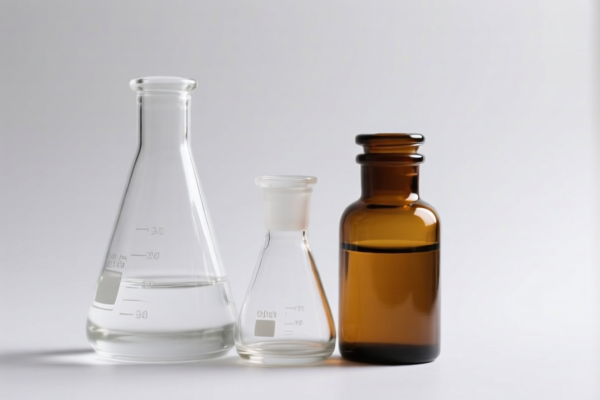
AI Analysis
🧪 C11 and Below Alcohol Chemical Reagents (C11 and Lower Alcohols)
🌐 HS Code Reference & Customs Clearance Guide | 2026 Latest Tariff Analysis | Professional Compliance Strategy
📌 I. Product Definition and Classification: Do You Truly Understand "Alcohols"?
Alcohol chemical reagents are essential compounds in chemistry, pharmaceuticals, and industrial manufacturing. In international trade, they are strictly categorized based on their carbon chain length, chemical structure (saturated/unsaturated, cyclic/acyclic), and functional groups.
For "C11 and below alcohol chemical reagents," the classification hinges on two main distinctions: 1. Pure Chemical Substances (Chapter 29): Single-component, saturated, acyclic alcohols (e.g., Decanol, Undecanol). 2. Mixtures/Preparations (Chapter 38): Complex blends, mixtures of alcohols, or specific preparations not fitting the precise chemical definitions of Chapter 29.
⚠️ Key Distinction Point:
- If the product is a pure, specific saturated monohydric alcohol with ≤11 carbon atoms → Classified under Chapter 29.
- If the product is a mixture of alcohols, a blend of C11 and lower alcohols, or a non-specific alcohol preparation → Classified under Chapter 38.
📦 II. HS Code Classification Details (2026 Latest Tariff Authority Comparison)
| HS Code | Product Description | Application Scenario | Chemical Nature |
|---|---|---|---|
2905.19.90.10 |
Other saturated acyclic alcohols (covers C10, e.g., Decanol) | Pure C10 linear alcohol, standard laboratory reagent | ✅ Pure Saturated Monohydric Alcohol |
2905.19.90.20 |
Other saturated acyclic alcohols (specific substance scope) | Pure C11 or lower saturated monohydric alcohols not elsewhere specified | ✅ Pure Saturated Monohydric Alcohol |
3824.99.93.10 |
Matching C11 or lower alcohol chemical reagents | Mixtures containing only C11 or lower alcohols; general alcohol reagent blends | ✅ Mixture/Preparation |
3824.99.93.30 |
Mixtures of non-cyclic, mono-hydroxy, unsubstituted alcohols ≤C11 | Complex blends of acyclic, single-hydroxyl, un-substituted alcohols (≤C11) | ✅ Complex Mixture |
🔍 Key Reminder:
- All pure, single-component saturated acyclic alcohols with ≤11 carbons must be classified under 2905.19.90.x0. Misclassifying them as mixtures (Chapter 38) can lead to disputes. - If the product is a blend (e.g., a mixture of Octanol, Decanol, and Undecanol), it generally falls under 3824.99.93.x0 as a "preparation" or "mixture."
💰 III. 2026 Latest Tariff Rate Breakdown (Including Surcharges & Policy Add-ons)
✅ Applicable Country: United States (US)
✅ Country of Origin: China (CN)
✅ Effective Date: From November 10, 2025 (including subsequent imports)
🎯 1. 3824.99.93.10 & 3824.99.93.30 —— Chemical Reagents Mixtures (Chapter 38)
| Item | Content |
|---|---|
| Base Duty Rate | 5.0% (ad valorem) |
| USITC Surcharge (Section 301) | +25.0% |
| 122 Clause Tariff | +10.0% |
| Total Effective Rate | 40.0% |
| Tax Calculation | CIF Value × 40.0% |
| De Minimis Exemption Eligible? | ❌ No (deny_de_minimis applies) |
| Legal Basis Path | Base:3824.99.93 → USITC:301_Surcharge → 122_Clauses |
📌 Explanation:
- The 5% base duty is the standard US MFN rate for "chemical products and preparations" under Chapter 38. - The 25% surcharge is imposed under US Trade Law Section 301 against Chinese goods. - The 10% "122 Clause" tariff is an additional surcharge targeting specific Chinese chemical imports. - Total of 40% is significantly high, requiring careful cost calculation.
🎯 2. 2905.19.90.10 & 2905.19.90.20 —— Pure Saturated Acyclic Alcohols (Chapter 29)
| Item | Content |
|---|---|
| Base Duty Rate | 3.7% (ad valorem) |
| USITC Surcharge (Section 301) | +25.0% |
| 122 Clause Tariff | +10.0% |
| Total Effective Rate | 38.7% |
| Tax Calculation | CIF Value × 38.7% |
| De Minimis Exemption Eligible? | ❌ No (deny_de_minimis applies) |
| Legal Basis Path | Base:2905.19.90 → USITC:301_Surcharge → 122_Clauses |
📌 Note:
- The 3.7% base duty is lower than Chapter 38 products, but the 25% + 10% surcharges remain the same. - Total of 38.7% is slightly lower than the 40% for mixtures, but still very high. - Even for "pure" chemicals, the Section 301 and 122 clause tariffs apply fully to Chinese-origin goods.
🛠️ IV. Customs Clearance Practical Advice (Real-World Pitfall Avoidance)
✅ 1. Required Documentation Checklist (Mandatory)
| Document | Must Provide | Description |
|---|---|---|
| ✅ Product Specification Sheet | ✔️ | Must clearly state: Carbon chain length (e.g., C10, C11), purity (≥99%), and chemical name (IUPAC). |
| ✅ Formula/Purity Certificate | ✔️ | Critical for distinguishing between Pure Substance (Ch 29) and Mixture (Ch 38). |
| ✅ Product Photos (incl. Label) | ✔️ | Clear view of label, batch number, and hazard symbols. |
| ✅ Third-Party Test Report | ✔️ | GC/MS reports confirming composition and purity. |
| ✅ Commercial Invoice | ✔️ | Must specify "Saturated Acyclic Alcohol" or "Alcohol Mixture" accurately. |
| ✅ Certificate of Origin (CO) | ✔️ | Mandatory for proving Chinese origin to apply correct tariffs. |
| ✅ Packing List | ✔️ | Detailed breakdown of contents to avoid "unknown chemicals" flags. |
✅ 2. Declaration Tips (Key Mantra)
🔥 "Pure Alcohol to Ch 29, Mixtures to Ch 38, Purity Proof is King!"
| Scenario | Correct Declaration Method | Incorrect Practice |
|---|---|---|
| Pure Decanol (C10) | 2905.19.90.10 |
Misdeclare as "Chemical Mixture" → Higher Base Duty + Dispute |
| Pure Undecanol (C11) | 2905.19.90.20 |
Use vague term "Alcohol Reagent" → Custom Officer may classify as Ch 38 |
| Blend of C8-C11 Alcohols | 3824.99.93.10 or .30 |
Declare as "Pure Alcohol" → Rejection & Penalty due to impurity |
| Unsubstituted Acyclic Alcohols | 3824.99.93.30 |
Fail to specify "unsubstituted/non-cyclic" → Classification error |
✅ 3. Special Case Handling
| Situation | Handling Advice |
|---|---|
| OEM Custom Alcohol Reagent | Provide client order + detailed composition list. Avoid vague names like "Solvent Mixture." |
| Alcohol Reagent with Impurities | If impurities >5-10%, it may shift from Ch 29 to Ch 38. Purity matters! |
| Reagent for Laboratory Use | Still subject to tariffs. "Laboratory Use" does not exempt Section 301 or 122 clause tariffs. |
| Mixed with Water or Solvents | If mixed with non-alcohol solvents, it may be classified under a different Chapter entirely (e.g., 3824.99.93 is for alcohol mixtures, not alcohol-solvent blends). Check full composition! |
🌍 V. Global Market Clearance Comparison (2026 Latest)
| Country/Region | Recommended HS Code | Tariff (China Origin) | Certification Requirements | Remarks |
|---|---|---|---|---|
| 🇺🇸 USA | 2905.19.90.10/20 or 3824.99.93.10/30 |
38.7% or 40.0% | No specific FDA for non-consumables | High surcharges (25%+10%) |
| 🇨🇳 China | 2905.19.90 or 3824.99.93 |
3.7% - 5.0% | No additional import tariffs | Base duty applies |
| 🇪🇺 EU | 2905.19 or 3824.99 |
4.0% - 6.5% | REACH Registration Mandatory | No Section 301 equivalent, but REACH is strict |
| 🇬🇧 UK | 2905.19 or 3824.99 |
4.0% - 6.5% | UK REACH | Post-Brexit standards apply |
| 🇦🇺 Australia | 2905.19 or 3824.99 |
5.0% | AICIS (Industrial Chemicals Act) | No additional surcharges |
📌 Conclusion:
- The USA imposes the highest effective tariff burden (38.7% - 40.0%) due to Section 301 and 122 clause tariffs. - EU and UK require REACH/UK REACH registration for alcohols, which is a compliance hurdle, not a tariff one. - Cost-saving Strategy: If possible, verify if the product can be classified as a specific pure substance (Ch 29) to save 1.3% compared to mixtures (Ch 38), though both are heavily taxed in the US.
📌 VI. Common Errors & Pitfall Guide (Lessons from Blood and Tears)
❌ Mistake 1: Declaring a Mixture of Alcohols as a Pure Alcohol (Ch 29)
👉 Consequence: Customs rejects declaration, demands full composition test, delays shipment, and may impose fines.
❌ Mistake 2: Using generic term "Alcohol" without specifying Chain Length (C11 and below)
👉 Consequence: If C12+ is found, it may fall under different subheadings with potentially different duties or restrictions.
❌ Mistake 3: Ignoring the 122 Clause Tariff
👉 Consequence: Underestimating landed cost by 10%. This is not part of the standard 25% Section 301. It is an additional 10%.
❌ Mistake 4: Assuming "Laboratory Reagent" means Tariff Exemption
👉 Consequence: False. Chemical reagents from China are not exempt from Section 301 or 122 clause tariffs in the US.
✅ Correct Approach:
"Undecanol (C11), Saturated Acyclic Monohydric Alcohol, Purity ≥99%, for Laboratory Use, Chinese Origin, HS 2905.19.90.20"
🎯 VII. Conclusion: Professional Declaration Saves Money!
🎯 Remember the Mantra:
🔹 "Pure to Ch 29 (38.7%), Mix to Ch 38 (40%), 122 Clause is Extra 10%!"
🔹 "Purity Proof is Key, Generic Names Fail, US Tariffs are Heavy, Plan Ahead!"
📌 Pro Tip:
If your alcohol reagents are originating from Vietnam, Mexico, Thailand, or Malaysia, you may qualify for IEEPA Exemptions or lower tariffs under FTAs.
It is highly recommended to apply for an Advance Ruling from U.S. Customs and Border Protection (CBP) before shipping to avoid surprises.
📣 Immediate Action:
📞 Contact a licensed Customs Broker + Provide Purity Certificate + Apply for HS Code Advance Ruling
🚀 Ensure your C11 and Below Alcohol Reagents clear smoothly, minimize costs, and maximize profit!
✨ Professional Clearance Starts with Accurate Classification!
💼 Every cent of your cost deserves precise calculation!
Customer Reviews
About HS Code Classification
The Harmonized System (HS) is an internationally standardized nomenclature developed by the World Customs Organization (WCO) to classify traded products. Over 200 countries use the HS system as the basis for customs tariffs, trade statistics, and import/export regulations.
Each HS code follows a hierarchical structure:
- Chapter (2 digits) — Broad category of goods (e.g., Chapter 84: Machinery and Mechanical Appliances)
- Heading (4 digits) — More specific grouping within the chapter
- Subheading (6 digits) — Internationally standardized breakdown, used by all WCO member countries
- National subdivisions (8-10 digits) — Country-specific extensions for further classification, such as US HTSUS 10-digit codes
Correct HS code classification is essential for smooth customs clearance, accurate duty payment, and compliance with trade regulations. Misclassification can lead to customs delays, overpayment of duties, or penalties.
When importing from CN to US, the applicable tariff rates may include:
- Most-Favored-Nation (MFN) rate — The standard duty rate applied to WTO members
- General rate — Applied to countries without trade agreements
- Trade remedy duties — Additional tariffs such as Section 301 (anti-dumping), Section 232 (national security), or countervailing duties
The information provided on this page is for reference purposes only. For official classification, please consult with your local customs authority or a licensed customs broker.