C3 Carrying Case
CN → US| HS Code | Tariff Rate | Origin | Destination | Doc |
|---|---|---|---|---|
| 4205008000 | 35.0% | CN | US | Official Doc |
| 4202923900 | 52.6% | CN | US | Official Doc |
| 4205001000 | 35.0% | CN | US | Official Doc |
| 4202924500 | 55.0% | CN | US | Official Doc |
Product Images

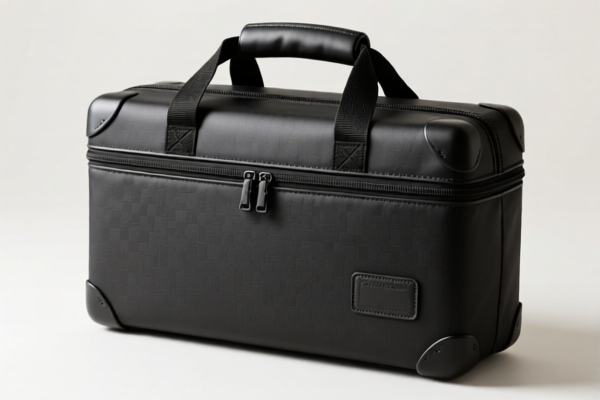
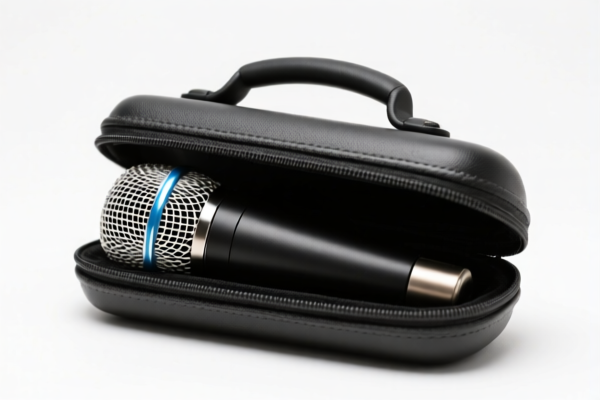
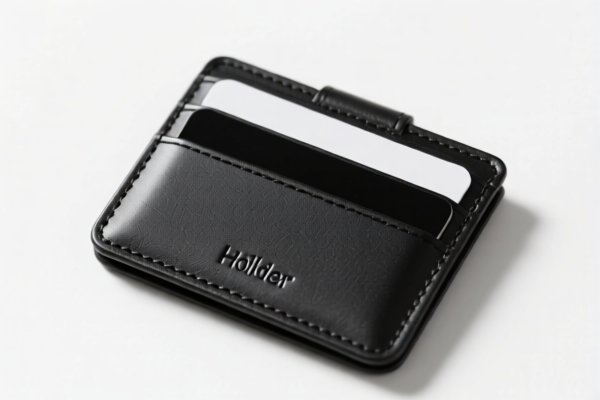
AI Analysis
🎒 C3 Carrying Case: Global Customs Classification & Tariff Master Guide (2026 Edition)
🌐 HS Code Reference & Clearance Strategy | Latest 2026 Tariff Analysis | Expert Compliance Protocol
📌 I. Product Definition & Classification: What is a "C3 Carrying Case"?
The "C3 Carrying Case" is a versatile container designed to transport, protect, and organize equipment. In international trade, its classification depends heavily on two critical factors: 1. Primary Material (Leather/Synthetic vs. Plastic/Textile) 2. Intended Use (General "Other" vs. Specific "Travel/Sports Bag")
⚠️ Critical Distinction:
- If made of Leather or Synthetic Leather (Regrouped as "Other Articles of Leather") → Heading 4205. - If made of Plastic, Textiles, or Rubber (Regrouped as "Travel/Sports Bags") → Heading 4202. - The "C3" designation alone does not determine the HS Code; material composition is king.
📦 II. Detailed HS Code Classification Matrix (2026 Latest Tariff)
Based on current trade rules and the specific "C3 Carrying Case" product profile, here are the four most probable classifications with their associated tax logic.
| HS Code | Classification Logic & Material Inference | Tax Rate (Total) | Primary Tax Components |
|---|---|---|---|
| 4205.00.80.00 | Leather/Synthetic Leather "Other" Articles. ✅ Logic: If the case is primarily made of leather, artificial leather, or composition leather. It falls under "Other" articles of leather where no more specific code applies. |
35.0% | • Base: 0.0% • Additional: 25.0% • Section 122: 10.0% |
| 4205.00.10.00 | Leather/Regenerated Leather "Other" Articles. ✅ Logic: Specifically targets "other" articles of leather or regenerated leather. Often used for high-end carrying cases where the leather content is dominant but the form is generic. |
35.0% | • Base: 0.0% • Additional: 25.0% • Section 122: 10.0% |
| 4202.92.39.00 | Textile Outer Surface "Other" Bags. ✅ Logic: If the case exterior is made of textiles (nylon, canvas, polyester) and does not fit specific "trunks/suitcases" categories. It covers "other" travel/sports bags. |
52.6% | • Base: 17.6% • Additional: 25.0% • Section 122: 10.0% |
| 4202.92.45.00 | Plastic/Textile Outer Surface "Other" Bags. ✅ Logic: If the case is constructed from plastic sheets or a mix of plastic/textile materials. Common for hard-shell or rugged protective cases. |
55.0% | • Base: 20.0% • Additional: 25.0% • Section 122: 10.0% |
🔍 Key Insight:
- Leather cases (4205) have a 0% Base Tariff, resulting in a lower total rate (35%). - Textile/Plastic cases (4202) have a Base Tariff (17.6% - 20%), pushing the total rate to 52.6% - 55.0%. - Material Declaration is Paramount: Misdeclaring a textile case as "leather" will lead to severe penalties and re-classification.
💰 III. 2026 Tariff Breakdown: The "Triple-Strike" Tax Structure
✅ Target Market: United States (US)
✅ Origin: China (CN)
✅ Effective Date: November 10, 2025 (Current Policy Enforceable)
The total tax burden for a C3 Carrying Case is not just one number. It is a composite of three distinct layers:
🎯 Layer 1: Base Duty (MFN Rate)
- 0.0% for Leather products (HS 4205.00).
- 17.6% - 20.0% for Textile/Plastic products (HS 4202.92).
- This is the standard Most-Favored-Nation rate before any political tariffs.
🎯 Layer 2: Section 301 / "Additional Duty" (+25.0%)
- Applicable to ALL listed HS Codes.
- Source: US Trade Representative (USTR) Section 301 List.
- Impact: This is a punitive tariff specifically targeting Chinese imports of manufactured goods. It applies regardless of the material.
🎯 Layer 3: Section 122 / IEEPA Tariff (+10.0%)
- Applicable to ALL listed HS Codes.
- Source: Executive Order under the International Emergency Economic Powers Act (IEEPA).
- Impact: An additional 10% surcharge on goods originating from China, effective from late 2025.
📊 The Math:
Scenario A (Leather Case): 0% + 25% + 10% = 35.0% * Scenario B (Textile/Plastic Case): 17.6% + 25% + 10% = 52.6%* (or up to 55.0% for plastic).
🛠️ IV. Clearance Action Plan: Avoiding the "C3" Trap
✅ 1. Documentation Checklist (Must-Have for 100% Pass Rate)
| Document | Critical Requirement | Why It Matters |
|---|---|---|
| Material Specification Sheet | Mandatory. Must explicitly state: "% Leather", "% Textile", or "% Plastic". | Determines if you pay 35% or 55%. |
| Product Photographs | Close-ups of seams, texture, and interior lining. | Customs officers verify "Leather" vs. "Synthetic" visually. |
| Bill of Materials (BOM) | Detailed list of all components (zippers, foam, fabric). | Prevents "partial duty" disputes if a part is leather and part is textile. |
| Commercial Invoice | Must state: "Carrying Case, Model C3, Material: [Specific]". | Vague terms like "Case" lead to misclassification. |
| Packaging Details | Show if it's a "set" or "kit". | Ensures the entire kit is taxed under one HS Code (not split). |
✅ 2. Strategic Declaration Tips (The "Golden Rules")
🔥 Rule 1: "Leather is Low Tax, Plastic is High Tax"
If your product is 100% genuine leather, declare it as 4205.00. Do not try to classify a leather case as "plastic" to avoid base duty (it's 0% anyway, but the material must be real leather).🔥 Rule 2: "Textile is the High Road"
If your case is Nylon or Canvas, expect ~53% total tax. Do not attempt to misclassify as "Leather" (4205). This is fraud and will result in seizure.🔥 Rule 3: "The 'C3' Label is Irrelevant"
Do not write "C3" on the HS Code field. Only write the 8-digit HS Code. Use "C3" in the Product Description field for internal reference.
| Incorrect Declaration | Correct Declaration | Outcome |
|---|---|---|
| "C3 Carrying Case" (Vague) | "Leather Carrying Case for Instruments, HS 4205.00.80.00" | Risk of Delay/Seizure |
| "Carrying Case" (No Material) | "Textile Travel Bag (Nylon), HS 4202.92.39.00" | Correct Clearance |
✅ 3. Special Scenarios & Handling
| Scenario | Recommended Action |
|---|---|
| Mixed Materials (e.g., Leather exterior + Plastic shell) | Declare based on the principal material giving the item its essential character. If Leather dominates, use 4205. |
| Lining is Leather, Outside is Fabric | Usually classified under 4202 (Textile/Plastic) as the exterior defines the look. |
| Sample Shipments | Even samples are subject to the 35% or 55% tariff. Do not claim "De Minimis" for commercial goods. |
🌍 V. Market Comparison: Where is the Best Cost?
| Destination | Recommended HS Code | Effective Tax Rate (China Origin) | Notes |
|---|---|---|---|
| 🇺🇸 USA | 4205.00.80.00 (Leather) or 4202.92.39.00 (Textile) |
35.0% (Leather) 52.6% (Textile) |
Highest barrier. Section 301 + 122 applies. |
| 🇨🇳 China | Same HS Codes | ~5-8% | No Section 301/122 tariffs. Low entry cost. |
| 🇪🇺 EU | 4202.92 or 4205.00 |
~0-10% (No Section 301) | CE marking required. No 25% punitive tariff. |
| 🇯🇵 Japan | 4202.92 |
~5-10% | E-commerce friendly. No extra punitive tariffs. |
💡 Strategic Insight:
The USA market is the most expensive for "C3 Carrying Cases" due to the 35-55% total tax. If your product is textile-based, the profit margin is severely eaten. Consider sourcing from Vietnam or Mexico to bypass the "China Origin" surcharges (Section 122 & 301).
🚨 VI. Common Pitfalls & How to Avoid Them
❌ Pitfall 1: "It looks like leather, so I'll use 4205"
👉 Consequence: Customs will test the material. If it's PVC/Synthetic, they reclassify to 4202. You pay back taxes + 20% penalty.
✅ Fix: Provide a lab test report proving the material composition.
❌ Pitfall 2: Ignoring the "Section 122" 10%
👉 Consequence: Underestimating costs by 10% can turn a profitable order into a loss.
✅ Fix: Always calculate taxes as (Base + 25% + 10%).
❌ Pitfall 3: Splitting a Single Case into Multiple HS Codes
👉 Consequence: If a case has a leather patch and a fabric body, do not split the invoice. One case = One HS Code.
✅ Fix: Declare based on the predominant material.
🎯 VII. Conclusion: The Bottom Line for C3 Carrying Cases
🚀 The Verdict:
The "C3 Carrying Case" faces a harsh reality in the US market.
- If Leather: You pay 35%.
- If Fabric/Plastic: You pay 52.6% - 55.0%.Action Plan:
1. Verify Material: Get a physical test report immediately.
2. Price Adjustment: Factor in the 35-55% tax into your FOB/CIF pricing.
3. Consider Supply Chain: For textile cases, Vietnam/Mexico origins are the only way to avoid the 35% premium.
✨ Expert Clearance Service:
Don't let a "Case" cost you your margin. Precise classification is your first step to profit.
📞 Contact us today for an Advance Ruling (Binding Classification) to lock in your tax rate!
Customer Reviews
About HS Code Classification
The Harmonized System (HS) is an internationally standardized nomenclature developed by the World Customs Organization (WCO) to classify traded products. Over 200 countries use the HS system as the basis for customs tariffs, trade statistics, and import/export regulations.
Each HS code follows a hierarchical structure:
- Chapter (2 digits) — Broad category of goods (e.g., Chapter 84: Machinery and Mechanical Appliances)
- Heading (4 digits) — More specific grouping within the chapter
- Subheading (6 digits) — Internationally standardized breakdown, used by all WCO member countries
- National subdivisions (8-10 digits) — Country-specific extensions for further classification, such as US HTSUS 10-digit codes
Correct HS code classification is essential for smooth customs clearance, accurate duty payment, and compliance with trade regulations. Misclassification can lead to customs delays, overpayment of duties, or penalties.
When importing from CN to US, the applicable tariff rates may include:
- Most-Favored-Nation (MFN) rate — The standard duty rate applied to WTO members
- General rate — Applied to countries without trade agreements
- Trade remedy duties — Additional tariffs such as Section 301 (anti-dumping), Section 232 (national security), or countervailing duties
The information provided on this page is for reference purposes only. For official classification, please consult with your local customs authority or a licensed customs broker.