C9 Petroleum Resin Elastomer
CN → USProduct Images

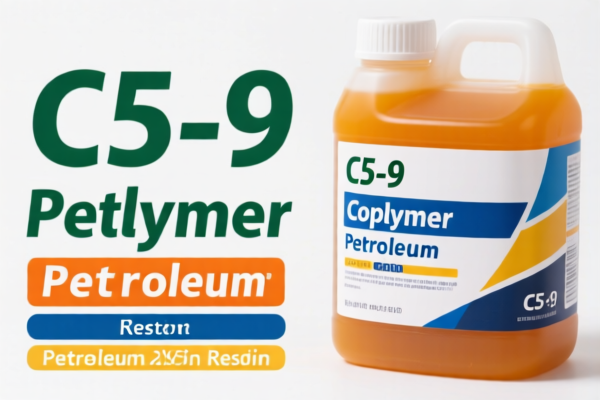

AI Analysis
🧪 C9 Petroleum Resin Elastomer
🌐 HS Code Reference & Customs Clearance Guide | 2026 Latest Tariff Analysis | Professional Compliance Strategy
📌 I. Product Definition & Classification: What is "C9 Petroleum Resin"?
C9 Petroleum Resin (also known as C9 Hydrocarbon Resin) is a light-colored, transparent thermoplastic resin derived from the polymerization of light oil fractions (specifically the C9 aromatic fraction) obtained from steam cracking ethylene production or coal tar distillation.
In international trade, it is primarily classified as a modified natural polymer or plastic material. Its classification depends heavily on its chemical composition and physical state:
1. Primary Resin Form (Raw Material):
Unmodified C9 resin used as an adhesive, coating, or rubber modifier.
→ HS Code: 3906 (Acrylic polymers in primary forms) or more accurately 3911 (Petroleum resins).
2. Modified/Elastomeric Form:
If the "Elastomer" part implies it is blended with rubber or used as a rubber modifier, it may still fall under 3911 if it retains its primary resin identity, or 4002/4003 if it is a compound rubber. However, C9 Resin itself is not a rubber; it is a resin added to rubber.
→ Most Common Classification: 3911.90
⚠️ Key Distinction:
- If sold as a solid lump, powder, or granule → 3911.90.90
- If sold as a liquid solution → 3911.90.90
- If it is a final rubber compound containing C9 resin → 4002 (Synthetic rubber)
📦 II. HS Code Classification Details (2026 Latest Tariff Authority Comparison)
| HS Code | Product Description | Application Scenario | Is it a Primary Plastic? |
|---|---|---|---|
3911.90.90.00 |
Petroleum resins, other than those of heading 3907 to 3910; phenolic resins; polyethers; polyacetals; other polymers | C9/C5 Hydrocarbon Resins, Rubber Modifiers, Adhesives | ✅ Yes (Primary Form) |
3906.90.00.00 |
Acrylic polymers in primary forms | NOT applicable (C9 is not acrylic) | ❌ N/A |
4002.99.00.00 |
Synthetic rubber (including Styrene-Butadiene Rubber, SBR) | ONLY IF C9 is mixed into a final rubber compound | ❌ No (Final Product) |
3506.91.00.00 |
Prepared adhesives (based on polymers) | If C9 resin is formulated into a final adhesive product | ❌ No (Formulated Product) |
🔍 Critical Note:
- C9 Petroleum Resin is overwhelmingly classified under3911.90.90.00.
- It is considered a "Other polymers" under Chapter 39, specifically "Petroleum resins" under Heading 3911.
- Do NOT classify as3907(Polyacetals) or3902(Polyolefins).
- If the product is a final adhesive (e.g., hot melt glue stick), it may be3506.91, but pure resin is3911.
💰 III. 2026 Latest Tariff Rate Detailed Breakdown (Including Surtaxes)
✅ Applicable Country: United States (US)
✅ Country of Origin: China (CN)
✅ Effective Date: From November 10, 2025 (and subsequent imports)
🎯 1. 3911.90.90.00 —— C9 Petroleum Resin (Raw Material)
| Item | Details |
|---|---|
| Base Tariff Rate | 5.3% (ad valorem) |
| USITC Surtax | +25% (Under USITC Footnote 9903.88.01, Section 301) |
| IEEPA Surtax | +10% (Under IEEPA Section 9903.01.24, targeting China/HK origin) |
| Total Effective Rate | 40.3% |
| Tax Calculation | CIF Value × 40.3% |
| De Minimis Eligibility | ❌ Not Eligible (deny_de_minimis) |
| Legal Path | IEEPA:9903.01.25 → IEEPA:9903.01.24 → USITC:3911.90.90.00 → FOOTNOTE:9903.88.01 |
📌 Explanation:
- C9 Resin is subject to the 301 Section Additional Duties (25%) and IEEPA Surtax (10%).
- Total Tariff Burden: ~40.3%. This is a high-cost import category.
- Small shipments (under $800) do NOT qualify for de minimis exemption due to the nature of the goods (industrial raw material).
🎯 2. 3506.91.00.00 —— Prepared Adhesives (If C9 is blended into glue)
| Item | Details |
|---|---|
| Base Tariff Rate | 5.7% |
| USITC Surtax | +25% |
| IEEPA Surtax | +10% |
| Total Effective Rate | 40.7% |
| De Minimis Eligibility | ❌ Not Eligible |
| Legal Path | IEEPA:9903.01.25 → IEEPA:9903.01.24 → USITC:3506.91.00.00 |
📌 Note:
- If the product is marketed as "Adhesive" or "Hot Melt Glue," the HS Code shifts to Chapter 35.
- Tariff rate is nearly identical (~40.7%), so cost impact is similar.
🛠️ IV. Customs Clearance Practical Advice (Battle-Tested Pitfall Guide)
✅ 1. Required Documentation Checklist
| Document | Mandatory? | Details |
|---|---|---|
| ✅ Product Specification Sheet | ✔️ | Must state: C9 Hydrocarbon Resin, Solid/Liquid, Softening Point, Molecular Weight |
| ✅ Certificate of Origin (CO) | ✔️ | Essential for proving origin (China) |
| ✅ Commercial Invoice | ✔️ | Must clearly state "C9 Petroleum Resin" NOT generic "Chemical" |
| ✅ MSDS (Material Safety Data Sheet) | ✔️ | Required for customs and carrier safety compliance |
| ✅ Formula/Composition Statement | ✔️ | Confirm it is not a rubber compound (to avoid 4002 classification errors) |
✅ 2. Declaration Tips (Key Mantras)
🔥 "Resin not Rubber, Adhesive not Raw, Name Specific, Tariff Saved!"
| Scenario | Correct HS Code | Wrong Approach |
|---|---|---|
| Pure C9 Resin (Granules/Lumps) | 3911.90.90.00 |
Misdeclaring as "Plastic" (3901-3914) → Risk of penalty |
| C9 Resin blended into Hot Melt Glue | 3506.91.00.00 |
Declaring as "Resin" → Classification error |
| C9 Resin added to Rubber Compounds | 4002.99.00.00 |
Declaring as "Resin" → Misses rubber surtax rules |
✅ 3. Special Cases
| Situation | Handling Advice |
|---|---|
| OEM Branding | Provide brand authorization; customs may inspect for IP infringement |
| Liquid Form | Ensure proper UN packaging certification for hazardous transport (if applicable) |
| Blended Products | If >50% resin by weight, still declare as Resin if primary function is resin |
| Re-export from Mexico/Vietnam | Check Rules of Origin; if substantial transformation occurs, IEEPA surtax may be avoided |
🌍 V. Global Market Comparison (2026 Latest)
| Country/Region | Recommended HS Code | Tariff (China Origin) | Certification | Notes |
|---|---|---|---|---|
| 🇺🇸 USA | 3911.90.90.00 |
40.3% | None specific | High surtax applies |
| 🇨🇳 China | 3911.90.90.00 |
5.3% | CCC (if applicable) | Low import duty |
| 🇪🇺 EU | 3911.90.90 |
6.5% | REACH Registration | REACH is critical |
| 🇦🇺 Australia | 3911.90.90 |
5.0% | AICIS (Chemical) | No surtax |
| 🇯🇵 Japan | 3911.90.90 |
5.0% | Chemical Substance Control Law | No surtax |
📌 Conclusion:
- USA is the most expensive market due to 301 and IEEPA surtaxes.
- EU and Japan require strict chemical compliance (REACH/Chemical Substances Control).
- Consider supply chain diversification if exporting to the US to mitigate tariff risk.
📌 VI. Common Errors & Pitfalls (Lessons Learned)
❌ Error 1: Declaring C9 Resin as "Plastic Raw Material" (Generic)
👉 Consequence: Customs may reassess to correct HS code + delay + penalty.
❌ Error 2: Confusing C9 Resin with C5 Resin
👉 Consequence: Both fall under 3911.90.90.00, but C5 is often taxed differently in other countries (e.g., EU). Keep them separate in documentation.
❌ Error 3: Not declaring "Chemical Composition"
👉 Consequence: US Customs may suspect hidden rubber or hazardous substances → Inspection hold.
❌ Error 4: Using "Adhesive" for raw resin
👉 Consequence: Classification as 3506 may trigger different regulatory requirements (e.g., EPA).
✅ Correct Declaration Example:
"C9 Hydrocarbon Resin, Solid, Granules, Softening Point 90°C, Used as Rubber Modifier, HS Code 3911.90.90.00, Made in China"
🎯 VII. Conclusion: Precision Saves Money!
🎯 Remember the Mantras:
🔹 "Resin under 3911, Adhesive under 3506, Rubber under 4002"
🔹 "US Tariff ~40%, No De Minimis, Plan Ahead!"
🔹 "Chemical Compliance is Key in EU/US"
📌 Pro Tip:
If your C9 Resin is originally processed in Vietnam or Mexico and meets Rules of Origin, you may avoid IEEPA surtax (10%).
Consider pre-ruling (Advance Ruling) from US Customs for complex blended products.
📣 Immediate Action:
📞 Consult a licensed customs broker + Provide MSDS + Apply for HS Code Pre-Ruling
🚀 Clear Customs Smoothly, Reduce Costs, Maximize Profit!
✨ Professional Customs Clearance Starts with Accurate Classification!
💼 Every Dollar in Tariffs Counts!
Customer Reviews
About HS Code Classification
The Harmonized System (HS) is an internationally standardized nomenclature developed by the World Customs Organization (WCO) to classify traded products. Over 200 countries use the HS system as the basis for customs tariffs, trade statistics, and import/export regulations.
Each HS code follows a hierarchical structure:
- Chapter (2 digits) — Broad category of goods (e.g., Chapter 84: Machinery and Mechanical Appliances)
- Heading (4 digits) — More specific grouping within the chapter
- Subheading (6 digits) — Internationally standardized breakdown, used by all WCO member countries
- National subdivisions (8-10 digits) — Country-specific extensions for further classification, such as US HTSUS 10-digit codes
Correct HS code classification is essential for smooth customs clearance, accurate duty payment, and compliance with trade regulations. Misclassification can lead to customs delays, overpayment of duties, or penalties.
When importing from CN to US, the applicable tariff rates may include:
- Most-Favored-Nation (MFN) rate — The standard duty rate applied to WTO members
- General rate — Applied to countries without trade agreements
- Trade remedy duties — Additional tariffs such as Section 301 (anti-dumping), Section 232 (national security), or countervailing duties
The information provided on this page is for reference purposes only. For official classification, please consult with your local customs authority or a licensed customs broker.