CD Player Combination Unit
CN → US| HS Code | Tariff Rate | Origin | Destination | Doc |
|---|---|---|---|---|
| 8522906500 | 35.0% | CN | US | Official Doc |
| 8519813010 | 35.0% | CN | US | Official Doc |
| 8543709860 | 37.6% | CN | US | Official Doc |
| 8543708900 | 17.5% | CN | US | Official Doc |
| 8522908081 | 35.0% | CN | US | Official Doc |
Product Images
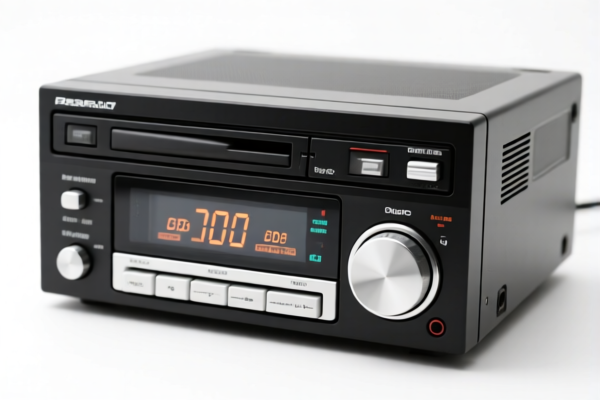


AI Analysis
🎵 CD Player Combination Unit (Audio System)
🌐 HS Code Reference & Customs Clearance Guide | 2026 Latest Tariff Analysis | Professional Clearance Strategy
📌 Part 1: Product Definition & Classification: Do You Really Understand the "CD Player Combination Unit"?
A CD Player Combination Unit is an audio device designed for playing Compact Discs (optical media) and often includes recording capabilities or connection to amplifiers/speakers. In international trade, its classification depends heavily on its internal components, primary function, and structural form.
According to the provided data, there are five potential HS Code classifications. Below is the detailed breakdown of why each code applies, the corresponding tax rates, and the rationale behind each classification.
⚠️ Key Distinction Points:
- If the unit is primarily an audio reproduction device with integrated circuitry → 8519/8522 categories.
- If it contains PCB assemblies for control → 8522.90.65.00.
- If it is explicitly defined as an optical disc player → 8519.81.30.10.
- If it is considered a standalone machine excluding amplifiers → 8543.70.98.60 or 8543.70.89.00.
📦 Part 2: Detailed HS Code Classification (Based on Provided Data)
| HS Code | Product Description & Rationale | Total Tax Rate | Tax Breakdown |
|---|---|---|---|
8522.90.65.00 |
Audio Equipment Component: Belongs to the 8519/8521 chapter. It contains printed circuit components for controlling audio play/record functions. Fits the "use-matching principle" for internal control modules. | 35.0% | Base: 0.0% Additional: 25.0% Section 301 (122): 10% |
8519.81.30.10 |
Optical Disc Player: The name explicitly includes "CD" (optical medium) and "Play/Record" (sound reproduction). Fully complies with the definition of optical disc players and sound reproduction equipment in this code. | 35.0% | Base: 0.0% Additional: 25.0% Section 301 (122): 10% |
8543.70.98.60 |
Other Machines & Devices: An audio device with independent function. The combination of CD play/record falls under "Other machines and devices" in 8543.70.98.60, excluding amplifiers and musical instrument effectors. | 37.6% | Base: 2.6% Additional: 25.0% Section 301 (122): 10% |
8543.70.89.00 |
Audio Regeneration Device: An electronic device with "audio file regeneration" function. Form factor matches "other portable/independent function electrical devices." | 17.5% | Base: 0.0% Additional: 7.5% Section 301 (122): 10% |
8522.90.80.81 |
Accessory/Part for Audio/Video Equipment: Belongs to Chapter 8521 (Audio/Video auto-play equipment). Infers inclusion of metal/plastic, consistent with the equipment category for parts/accessories. | 35.0% | Base: 0.0% Additional: 25.0% Section 301 (122): 10% |
🔍 Key Reminder:
-8519.81.30.10is the most direct classification for a standard "CD Player" based on its explicit function (optical playback).
-8543.70.89.00offers the lowest total tax (17.5%) but requires proving it as a "standalone regeneration device" rather than a standard consumer audio player.
-8543.70.98.60has the highest total tax (37.6%) due to a 2.6% base tariff.
💰 Part 3: 2026 Latest Tariff Rate Details (Including Surcharges)
✅ Applicable Country: United States (US)
✅ Origin: China (CN)
✅ Effective Date: 2025 November 10 onwards
🎯 1. 8522.90.65.00 & 8522.90.80.81 & 8519.81.30.10 —— Audio Equipment & Optical Players
| Item | Detail |
|---|---|
| Base Tariff | 0% (ad valorem) |
| USITC Additional Tariff (Section 301) | +25% |
| IEEPA Additional Tariff | +10% (针对中国/香港产品) |
| Total Tariff Rate | 35.0% |
| Tax Calculation | CIF Value × 35% |
| De Minimis Exemption | ❌ Not Eligible (deny_de_minimis) |
| Legal Basis Path | IEEPA:9903.01.25 → USITC:8519.81.30.10 / 8522.90.65.00 → FOOTNOTE:9903.88.01 |
📌 Explanation:
- These codes fall under the "high-risk" category for Chinese electronics due to the 25% Section 301 tariff.
- The 10% IEEPA tariff is applied on top of the base and Section 301 rates.
🎯 2. 8543.70.98.60 —— Other Independent Audio Machines
| Item | Detail |
|---|---|
| Base Tariff | 2.6% |
| USITC Additional Tariff (Section 301) | +25.0% |
| IEEPA Additional Tariff | +10.0% |
| Total Tariff Rate | 37.6% |
| Tax Calculation | CIF Value × 37.6% |
| De Minimis Exemption | ❌ Not Eligible |
| Legal Basis Path | IEEPA:9903.01.25 → USITC:8543.70.98.60 |
📌 Note:
- This code has a base tariff of 2.6%, which is higher than the 0% base for codes in 8519/8522.
- Total tax is the highest among all options. Avoid unless specifically required by the device's technical structure.
🎯 3. 8543.70.89.00 —— Audio Regeneration Device (Lowest Tax Option)
| Item | Detail |
|---|---|
| Base Tariff | 0% |
| USITC Additional Tariff (Section 301) | +7.5% |
| IEEPA Additional Tariff | +10.0% |
| Total Tariff Rate | 17.5% |
| Tax Calculation | CIF Value × 17.5% |
| De Minimis Exemption | ❌ Not Eligible |
| Legal Basis Path | IEEPA:9903.01.25 → USITC:8543.70.89.00 |
📌 Strategy:
- This code offers significant tax savings (17.5% vs. 35%+).
- Crucial: You must prove the device is an "independent electrical apparatus" for "audio file regeneration" and not a standard consumer CD player. Documentation must emphasize independent functionality and portability.
🛠️ Part 4: Customs Clearance Practical Advice (Pitfall Avoidance Guide)
✅ 1. Required Documentation Checklist
| Document | Required? | Description |
|---|---|---|
| ✅ Product Spec Sheet | ✔️ | Must detail: Optical drive type, PCB control functions, audio output/input specs. |
| ✅ Circuit Diagram/Block Diagram | ✔️ | Critical to determine if it’s a "complete player" (8519) or a "component/device" (8543/8522). |
| ✅ Product Photos | ✔️ | Clear shots of labels, ports, and internal structure (if available). |
| ✅ Commercial Invoice | ✔️ | Must clearly state: "CD Player Combination Unit" and intended HS Code. |
| ✅ Proof of Independent Function | ✔️ | For 8543.70.89.00: Provide manuals showing it operates independently without external amplifiers. |
✅ 2. Declaration Tips (Key Mnemonics)
🔥 "Function First, Structure Second, Tax Optimization Third!"
| Scenario | Recommended HS Code | Risk |
|---|---|---|
| Standard Consumer CD Player | 8519.81.30.10 |
Safe, but 35% tax. |
| Device with Control PCB | 8522.90.65.00 |
High tax (35%), only if primarily a control module. |
| Independent Audio Processor/Regenerator | 8543.70.89.00 |
Low Tax (17.5%), but requires strong technical justification. |
| Part/Accessory for Audio System | 8522.90.80.81 |
35% tax, only if sold as a spare part/component. |
✅ 3. Special Case Handling
| Case | Advice |
|---|---|
| "Combination Unit" with Amplifier | If it includes a built-in amplifier, it may be classified as an audio amplifier (8518.21), which could have different taxes. Check if "Amplifier" is explicitly excluded in 8543.70.98.60. |
| OEM/White Label | Provide client order and design specs to prove the "independent function" if claiming 8543.70.89.00. |
| High-Value Import | Consider Advance Ruling from CBP. The difference between 17.5% and 35% is significant. |
🌍 Part 5: Global Market Comparison (2026 Update)
| Country/Region | Recommended HS Code | Estimated Tax (China Origin) | Key Certification |
|---|---|---|---|
| 🇺🇸 USA | 8519.81.30.10 or 8543.70.89.00 |
17.5% – 37.6% | FCC, RoHS |
| 🇨🇳 China | 8519.81.30.10 |
~5-7% | CCC |
| 🇪🇺 EU | 8519.81.30.10 |
~0-4% | CE, ErP |
| 🇬🇧 UK | 8519.81.30.10 |
~0-4% | UKCA |
📌 Conclusion:
- The USA imposes the highest tariffs due to Section 301 and IEEPA.
-8543.70.89.00(17.5%) is the only cost-effective option for the US market if technically justifiable.
- For other markets, standard audio equipment rates apply.
📌 Part 6: Common Errors & Pitfalls (Lessons Learned)
❌ Error 1: Classifying a standard CD player as 8543.70.89.00 without proof.
👉 Consequence: Customs rejects the low tax rate, demands back taxes at 35%.
❌ Error 2: Splitting the "Combination Unit" into "CD Player" + "Amplifier" parts.
👉 Consequence: Each part declared separately may face higher individual tariffs or rejection for incomplete assembly.
❌ Error 3: Ignoring the "122 Section" (IEEPA) 10% tariff.
👉 Consequence: Underpayment of duties, leading to penalties and delays.
✅ Correct Practice:
"CD Player, Optical Disc Playback & Recording, with Control PCB, Independent Audio Regeneration Device, Model XYZ, FCC Certified"
🎯 Part 7: Conclusion: Professional Classification Saves Money!
🎯 Remember:
🔹 "Low Tax (17.5%) requires High Justification!"
🔹 "Standard Player (35%) is Safe but Expensive!"
🔹 "Always check the 'Base Tariff' difference between 8519 and 8543!"
📌 Pro Tip:
If your product is originally from Vietnam, Mexico, or Thailand, you may be eligible for IEEPA Exemptions, reducing the tax to 0-5%.
👉 Recommendation: Apply for an Advance Ruling with CBP to confirm the correct HS Code for the US market.
📣 Immediate Action:
📞 Contact a Licensed Customs Broker
📄 Provide Technical Specs & Circuit Diagrams
🚀 Optimize Your Classification, Maximize Your Profit!
✨ Professional Clearance Starts with Accurate Classification!
💼 Every Percent of Tax Matters!
Customer Reviews
About HS Code Classification
The Harmonized System (HS) is an internationally standardized nomenclature developed by the World Customs Organization (WCO) to classify traded products. Over 200 countries use the HS system as the basis for customs tariffs, trade statistics, and import/export regulations.
Each HS code follows a hierarchical structure:
- Chapter (2 digits) — Broad category of goods (e.g., Chapter 84: Machinery and Mechanical Appliances)
- Heading (4 digits) — More specific grouping within the chapter
- Subheading (6 digits) — Internationally standardized breakdown, used by all WCO member countries
- National subdivisions (8-10 digits) — Country-specific extensions for further classification, such as US HTSUS 10-digit codes
Correct HS code classification is essential for smooth customs clearance, accurate duty payment, and compliance with trade regulations. Misclassification can lead to customs delays, overpayment of duties, or penalties.
When importing from CN to US, the applicable tariff rates may include:
- Most-Favored-Nation (MFN) rate — The standard duty rate applied to WTO members
- General rate — Applied to countries without trade agreements
- Trade remedy duties — Additional tariffs such as Section 301 (anti-dumping), Section 232 (national security), or countervailing duties
The information provided on this page is for reference purposes only. For official classification, please consult with your local customs authority or a licensed customs broker.