CD Player Combination Unit (Low Power)
CN → US| HS Code | Tariff Rate | Origin | Destination | Doc |
|---|---|---|---|---|
| 8519814120 | 10.0% | CN | US | Official Doc |
| 8519813010 | 35.0% | CN | US | Official Doc |
| 8527136040 | 10.0% | CN | US | Official Doc |
Product Images
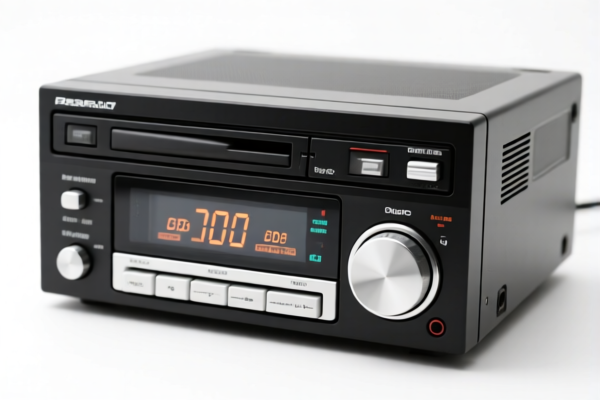


AI Analysis
🎵 CD Player Combination Unit (Low Power)
🌐 HS Code Reference & Clearance Guide | 2026 Latest Tariff Analysis | Professional Customs Strategy
📌 I. Product Definition & Classification: What Exactly Is a "CD Player Combination Unit"?
A CD Player Combination Unit (Low Power) is an audio reproduction device that plays Compact Discs (CDs) and often integrates additional functions (such as amplifiers, speakers, or radio tuners) into a single compact chassis. In international trade, its classification depends heavily on whether it is viewed as a specialized optical disc player or as part of a general audio system, and whether it is considered a standalone unit or part of a larger data processing machine.
⚠️ Key Distinction Points:
- Optical Mechanism Focus: If the device is primarily defined by its CD reading capability using optical media, it leans toward subheading 8519.
- Audio System Focus: If the device is primarily a general-purpose audio receiver/player with CD functionality, it may lean toward subheading 8527.
- "Low Power" Implication: Often implies portability or integration, but does not automatically change the HS code unless it affects the primary function definition.
- U.S. Trade Policy Impact: The classification drastically changes the Section 301 and IEEPA surcharges applied to goods originating from China.
📦 II. HS Code Classification Details (2026 Latest Tariff Authority Comparison)
| HS Code | Product Description | Applicability Scenario | Key Feature |
|---|---|---|---|
8519.81.41.20 |
Optical Disc Recording/Reproduction Equipment (Low Power) | Specialized optical media players; matches logic for CD recorders/players | ✅ Optical Media Focus |
8519.81.30.10 |
Optical Disc Players (CD/CD-ROM) | General CD players using optical discs as the primary medium | ✅ Optical Disc Player |
8527.13.60.40 |
Other Sound Recording/Reproducing Apparatus | Audio players integrated with other recording/reproducing equipment; general audio units | ✅ Audio System Focus |
🔍 Critical Warning:
- 8519 vs. 8527: The core debate is whether the device is an "automatic data processing machine" peripheral/optical player (8519) or a general sound recording/reproducing apparatus (8527).
- U.S. Customs (CBP) often scrutinizes "Combination Units." If the device is marketed as a stereo system with CD capability, 8527 might be argued. However, if it is a dedicated CD player (even if it has small speakers), 8519 is frequently applied for optical devices.
- Tax Consequence: The tax rate difference between these codes is massive (10% vs. 35%) due to U.S. trade restrictions on Chinese goods.
💰 III. 2026 Latest Tariff Rate Breakdown (Including Surtaxes & Policy Add-ons)
✅ Applicable Country: United States (US)
✅ Country of Origin: China (CN)
✅ Effective Date: November 10, 2025 (and subsequent imports)
🎯 1. 8519.81.41.20 — Optical Disc Recording/Reproduction Equipment (Low Power)
| Item | Content |
|---|---|
| Base Tariff | 0.0% (ad valorem) |
| Section 301 Surtax | 0.0% (No additional 25% tariff for this specific subheading under current lists) |
| Section 122 / IEEPA Surtax | +10.0% (Targeted China surcharge) |
| Total Tax Rate | 10.0% |
| Tax Calculation | CIF Value × 10% |
| De Minimis Eligibility | ❌ No (Denied de minimis for goods subject to Section 301/IEEPA) |
| Legal Basis Path | IEEPA:9903.01.24 → USITC:8519.81.41.20 |
📌 Explanation:
- This code is classified under "Optical disc players, recorders and reproducers."
- It attracts a 10% IEEPA surcharge but avoids the harsher 25% Section 301 tariff that applies to other electronic categories.
- Total Liability: Only 10%. This is the most favorable classification for low-power optical devices.
🎯 2. 8519.81.30.10 — Optical Disc Players (CD)
| Item | Content |
|---|---|
| Base Tariff | 0.0% |
| Section 301 Surtax | +25.0% (Standard Section 301 tariff for electronic goods from China) |
| Section 122 / IEEPA Surtax | +10.0% (Targeted China surcharge) |
| Total Tax Rate | 35.0% |
| Tax Calculation | CIF Value × 35% |
| De Minimis Eligibility | ❌ No |
| Legal Basis Path | USITC:9903.01.01 (Section 301) + IEEPA:9903.01.24 |
📌 Explanation:
- While also an optical player, this subheading falls under a different legal interpretation that triggers the full 25% Section 301 tariff.
- Combined with the 10% IEEPA surcharge, the total burden is 35%.
- Risk: Misclassification here increases cost by 25 percentage points compared to8519.81.41.20.
🎯 3. 8527.13.60.40 — Other Sound Recording/Reproducing Apparatus
| Item | Content |
|---|---|
| Base Tariff | 0.0% |
| Section 301 Surtax | 0.0% (Note: Some general audio items may have different 301 lists, but here listed as 0.0% base + IEEPA) |
| Section 122 / IEEPA Surtax | +10.0% |
| Total Tax Rate | 10.0% |
| Tax Calculation | CIF Value × 10% |
| De Minimis Eligibility | ❌ No |
| Legal Basis Path | IEEPA:9903.01.24 → USITC:8527.13.60.40 |
📌 Explanation:
- This code treats the device as a general audio apparatus rather than a specialized optical data device.
- It benefits from a 10% total tax rate, similar to the first code.
- Caveat: U.S. Customs may challenge this if the device is marketed primarily as a CD player. If the "CD" function is secondary to radio/amp functions, this code is safer. If it's a "CD Player," 8519 is more accurate, but you must choose the lower-taxed 8519 variant.
🛠️ IV. Customs Clearance Practical Advice (Pitfall Avoidance Guide)
✅ 1. Required Documentation Checklist
| Document | Must Provide | Explanation |
|---|---|---|
| ✅ Product Specification Sheet | ✔️ | Must clearly state "Optical Disc Player" vs. "Audio System" and highlight "Low Power" features. |
| ✅ Circuit Diagram / Block Diagram | ✔️ | Crucial to prove if the primary function is optical data reading (8519) or audio reproduction (8527). |
| ✅ Product Photos (Clear) | ✔️ | Show branding, input/output ports, and media slot. If it has a CD slot, emphasize it. |
| ✅ Commercial Invoice | ✔️ | Must accurately describe the product. Avoid vague terms like "Electronic Toy." Use "CD Player Combo Unit." |
| ✅ Country of Origin Certificate | ✔️ | Essential to apply/avoid IEEPA surcharges if origin is not China. |
| ✅ Declaration of Function | ✔️ | Explicitly state: "Primary function is playing Compact Discs using optical media." |
✅ 2. Declaration Strategy (Key Rules)
🔥 "Define Primary Function, Choose Optics Over Audio, Avoid 301 Trap!"
| Scenario | Correct Declaration Approach | Error to Avoid |
|---|---|---|
| Device marketed as "CD Player" with small speakers | Declare as Optical Disc Player (8519.81...) |
Declare as "Radio/CD Receiver" (8527) without justification → Risk of 25% penalty. |
| Device marketed as "Boombox" or "Stereo System" with CD | Consider 8527.13.60.40 if audio is primary | Declare as "CD Player" → Risk of reclassification to 8527 (still 10% here, but verify 301 status). |
| "Low Power" Claim | Include in specs to support portability argument | Ignore → May be classified as high-power equipment with different rules. |
| Origin: China | Prepare for 10% or 35% tax | Assume 0% base tariff means 0% total → Big surprise at customs. |
✅ 3. Special Circumstances Handling
| Situation | Handling Suggestion |
|---|---|
| OEM/White Label Products | Ensure the technical specifications match the declared HS code. If it's a "CD Player," do not call it "Computer Peripheral" unless it connects via USB/IEEE1394 as a data drive. |
| Integrated with USB/MP3 | If it plays CDs and USB/MP3, it is still primarily a CD player if the optical drive is central. Keep 8519. |
| Pre-Ruling Application | Highly Recommended: Apply for a Customs Ruling (CBP Ruling) before shipment. Submit specs and argue for 8519.81.41.20 to secure the 10% rate. |
| Section 301 Exclusion | Check if your specific HTSUS subheading is excluded from Section 301. In this case, 8519.81.41.20 avoids the 25% part, but 8519.81.30.10 does not. |
🌍 V. Global Market Clearance Comparison (2026 Latest)
| Country/Region | Recommended HS Code | Tariff (China Origin) | Certification Req. | Notes |
|---|---|---|---|---|
| 🇺🇸 USA | 8519.81.41.20 |
10.0% | FCC ID | Avoid 8519.81.30.10 (35%) |
| 🇺🇸 USA | 8527.13.60.40 |
10.0% | FCC ID | Risk of misclassification if marketed as CD Player |
| 🇨🇳 China | 8519.81.41.20 |
0.0% | CCC (if applicable) | Import into China is duty-free for most electronics |
| 🇪🇺 EU | 8519.93.00 |
0.0% | CE + RoHS | VAT applies (19-27%) |
| 🇬🇧 UK | 8519.93.00 |
0.0% | UKCA + RoHS | Post-Brexit rules apply |
📌 Conclusion:
- USA is the most critical market due to the 25% differential between similar codes.
- Strategic Advice: For "Low Power" CD combos, argue for8519.81.41.20to secure the 10% rate. Avoid8519.81.30.10at all costs.
- Documentation is Key: Your product description must support the "Optical Disc" classification, not just "Audio System," to leverage the lower Section 301 impact (if applicable) or IEEPA-only structure.
📌 VI. Common Errors & Pitfalls (Lessons Learned)
❌ Error 1: Declaring a CD Player as 8519.81.30.10
👉 Consequence: Paying 35% instead of 10%. Loss of 25% profit margin.
👉 Fix: Verify if the specific subheading 8519.81.41.20 applies to your "Low Power" specification. If yes, use it.
❌ Error 2: Ignoring the IEEPA 10% Surtax
👉 Consequence: Underpaying taxes by 10% on a 10% rate product.
👉 Fix: Always add the 10% IEEPA surcharge for China-origin goods, regardless of the base code.
❌ Error 3: Using "Radio" as the primary description
👉 Consequence: Customs may reject 8519 and force 8527. While both are 10% here, it causes delays and inspections.
👉 Fix: Be consistent. If it's a CD player, say "CD Player."
❌ Error 4: Splitting Shipment to Avoid "Combination"
👉 Consequence: Customs views separate shipments as part of the same consignment. Penalties apply.
👉 Fix: Declare the complete unit accurately.
✅ Correct Practice:
"CD Player Combination Unit, Low Power, Optical Disc Playback, Model XYZ, FCC Certified, Origin: China"
HS Code:8519.81.41.20
Total Tax: 10.0%
🎯 VII. Conclusion: Precise Classification Saves 25%
🎯 Remember the Golden Rule:
🔹 "CD Player + Low Power = 8519.81.41.20 (10%)"
🔹 "CD Player + General = 8519.81.30.10 (35%)"
🔹 "Audio System + CD = 8527.13.60.40 (10%)"
📌 Pro Tip:
If your product is borderline, apply for a CBP Pre-Ruling before manufacturing or shipping. Submit your technical specs and request classification under 8519.81.41.20. This legally binds the U.S. Customs to your chosen code, protecting you from the 35% hit.
📣 Immediate Action:
📞 Contact a Customs Broker: Ask specifically about the distinction between
8519.81.41.20and8519.81.30.10.
📄 Prepare Technical Docs: Highlight "Optical Media" and "Low Power" features.
🚀 Ship Confidently: With the right code, you pay 10%, not 35%. Save that 25% for profit!
✨ Professional Clearance Starts with Accurate Classification!
💼 Your Bottom Line Depends on These Two Digits: 41 vs. 30!
Customer Reviews
About HS Code Classification
The Harmonized System (HS) is an internationally standardized nomenclature developed by the World Customs Organization (WCO) to classify traded products. Over 200 countries use the HS system as the basis for customs tariffs, trade statistics, and import/export regulations.
Each HS code follows a hierarchical structure:
- Chapter (2 digits) — Broad category of goods (e.g., Chapter 84: Machinery and Mechanical Appliances)
- Heading (4 digits) — More specific grouping within the chapter
- Subheading (6 digits) — Internationally standardized breakdown, used by all WCO member countries
- National subdivisions (8-10 digits) — Country-specific extensions for further classification, such as US HTSUS 10-digit codes
Correct HS code classification is essential for smooth customs clearance, accurate duty payment, and compliance with trade regulations. Misclassification can lead to customs delays, overpayment of duties, or penalties.
When importing from CN to US, the applicable tariff rates may include:
- Most-Favored-Nation (MFN) rate — The standard duty rate applied to WTO members
- General rate — Applied to countries without trade agreements
- Trade remedy duties — Additional tariffs such as Section 301 (anti-dumping), Section 232 (national security), or countervailing duties
The information provided on this page is for reference purposes only. For official classification, please consult with your local customs authority or a licensed customs broker.