CD Player System
CN → US| HS Code | Tariff Rate | Origin | Destination | Doc |
|---|---|---|---|---|
| 8543708900 | 17.5% | CN | US | Official Doc |
| 8519814120 | 10.0% | CN | US | Official Doc |
| 8543709860 | 37.6% | CN | US | Official Doc |
| 8519813010 | 35.0% | CN | US | Official Doc |
| 8518500000 | 35.0% | CN | US | Official Doc |
Product Images
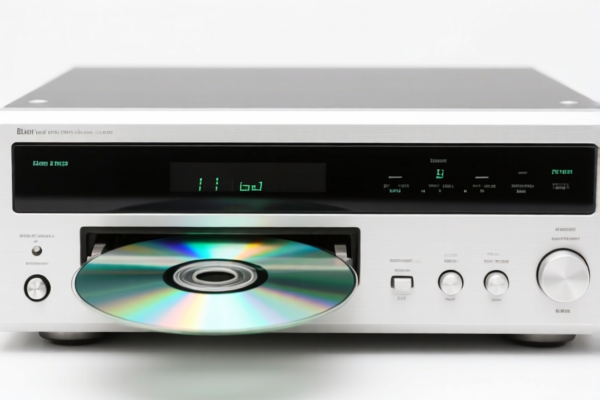


AI Analysis
🎵 CD Player System (CD Playback Systems)
🌐 HS Code Reference & Customs Clearance Guide | 2026 Latest Tariff Analysis | Professional通关 Strategy
📌 1. Product Definition & Classification: Do You Really Understand "CD Players"?
A CD Player System is an electronic device designed to record and reproduce audio files from compact discs. In international trade, the classification hinges on whether the device is seen as a specific optical media player or a general-purpose electronic apparatus.
Key Distinction Points:
- Optical Media Specificity: Does it only play audio via optical discs? → Likely Chapter 8519 (Sound recording/reproducing apparatus).
- General Electronic Apparatus: Is it a complex system with mixed functions or no specific optical media definition? → Likely Chapter 8543 (Other electric appliances).
⚠️ Critical Warning:
- Misclassification can lead to tax rates ranging from 10% to 37.6% due to Section 301 and IEEPA tariffs.
- The "122 Clause" (Section 232 steel/aluminum or other specific trade measures) often adds an extra 10% on top of base and Section 301 tariffs.
📦 2. HS Code Classification Details (2026 Latest Tariff Authority Comparison)
Based on the provided data, here are the five possible HS Code classifications for a CD Player System, ranked by tax efficiency and technical fit.
| HS Code | Product Description | Technical Justification | Total Tax Rate |
|---|---|---|---|
8519.81.41.20 |
Best Fit: Optical Media Player | Specifically designed for CD playback. Fits the definition of "optical media recording/reproducing apparatus." No material or functional conflict. | 10.0% |
8543.70.89.00 |
Portable Battery-Operated Electronic Device | Classified as a portable electronic device for audio files. May apply if battery-powered and portable. | 17.5% |
8519.81.30.10 |
Optical Disk Playback (Sound Only) | Core function is optical disc playback for sound reproduction. | 35.0% |
8518.50.00.00 |
Electrical Sound/Amplification Equipment | Classified under electro-acoustic amplifiers. No material/usage conflict. | 35.0% |
8543.70.98.60 |
Other Electronic Appliances | General category for electronic devices not specified elsewhere. Highest risk/highest tax. | 37.6% |
🔍 Key Insight:
-8519.81.41.20is the most favorable classification with a total tax of only 10%.
-8543.70.98.60is the least favorable at 37.6% due to higher base tariffs and Section 301 duties.
- The difference between the best and worst case is 27.6 percentage points, which significantly impacts profit margins.
💰 3. 2026 Latest Tariff Rate Breakdown (Including Supplementary Taxes)
✅ Applicable Country: United States (US)
✅ Country of Origin: China (CN)
✅ Effective Date: 2025/2026 (Current Trade Policy)
🎯 1. 8519.81.41.20 —— OPTIMAL CLASSIFICATION: Optical CD Player
| Item | Detail |
|---|---|
| Base Duty | 0.0% |
| Section 301 Additional Duty | 0.0% |
| 122 Clause Duty | 10.0% |
| Total Tax Rate | 10.0% |
| Tax Calculation | CIF Value × 10% |
| De Minimis Exemption | ❌ Not Applicable (Commercial shipment) |
| Legal Basis | HTSUS 8519.81.41.20 + IEEPA/Section 301 Footnotes |
📌 Explanation:
- This classification benefits from zero base duty and zero Section 301 duty.
- The only additional cost is the 122 Clause duty (10%).
- Why it’s best: It accurately reflects the product’s primary function as an optical media player, avoiding the "general apparatus" penalties.
🎯 2. 8543.70.89.00 —— Portable Electronic Audio Device
| Item | Detail |
|---|---|
| Base Duty | 0.0% |
| Section 301 Additional Duty | 7.5% |
| 122 Clause Duty | 10.0% |
| Total Tax Rate | 17.5% |
| Tax Calculation | CIF Value × 17.5% |
| De Minimis Exemption | ❌ Not Applicable |
📌 Explanation:
- If classified as a general portable electronic device, a 7.5% Section 301 duty applies.
- This is a mid-tier option, 7.5% higher than the optimal classification.
🎯 3. 8519.81.30.10 & 8518.50.00.00 —— High Tax Categories
| Item | Detail |
|---|---|
| Base Duty | 0.0% |
| Section 301 Additional Duty | 25.0% |
| 122 Clause Duty | 10.0% |
| Total Tax Rate | 35.0% |
| Tax Calculation | CIF Value × 35.0% |
📌 Explanation:
- Despite a 0% base duty, the 25% Section 301 duty makes these classifications expensive.
- This occurs if customs views the product as a general audio amplifier or non-specific optical player.
🎯 4. 8543.70.98.60 —— Highest Tax Category
| Item | Detail |
|---|---|
| Base Duty | 2.6% |
| Section 301 Additional Duty | 25.0% |
| 122 Clause Duty | 10.0% |
| Total Tax Rate | 37.6% |
| Tax Calculation | CIF Value × 37.6% |
📌 Explanation:
- This is the worst-case scenario.
- It includes a 2.6% base duty PLUS 25% Section 301 PLUS 10% 122 Clause.
- Avoid this classification unless the product cannot be proven to be an optical player.
🛠️ 4. Customs Clearance Practical Advice (Pitfall Avoidance Guide)
✅ 1. Documentation Checklist (Non-Negotiable)
| Document | Required | Purpose |
|---|---|---|
| ✅ Product Specification Sheet | ✔️ | Must explicitly state "CD Playback," "Optical Disc," "Audio Output." |
| ✅ Photos of Product & Packaging | ✔️ | Show the disc tray, buttons, and ports. |
| ✅ Technical Manual | ✔️ | Proves the device is designed for optical media playback. |
| ✅ Commercial Invoice | ✔️ | Description must match HS Code logic (e.g., "CD Player System"). |
| ✅ Origin Certificate | ✔️ | To verify China origin and apply correct tariffs. |
✅ 2. Declaration Strategy (Key Mantra)
🔥 "Prove Optical Function, Claim 10%, Avoid 37%!"
| Scenario | Correct Declaration | Incorrect Declaration |
|---|---|---|
| Standard CD Player | 8519.81.41.20 (Optical Player) |
General "Audio System" → 8543.70.98.60 (37.6%) |
| Portable CD Player | 8543.70.89.00 (Portable Electronic) |
Generic "Electronic Device" → 8543.70.98.60 |
| CD Player + Amplifier | Separate or 8519.81.30.10 if integrated |
Mislabel as "Speaker" → 8518.50.00.00 (35%) |
✅ 3. Special Handling Tips
- If the device plays DVDs/Blu-rays: Ensure the documentation specifies CD functionality if targeting
8519.81.41.20. Mixed-media devices may fall under stricter scrutiny. - Bundled Accessories: If sold with cables or stands, declare them as part of the main product to avoid separate classification issues.
- Pre-Ruling Application: For large shipments, apply for a Binding Tariff Information (BTI) or pre-ruling from CBP to lock in the 10% rate.
🌍 5. Global Market Comparison (2026 Latest)
| Market | Recommended HS Code | Estimated Total Tax | Key Requirement |
|---|---|---|---|
| 🇺🇸 USA | 8519.81.41.20 |
10% | Proven optical media function |
| 🇨🇳 China | 8519.81.41.20 |
~5-10% (Domestic) | CCC Certification (if applicable) |
| 🇪🇺 EU | 8519.81.41.20 |
0-4% (General) | CE Marking, RoHS Compliance |
| 🇬🇧 UK | 8519.81.41.20 |
0-4% | UKCA Marking |
📌 Conclusion:
- The US market is the most tariff-sensitive due to Section 301 and 122 Clause policies.
- Accurate classification is critical to saving 27.6% in duties.
- Other markets (EU, UK, Asia) have lower tariffs, but US compliance requires meticulous documentation.
📌 6. Common Mistakes & Pitfalls (Lessons Learned)
❌ Mistake 1: Declaring a CD Player as "Electronic Appliance" (8543.70.98.60)
👉 Result: Tax jumps from 10% to 37.6%. Loss of 27.6% profit margin.
❌ Mistake 2: Ignoring the "122 Clause"
👉 Result: Unexpected 10% surcharge even if Section 301 is 0%.
❌ Mistake 3: Providing vague descriptions like "Audio Device"
👉 Result: Customs may classify it under the highest tariff bracket (8518.50.00.00 or 8543.70.98.60).
✅ Correct Approach:
"CD Player System, Optical Disc Playback, Audio Reproduction, Model XYZ, Designed for Compact Discs."
🎯 7. Conclusion: Professional Declaration Saves Money!
🎯 Key Takeaway:
🔹 Aim for
8519.81.41.20: Total Tax 10%.
🔹 Avoid8543.70.98.60: Total Tax 37.6%.
🔹 Document Proof: Ensure technical specs highlight optical media playback as the primary function.
📌 Pro Tip:
If your CD Player is part of a larger hi-fi system, consider declaring the player and amplifier separately if possible, or ensure the main unit is clearly an optical player to benefit from the lower rate.
📣 Action Required:
📞 Consult a Customs Broker: Verify the exact technical specifications match
8519.81.41.20.
📄 Prepare Technical Files: Include manuals, photos, and circuit diagrams if requested.
🚀 Optimize Costs: Save up to 27.6% in duties by choosing the correct HS Code!
✨ Precise Classification = Maximum Profit!
💼 Every percentage point counts in global trade!
Customer Reviews
About HS Code Classification
The Harmonized System (HS) is an internationally standardized nomenclature developed by the World Customs Organization (WCO) to classify traded products. Over 200 countries use the HS system as the basis for customs tariffs, trade statistics, and import/export regulations.
Each HS code follows a hierarchical structure:
- Chapter (2 digits) — Broad category of goods (e.g., Chapter 84: Machinery and Mechanical Appliances)
- Heading (4 digits) — More specific grouping within the chapter
- Subheading (6 digits) — Internationally standardized breakdown, used by all WCO member countries
- National subdivisions (8-10 digits) — Country-specific extensions for further classification, such as US HTSUS 10-digit codes
Correct HS code classification is essential for smooth customs clearance, accurate duty payment, and compliance with trade regulations. Misclassification can lead to customs delays, overpayment of duties, or penalties.
When importing from CN to US, the applicable tariff rates may include:
- Most-Favored-Nation (MFN) rate — The standard duty rate applied to WTO members
- General rate — Applied to countries without trade agreements
- Trade remedy duties — Additional tariffs such as Section 301 (anti-dumping), Section 232 (national security), or countervailing duties
The information provided on this page is for reference purposes only. For official classification, please consult with your local customs authority or a licensed customs broker.