CD Player System (AUX)
CN → US| HS Code | Tariff Rate | Origin | Destination | Doc |
|---|---|---|---|---|
| 8543709860 | 37.6% | CN | US | Official Doc |
| 8518500000 | 35.0% | CN | US | Official Doc |
| 8519813010 | 35.0% | CN | US | Official Doc |
| 8543708900 | 17.5% | CN | US | Official Doc |
| 8519814120 | 10.0% | CN | US | Official Doc |
Product Images
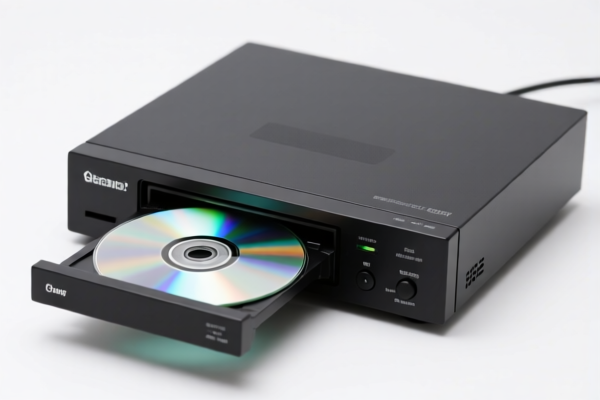
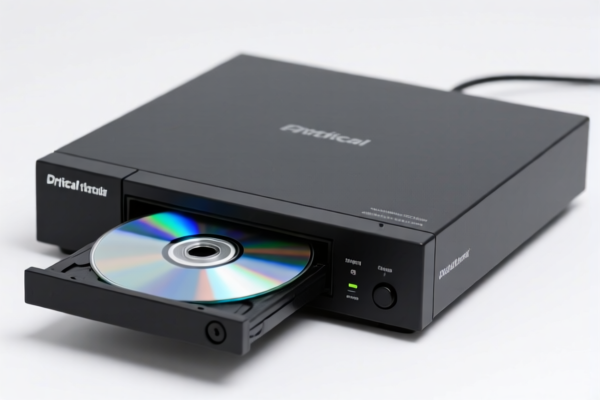


AI Analysis
📻 CD Player System (AUX)
🌐 HS Code Reference & Customs Clearance Guide | 2026 Latest Tariff Analysis | Professional Compliance Strategy
📌 1. Product Definition: What is a "CD Player System"?
A CD Player System is an electronic audio device designed primarily for the playback of Compact Discs (CDs). It typically includes a laser optical mechanism, digital-to-analog converter (DAC), and output interfaces (such as AUX, USB, or Bluetooth).
In international trade, the classification depends heavily on the primary function and media type: * Optical Media Playback: If the core function is reading optical discs (CDs/DVDs) for sound reproduction, it generally falls under Chapter 85 (Electrical machinery). * Specific Use: The presence of an AUX port indicates audio output capability but does not change the primary classification from optical media playback to general electronic apparatus, unless the device lacks optical playback capabilities.
⚠️ Key Distinction:
- If the device only plays CDs/DVDs → Classified under 8519 (Sound recording/reproducing apparatus).
- If the device is a general-purpose audio processor without specific media playback → Classified under 8543 (Other electrical machines/aparatus).
📦 2. HS Code Classification Details (2026 Latest Tariff Reference)
Based on the provided data, here are the five possible HS Code classifications for the CD Player System (AUX), along with their rationale and tax implications.
| HS Code | Product Description & Rationale | Total Tax Rate | Tax Breakdown |
|---|---|---|---|
| 8543.70.98.60 | Other Electrical Machines/Apparatus: Classified as an "electrical apparatus" for playback. No material/shape conflicts. | 37.6% | Base: 2.6% Section 301: 25.0% Section 122: 10% |
| 8518.50.00.00 | Audio Amplifiers/Processing: Classified as an "electro-acoustic/audio processing device" because its function aligns with audio frequency processing systems. | 35.0% | Base: 0.0% Section 301: 25.0% Section 122: 10% |
| 8519.81.30.10 | Optical Disc Players: Specifically for CD playback. Core function is "optical disk media" use, "sound reproduction only." USB is secondary. | 35.0% | Base: 0.0% Section 301: 25.0% Section 122: 10% |
| 8543.70.89.00 | Portable Electronic Apparatus: Classified as a "portable battery-operated electronic device" for audio regeneration. | 17.5% | Base: 0.0% Section 301: 7.5% Section 122: 10% |
| 8519.81.41.20 | Optical Recording/Playback Apparatus: Fits "optical medium" technology features. No material conflict. | 10.0% | Base: 0.0% Section 301: 0.0% Section 122: 10% |
🔍 Critical Insight:
The classification hinges on whether customs authorities view the device as a dedicated optical player (8519) or a general electronic audio apparatus (8543/8518). The most favorable rate is 10% (8519.81.41.20), but this requires convincing the customs officer that the device strictly fits the "optical recording/playback" description without other conflicting functions.
💰 3. 2026 Latest Tariff Rate Detailed Analysis
✅ Applicable Country: USA (US)
✅ Origin: China (CN)
✅ Effective Date: From November 10, 2025 onwards
🎯 1. 8543.70.98.60 — Other Electrical Machines/Apparatus
| Item | Detail |
|---|---|
| Base Rate | 2.6% |
| Section 301 Tariff | +25.0% |
| Section 122 Tariff | +10.0% |
| Total Rate | 37.6% |
| De Minimis Exemption | ❌ Not Eligible |
| Legal Basis | High tariff burden due to Section 301. |
📌 Explanation:
This classification is the least favorable. It treats the CD player as a general electronic apparatus, triggering the highest Section 301 tariff (25%) plus the 10% Section 122 tariff. Avoid this unless no other classification is plausible.
🎯 2. 8518.50.00.00 — Audio Amplifiers/Processing Devices
| Item | Detail |
|---|---|
| Base Rate | 0.0% |
| Section 301 Tariff | +25.0% |
| Section 122 Tariff | +10.0% |
| Total Rate | 35.0% |
| De Minimis Exemption | ❌ Not Eligible |
| Legal Basis | Moderate-High tariff burden. |
📌 Explanation:
While the base rate is 0%, the Section 301 tariff still applies at 25%. This classification is based on the "audio processing" aspect. It is cheaper than8543.70.98.60but more expensive than dedicated optical player codes.
🎯 3. 8519.81.30.10 — Optical Disc Players (CD Specific)
| Item | Detail |
|---|---|
| Base Rate | 0.0% |
| Section 301 Tariff | +25.0% |
| Section 122 Tariff | +10.0% |
| Total Rate | 35.0% |
| De Minimis Exemption | ❌ Not Eligible |
| Legal Basis | Same as above. |
📌 Explanation:
This is the standard classification for CD players. It explicitly mentions "optical disk media." However, it still incurs the full 25% Section 301 tariff. This is the most common and defensible classification for CD players.
🎯 4. 8543.70.89.00 — Portable Electronic Apparatus
| Item | Detail |
|---|---|
| Base Rate | 0.0% |
| Section 301 Tariff | +7.5% |
| Section 122 Tariff | +10.0% |
| Total Rate | 17.5% |
| De Minimis Exemption | ❌ Not Eligible |
| Legal Basis | Optimization Opportunity. |
📌 Explanation:
This classification offers a significant tax advantage (17.5% vs. 35% or 37.6%). It argues the device is a "portable battery-operated electronic device." To qualify, you must demonstrate that the device is portable and battery-operated (not just plug-in). If the device is a desktop unit, this classification may be rejected.
🎯 5. 8519.81.41.20 — Optical Recording/Playback Apparatus (Best Rate)
| Item | Detail |
|---|---|
| Base Rate | 0.0% |
| Section 301 Tariff | 0.0% |
| Section 122 Tariff | +10.0% |
| Total Rate | 10.0% |
| De Minimis Exemption | ❌ Not Eligible |
| Legal Basis | Most Favorable. |
📌 Explanation:
This is the most advantageous classification. It applies a 0% Section 301 tariff, resulting in only the 10% Section 122 tariff. To use this, you must strictly prove that the device fits the definition of "optical recording/playback apparatus" and does not have conflicting general-purpose features. This requires strong technical documentation and potentially a pre-ruling.
🛠️ 4. Customs Clearance Practical Advice
✅ 1. Required Documentation Checklist
| Document | Required | Purpose |
|---|---|---|
| ✅ Product Specifications | ✔️ | Detail interfaces (AUX, USB), power source (battery vs. AC), and primary function (CD playback). |
| ✅ Technical Schematics | ✔️ | Prove the core function is optical media playback, not general audio processing. |
| ✅ Product Photos | ✔️ | Show front/back panels, interfaces, and branding. |
| ✅ Commercial Invoice | ✔️ | Clearly state "CD Player System" and HS Code. |
| ✅ Origin Certificate | ✔️ | Confirm China origin to apply appropriate Section 301 rates. |
| ✅ Battery Test Report | ✔️ | If claiming 8543.70.89.00 (portable), prove battery operation. |
✅ 2. Classification Strategy & Tips
🔥 "Optical Core, Portable Edge, Document Everything!"
| Scenario | Recommended HS Code | Risk Level | Notes |
|---|---|---|---|
| Standard Desktop CD Player | 8519.81.30.10 |
Medium | Standard classification. Expect 35% tax. |
| Portable/Battery-Powered CD Player | 8543.70.89.00 |
Medium-High | Can argue for 17.5% tax if portability is proven. |
| Specialized Optical Playback Device | 8519.81.41.20 |
High | Aim for 10% tax. Requires strong technical justification to avoid Section 301. |
| General Audio Processor | 8543.70.98.60 |
Low | Avoid this if possible due to high tax (37.6%). |
📌 Key Tip:
- If your device is portable, emphasize this feature to potentially qualify for8543.70.89.00(17.5% tax). - If your device is strictly optical, argue for8519.81.41.20(10% tax) but be prepared to defend against customs challenges. - Always include Section 122 (10%) in your cost calculations regardless of HS Code.
✅ 3. Special Cases
| Situation | Handling Advice |
|---|---|
| Device with Bluetooth/Aux | Still classified under optical playback (8519) if CD is the primary function. |
| Device with USB Input | Clarify that USB is for media extension, not the primary playback method. |
| Desktop vs. Portable | Desktop units are harder to classify under portable codes (8543.70.89.00). |
| Pre-Ruling Request | Highly recommended for 8519.81.41.20 to lock in the 10% rate. |
🌍 5. Global Market Comparison (2026 Latest)
| Country/Region | Recommended HS Code | Estimated Tax | Notes |
|---|---|---|---|
| 🇺🇸 USA | 8519.81.41.20 |
10% | Best rate with Section 301 exemption. |
| 🇨🇳 China | 8519.81.41.20 |
Low/Zero | Check local tariffs; usually lower than US. |
| 🇪🇺 EU | 8519.81.41.20 |
0% | Generally lower tariffs; no Section 301/122. |
| 🇬🇧 UK | 8519.81.41.20 |
0-2.5% | Post-Brexit tariffs may vary; check latest schedule. |
| 🇯🇵 Japan | 8519.81.41.20 |
0-5% | Generally favorable for electronics. |
📌 Conclusion:
- USA is the most complex market due to Section 301 and Section 122 tariffs. - EU/UK/Japan offer much lower tax burdens. Consider supply chain diversification if exporting to the US.
📌 6. Common Errors & Pitfalls
❌ Error 1: Classifying a desktop CD player as "Portable" (8543.70.89.00)
👉 Consequence: Customs rejection, potential penalty, or forced reclassification to 35% tax.
❌ Error 2: Overlooking Section 122 (10%)
👉 Consequence: Unexpected tax bill. Always include 10% in cost calculations.
❌ Error 3: Using generic "Electrical Apparatus" classification (8543.70.98.60)
👉 Consequence: Highest tax rate (37.6%). Only use as a last resort.
❌ Error 4: Ignoring Section 301 for Optical Players
👉 Consequence: Many importers assume all audio devices get 0% base rate, but forget the 25% Section 301 applies unless a specific exemption code is used.
✅ Correct Approach:
"CD Player System, Portable, Battery-Operated, AUX Output, Model XYZ" → Argue for
8543.70.89.00(17.5%).
"CD Player System, Optical Playback, Desktop, AUX Output, Model XYZ" → Argue for8519.81.41.20(10%) with strong justification, or accept8519.81.30.10(35%).
🎯 7. Conclusion: Strategic Clearance for Cost Efficiency
🎯 Key Takeaways:
🔹 Best Rate:
8519.81.41.20(10% tax) – Requires strict optical player classification.
🔹 Good Rate:8543.70.89.00(17.5% tax) – If device is portable/battery-operated.
🔹 Standard Rate:8519.81.30.10(35% tax) – Safe, standard CD player classification.
🔹 Highest Rate:8543.70.98.60(37.6% tax) – Avoid unless necessary.
📌 Pro Tip:
Apply for a US Customs Pre-Ruling before shipping. This locks in your HS Code and tax rate, providing certainty and avoiding post-clearance audits.
📣 Immediate Action:
📞 Consult a customs broker.
📄 Prepare technical datasheets proving portability (if claiming 17.5%) or optical specificity (if claiming 10%).
🚀 Optimize your supply chain for cost efficiency and compliance.
✨ Professional Clearance Starts with Accurate Classification!
💼 Every percentage point saved is profit kept!
Customer Reviews
About HS Code Classification
The Harmonized System (HS) is an internationally standardized nomenclature developed by the World Customs Organization (WCO) to classify traded products. Over 200 countries use the HS system as the basis for customs tariffs, trade statistics, and import/export regulations.
Each HS code follows a hierarchical structure:
- Chapter (2 digits) — Broad category of goods (e.g., Chapter 84: Machinery and Mechanical Appliances)
- Heading (4 digits) — More specific grouping within the chapter
- Subheading (6 digits) — Internationally standardized breakdown, used by all WCO member countries
- National subdivisions (8-10 digits) — Country-specific extensions for further classification, such as US HTSUS 10-digit codes
Correct HS code classification is essential for smooth customs clearance, accurate duty payment, and compliance with trade regulations. Misclassification can lead to customs delays, overpayment of duties, or penalties.
When importing from CN to US, the applicable tariff rates may include:
- Most-Favored-Nation (MFN) rate — The standard duty rate applied to WTO members
- General rate — Applied to countries without trade agreements
- Trade remedy duties — Additional tariffs such as Section 301 (anti-dumping), Section 232 (national security), or countervailing duties
The information provided on this page is for reference purposes only. For official classification, please consult with your local customs authority or a licensed customs broker.