CD Player System USB
CN → US| HS Code | Tariff Rate | Origin | Destination | Doc |
|---|---|---|---|---|
| 8519814120 | 10.0% | CN | US | Official Doc |
| 8543708900 | 17.5% | CN | US | Official Doc |
| 8519813010 | 35.0% | CN | US | Official Doc |
| 8543709860 | 37.6% | CN | US | Official Doc |
| 8518500000 | 35.0% | CN | US | Official Doc |
Product Images
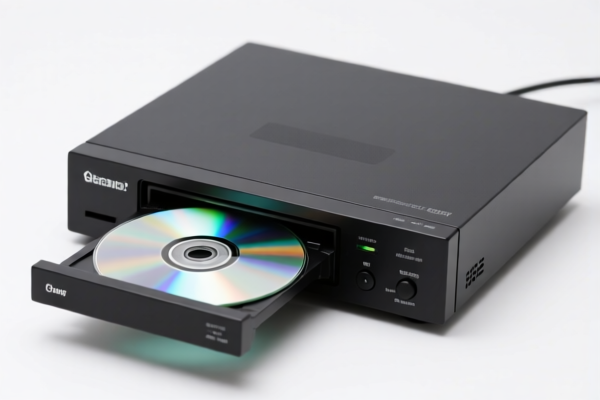
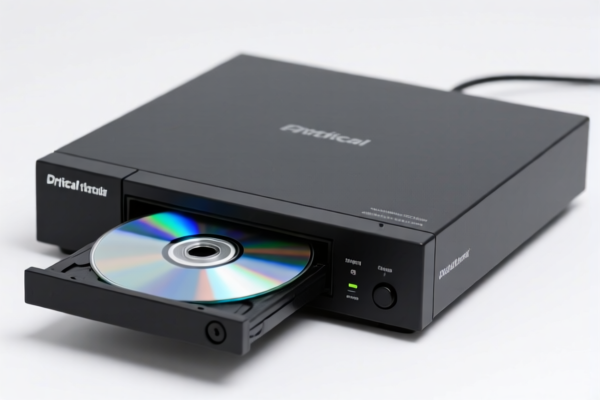


AI Analysis
🎵 CD Player System (USB)
🌐 HS Code Reference & Customs Clearance Guide | 2026 Latest Tariff Analysis | Professional Clearance Strategy
📌 1. Product Definition: Is It an Optical Disc Player or an Electronic Device?
A "CD Player System (USB)" is a complex electronic audio device that combines traditional optical disc reading capabilities with modern digital connectivity (USB). In international trade, its classification is highly contested because it sits at the intersection of two major HS categories: * Optical Disc Players (Heading 8519): Specifically designed for reading CDs/DVDs. * Other Electrical Machines (Heading 8543): General-purpose audio processing or special-function electronic devices. * Audio Amplifiers (Heading 8518): If the primary function is perceived as amplification rather than media playback.
⚠️ Critical Classification Point:
- If the device’s core function is defined as reading optical media (CD), it leans towards 8519.
- If the device is viewed as a general audio processing system where CD playback is just one feature among many, it may fall under 8543.
- Misclassification leads to drastic tax differences (from 10% to 37.6%).
📦 2. HS Code Classification Details (Based on Provided Data)
Below are the 5 possible HS Codes identified for this product, along with the logic and tax implications for each. Note: All rates below include US Base Tariff, Section 301/Additional Tariff, and IEEPA 122-Clause Tariff (10%).
| HS Code | Product Description & Logic | Total Tax Rate | Tax Breakdown |
|---|---|---|---|
| 8519.81.41.20 | Best Case: Optical Disc Recording/Playback Logic: Fits "Optical Media Recording/Playback" scope. Designed as a standard CD player with USB interface, belonging to optical equipment category. |
10.0% | Base: 0% Section 301/Additional: 0% 122-Clause (IEEPA): 10% |
| 8543.70.89.00 | Common Misclassification: Portable Battery/Electronic Device Logic: Viewed as a "portable battery-supplied electronic equipment" capable of recording/reproducing audio files. Fails to recognize specific optical hardware focus. |
17.5% | Base: 0% Section 301/Additional: 7.5% 122-Clause (IEEPA): 10% |
| 8519.81.30.10 | High Risk: Optical Disc for Sound Reproduction Logic: Core function is strictly optical disc (CD) playback for sound only. However, specific sub-heading triggers higher additional tariffs. |
35.0% | Base: 0% Section 301/Additional: 25% 122-Clause (IEEPA): 10% |
| 8543.70.98.60 | Worst Case: Other Electrical Machinery Logic: Classified as "Other machines and apparatus" under general electronic appliances. No conflict in material/form, but attracts highest base + additional tariffs. |
37.6% | Base: 2.6% Section 301/Additional: 25% 122-Clause (IEEPA): 10% |
| 8518.50.00.00 | Alternative: Audio Processing Equipment Logic: Viewed as "Electro-acoustic/Audio processing equipment" or amplifier group. Assumes the USB system makes it primarily an audio output device. |
35.0% | Base: 0% Section 301/Additional: 25% 122-Clause (IEEPA): 10% |
🔍 Key Insight:
- 8519.81.41.20 offers the lowest duty (10%) if you can prove the primary design intent is optical media playback.
- 8543.70.98.60 is the highest duty (37.6%) due to the 2.6% base tariff + 25% additional tariff.
- The difference between the best and worst classification is 27.6%, which is significant for high-volume shipments.
💰 3. Detailed Tariff Analysis (US Market Focus)
✅ Applicable Country: United States (US)
✅ Origin: China (CN) (Implied by IEEPA 122-Clause and Section 301 context)
✅ Effective Time: Current regulations (2025-2026)
🎯 1. 8519.81.41.20 – The Optimal Classification (10%)
| Item | Detail |
|---|---|
| Base Tariff | 0% (Ad Valorem) |
| Section 301 / Additional Tariff | 0% (Exempt or not applicable to this specific subheading) |
| IEEPA 122-Clause Tariff | +10% (Targeted US tariff on specific Chinese tech imports) |
| Total Effective Rate | 10.0% |
| Legal Basis | HS 8519 (Sound recording/reproducing apparatus) → Optical disc specific |
📌 Why this is best:
- It leverages the "Optical Disc" nature of the product.
- Avoids the 25% Section 301 tariff often applied to other electronics under Heading 8543 or 8518.
- Strategy: Emphasize "CD Playback" in product descriptions and marketing materials.
🎯 2. 8543.70.89.00 – The "Portable Electronics" Trap (17.5%)
| Item | Detail |
|---|---|
| Base Tariff | 0% |
| Section 301 / Additional Tariff | +7.5% |
| IEEPA 122-Clause Tariff | +10% |
| Total Effective Rate | 17.5% |
| Legal Basis | HS 8543 (Other electrical machines) |
📌 Risk:
- Customs may view the USB connectivity and digital file support as making it a "general electronic device" rather than a pure CD player.
- The 7.5% additional tariff suggests it falls into a less exempted category of electronics.
🎯 3. 8519.81.30.10 & 8518.50.00.00 – The High-Tariff Zones (35%)
| Item | Detail |
|---|---|
| Base Tariff | 0% |
| Section 301 / Additional Tariff | +25% |
| IEEPA 122-Clause Tariff | +10% |
| Total Effective Rate | 35.0% |
| Legal Basis | HS 8518 (Sound amplifiers) or other 8519 subheadings |
📌 Why so high?
- These codes attract the full 25% Section 301 additional tariff.
- Classification as "Audio Amplifier" (8518) removes the optical media exemption.
🎯 4. 8543.70.98.60 – The Worst Case (37.6%)
| Item | Detail |
|---|---|
| Base Tariff | 2.6% |
| Section 301 / Additional Tariff | +25% |
| IEEPA 122-Clause Tariff | +10% |
| Total Effective Rate | 37.6% |
| Legal Basis | HS 8543 (Other machinery) |
📌 Why so high?
- Double Penalty: You pay the 2.6% base tariff plus the 25% additional tariff.
- This is the most conservative and costly classification, often used when the product’s function is deemed ambiguous.
🛠️ 4. Customs Clearance Practical Advice
✅ 1. Preparation Checklist (Must-Haves)
| Document | Required | Purpose |
|---|---|---|
| Product Specifications | ✔️ | Must highlight "CD Playback," "Optical Drive," and "USB Interface." |
| Functionality Diagram | ✔️ | Show how the USB connects to the CD system, not as a standalone data drive. |
| Marketing Brochure | ✔️ | Use language like "CD Player System with USB Output" rather than "Digital Audio Converter." |
| Commercial Invoice | ✔️ | Clearly state: "CD Player System, Optical Disc Playback, USB Enabled" |
| FCC/CE Certificates | ✔️ | Standard for electronic audio devices. |
| Origin Certificate | ✔️ | Required for tariff determination. |
✅ 2. Declaration Strategy (Key Keywords)
🔥 Golden Rule: "Highlight Optics, Minimize General Electronics"
| Scenario | Recommended Declaration | Incorrect Declaration |
|---|---|---|
| Primary Function | "CD Player System with USB Interface" | "USB Audio Adapter" or "Portable Media Player" |
| HS Code Target | 8519.81.41.20 |
8543.70.89.00 |
| Key Feature Emphasis | "Optical Disc Reading," "CD-ROM Drive" | "Digital File Processing," "Bluetooth/Wireless" |
| Avoid | Using terms like "Computer Peripheral" or "General Purpose Audio Processor" | ❌ |
✅ 3. Special Considerations
| Situation | Handling Advice |
|---|---|
| If the Device Also Plays MP3/Flash Drives | Ensure the CD Drive is the primary mechanism. If USB is used only for power, it’s even stronger for 8519. |
| If It’s a Car Audio System | Emphasize "Automotive CD Player." Sometimes automotive electronics have different duty treatments. |
| If It’s a Hi-Fi Component | Avoid calling it a "System" if possible. Call it a "CD Transport" or "CD Player" to fit 8519 better. |
| Pre-Ruling Application | HIGHLY RECOMMENDED. Apply for an Advance Ruling from US CBP to lock in the 10% rate. |
🌍 5. Global Market Comparison (2026)
| Country/Region | Recommended HS Code | Est. Tariff | Notes |
|---|---|---|---|
| 🇺🇸 USA | 8519.81.41.20 |
10% | Best if classified correctly. Watch out for 301 tariffs on 8543/8518. |
| 🇨🇳 China | 8519.81.41.20 |
Low | Import duties are low; VAT applies. |
| 🇪🇺 EU | 8519.81.00 |
0% | Many audio devices have 0% MFN tariff. |
| 🇬🇧 UK | 8519.81.00 |
0% | Post-Brexit, similar to EU for this category. |
| 🇯🇵 Japan | 8519.81.00 |
0% | Favorable tariff structure for audio equipment. |
📌 Conclusion:
- The US market is the most critical due to the high variance in tariffs (10% vs 37.6%).
- Other markets are relatively stable with low or 0% tariffs.
- Focus your compliance efforts on US Customs.
📌 6. Common Errors & Pitfalls (Learn from Mistakes)
❌ Error 1: Declaring as "USB Audio Adapter" or "DAC"
👉 Result: Misclassified under 8543 or 8518 → 35-37.6% duty.
✅ Fix: Emphasize the CD Optical Drive.
❌ Error 2: Ignoring the IEEPA 122-Clause Tariff
👉 Result: Unexpected 10% charge even on "duty-free" base items.
✅ Fix: Always account for the 10% IEEPA surcharge in cost calculations.
❌ Error 3: Over-complicating the Description
👉 Result: Customs officer interprets ambiguity against you, leading to higher classification.
✅ Fix: Keep it simple: "CD Player with USB."
❌ Error 4: Splitting Shipment (CD Player + USB Cable separately)
👉 Result: Higher duty on components if not declared as a complete set.
✅ Fix: Declare as one complete unit.
🎯 7. Conclusion: Secure the 10% Rate!
🎯 Key Takeaway:
🔹 "CD Player is King: Aim for 8519.81.41.20 (10%)."
🔹 "Avoid 8543 & 8518: They cost you 25-37.6%."
🔹 "IEEPA 10% is unavoidable for China-origin goods, but minimize the base."
📌 Pro Tip:
📞 Apply for an Advance Ruling with US CBP. Provide photos, specs, and emphasize the optical disc mechanism.
🚀 Result: Predictable costs, faster clearance, and savings of up to $2,760 per $10,000 shipment compared to the worst-case scenario.
✨ Professional Clearance Starts with Precise Classification!
💼 Don’t Let Misclassification Cost You Profit!
Customer Reviews
About HS Code Classification
The Harmonized System (HS) is an internationally standardized nomenclature developed by the World Customs Organization (WCO) to classify traded products. Over 200 countries use the HS system as the basis for customs tariffs, trade statistics, and import/export regulations.
Each HS code follows a hierarchical structure:
- Chapter (2 digits) — Broad category of goods (e.g., Chapter 84: Machinery and Mechanical Appliances)
- Heading (4 digits) — More specific grouping within the chapter
- Subheading (6 digits) — Internationally standardized breakdown, used by all WCO member countries
- National subdivisions (8-10 digits) — Country-specific extensions for further classification, such as US HTSUS 10-digit codes
Correct HS code classification is essential for smooth customs clearance, accurate duty payment, and compliance with trade regulations. Misclassification can lead to customs delays, overpayment of duties, or penalties.
When importing from CN to US, the applicable tariff rates may include:
- Most-Favored-Nation (MFN) rate — The standard duty rate applied to WTO members
- General rate — Applied to countries without trade agreements
- Trade remedy duties — Additional tariffs such as Section 301 (anti-dumping), Section 232 (national security), or countervailing duties
The information provided on this page is for reference purposes only. For official classification, please consult with your local customs authority or a licensed customs broker.