CNC Lathe
CN → US| HS Code | Tariff Rate | Origin | Destination | Doc |
|---|---|---|---|---|
| 8458110030 | 39.4% | CN | US | Official Doc |
| 8459210080 | 39.2% | CN | US | Official Doc |
| 8459610080 | 39.2% | CN | US | Official Doc |
| 8457200010 | 38.3% | CN | US | Official Doc |
| 8457100015 | 39.2% | CN | US | Official Doc |
Product Images
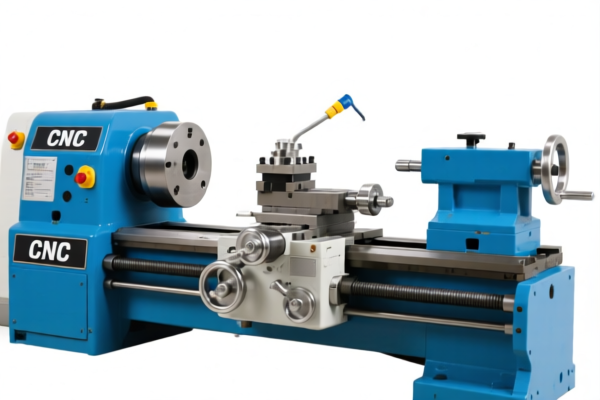
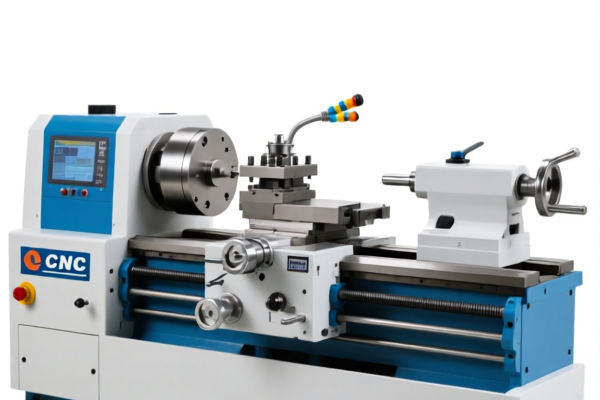
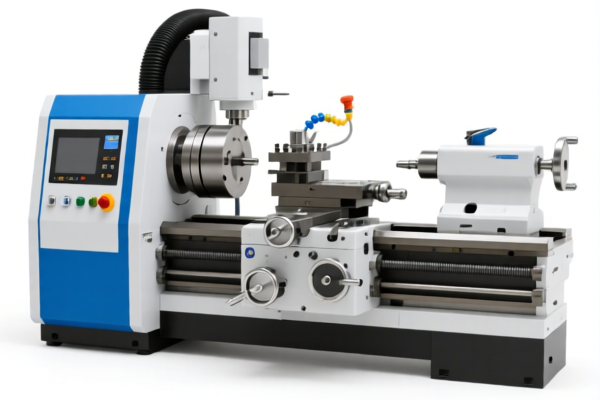
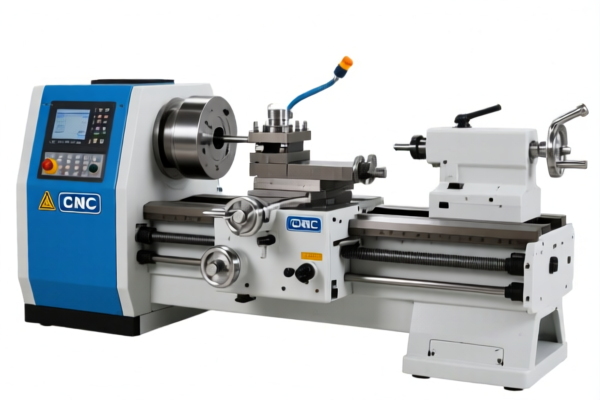
AI Analysis
🏭 CNC Lathe (Computer Numerical Control Lathe)
🌐 HS Code Reference & Customs Clearance Guide | 2026 Latest Tariff Analysis | Professional-Level Strategy
📌 1. Product Definition & Classification: What Exactly is a "CNC Lathe"?
A CNC Lathe is a metalworking machine tool that uses computer programs to control the movement of tools and parts. It is primarily used for cutting, drilling, boring, and turning operations on rotating workpieces.
In international trade, it is often broadly categorized under Chapter 84, specifically within headings 8457 (Processing machines) or 8458/8459 (Lathes and other metal cutting machines). The precise classification depends heavily on the specific function (turning vs. milling/machining center) and the presence of auxiliary functions (like tool changing or pallet handling).
⚠️ Key Distinction:
- If the machine is strictly for turning (rotating the workpiece against a stationary or moving tool), it typically falls under 8458 or 8459.
- If it is a machining center (capable of milling, drilling, tapping, etc., often with automatic tool changing), it may fall under 8457 (Unit Construction Machines).
- Misclassification Risk: Declaring a "Machining Center" as a simple "Lathe" can lead to incorrect tariff rates and customs delays.
📦 2. HS Code Classification Details (2026 Latest Tariff Authority Match)
Based on the provided data, here are the potential HS Codes for a "CNC Lathe" or general "CNC Machine Tool," along with their justification and tax implications.
| HS Code | Product Description | Application Scenario | Classification Logic |
|---|---|---|---|
8457.20.00.10 |
Processing Machines: Unit Construction Machines (CNC) | Best Match for General "CNC" | ✅ High Confidence. "CNC Machine" matches "Unit Construction Machine" morphology. Often used for complex multi-function CNC lathes/machining centers. |
8459.21.00.80 |
Other Machines for Working Metal by Removing Chips: CNC | CNC Lathes, Drilling, Milling | ✅ Match. "CNC" matches the usage attribute. Fits under "Other" if not specifically defined as a standard lathe. |
8459.61.00.80 |
Other Machines for Working Metal by Removing Chips (Other) | CNC Lathes (General Category) | ✅ Possible. Uses the "Catch-all" principle for CNC machines when specific subtype is unclear. |
8458.11.00.30 |
Metal Cutting Lathes (Turning Lathes) | Traditional/Standard CNC Lathes | ⚠️ Partial Match. Matches "Metal Cutting Lathe" but lacks power/shape details. Used if strictly a turning lathe. |
8457.10.00.15 |
Processing Machines: Machining Centers | CNC Machining Centers | ✅ Match. If the "CNC Lathe" has milling capabilities (i.e., is a turning-milling center), this is the correct functional classification. |
🔍 Key Note:
-8457codes generally apply to Unit Construction Machines (often implying higher complexity or multi-functionality).
-8458/8459codes apply to specific Lathes or Other Chip-Removing Machines.
- The choice depends on whether the machine is a pure turning lathe (8458/8459) or a multi-tasking machining center (8457).
💰 3. 2026 Latest Tariff Rate Breakdown (Including Surtaxes & Policy Add-ons)
✅ Applicable Country: United States (US)
✅ Origin: China (CN)
✅ Effective Time: From November 10, 2025 (Including subsequent imports)
🎯 1. 8457.20.00.10 — Processing Machines: Unit Construction Machines
| Item | Details |
|---|---|
| Base Duty | 3.3% |
| Section 301 Surtax | +25.0% |
| Section 122 Tariff | +10.0% |
| Total Duty Rate | 38.3% |
| Tax Calculation | CIF Value × 38.3% |
| De Minimis Eligibility | ❌ No (Deny de minimis) |
| Legal Basis Path | Section 122: 10% → Section 301: 25% → Base: 3.3% |
📌 Explanation:
- Base Duty (3.3%): Standard US MFN rate for unit construction machines.
- Section 301 Surtax (25%): Additional tariff on Chinese-origin machinery.
- Section 122 Tariff (10%): National security-related tariff on imports.
- Total: 38.3%. This is a high-cost classification for CNC machinery.
🎯 2. 8459.21.00.80 — Other CNC Machines for Working Metal
| Item | Details |
|---|---|
| Base Duty | 4.2% |
| Section 301 Surtax | +25.0% |
| Section 122 Tariff | +10.0% |
| Total Duty Rate | 39.2% |
| Tax Calculation | CIF Value × 39.2% |
| De Minimis Eligibility | ❌ No (Deny de minimis) |
| Legal Basis Path | Section 122: 10% → Section 301: 25% → Base: 4.2% |
📌 Note:
- Slightly higher base duty than8457.20.00.10.
- Applicable if the machine is classified as a general "other CNC machine" not fitting the "Unit Construction" definition.
🎯 3. 8459.61.00.80 — Other CNC Machines (Catch-all)
| Item | Details |
|---|---|
| Base Duty | 4.2% |
| Section 301 Surtax | +25.0% |
| Section 122 Tariff | +10.0% |
| Total Duty Rate | 39.2% |
| Tax Calculation | CIF Value × 39.2% |
| De Minimis Eligibility | ❌ No (Deny de minimis) |
| Legal Basis Path | Section 122: 10% → Section 301: 25% → Base: 4.2% |
📌 Note:
- Uses the "Catch-all" principle. Risk of customs audit if specific subtype is not documented.
🎯 4. 8458.11.00.30 — Metal Cutting Lathes (Turning Lathes)
| Item | Details |
|---|---|
| Base Duty | 4.4% |
| Section 301 Surtax | +25.0% |
| Section 122 Tariff | +10.0% |
| Total Duty Rate | 39.4% |
| Tax Calculation | CIF Value × 39.4% |
| De Minimis Eligibility | ❌ No (Deny de minimis) |
| Legal Basis Path | Section 122: 10% → Section 301: 25% → Base: 4.4% |
📌 Note:
- Highest total rate (39.4%) among the options.
- Apply only if the machine is strictly a turning lathe with no additional milling/machining center capabilities.
🎯 5. 8457.10.00.15 — Processing Machines: Machining Centers
| Item | Details |
|---|---|
| Base Duty | 4.2% |
| Section 301 Surtax | +25.0% |
| Section 122 Tariff | +10.0% |
| Total Duty Rate | 39.2% |
| Tax Calculation | CIF Value × 39.2% |
| De Minimis Eligibility | ❌ No (Deny de minimis) |
| Legal Basis Path | Section 122: 10% → Section 301: 25% → Base: 4.2% |
📌 Note:
- If the "CNC Lathe" is actually a CNC Machining Center (e.g., turning-milling center), this is the correct functional code.
- Rate is identical to8459.21.00.80.
🛠️ 4. Customs Clearance Practical Advice (Real-World Pitfall Guide)
✅ 1. Required Documentation Checklist (No Exceptions)
| Document | Mandatory | Description |
|---|---|---|
| ✅ Product Specification Sheet | ✔️ | Must include: Model, Power Rating, Turning Diameter, Max Rotation Speed, CNC System Brand. |
| ✅ Technical Manual | ✔️ | Proof of CNC functionality (software version, axis configuration). |
| ✅ Photos (Clear & Detailed) | ✔️ | Show nameplate, control panel, and overall structure. |
| ✅ Commercial Invoice | ✔️ | Clearly state: "CNC Lathe, Model XYZ, Origin: China". Do not use generic terms like "Machine". |
| ✅ Packing List | ✔️ | List all accessories (tools, panels, software licenses). |
| ✅ Certificate of Origin (CO) | ✔️ | Essential for determining Section 301 and Section 122 applicability. |
✅ 2. Declaration Tips (Key Mantras)
🔥 "CNC is CNC, Lathe is Lathe, Don't Mix Functions!"
| Scenario | Correct Declaration | Error to Avoid |
|---|---|---|
| Pure CNC Turning Lathe | 8458.11.00.30 or 8459.21.00.80 |
Declaring as "Machining Center" → Potential audit for misclassification. |
| CNC Turning-Milling Center | 8457.10.00.15 or 8457.20.00.10 |
Declaring as simple "Lathe" → Under-declaring functionality. |
| Generic "CNC Machine" | 8457.20.00.10 (If multi-function) or 8459.21.00.80 |
Vague description → Customs will assign highest reasonable rate + penalty. |
✅ 3. Special Considerations
| Scenario | Handling Advice |
|---|---|
| Hybrid Machine (Turn + Mill) | Must declare as Machining Center (8457). Simple lathe codes may be rejected if milling spindles are present. |
| Software Included | Ensure software is bundled with the hardware for duty purposes. Separate software may face different tariff treatment. |
| Used vs. New | Used machines require additional inspection and may have different valuation criteria. |
🌍 5. Global Market Comparison (2026 Latest)
| Country/Region | Recommended HS Code | Duty Rate (China Origin) | Certification Requirements | Notes |
|---|---|---|---|---|
| 🇺🇸 USA | 8457.20.00.10 |
38.3% | N/A (No specific tech certs) | High tariffs due to 301 & 122. |
| 🇨🇳 China | 8458 or 8459 |
5-7% | CCC (if applicable) | Lower tariffs, but export controls may apply. |
| 🇪🇺 EU | 8458 or 8459 |
0% (Most) | CE Marking | No additional surtaxes for machinery. |
| 🇻🇳 Vietnam | 8458 or 8459 |
0% (If FTA applied) | N/A | Potential for duty-free under RCEP/Vietnam-China FTA. |
📌 Conclusion:
- USA has the highest burden due to layered tariffs (Base + 301 + 122).
- EU and China have significantly lower duties, but compliance (CE, CCC) is critical.
📌 6. Common Errors & Pitfalls (Blood & Tears Lessons)
❌ Error 1: Declaring a CNC Machining Center as a simple Lathe
👉 Consequence: Customs may reclassify to 8457 with higher scrutiny or penalties for misrepresentation.
❌ Error 2: Ignoring the Section 122 Tariff (10%)
👉 Consequence: Underpayment of duties → Back taxes + Interest + Fines.
❌ Error 3: Using vague terms like "Machine Tool" without specifying CNC
👉 Consequence: Customs may assign the highest applicable rate or request extensive documentation.
❌ Error 4: Failing to distinguish between Turning and Milling capabilities
👉 Consequence: Incorrect HS Code → Delayed clearance.
✅ Correct Practice:
"CNC Turning Lathe, 21-inch Swing, Fanuc Control, Model XYZ, Made in China, For Metal Cutting Only"
🎯 7. Conclusion: Precise Classification Saves Money!
🎯 Remember the Mantra:
🔹 "CNC is Key, Function is King, 38%+ Duty is Real, Document is Relief!"
🔹 "HS Code Determines Cost, 1% Error Can Cost Thousands!"
📌 Pro Tip:
- If your CNC machine is multi-functional (e.g., turning + milling), use 8457 codes.
- If it is a dedicated lathe, use 8458 or 8459 codes.
- Always apply for an Advance Ruling from US Customs if the machine's function is ambiguous.
📣 Immediate Action:
📞 Consult a licensed customs broker + Provide Technical Specs + Verify Section 122 & 301 applicability
🚀 Ensure smooth clearance, avoid delays, and optimize your landed cost!
✨ Professional Customs Clearance Starts with Precise Classification!
💼 Every Dollar of Duty Counts!
Customer Reviews
About HS Code Classification
The Harmonized System (HS) is an internationally standardized nomenclature developed by the World Customs Organization (WCO) to classify traded products. Over 200 countries use the HS system as the basis for customs tariffs, trade statistics, and import/export regulations.
Each HS code follows a hierarchical structure:
- Chapter (2 digits) — Broad category of goods (e.g., Chapter 84: Machinery and Mechanical Appliances)
- Heading (4 digits) — More specific grouping within the chapter
- Subheading (6 digits) — Internationally standardized breakdown, used by all WCO member countries
- National subdivisions (8-10 digits) — Country-specific extensions for further classification, such as US HTSUS 10-digit codes
Correct HS code classification is essential for smooth customs clearance, accurate duty payment, and compliance with trade regulations. Misclassification can lead to customs delays, overpayment of duties, or penalties.
When importing from CN to US, the applicable tariff rates may include:
- Most-Favored-Nation (MFN) rate — The standard duty rate applied to WTO members
- General rate — Applied to countries without trade agreements
- Trade remedy duties — Additional tariffs such as Section 301 (anti-dumping), Section 232 (national security), or countervailing duties
The information provided on this page is for reference purposes only. For official classification, please consult with your local customs authority or a licensed customs broker.