CNC Machine Parts
CN → US| HS Code | Tariff Rate | Origin | Destination | Doc |
|---|---|---|---|---|
| 8442509000 | 17.5% | CN | US | Official Doc |
| 8457200010 | 38.3% | CN | US | Official Doc |
| 8457100015 | 39.2% | CN | US | Official Doc |
| 8458110030 | 39.4% | CN | US | Official Doc |
| 8459610080 | 39.2% | CN | US | Official Doc |
Product Images
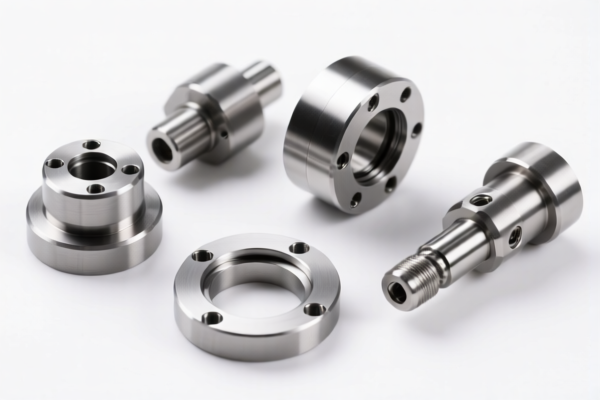
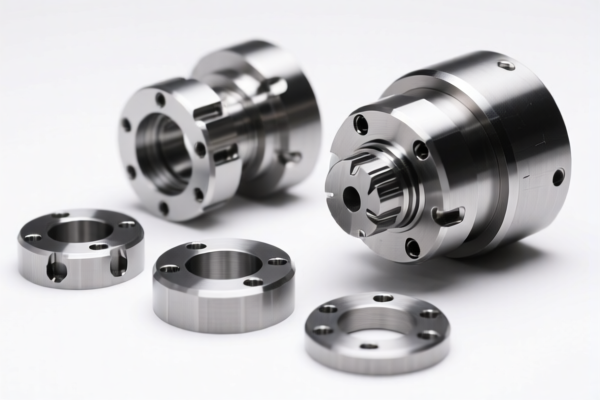
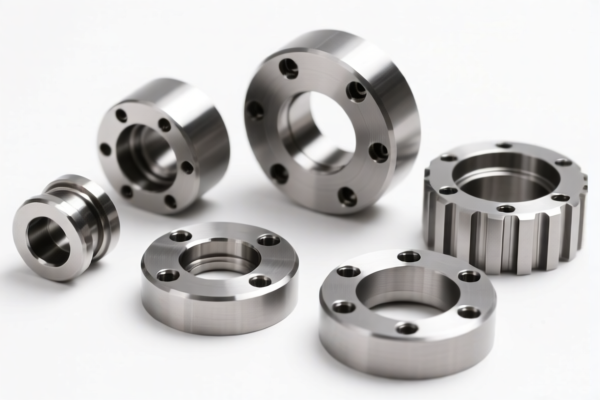
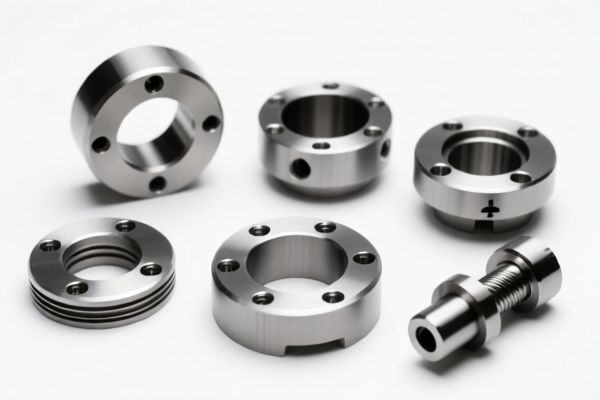
AI Analysis
⚙️ CNC Machine Parts (Numerical Control Equipment Components)
🌐 HS Code Reference & Customs Clearance Guide | 2026 Latest Tariff Analysis | Professional Clearance Strategy
📌 I. Product Definition & Classification: Do You Really Understand "CNC Parts"?
CNC (Computer Numerical Control) machine parts are critical components for industrial automation, precision machining, and manufacturing. In international trade, they are often categorized by their specific function, material, or integration level. The classification depends heavily on whether the part is a specific component (like a spindle or chuck) or a general-purpose accessory.
⚠️ Key Distinction:
- If the part is a specific component for a particular type of machine (e.g., lathes, milling machines, drilling machines), it falls under Section 84 specific headings for those machines (8457, 8458, 8459).
- If the part is a general accessory or does not fit specific machine categories, it may fall under 8442.50.90.00 (Parts/Accessories for Other Machines) or general Parts of Machines headings.
- Crucial Note: Misclassification between "Specific Machine Part" and "General Part" can lead to significant tariff differences due to Section 301 and IEEPA surcharges.
📦 II. HS Code Classification Details (2026 Latest Tariff Authority Cross-Reference)
Based on the provided data, here are the matched HS Codes for CNC Machine Parts:
| HS Code | Product Description | Application Scenario | Conflict Check |
|---|---|---|---|
8442.50.90.00 |
Parts/Accessories for Other Printing/Typing Machines (General Catch-all) | General parts/components where no specific machine conflict exists; fallback category for parts. | ✅ No material or use conflict; fits general parts tendency. |
8457.20.00.10 |
CNC Units/Machines for Metalworking | CNC machines with numerical control functions; specifically for machining centers or units. | ✅ Fully matches CNC usage and unit structure. |
8457.10.00.15 |
Machines for Drilling, Boring, Milling, Thread Cutting | CNC metalworking machines; matches machining center attributes. | ✅ Consistent with metal processing CNC machines. |
8458.11.00.30 |
Horizontal Lathes (CNC) | CNC lathes; power and horizontal form not specified, but no conflict. | ✅ Potential match; consistent with CNC usage. |
8459.61.00.80 |
Other Metalworking Machinery (CNC) | CNC machines for metalworking; specific type not defined, fallback applicable. | ✅ Potential match; consistent with CNC usage. |
🔍 Key Reminder:
- 8442.50.90.00 is often used as a fallback for parts that do not have a more specific heading elsewhere in Section 84.
- Codes starting with 8457, 8458, 8459 refer to the complete machines or major units of metalworking machinery, not necessarily small parts. If your product is a small part (e.g., a bolt, seal, or small bracket), using these machine codes may be incorrect unless it is a major assembly or unit.
- Clarity is Key: If the item is a standalone part, 8442.50.90.00 might be the most appropriate "parts" category if no other specific part heading applies. However, if it is a major component of a specific machine (e.g., a chuck for a lathe), it should be classified under the specific machine heading (e.g., 8458).
💰 III. 2026 Latest Tariff Rate Breakdown (Including Additional Taxes & Policy Add-ons)
✅ Applicable Country: USA (US)
✅ Origin: China (CN)
✅ Effective Date: From November 10, 2025 (for subsequent imports)
🎯 1. 8442.50.90.00 —— General Parts/Accessories (Fallback Category)
| Item | Content |
|---|---|
| Base Tariff | 0.0% |
| USITC Additional Tariff | +7.5% |
| IEEPA Additional Tariff | +10% (Section 122) |
| Total Tariff | 17.5% |
| Tax Calculation | CIF Value × 17.5% |
| De Minimis Exemption | ❌ Not Applicable (Section 301/IEEPA goods are generally excluded) |
| Legal Basis Path | IEEPA:122 → USITC:8442.50.90.00 |
📌 Explanation:
- This category has a lower total tariff (17.5%) compared to specific CNC machines.
- It applies when the part is considered a general accessory or when no more specific machine part heading is available.
- Caution: Customs may scrutinize this code if the part is clearly identifiable as a component of a specific machine (e.g., a lathe chuck). If deemed a specific part, it may be reclassified to a higher tariff heading.
🎯 2. 8457.20.00.10 & 8457.10.00.15 —— CNC Metalworking Machines/Units
| Item | Content |
|---|---|
| Base Tariff | 3.3% - 4.2% |
| USITC Additional Tariff | +25.0% |
| IEEPA Additional Tariff | +10% (Section 122) |
| Total Tariff | 38.3% - 39.2% |
| Tax Calculation | CIF Value × ~39% |
| De Minimis Exemption | ❌ Not Applicable |
| Legal Basis Path | IEEPA:122 → USITC:8457.xxxx |
📌 Explanation:
- These codes are for CNC machines or major units, not small parts.
- If you are importing CNC machine parts (e.g., spindles, tool holders, control panels), ensure they are not classified as complete machines.
- High Tariff Alert: If the part is misclassified as a machine unit, the tariff jumps from 17.5% to ~39%.
🎯 3. 8458.11.00.30 & 8459.61.00.80 —— Other CNC Metalworking Machinery
| Item | Content |
|---|---|
| Base Tariff | 4.4% - 4.2% |
| USITC Additional Tariff | +25.0% |
| IEEPA Additional Tariff | +10% (Section 122) |
| Total Tariff | 39.4% - 39.2% |
| Tax Calculation | CIF Value × ~39% |
| De Minimis Exemption | ❌ Not Applicable |
| Legal Basis Path | IEEPA:122 → USITC:8458/8459 |
📌 Explanation:
- Similar to 8457, these codes are for complete machines or major functional units.
- Risk: If you import a lathe chuck or milling spindle, classifying it under these machine codes may trigger customs audits. The correct classification might be under 8442.50.90.00 or a specific part heading (e.g., 8465.91 for lathe parts) if available.
- Note: The provided data suggests a "potential match" for these codes, indicating ambiguity. Professional pre-classification is highly recommended.
🛠️ IV. Customs Clearance Practical Advice (Battle-Tested Pitfall Avoidance)
✅ 1. Document Checklist (Mandatory)
| Document | Required | Purpose |
|---|---|---|
| ✅ Product Specification Sheet | ✔️ | Detailing dimensions, material, function, and compatibility. |
| ✅ Technical Drawings | ✔️ | To prove whether the item is a part, assembly, or machine. |
| ✅ Product Photos | ✔️ | Showing the item alone and its installation context (if applicable). |
| ✅ Commercial Invoice | ✔️ | Clearly stating "CNC Machine Parts" or specific component name. |
| ✅ Packing List | ✔️ | Listing all items to avoid "mixed shipments" issues. |
| ✅ Certificate of Origin | ✔️ | For tariff calculation and potential FTZ benefits. |
✅ 2. Classification Strategy (Critical Tips)
🔥 "Parts vs. Machines: One Line Defines Your Tax!"
| Scenario | Correct Classification | Error Consequence |
|---|---|---|
| Small Part (e.g., bolt, seal, sensor) | 8442.50.90.00 (or specific part heading) |
If misclassified as machine → 39% vs 17.5% |
| Major Assembly (e.g., spindle head, control cabinet) | Check if it's a "unit" → May fall under 8457/8459 | If misclassified as part → Underpayment Risk |
| Complete CNC Machine | 8457.xxxx / 8458.xxxx / 8459.xxxx |
If misclassified as part → Severe Penalty |
| Generic Accessory (e.g., tool holder, vise) | 8442.50.90.00 (if no specific heading) |
Ensure it's not a "machine part" of a specific type. |
✅ 3. Special Cases Handling
| Situation | Recommendation |
|---|---|
| OEM Parts for Specific Brand | Provide brand authorization and part number to prove compatibility. |
| Mixed Shipment | Separate CNC parts from other goods on the invoice to avoid customs delays. |
| High-Value Precision Parts | Consider Advance Ruling from CBP to lock in the classification and tariff. |
| Parts for Export/Re-import | If originally exported from the US, ensure proper Returnable Goods documentation to avoid double taxation. |
🌍 V. Global Market Comparison (2026 Latest)
| Country/Region | Recommended HS Code | Tariff (CN Origin) | Key Requirements | Notes |
|---|---|---|---|---|
| 🇺🇸 USA | 8442.50.90.00 (Parts) / 8457-59 (Machines) |
17.5% (Parts) / ~39% (Machines) | FCC, CE, RoHS (if electronic) | Section 301 & IEEPA apply. High risk of audit for parts classification. |
| 🇨🇳 China | 8442.50.90.00 / 8457-59 |
5-10% (Import) | CCC (if applicable) | Lower tariffs, but ensure proper origin marking. |
| 🇪🇺 EU | 8442.50.90.00 / 8457-59 |
0-5% | CE, GDPR (if electronic) | No Section 301 equivalent, but anti-dumping may apply. |
| 🇯🇵 Japan | 8442.50.90.00 / 8457-59 |
0-3% | PSE, JIS | Stable tariff environment. |
📌 Conclusion:
- USA is the most challenging market for CNC parts due to high additional tariffs.
- Classification accuracy is paramount to avoid paying 39% when 17.5% is applicable.
- Pre-classification with a customs broker is strongly advised.
📌 VI. Common Mistakes & Pitfall Guide (Lessons Learned)
❌ Mistake 1: Classifying CNC Machine Parts under Machine Codes (8457-59)
👉 Consequence: Paying ~39% instead of 17.5%. Customs may also penalize for misclassification.
❌ Mistake 2: Using 8442.50.90.00 for Complete Machines
👉 Consequence: Customs reclassification, delays, and potential fines for underpayment.
❌ Mistake 3: Vague Description ("CNC Part")
👉 Consequence: Customs inability to classify → Hold at port for inspection → Storage fees.
✅ Correct Approach:
"CNC Lathe Chuck, Model XYZ, for Use with Horizontal Lathes, Made of Steel"
OR
"CNC Machine General Accessory, Non-Specific, Made of Aluminum"
🎯 VII. Conclusion: Precision in Classification, Efficiency in Clearance!
🎯 Key Takeaways:
🔹 "Part vs. Machine: Check the Heading, Save the Dollar."
🔹 "17.5% for Parts, 39% for Machines: Don't Guess, Verify."
🔹 "Documentation is Your Shield: Drawings, Photos, Specs."
📌 Pro Tip:
If you are importing high-volume CNC parts, consider Apply for an Advance Ruling from CBP to secure a definitive classification. This can save you thousands of dollars in potential back-taxes and penalties.
📣 Take Action Now:
📞 Consult a Licensed Customs Broker
📄 Prepare Technical Drawings & Specs
🚀 Ensure Smooth Clearance, Maximize Profit, Minimize Risk!
✨ Professional Classification Starts Here!
💼 Every Dollar Saved is a Dollar Earned!
Customer Reviews
About HS Code Classification
The Harmonized System (HS) is an internationally standardized nomenclature developed by the World Customs Organization (WCO) to classify traded products. Over 200 countries use the HS system as the basis for customs tariffs, trade statistics, and import/export regulations.
Each HS code follows a hierarchical structure:
- Chapter (2 digits) — Broad category of goods (e.g., Chapter 84: Machinery and Mechanical Appliances)
- Heading (4 digits) — More specific grouping within the chapter
- Subheading (6 digits) — Internationally standardized breakdown, used by all WCO member countries
- National subdivisions (8-10 digits) — Country-specific extensions for further classification, such as US HTSUS 10-digit codes
Correct HS code classification is essential for smooth customs clearance, accurate duty payment, and compliance with trade regulations. Misclassification can lead to customs delays, overpayment of duties, or penalties.
When importing from CN to US, the applicable tariff rates may include:
- Most-Favored-Nation (MFN) rate — The standard duty rate applied to WTO members
- General rate — Applied to countries without trade agreements
- Trade remedy duties — Additional tariffs such as Section 301 (anti-dumping), Section 232 (national security), or countervailing duties
The information provided on this page is for reference purposes only. For official classification, please consult with your local customs authority or a licensed customs broker.