CNC Machining Center
CN → US| HS Code | Tariff Rate | Origin | Destination | Doc |
|---|---|---|---|---|
| 8458110030 | 39.4% | CN | US | Official Doc |
| 8458110050 | 39.4% | CN | US | Official Doc |
Product Images
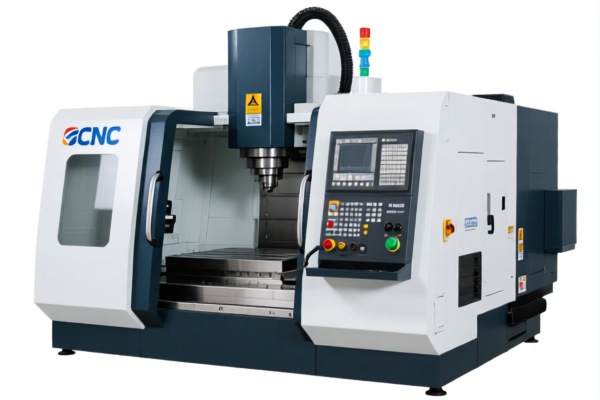
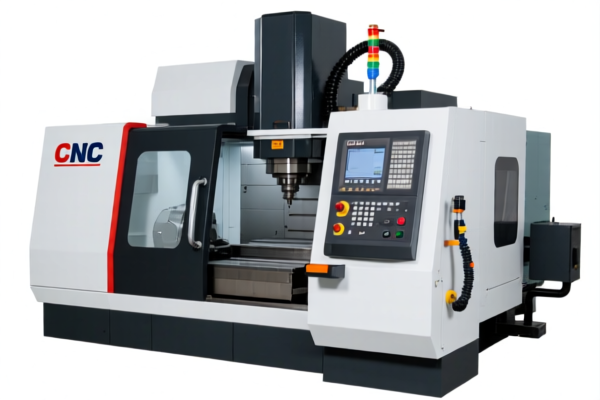
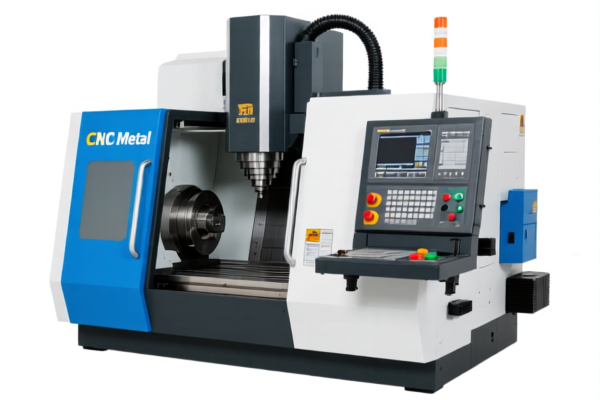
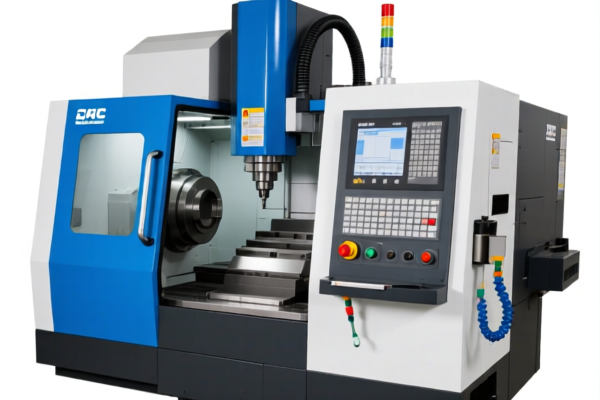
AI Analysis
🏭 CNC Machining Centers (Lathes for Metal Removal)
🌐 HS Code Reference & Customs Clearance Guide | 2026 Latest Tariff Analysis | Professional Strategy
📌 I. Product Definition: What is a "CNC Lathe"?
CNC Machining Centers, specifically Lathes (including turning centers) for removing metal, are high-precision automated machine tools used to shape metal parts by rotating the workpiece against a cutting tool. In international trade, the critical classification factor is not just "CNC" or "Lathe," but the Power Rating (kW) of the motor.
Key Distinction: * Horizontal Lathes: The spindle is horizontal. * Numerically Controlled (NC/CNC): Operated via computer programming. * Power Threshold: The cutoff point for tariff classification is 18.65 kW. This is the single most important technical parameter for customs declaration.
⚠️ Critical Clarification Point:
- If the power rating is < 18.65 kW → HS Code 8458.11.00.30
- If the power rating is ≥ 18.65 kW but ≤ 37.3 kW → HS Code 8458.11.00.50
- Note: Lathes exceeding 37.3 kW are not included in this specific dataset and would fall under different subheadings (e.g., 8458.11.00.60 or higher).
📦 II. HS Code Classification Details (2026 Latest Tariff Authority)
| HS Code | Product Description | Power Rating Criteria | Application Scenario |
|---|---|---|---|
8458.11.00.30 |
Lathes (including turning centers) for removing metal: Horizontal lathes: Numerically controlled Other: Other | Less than 18.65 kW | Small precision workshops, light-duty turning, high-speed mini-lathes |
8458.11.00.50 |
Lathes (including turning centers) for removing metal: Horizontal lathes: Numerically controlled Other: Other | 18.65 kW or greater but not exceeding 37.3 kW | Industrial machining, medium-to-heavy duty cutting, automotive parts production |
🔍 Key Reminder:
- The classification is strictly based on rated power output.
- Ensure the nameplate or technical specification sheet clearly states the power in Kilowatts (kW).
- Do not confuse "Motor Power" with "Spindle Torque" or "Overall System Power." Use the main drive motor rating.
💰 III. 2026 Latest Tariff Rate Details (Detailed Tax Breakdown)
✅ Applicable Jurisdiction: United States (US)
✅ Origin: China (CN) (Based on standard trade context; verify if origin differs)
✅ Effective Time: Current USITC/IEEPA regimes
🎯 1. 8458.11.00.30 —— Small Power CNC Lathes (< 18.65 kW)
| Item | Content |
|---|---|
| Base Tariff Rate | 0.0% (ad valorem) |
| Section 301/USITC Additional Duty | 0.0% |
| IEEPA Additional Duty | 0.0% |
| Total Tax Rate | 0.0% |
| Tax Calculation | CIF Value × 0% = $0.00 |
| De Minimis Eligibility | ❌ Not Applicable (Goods over $800 subject to standard entry procedures; however, tax remains 0%) |
| Legal Basis Path | HTSUS:8458.11.00.30 → USITC:Footnote 8458 → Current Trade Regimes |
📌 Explanation:
- These small CNC lathes currently enjoy a 0% total tariff burden in the US market.
- Unlike many electronics or steel products, precision machinery under this specific power threshold is not subject to the aggressive Section 301 or IEEPA surcharges currently applied to many Chinese imports.
- Cost Advantage: This makes8458.11.00.30highly competitive for small-scale precision manufacturing equipment exports.
🎯 2. 8458.11.00.50 —— Medium Power CNC Lathes (18.65 kW – 37.3 kW)
| Item | Content |
|---|---|
| Base Tariff Rate | 0.0% (ad valorem) |
| Section 301/USITC Additional Duty | 0.0% |
| IEEPA Additional Duty | 0.0% |
| Total Tax Rate | 0.0% |
| Tax Calculation | CIF Value × 0% = $0.00 |
| De Minimis Eligibility | ❌ Not Applicable |
| Legal Basis Path | HTSUS:8458.11.00.50 → USITC:Footnote 8458 → Current Trade Regimes |
📌 Note:
- Even at medium power levels, these industrial lathes remain duty-free (0%).
- This policy encourages the import of industrial automation equipment.
- Caution: Ensure the power rating is accurately declared. Under-declaring power to shift from...50to...30is illegal and risks penalties. Over-declaring doesn't increase tax here, but may affect statistical reporting.
🛠️ IV. Customs Clearance Practical Advice (Pitfall Avoidance Guide)
✅ 1. Required Documentation Checklist
| Document | Must Provide | Description |
|---|---|---|
| ✅ Technical Data Sheet | ✔️ | Must explicitly state Motor Power (kW), voltage, frequency, and dimensions. |
| ✅ Commercial Invoice | ✔️ | Clearly describe as "CNC Horizontal Lathe, Numerically Controlled." Include model number. |
| ✅ Packing List | ✔️ | List main machine, control panel, tooling, and accessories separately if shipped in multiple boxes. |
| ✅ Product Photos | ✔️ | Clear shots of the machine, nameplate (showing power rating), and control interface. |
| ✅ Certificate of Origin | ✔️ | To prove origin (if claiming preferential rates in other countries). |
| ✅ Safety Certifications | ✔️ | UL, CE, or ANSI B11.1 compliance docs may be requested by port authorities. |
✅ 2. Declaration Tips (Critical Mnemonics)
🔥 “Power is King, kW is the Key, Don’t Guess, Check the Fee!”
| Scenario | Correct Declaration | Wrong Practice |
|---|---|---|
| Power = 15 kW | HS Code 8458.11.00.30 |
Misdeclaring as ...50 (No harm, but incorrect) |
| Power = 25 kW | HS Code 8458.11.00.50 |
Misdeclaring as ...30 → Illegal, risk of seizure |
| Power = 40 kW | NOT in this dataset. Check 8458.11.00.60 or higher. |
Forcing into ...50 → Misclassification, penalties |
| Vertical Lathe | Different HS Code (8458.91 or similar) | Declaring as Horizontal → Wrong Category |
✅ 3. Special Cases & Handling
| Situation | Handling Advice |
|---|---|
| Used Machinery | May require additional inspection, phytosanitary certificates (for wood pallets), and proof of prior use. |
| With Software Included | Declare as part of the machine value. No separate software tariff if bundled. |
| Multi-Function (Mill-Turn) | If it combines milling and turning, ensure it’s primarily a "Lathe" for HTS 8458. If primarily a "Milling Machine," it may fall under 8457. Consult a customs broker for complex hybrid machines. |
| Power Rating Discrepancy | If nameplate says 20 kW, but motor is rated 15 kW, use the installed motor rating as declared by the manufacturer. |
🌍 V. Global Market Comparison (2026 Snapshot)
| Country/Region | Recommended HS Code | Tariff (China Origin) | Certification Requirements | Notes |
|---|---|---|---|---|
| 🇺🇸 USA | 8458.11.00.30 / .50 |
0.0% | UL/ANSI, FCC (for controls) | Duty-Free Advantage |
| 🇨🇳 China | 8458.11.00.30 / .50 |
~5-10% (Import Duty) | CCC (if applicable) | High domestic demand |
| 🇪🇺 EU | 8458.11.00.30 / .50 |
0% (Most FTA) | CE, EMC Directive | Free under many FTAs |
| 🇯🇵 Japan | 8458.11.00.30 / .50 |
0% | PSE (for electrical parts) | High quality standards |
| 🇦🇺 Australia | 8458.11.00.30 / .50 |
5% | RCM, AS/NZS Standards | No FTA with China yet |
📌 Conclusion:
- The USA offers a 0% tariff for these specific CNC lathes, making it a highly attractive market for exporters.
- Accuracy in Power Rating is the single biggest compliance risk. Misclassification can lead to back-tariffs and audits.
📌 VI. Common Errors & Pitfalls (Lessons Learned)
❌ Error 1: Declaring a 40 kW Lathe under 8458.11.00.50
👉 Consequence: Customs may reclassify, apply higher tariffs, and impose penalties.
👉 Fix: Always check the full HTSUS chapter for machines > 37.3 kW.
❌ Error 2: Confusing "Horizontal" with "Vertical"
👉 Consequence: Vertical lathes (Turn Centers) often have different subheadings.
👉 Fix: Verify spindle orientation. Horizontal = 8458.11. Vertical = 8458.91 (typically).
❌ Error 3: Ignoring the "Numerically Controlled" aspect
👉 Consequence: Manual lathes fall under 8458.19. CNC lathes are 8458.11.
👉 Fix: Ensure the machine has CNC controls. If it’s semi-automatic, clarify with a broker.
❌ Error 4: Missing the kW Specification on Invoice
👉 Consequence: Customs will request additional docs, causing delays.
👉 Fix: Always include "Motor Power: XX kW" on the commercial invoice.
✅ Correct Declaration Example:
"CNC Horizontal Turning Center, Numerically Controlled, Motor Power 22.5 kW, Model XYZ-200, for Metal Removal"
🎯 VII. Conclusion: Precision Declaration, Seamless Clearance
🎯 Remember the Mantra:
🔹 "Under 18.65 kW → Code .30"
🔹 "18.65 to 37.3 kW → Code .50"
🔹 "Both Zero Percent → Zero Stress!"
🔹 "Check the Nameplate → Avoid the Gate!"
📌 Pro Tip:
If your lathe has a hybrid power system (e.g., electric + hydraulic), declare the main driving motor's rated power. Keep the technical spec sheet handy for customs audits.
For machines over 37.3 kW, contact a customs broker immediately as they may fall under different duty rates or require additional permits.
📣 Immediate Action:
📞 Verify the Power Rating on Your Machine’s Nameplate
📄 Match to HS Code .30 or .50
🚀 Declare Accurately to Enjoy 0% Duty & Smooth Customs Release!
✨ Professional Customs Clearance Starts with Accurate Classification!
💼 Every Kilowatt Counts in Global Trade!
Customer Reviews
About HS Code Classification
The Harmonized System (HS) is an internationally standardized nomenclature developed by the World Customs Organization (WCO) to classify traded products. Over 200 countries use the HS system as the basis for customs tariffs, trade statistics, and import/export regulations.
Each HS code follows a hierarchical structure:
- Chapter (2 digits) — Broad category of goods (e.g., Chapter 84: Machinery and Mechanical Appliances)
- Heading (4 digits) — More specific grouping within the chapter
- Subheading (6 digits) — Internationally standardized breakdown, used by all WCO member countries
- National subdivisions (8-10 digits) — Country-specific extensions for further classification, such as US HTSUS 10-digit codes
Correct HS code classification is essential for smooth customs clearance, accurate duty payment, and compliance with trade regulations. Misclassification can lead to customs delays, overpayment of duties, or penalties.
When importing from CN to US, the applicable tariff rates may include:
- Most-Favored-Nation (MFN) rate — The standard duty rate applied to WTO members
- General rate — Applied to countries without trade agreements
- Trade remedy duties — Additional tariffs such as Section 301 (anti-dumping), Section 232 (national security), or countervailing duties
The information provided on this page is for reference purposes only. For official classification, please consult with your local customs authority or a licensed customs broker.