CROCODILE PRINT CROTCH BAG
CN → US| HS Code | Tariff Rate | Origin | Destination | Doc |
|---|---|---|---|---|
| 4202213000 | 40.3% | CN | US | Official Doc |
| 4202219000 | 44.0% | CN | US | Official Doc |
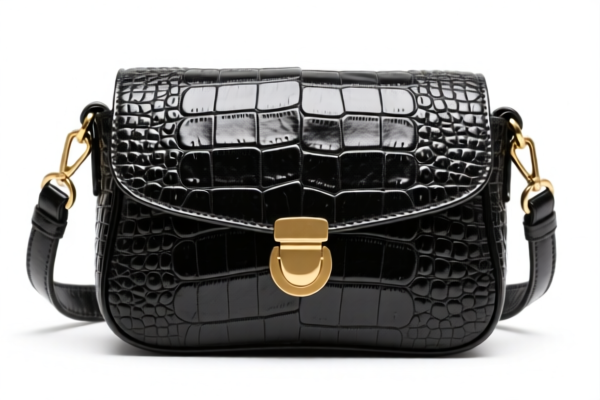
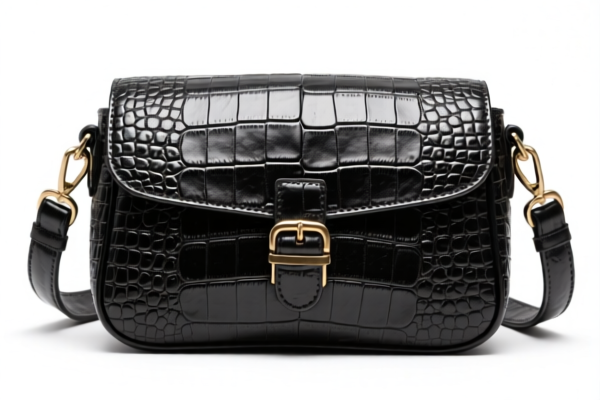
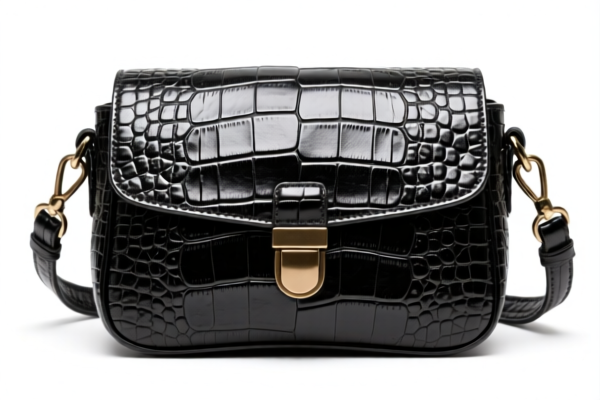
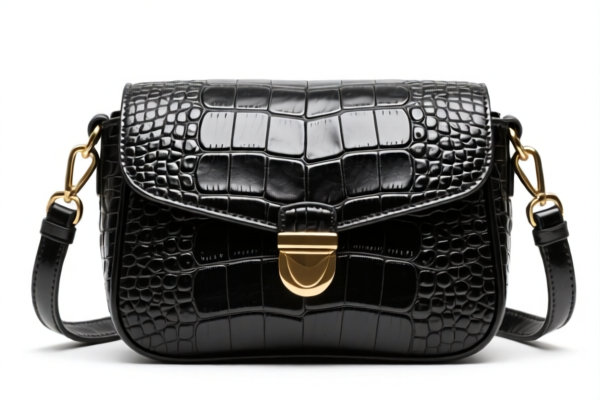
Product Images
AI Analysis
👜 The "Crocodile Print Crotch Bag" (Crossbody/Sling Bag)
🌐 HS Code Reference & Customs Clearance Guide | 2026 Latest Tariff Analysis | Professional Clearance Strategy
📌 I. Product Definition & Classification: What is a "Crotch Bag"?
A "Crotch Bag" (commonly known in the trade as a Sling Bag, Crossbody Bag, or Messenger Bag depending on structure) is a container worn across the torso. In international trade, the classification hinges entirely on the outer surface material and specific design features (handle vs. strap).
Key Distinction for This Product:
Material: The prompt specifies "Crocodile Print".
* Crucial Note: "Print" usually implies a synthetic material (PU, PVC, Textile) with a crocodile pattern, NOT genuine reptile skin.
* If it is Genuine Reptile Leather: It falls under 4202.21.30.00.
* If it is Synthetic/Textile with Print: It falls under 4202.21.90.00 (Other) or potentially other headings if not leather/composition leather. However, based on the provided <DATA>, we are analyzing items under Chapter 42 (Leather Articles)*.
⚠️ Critical Warning:
- If the bag is made of Genuine Crocodile/Alligator/Python Leather, it is classified under4202.21.30.00.
- If the bag is made of PU Leather, PVC, or Textile with a crocodile print, it is NOT reptile leather. It falls under "Other" (4202.21.90.00or4202.22/4202.29depending on exact material).
- Based on the provided<DATA>which only lists4202.21.30(Reptile) and4202.21.90(Other >$20), we assume the user wants the classification for Leather/Composition Leather bags. If your "Crotch Bag" is fabric or plastic, these HS codes are incorrect.
📦 II. HS Code Classification Details (Based on Provided Data)
| HS Code | Product Description | Material Requirement | Price Threshold |
|---|---|---|---|
4202.21.30.00 |
Handbags, outer surface of leather/composition leather, of reptile leather | Genuine Crocodile, Alligator, Lizard, etc. | Any Value |
4202.21.90.00 |
Handbags, outer surface of leather/composition leather, Other, valued over $20 each | Genuine Cowhide, Pigskin, PU Leather, etc. | > $20.00 |
🔍 Why this classification?
1. Chapter 42: Articles of Leather; Saddle Harness.
2. Heading 4202: Trunks, suitcases, handbags, wallets, etc.
3. Subheading 4202.21: "With outer surface of leather or of composition leather."
4. Subheading 4202.21.30: Specifically for Reptile Leather.
5. Subheading 4202.21.90: "Other" leather/composition leather bags, but only if valued over $20.
💰 III. 2026 Latest Tariff Rate Breakdown
✅ Applicable Country: United States (US)
✅ Origin: China (CN)
✅ Data Source: Provided<DATA>indicates 0.0% Total Tax for both codes.
🎯 1. 4202.21.30.00 – Reptile Leather Handbags
| Item | Content |
|---|---|
| Base Tariff | 0.0% |
| Section 301 / IEEPA Surcharges | 0.0% (As per provided data) |
| Total Tax Rate | 0.0% |
| Tax Calculation | CIF Value × 0.0% = $0 |
| De Minimis Eligibility | ❓ Check: While the tax is 0%, reptile items may face CITES (Convention on International Trade in Endangered Species) restrictions. |
📌 Explanation:
- The provided data shows 0.0% total tax.
- However, for Reptile Leather (4202.21.30.00), customs may require CITES Permits to prove the skin was legally sourced. Without permits, goods may be seized regardless of the 0% tariff.
🎯 2. 4202.21.90.00 – Other Leather Handbags (> $20)
| Item | Content |
|---|---|
| Base Tariff | 0.0% |
| Section 301 / IEEPA Surcharges | 0.0% (As per provided data) |
| Total Tax Rate | 0.0% |
| Tax Calculation | CIF Value × 0.0% = $0 |
| De Minimis Eligibility | ✅ Yes, if value ≤ $800 (Section 321) |
| Value Constraint | ⚠️ Must be > $20 to fall under this specific subheading. If ≤ $20, it may fall under a different "Other" subheading with different tax rates (not provided in data). |
📌 Explanation:
- 0.0% total tax.
- Key Condition: The customs value must be exceeding $20. If a crotch bag is valued at $15, it does not fit4202.21.90.00. It would likely fall under4202.21.90(if another subcode exists) or4202.22/4202.29(if material differs).
- Note: If the bag is not leather/composition leather (e.g., canvas, nylon), it cannot use these codes.
🛠️ IV. Customs Clearance Practical Advice (Pitfall Avoidance Guide)
✅ 1. Prepare Documentation Checklist
| Document | Required? | Notes |
|---|---|---|
| ✅ Product Photo | ✔️ | Must clearly show the outer surface material. Is it grainy leather? Smooth PU? Fabric print? |
| ✅ Commercial Invoice | ✔️ | Must state "Handbag" or "Sling Bag". Do not use vague terms like "Fashion Accessory". |
| ✅ Material Declaration | ✔️ | Explicitly state: "Outer Surface: 100% Polyurethane (PU) with Crocodile Pattern" OR "Outer Surface: Genuine Crocodile Leather". |
| ✅ CITES Certificate | ✔️ | ONLY IF using 4202.21.30.00 (Reptile Leather). If it's just a print on synthetic material, you need a "Not Reptile" declaration. |
| ✅ Value Proof | ✔️ | For 4202.21.90.00, ensure invoice value > $20. |
✅ 2. Classification Strategy (The "Print" Trap)
🔥 "Print ≠ Leather Species!"
| Scenario | Correct HS Code | Reason |
|---|---|---|
| "Crocodile Print" on PU/Fabric | 4202.21.90.00 (if >$20 and leather-like) OR 4202.22/4202.29 (if textile/plastic) |
"Print" means pattern, not animal skin. It is not reptile leather. |
| Genuine Crocodile Skin Bag | 4202.21.30.00 |
Must be actual reptile skin. Requires CITES. |
| "Crocodile Embossed" Cowhide | 4202.21.90.00 |
It is cowhide, not reptile. |
⚠️ Warning: Misclassifying a synthetic "crocodile print" bag as
4202.21.30.00(Reptile) may trigger fraud suspicions or unnecessary CITES checks. Misclassifying genuine reptile as4202.21.90.00(Other) may lead to CITES violations and seizures.
✅ 3. Special Cases
| Situation | Handling Advice |
|---|---|
| Value ≤ $20 | 4202.21.90.00 is invalid. Check if it falls under 4202.21.90 (other subcodes) or 4202.92 (textile). |
| Not Leather (e.g., Nylon) | These HS codes are incorrect. Use Chapter 42 headings for textile/plastic bags (e.g., 4202.32, 4202.92). |
| Set with Wallet | If the crotch bag includes a detachable wallet, declare as a set or split if customs requires. |
🌍 V. Global Market Clearance Comparison (2026)
| Country/Region | Recommended HS Code | Tariff (China Origin) | Key Requirement |
|---|---|---|---|
| 🇺🇸 USA | 4202.21.30.00 or 4202.21.90.00 |
0.0% (per provided data) | CITES for Reptile; Value >$20 for .90 |
| 🇪🇺 EU | 4202.21.30 / 4202.21.90 | 0% - 4% | CE Marking (if applicable); CITES for Reptile |
| 🇨🇳 China | 4202.21.30 / 4202.21.90 | 0% - 10% | Import License for Reptile Products |
| 🇬🇧 UK | 4202.21.30 / 4202.21.90 | 0% - 4% | Post-Brexit CITES rules apply |
📌 VI. Common Mistakes & Pitfalls (Lessons Learned)
❌ Mistake 1: Calling a synthetic "crocodile print" bag "Crocodile Leather" to look premium.
👉 Consequence: Customs may demand CITES permits. If you can't provide them, the shipment is detained.
👉 Fix: Declare as "PU Leather with Crocodile Pattern".
❌ Mistake 2: Declaring a $15 bag under 4202.21.90.00.
👉 Consequence: Rejected classification. This code requires value > $20.
👉 Fix: Check the correct subheading for bags ≤ $20 (e.g., 4202.22.90 or similar, depending on material).
❌ Mistake 3: Ignoring the "Outer Surface" rule.
👉 Consequence: If the bag is primarily fabric with leather trim, it may be classified under Textile headings (4202.32), not Leather (4202.21).
👉 Fix: Analyze the primary material of the outer surface.
🎯 VII. Conclusion: Precision in Classification Saves Money & Time
🎯 Key Takeaway:
🔹 "Print is Not Skin!" – Unless it is genuine reptile leather, do not use
4202.21.30.00.
🔹 Value Matters! – For4202.21.90.00, the bag must be valued over $20.
🔹 CITES is King – If you claim reptile leather, have the CITES Certificate ready, or face seizure.
📌 Pro Tip:
If your "Crotch Bag" is made of Canvas, Nylon, or Polyester (common for crotch bags), HS Codes 4202.21.30.00 and 4202.21.90.00 are INCORRECT.
You should look for:
- 4202.32.00 (Handbags with outer surface of textile materials)
- 4202.92 (Other containers with outer surface of textile materials)
✨ Professional Clearance Starts with Accurate Classification!
💼 Don't let a "Print" bag get stuck at Customs!
Customer Reviews
About HS Code Classification
The Harmonized System (HS) is an internationally standardized nomenclature developed by the World Customs Organization (WCO) to classify traded products. Over 200 countries use the HS system as the basis for customs tariffs, trade statistics, and import/export regulations.
Each HS code follows a hierarchical structure:
- Chapter (2 digits) — Broad category of goods (e.g., Chapter 84: Machinery and Mechanical Appliances)
- Heading (4 digits) — More specific grouping within the chapter
- Subheading (6 digits) — Internationally standardized breakdown, used by all WCO member countries
- National subdivisions (8-10 digits) — Country-specific extensions for further classification, such as US HTSUS 10-digit codes
Correct HS code classification is essential for smooth customs clearance, accurate duty payment, and compliance with trade regulations. Misclassification can lead to customs delays, overpayment of duties, or penalties.
When importing from CN to US, the applicable tariff rates may include:
- Most-Favored-Nation (MFN) rate — The standard duty rate applied to WTO members
- General rate — Applied to countries without trade agreements
- Trade remedy duties — Additional tariffs such as Section 301 (anti-dumping), Section 232 (national security), or countervailing duties
The information provided on this page is for reference purposes only. For official classification, please consult with your local customs authority or a licensed customs broker.