CROSS FLAT NOSE PLIERS
CN → US| HS Code | Tariff Rate | Origin | Destination | Doc |
|---|---|---|---|---|
| 8203204000 | 47.0% | CN | US | Official Doc |
| 8203206030 | 0.0% | CN | US | Official Doc |
Product Images
AI Analysis
🛠️ Cross Flat Nose Pliers (Handtools)
🌐 HS Code Reference & Customs Clearance Guide | 2026 Latest Tariff Analysis | Professional Compliance Strategy
📌 I. Product Definition & Classification: Do You Know Your "Pliers"?
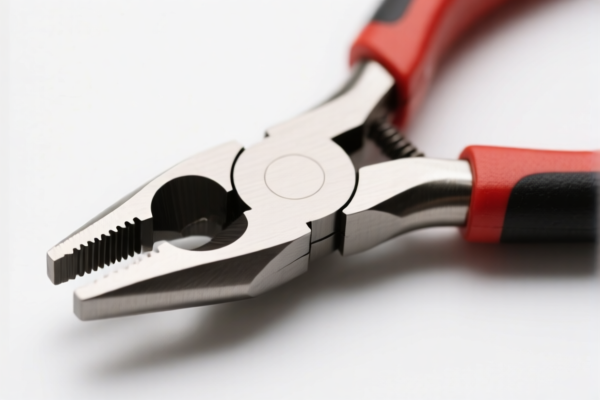
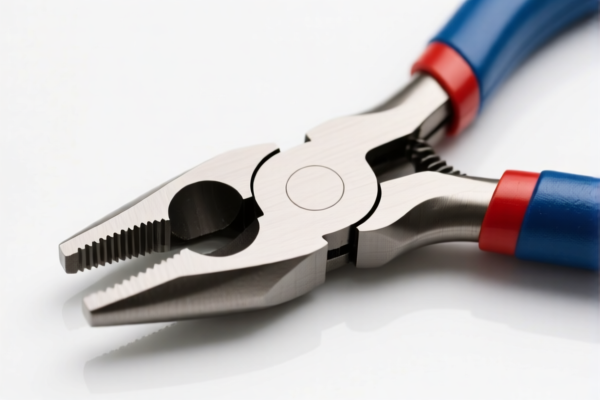
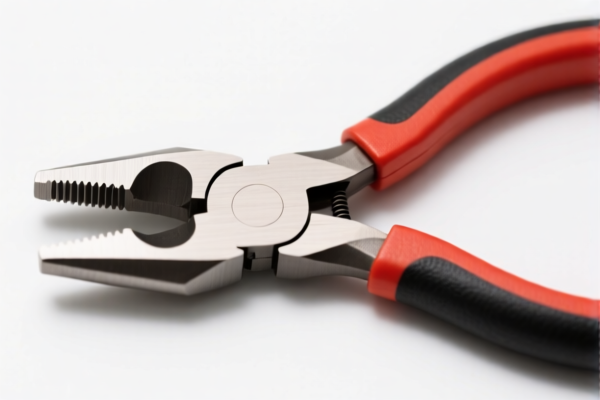
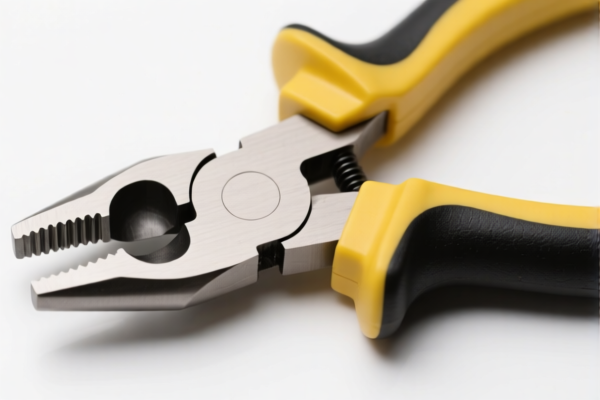
Cross Flat Nose Pliers are a specific type of hand tool featuring jaws with a cross-shaped flat profile, designed for gripping, bending, and shaping small components in electronics, jewelry making, and precision mechanical work. In international trade, hand tools are strictly categorized by their function, material, and mechanism.
There are two critical distinctions for classification under Heading 8203:
- Slip Joint Pliers (Adjustable Pivot): Tools where the pivot point changes position to allow different jaw openings.
- Other Pliers (Fixed or Specific Function): Tools like Needle Nose, Diagonal Cutting, or Cross Flat Nose Pliers, which typically have a fixed pivot or specific jaw geometry not classified as "Slip Joint."
⚠️ Key Distinction Point:
- If the pliers have an adjustable pivot (slip joint mechanism) → They may fall under8203.20.40.00.
- If the pliers have a fixed pivot or are specialized gripping tools (like standard Cross Flat Nose Pliers) → They fall under8203.20.60.30.
- Note: Most standard "Cross Flat Nose Pliers" used in electronics/jewelry are not slip joint pliers. Therefore, they are generally classified under "Other Pliers."
📦 II. HS Code Classification Details (2026 Latest Tariff Authority Comparison)
Based on the provided data, here is the precise breakdown for hand tools:
| HS Code | Product Description | Applicable Scenario | Is it Slip Joint? |
|---|---|---|---|
8203.20.40.00 |
Slip joint pliers | Pliers with an adjustable pivot mechanism allowing variable jaw width | ✅ Yes |
8203.20.60.30 |
Other Pliers (except parts) | Fixed pivot pliers, needle nose, diaphragm, cross flat nose, etc. | ❌ No |
🔍 Critical Reminder:
- Cross Flat Nose Pliers are typically fixed-jaw gripping tools. Unless they specifically feature a slip-joint mechanism (which is rare for precision "cross flat" types), they MUST be classified under8203.20.60.30.
- Misclassifying fixed-pivot pliers as "Slip Joint" (8203.20.40.00) will result in a 12% tariff instead of 0%. This is a common and costly error.
💰 III. 2026 Latest Tariff Rate Details (Including Base Tariff & Surcharges)
✅ Applicable Context:
The provided data lists two tax scenarios. We will analyze both to identify the correct one for Cross Flat Nose Pliers.
🎯 1. 8203.20.40.00 —— Slip Joint Pliers
| Item | Content |
|---|---|
| Base Tariff | 12.0% |
| Additional Surcharge | 0.0% |
| Total Tax Rate | 12.0% |
| Tax Detail | Base Tariff: 12.0%, Additional Surcharge: 0.0% |
📌 Explanation:
This rate applies ONLY if the pliers have an adjustable slip-joint mechanism.
❌ For Standard Cross Flat Nose Pliers: This rate is likely INCORRECT unless the specific product is a slip-joint variant.
🎯 2. 8203.20.60.30 —— Other Pliers (except parts)
| Item | Content |
|---|---|
| Base Tariff | 0.0% |
| Additional Surcharge | 0.0% |
| Total Tax Rate | 0.0% |
| Tax Detail | Base Tariff: 0.0%, Additional Surcharge: 0.0% |
📌 Explanation:
This is the correct classification for standard Cross Flat Nose Pliers with fixed jaws.
✅ Benefit: 0% Duty! This is a significant cost saving compared to the 12% slip-joint rate.
✅ Condition: The product must NOT be a slip-joint plier.
🛠️ IV. Customs Clearance Practical Advice (Real-World Pitfall Guide)
✅ 1. Preparation Checklist (Non-negotiable)
| Document | Must Provide | Reason |
|---|---|---|
| ✅ Product Photos | ✔️ | Show the jaw shape (flat cross) and pivot type (fixed vs. adjustable). |
| ✅ Technical Specification Sheet | ✔️ | Explicitly state: "Fixed Pivot" or "Adjustable Slip Joint." |
| ✅ Commercial Invoice | ✔️ | Description: "Cross Flat Nose Pliers, Fixed Jaw, Hand Tool, Base Metal." |
| ✅ Material Declaration | ✔️ | Confirm base metal parts (not plastic handles only) to qualify for Chapter 82. |
✅ 2. Declaration Strategy (Key Mantras)
🔥 "Fixed Jaw is 0%, Slip Joint is 12%! Describe the Mechanism!"
| Scenario | Correct HS Code | Wrong HS Code | Consequence |
|---|---|---|---|
| Standard Cross Flat Nose (Fixed) | 8203.20.60.30 (0%) |
8203.20.40.00 |
Overpayment of 12% |
| Slip Joint Variant (Adjustable) | 8203.20.40.00 (12%) |
8203.20.60.30 |
Underpayment → Penalty + Back Duties |
| Pliers with Plastic Handles | 8203.20.60.30 |
8210.00 (Incorrect) |
Misclassification → Delay |
💡 Tip:
If the pliers have plastic-coated handles, they are still classified under 8203 (hand tools of base metal) as long as the functional part is metal. Do not classify under Chapter 85 or 8210 unless they are power tools.
✅ 3. Special Cases & Handling
| Situation | Handling Advice |
|---|---|
| OEM Custom Pliers | Provide drawings showing jaw geometry. Confirm pivot type. |
| Set of Tools | Declare separately. Pliers under 8203, files under 8205, etc. |
| Electroplated/Chrome Pliers | Still 8203.20.60.30. Coating does not change classification. |
| Pliers with Ratchet Mechanism | If it has a ratchet (not slip joint), it may still be "Other Pliers" → 8203.20.60.30 (0%). |
🌍 V. Global Market Clearance Comparison (2026 Latest)
| Country/Region | Recommended HS Code | Tariff | Notes |
|---|---|---|---|
| 🇺🇸 USA | 8203.20.60.30 |
0% | Ensure it's NOT slip joint. |
| 🇨🇳 China | 8203.20.60.30 |
Varies | Check latest China tariff book. |
| 🇪🇺 EU | 8203.20 |
4.5% | Standard EU duty for hand tools. |
| 🇬🇧 UK | 8203.20 |
4.5% | Post-Brexit tariff schedule. |
| 🇯🇵 Japan | 8203.20 |
5-8% | Varies by specific sub-category. |
📌 Conclusion:
- USA offers 0% duty for8203.20.60.30(Other Pliers).
- EU/UK/Japan have higher base tariffs (~5-8%).
- Key to Savings: Correctly declaring as "Other Pliers" (8203.20.60.30) rather than "Slip Joint" (8203.20.40.00) saves 12% in the US context provided.
📌 VI. Common Mistakes & Pitfalls (Lessons Learned)
❌ Mistake 1: Calling all pliers "Slip Joint" to avoid scrutiny.
👉 Result: Customs may inspect and reject if the pivot is fixed. Backdated 12% duty + fines.
❌ Mistake 2: Misidentifying "Cross Flat" as a type of screwdriver or wrench.
👉 Result: Wrong HS Code (e.g., 8205 or 8206) → 100% duty assessment error.
❌ Mistake 3: Not specifying "Fixed Pivot" in the invoice.
👉 Result: Ambiguity leads customs to choose the higher tax rate (12%) by default.
✅ Correct Approach:
"Cross Flat Nose Pliers, Fixed Pivot, Base Metal, Plastic Handles, For Electronics/Jewelry Use."
🎯 VII. Conclusion: Precision in Classification Saves Money!
🎯 Remember the Mantra:
🔹 "Fixed Jaw = 0% (
8203.20.60.30)"
🔹 "Slip Joint = 12% (8203.20.40.00)"
🔹 "Describe the Pivot, Not Just the Jaw!"
📌 Pro Tip:
If you are unsure whether your pliers are slip-joint or fixed, measure the pivot. If it slides on a track, it’s slip-joint (12%). If it’s a single screw/bolt with no sliding mechanism, it’s fixed (0%).
📣 Immediate Action:
📞 Consult your customs broker with clear photos of the pivot mechanism.
🚀 Declare accurately to benefit from the 0% tariff under8203.20.60.30.
✨ Professional clearance starts with precise classification!
💼 Every percent counts in global trade!
Customer Reviews
About HS Code Classification
The Harmonized System (HS) is an internationally standardized nomenclature developed by the World Customs Organization (WCO) to classify traded products. Over 200 countries use the HS system as the basis for customs tariffs, trade statistics, and import/export regulations.
Each HS code follows a hierarchical structure:
- Chapter (2 digits) — Broad category of goods (e.g., Chapter 84: Machinery and Mechanical Appliances)
- Heading (4 digits) — More specific grouping within the chapter
- Subheading (6 digits) — Internationally standardized breakdown, used by all WCO member countries
- National subdivisions (8-10 digits) — Country-specific extensions for further classification, such as US HTSUS 10-digit codes
Correct HS code classification is essential for smooth customs clearance, accurate duty payment, and compliance with trade regulations. Misclassification can lead to customs delays, overpayment of duties, or penalties.
When importing from CN to US, the applicable tariff rates may include:
- Most-Favored-Nation (MFN) rate — The standard duty rate applied to WTO members
- General rate — Applied to countries without trade agreements
- Trade remedy duties — Additional tariffs such as Section 301 (anti-dumping), Section 232 (national security), or countervailing duties
The information provided on this page is for reference purposes only. For official classification, please consult with your local customs authority or a licensed customs broker.