Cabinet
CN → US| HS Code | Tariff Rate | Origin | Destination | Doc |
|---|---|---|---|---|
| 9403409060 | 35.0% | CN | US | Official Doc |
| 9403200078 | 85.0% | CN | US | Official Doc |
| 9403608093 | 35.0% | CN | US | Official Doc |
| 9403509080 | 35.0% | CN | US | Official Doc |
| 9403708015 | 10.0% | CN | US | Official Doc |
Product Images
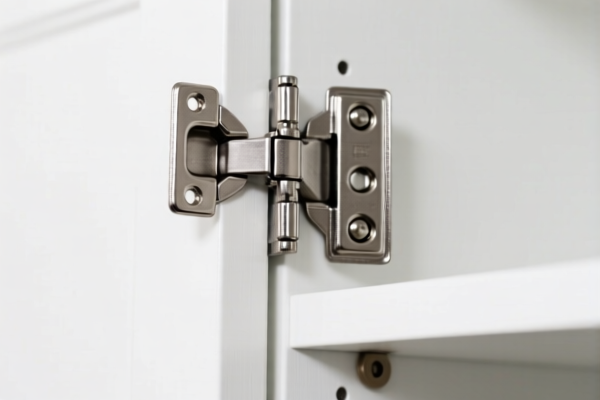

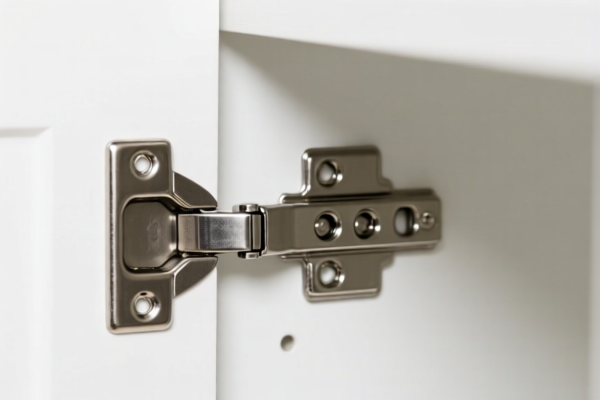
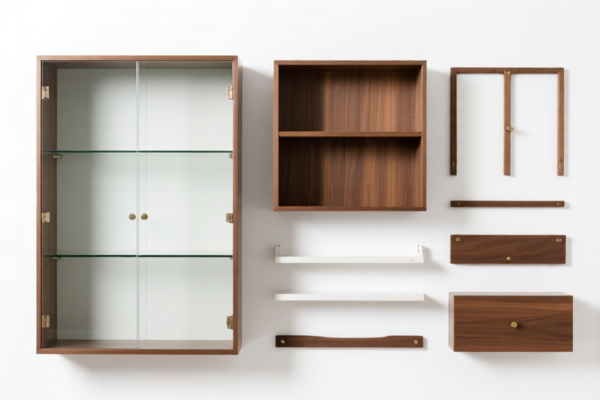
AI Analysis
🏠 Cabinet (Home & Office Furniture)
🌐 HS Code Reference & Customs Clearance Guide | 2026 Latest Tariff Analysis | Strategic Clearance Strategy
📌 I. Product Definition & Classification: Do You Really Understand "Cabinets"?
Cabinets are essential storage solutions for homes, offices, and industrial spaces. In international trade, they are classified based on material composition, function, and permanence of installation.
They are broadly categorized into:
- Metal Cabinets: Made of steel, aluminum, or copper (often for kitchens or workshops).
- Wooden Cabinets: Made of wood (including veneers), covering kitchen cabinets, bedroom wardrobes, and living room units.
- Plastic/Non-Metal Cabinets: Made of plastic or other non-metallic materials (often for utility or outdoor use).
⚠️ Key Distinction:
- Metal vs. Wood: The primary differentiator is the main structural material. Metal cabinets fall under 9403.20, while wooden ones fall under 9403.40/50/60/70. - Installation Status: If a cabinet is designed for permanent installation (e.g., fitted kitchen units), it may be classified differently than portable furniture. - Function: Kitchen cabinets vs. bedroom wardrobes vs. TV stands may have different sub-codes but often share similar tax profiles.
📦 II. HS Code Classification Details (2026 Latest Tariff Authority Match)
Based on your input data, here is the precise breakdown of Cabinet classifications and their corresponding tax liabilities.
| HS Code | Product Description | Material/Type | Specific Summary |
|---|---|---|---|
9403.20.00.78 |
Other Metal Furniture | Metal (Steel/Aluminum/Copper) | Kitchen cabinets made of metal; subject to special "122 Clause" steel/aluminum tariffs. |
9403.40.90.60 |
Kitchen Cabinets (Wood) | Wood | Designed for permanent installation; high tariff due to specific trade measures. |
9403.60.80.93 |
TV Stands / Living Room Furniture | Wood | Similar to kitchen cabinets but for living areas; permanent or semi-permanent. |
9403.50.90.80 |
Bedroom Furniture | Wood | Wardrobes, bedroom cabinets; standard wooden bedroom storage. |
9403.70.80.15 |
Other Household Furniture | Plastic / Non-Metal | Plastic or other non-metallic home furniture; lowest tax rate. |
🔍 Critical Insight:
- Metal Cabinets (9403.20) carry the highest risk due to the "122 Clause" tariffs targeting steel, aluminum, and copper products. - Wooden Cabinets (9403.40/50/60) are heavily targeted with 25% additional tariffs + 10% Section 301/122 tariffs. - Plastic/Non-Metal Cabinets (9403.70) are the least taxed (only 10% additional), making them a preferred option for cost-sensitive imports.
💰 III. 2026 Latest Tariff Rate Breakdown (US Market)
✅ Applicable Country: United States (US)
✅ Origin: China (CN)
✅ Effective Date: As per current 2025-2026 trade policies
🎯 1. 9403.20.00.78 — Metal Cabinets (High Risk)
Summary: Kitchen cabinets classified as "Other Metal Furniture."
| Item | Content |
|---|---|
| Base Tariff | 0.0% |
| Additional Tariff (Section 301) | +25.0% |
| "122 Clause" Tariff (Steel/Al/Cu) | +50.0% |
| Total Tax Rate | 85.0% |
| Tax Calculation | CIF Value × 85% |
| De Minimis Exemption | ❌ No (Strictly enforced for metal) |
| Legal Basis Path | USITC:9403.20.00.78 → Section 122 (Steel/Al) → Section 301 (25%) |
📌 Explanation:
- This is the most expensive category. The 50% "122 Clause" tariff applies specifically to steel, aluminum, and copper products. - Even if the cabinet is mostly metal with minor plastic parts, if the structural frame is metal, this rate applies. - Strategy: Avoid importing metal kitchen cabinets from China if possible, or consider alternative sourcing.
🎯 2. 9403.40.90.60 — Permanent Wooden Kitchen Cabinets
| Item | Content |
|---|---|
| Base Tariff | 0.0% |
| Additional Tariff (Section 301) | +25.0% |
| "122 Clause" Tariff | +10.0% |
| Total Tax Rate | 35.0% |
| Tax Calculation | CIF Value × 35% |
| De Minimis Exemption | ❌ No |
| Legal Basis Path | USITC:9403.40.90.60 → Section 301 (25%) → Section 122 (10%) |
📌 Explanation:
- "Designed for Permanent Installation" is the key phrase here. If the cabinet is meant to be screwed into the wall and cannot be easily moved, it falls here. - The 10% additional tariff (likely related to specific Section 301 listings or "122 Clause" adjustments for wood-related manufacturing inputs) adds up with the 25%.
🎯 3. 9403.60.80.93 — Wooden TV Stands / Living Room Units
| Item | Content |
|---|---|
| Base Tariff | 0.0% |
| Additional Tariff (Section 301) | +25.0% |
| "122 Clause" Tariff | +10.0% |
| Total Tax Rate | 35.0% |
| Tax Calculation | CIF Value × 35% |
| De Minimis Exemption | ❌ No |
| Legal Basis Path | USITC:9403.60.80.93 → Section 301 (25%) → Section 122 (10%) |
📌 Explanation:
- TV stands and similar living room wooden furniture face the same 35% rate as kitchen cabinets. - No distinction is made between "permanent" vs. "movable" for this specific code in terms of tax, unlike9403.40.
🎯 4. 9403.50.90.80 — Wooden Bedroom Furniture (Wardrobes)
| Item | Content |
|---|---|
| Base Tariff | 0.0% |
| Additional Tariff (Section 301) | +25.0% |
| "122 Clause" Tariff | +10.0% |
| Total Tax Rate | 35.0% |
| Tax Calculation | CIF Value × 35% |
| De Minimis Exemption | ❌ No |
| Legal Basis Path | USITC:9403.50.90.80 → Section 301 (25%) → Section 122 (10%) |
📌 Explanation:
- Wardrobes and bedroom cabinets are treated similarly to living room units. - Crucial Note: Ensure the wood is not treated as "hardwood" vs. "softwood" incorrectly, as some specific sub-rules may apply, but the 35% base rate remains consistent here.
🎯 5. 9403.70.80.15 — Plastic/Non-Metal Household Furniture (Lowest Risk)
| Item | Content |
|---|---|
| Base Tariff | 0.0% |
| Additional Tariff (Section 301) | 0.0% |
| "122 Clause" Tariff | +10.0% |
| Total Tax Rate | 10.0% |
| Tax Calculation | CIF Value × 10% |
| De Minimis Exemption | ⚠️ Check Eligibility (Often lower risk) |
| Legal Basis Path | USITC:9403.70.80.15 → Section 122 (10%) |
📌 Explanation:
- This is the "Golden Zone" for cost optimization. - Plastic, rattan, or other non-metal/non-wood furniture (if classified correctly) only face the 10% "122 Clause" tariff (likely a specific sector adjustment). - Strategy: If possible, design cabinets using plastic composites or metal-frame with plastic bodies (carefully classified) to qualify for this lower rate.
🛠️ IV. Customs Clearance Operational Advice (实战避坑指南)
✅ 1. Preparation Checklist (Must-Have Documents)
| Document | Required? | Explanation |
|---|---|---|
| Product Specification | ✅ | Must clearly state material composition (e.g., "Steel Frame," "Wood Veneer," "ABS Plastic"). |
| Assembly Drawings | ✅ | Essential to prove if it is "permanent installation" (9403.40) vs. portable. |
| Photos of Finished Product | ✅ | Show the full unit, including doors, drawers, and hinges. |
| Bill of Lading | ✅ | Must match the HS Code description exactly. |
| Commercial Invoice | ✅ | Value must be accurate; avoid under-declaring to trigger audits. |
| Certificate of Origin | ✅ | Required for Section 301/122 determinations. |
| Material Breakdown Report | ✅ | Critical for 9403.20 (Metal) vs. 9403.70 (Plastic) differentiation. |
✅ 2. Declaration Strategy (Key Mantras)
🔥 "Material First, Function Second, Permanent Status is Key!"
| Situation | Correct Declaration | Wrong Practice |
|---|---|---|
| Metal Kitchen Cabinet | 9403.20.00.78 |
Misdeclaring as wood → Audit & Penalty |
| Wooden Wardrobe | 9403.50.90.80 |
Misdeclaring as metal → 85% Tax! |
| Plastic Storage Unit | 9403.70.80.15 |
Misdeclaring as wood → 35% Tax (vs 10%) |
| Fitted Kitchen Unit | 9403.40.90.60 (Permanent) |
Declaring as portable 9403.60 → Risk of Rejection |
| Mixed Material Cabinet | Main Material Rule | Mixing codes → Confusion & Delays |
💡 Pro Tip:
- If a cabinet has a metal frame but wooden doors, declare based on the main structural material. If the frame is steel, it likely falls under9403.20.00.78(Metal) with the 85% tax.
- If a cabinet is made of plywood with a plastic finish, it is Wooden (35%), not Plastic.
✅ 3. Special Scenarios
| Scenario | Action Plan |
|---|---|
| OEM Custom Cabinets | Provide detailed design files to prove "permanent installation" status for 9403.40. |
| Flat-Pack Furniture | Must clearly state "unassembled" to avoid "permanent installation" classification if possible. |
| Metal Frame + Plastic Body | High Risk! If the metal frame provides structural support, it is often classified as Metal (85%). |
| Wooden Cabinet with Metal Hinges | This is Wooden (35%). The metal parts are considered "accessories." |
🌍 V. Global Market Comparison (2026)
| Country/Region | Recommended HS Code | Tariff (China Origin) | Key Requirement | Note |
|---|---|---|---|---|
| 🇺🇸 USA | 9403.20 / 9403.40 / 9403.70 |
10% - 85% | Strict Material Proof | Highest variance based on material. |
| 🇪🇺 EU | 9403.10 - 9403.60 |
0% - 10% | FSC/PEFC Wood | No Section 301/122 tariffs. |
| 🇨🇦 Canada | 9403.10 - 9403.90 |
0% (if CUSMA) | CUSMA Certificate | Check preferential rules. |
| 🇦🇺 Australia | 9403.10 - 9403.90 |
0% (if AIFTA) | AIFTA Cert | No high additional tariffs. |
📌 Conclusion:
- USA is the only major market imposing the 85% penalty on metal cabinets and the 35% penalty on wooden ones due to specific trade policies. - Europe and Asia generally have lower or zero tariffs for furniture, making them safer markets for high-volume furniture exports.
📌 VI. Common Mistakes & Pitfalls (Lessons Learned)
❌ Mistake 1: Declaring a Metal-Frame Cabinet as Wooden.
👉 Result: Tax jumps from 35% to 85%, plus potential fraud penalties.
❌ Mistake 2: Treating Fitted Kitchen Cabinets as Portable Furniture.
👉 Result: If declared as portable, it might be caught by Customs for misclassification, leading to delays.
❌ Mistake 3: Ignoring the "122 Clause" on plastic items.
👉 Result: Even plastic items (9403.70) face a 10% tariff if they contain specific polymer materials subject to the clause.
❌ Mistake 4: Assuming "Wood" always means "Low Tax".
👉 Result: Wooden cabinets still face 35% due to Section 301 and other clauses.
✅ Correct Approach:
"Identify the Main Structural Material first.
If Metal → 9403.20 (Prepare for 85%).
If Wood → 9403.40/50/60 (Prepare for 35%).
If Plastic/Non-Metal → 9403.70 (Prepare for 10%)."
🎯 VII. Conclusion: Strategic Clearance for Cabinets
🎯 Remember the Mantra:
🔹 "Metal is Heavy (85%), Wood is Medium (35%), Plastic is Light (10%)."
🔹 "Material dictates the tax, not the shape."
🔹 "Permanent installation changes the code, check the specs!"
📌 Pro Tip:
If your business relies heavily on metal kitchen cabinets, consider shifting production to countries with free trade agreements (e.g., Vietnam, Mexico) or explore design modifications to use more plastic/non-metal components to qualify for the 10% tax bracket.
📣 Immediate Action:
📞 Contact Customs Broker + Provide Material Composition Report + Request HS Code Pre-Ruling
🚀 Optimize your supply chain to minimize the 85% tax trap!
✨ Professional Clearance Starts with Accurate Classification!
💼 Your every dollar saved on tariff is pure profit!
Customer Reviews
About HS Code Classification
The Harmonized System (HS) is an internationally standardized nomenclature developed by the World Customs Organization (WCO) to classify traded products. Over 200 countries use the HS system as the basis for customs tariffs, trade statistics, and import/export regulations.
Each HS code follows a hierarchical structure:
- Chapter (2 digits) — Broad category of goods (e.g., Chapter 84: Machinery and Mechanical Appliances)
- Heading (4 digits) — More specific grouping within the chapter
- Subheading (6 digits) — Internationally standardized breakdown, used by all WCO member countries
- National subdivisions (8-10 digits) — Country-specific extensions for further classification, such as US HTSUS 10-digit codes
Correct HS code classification is essential for smooth customs clearance, accurate duty payment, and compliance with trade regulations. Misclassification can lead to customs delays, overpayment of duties, or penalties.
When importing from CN to US, the applicable tariff rates may include:
- Most-Favored-Nation (MFN) rate — The standard duty rate applied to WTO members
- General rate — Applied to countries without trade agreements
- Trade remedy duties — Additional tariffs such as Section 301 (anti-dumping), Section 232 (national security), or countervailing duties
The information provided on this page is for reference purposes only. For official classification, please consult with your local customs authority or a licensed customs broker.