Cable Adapter
CN → US| HS Code | Tariff Rate | Origin | Destination | Doc |
|---|---|---|---|---|
| 8504406007 | 35.0% | CN | US | Official Doc |
| 8504407007 | 35.0% | CN | US | Official Doc |
| 8536694010 | 35.0% | CN | US | Official Doc |
| 8536698000 | 37.7% | CN | US | Official Doc |
| 8517790000 | 67.5% | CN | US | Official Doc |
Product Images


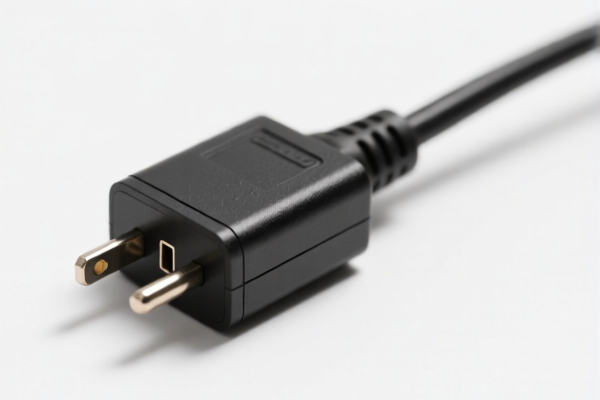
AI Analysis
🌐 Cable Adapter (Power & Data) | 2026 Comprehensive HS Code & Tariff Guide
🚨 Critical Clearance Strategy for US Imports | 2026 Duty Breakdown | Avoid 67.5% Pitfalls
⚠️ Disclaimer: The following classification and tariff analysis is based strictly on the provided data for "Adapter" products.
Applicable Origin: China (CN)
Target Market: USA (US)
Effective Date: Current 2026 Tariff Regime
📦 Part I: HS Code Classification & Rationale (The "Why")
Based on the product name "Cable Adapter", the classification depends entirely on the function of the adapter: is it converting electricity (Power Adapter) or connecting cables (Data/Connector Adapter)?
Here is the breakdown of the 5 possible HS Codes from your data, explained logically:
🎯 1. Power Adapter Classification (Static Converter)
HS Code: 8504.40.60.07 & 8504.40.70.07
📖 Definition: These codes classify the adapter as a "Static Converter" (Power Supply Unit/PSU).
* 8504.40.60.07: Specifically for AC/DC power adapters (the classic "brick" you plug into a wall to charge a laptop or phone).
* Why? It converts high-voltage AC input to low-voltage DC output for electronic devices.
* 8504.40.70.07: For other static power converters with no specific material conflicts (e.g., specialized industrial power supplies).
* Key Logic: If the device's primary job is voltage conversion (Wall → Device), it belongs here.
🎯 2. Connector/Interface Classification (Electrical Connection)
HS Code: 8536.69.40.10 & 8536.69.80.00
📖 Definition: These codes classify the adapter as an "Electrical Connection Device" or "Plug & Socket".
* 8536.69.40.10: Specifically for Coaxial Connectors (often used in RF or specific data adapters).
* Why? It functions as a physical interface to join cables, not necessarily converting power voltage. Voltage limit: ≤ 1,000V.
* 8536.69.80.00: For other plugs, sockets, and adapters (e.g., USB-C to HDMI, HDMI to VGA adapters).
* Why? It acts as a bridge between two different ports without changing the voltage level significantly.
* Key Logic: If the device is a pass-through or interface converter (Port A → Port B) rather than a power supply, it belongs here.
🎯 3. Communication Part Classification (High-Risk)
HS Code: 8517.79.00.00
📖 Definition: Classified as a "Part of Communication Equipment".
* Why? If the adapter is considered a component specifically for modems, routers, or telecom gear (e.g., a specific network interface card adapter), it falls under "Other."
* ⚠️ Warning: This category carries the highest penalty (see Tax Table below) because it includes "Steel, Aluminum, Copper Products" with a massive 50% surcharge.
💰 Part II: 2026 Tariff Rate Breakdown (The "Cost")
All calculations assume: * Country of Origin: China 🇨🇳 * Market: USA 🇺🇸 * Tariff Structure: Base Duty + Section 301 Surcharge (25%) + IEEPA (10%) + Specific Material Surcharges.
| HS Code | Product Function | Base Duty | Surcharge (301) | 122 Section (IEEPA) | Material Surcharge | TOTAL TARIFF |
|---|---|---|---|---|---|---|
8504.40.60.07 |
Power Adapter (AC/DC Converter) | 0.0% | 25.0% | 10.0% | N/A | 35.0% |
8504.40.70.07 |
Static Power Converter | 0.0% | 25.0% | 10.0% | N/A | 35.0% |
8536.69.40.10 |
Coaxial Connector Adapter | 0.0% | 25.0% | 10.0% | N/A | 35.0% |
8536.69.80.00 |
Other Plugs/Sockets/Adapters | 2.7% | 25.0% | 10.0% | N/A | 37.7% |
8517.79.00.00 |
Comm Equipment Part | 0.0% | 7.5% | 10.0% | 50.0% | 67.5% ⚠️ |
🧮 Detailed Tax Clause Explanation:
-
8504.40.60.07&8504.40.70.07(35% Total)- Base: 0% (Standard USITC rate for power supplies).
- Surcharge 1: +25% (Section 301 "Made in China" penalty).
- Surcharge 2: +10% (122 Section / IEEPA penalty).
- Result: A flat 35% duty on the CIF value.
-
8536.69.80.00(37.7% Total)- Base: 2.7% (Standard duty for generic connectors).
- Surcharge 1: +25% (Section 301).
- Surcharge 2: +10% (122 Section).
- Result: 37.7% (Slightly higher due to the base rate).
-
8517.79.00.00(67.5% Total) - ⚠️ DANGER ZONE- Base: 0%.
- Surcharge 1: +7.5% (Lower 301 rate for specific parts).
- Surcharge 2: +10% (122 Section).
- Material Surcharge: +50% (Crucial Clause: "Steel, Aluminum, Copper Products").
- Logic: If the adapter contains significant metal (copper windings, aluminum casing) and is classified as a "comm part," the 50% material surcharge is triggered.
- Result: 67.5% – This is catastrophic for profit margins.
🛠️ Part III: Clearance Action Plan (Strategic Advice)
✅ 1. Classification Strategy: Power vs. Interface
- Best Case Scenario: Classify as Power Adapter (
8504.40.60.07) or General Connector (8536.69.80.00).- Why? The total duty is stable at 35% - 37.7%.
- Avoid at All Costs: Classify as Communication Part (
8517.79.00.00).- Why? The 50% material surcharge on copper/aluminum drives the total tax to 67.5%. Do not describe the item as a "part of a router" if it is a standalone power brick.
✅ 2. Documentation Checklist for US Customs
| Document | Requirement | Reason |
|---|---|---|
| Product Description | Must explicitly state "AC/DC Power Adapter" OR "Data Connector Adapter". | Avoids ambiguity that leads to 8517 classification. |
| Technical Datasheet | Must show Input/Output Voltage (e.g., 110V-240V AC → 12V DC). | Proves it is a Converter (8504), not just a cable. |
| Material List | Highlight "Plastic Housing" vs. "Metal Case". | If metal content is high, ensure you are NOT under 8517 to avoid the 50% surcharge. |
| Origin Certificate | "Made in China" declaration. | Required for 301 and 122 Section calculations. |
| Usage Statement | "For use with Consumer Electronics (Laptops/Phones)". | Supports 8504 classification over 8517 (Industrial/Comm). |
✅ 3. Clearance Tips & Pitfalls
- 🚫 Pitfall: Calling the product "Charging Cable" instead of "Power Adapter".
- Risk: Customs may confuse it with a simple wire (
8544) or a communication part. - Fix: Use the term "External Power Supply Unit" in the commercial invoice.
- Risk: Customs may confuse it with a simple wire (
- 🚫 Pitfall: Assuming "Cable Adapter" is one single HS Code.
- Risk: If you ship a mix of power bricks and HDMI adapters in one container, you must split the shipment or declare both codes to avoid the 67.5% penalty on the whole lot.
- ✅ Pro Tip: If your adapter is plastic-heavy and designed for consumer electronics, emphasize
8504.40.60.07. This is the safest route for power adapters.
🌍 Part IV: Market Comparison (2026 Context)
| Market | Recommended HS Code | Total Duty (China Origin) | Notes |
|---|---|---|---|
| 🇺🇸 USA | 8504.40.60.07 |
35.0% | High 301 + 122 Section taxes. |
| 🇺🇸 USA | 8517.79.00.00 |
67.5% | Avoid (Material surcharge). |
| 🇪🇺 EU | 8504.40 |
~0-2% | No 301 Section (depends on origin). |
| 🇨🇳 China | 8504.40 |
~0-6% | Domestic import rates apply. |
📌 Final Verdict & Call to Action
🚀 The Golden Rule for "Cable Adapters": "If it powers it, use 8504. If it connects it, use 8536. If it talks, avoid 8517!"
- For Power Adapters: Aim for
8504.40.60.07→ 35% Tax. - For Data Adapters: Aim for
8536.69.80.00→ 37.7% Tax. - For Comm Parts: AVOID
8517.79.00.00unless necessary, as it triggers a 67.5% Tax due to material content.
📢 Immediate Action: Review your commercial invoice. Ensure the description clearly distinguishes between Power Conversion and Data Connection. If unsure, consult a customs broker to file a Binding Ruling before shipping, especially to avoid the 50% material surcharge trap.
✨ Smart Shipping = High Profit ✨
Don't let a 32% tax difference (67.5% vs 35%) eat your margins!
Customer Reviews
About HS Code Classification
The Harmonized System (HS) is an internationally standardized nomenclature developed by the World Customs Organization (WCO) to classify traded products. Over 200 countries use the HS system as the basis for customs tariffs, trade statistics, and import/export regulations.
Each HS code follows a hierarchical structure:
- Chapter (2 digits) — Broad category of goods (e.g., Chapter 84: Machinery and Mechanical Appliances)
- Heading (4 digits) — More specific grouping within the chapter
- Subheading (6 digits) — Internationally standardized breakdown, used by all WCO member countries
- National subdivisions (8-10 digits) — Country-specific extensions for further classification, such as US HTSUS 10-digit codes
Correct HS code classification is essential for smooth customs clearance, accurate duty payment, and compliance with trade regulations. Misclassification can lead to customs delays, overpayment of duties, or penalties.
When importing from CN to US, the applicable tariff rates may include:
- Most-Favored-Nation (MFN) rate — The standard duty rate applied to WTO members
- General rate — Applied to countries without trade agreements
- Trade remedy duties — Additional tariffs such as Section 301 (anti-dumping), Section 232 (national security), or countervailing duties
The information provided on this page is for reference purposes only. For official classification, please consult with your local customs authority or a licensed customs broker.