Cable Stranding
CN → US| HS Code | Tariff Rate | Origin | Destination | Doc |
|---|---|---|---|---|
| 8479400000 | 35.0% | CN | US | Official Doc |
| 8479899000 | 0.0% | CN | US | Official Doc |
| 7408190030 | 88.0% | CN | US | Official Doc |
| 7408190060 | 65.0% | CN | US | Official Doc |
Product Images
AI Analysis
🔌 Cable Stranding & Wire Manufacturing Equipment
🌐 HS Code Reference & Customs Clearance Guide | 2026 Latest Tariff Analysis | Professional Clearance Strategy
📌 I. Product Definition: What is "Cable Stranding"?
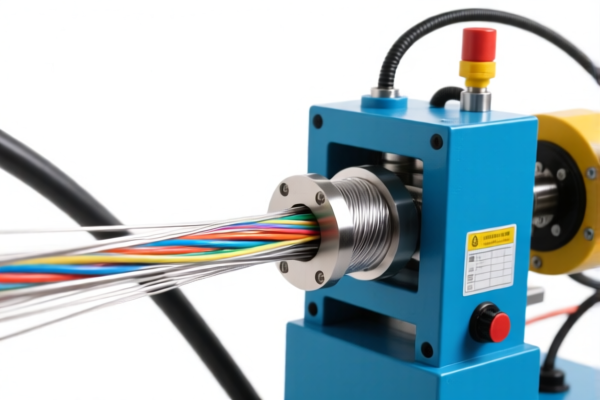
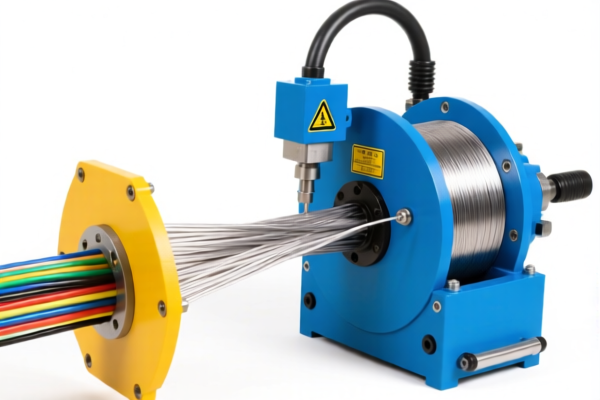
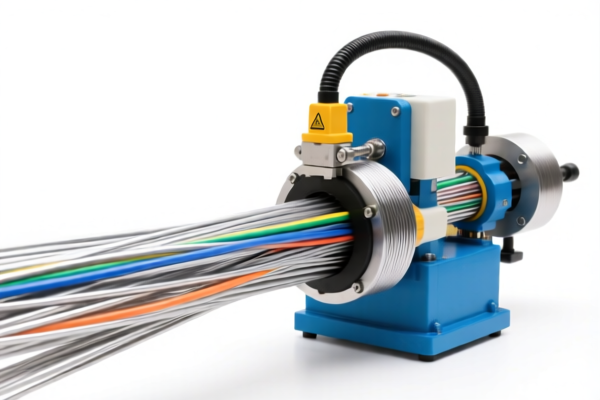
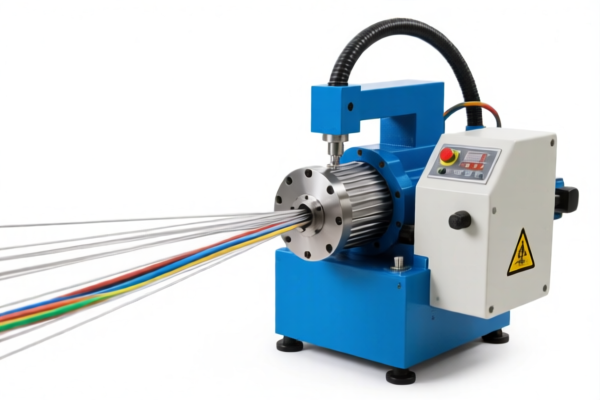
Cable Stranding (also known as Wire Stranding) is a critical manufacturing process where multiple individual strands of copper or aluminum wire are twisted together to form a single, more flexible conductor. This is not a finished product itself but the process and the machinery used to create it.
In international trade, this term primarily refers to two distinct HS Code categories based on the input material and the machine function:
- The Machinery: Rope or cable-making machines (Section XVI, Chapter 84).
- The Product: Copper Wire with specific dimensions (Section XV, Chapter 74).
⚠️ Key Distinction:
- If you are importing a machine that twists wires → HS Code 8479.40.00.00
- If you are importing the finished wire (stranded copper) → HS Code 7408.19.00.30 or 7408.19.00.60
📦 II. HS Code Classification Details (2026 Latest Tariff Reference)
Based on the provided dataset, here is the precise breakdown for Cable Stranding related items.
| HS Code | Product Description | Applicable Scenario | Key Feature |
|---|---|---|---|
8479.40.00.00 |
Machines and mechanical appliances... Rope or cable-making machines | Importing the stranding machine itself (twisting equipment) | Machinery |
7408.19.00.30 |
Copper wire: Of refined copper: Other With a max cross-sectional dimension of ≤ 3 mm | Importing thin copper wire (≤3mm) used in cables | Product |
7408.19.00.60 |
Copper wire: Of refined copper: Other Other | Importing thicker copper wire (>3mm) or unspecified dimensions | Product |
8479.89.90.00 |
Machines... Other machines and mechanical appliances | Incorrect or Error classification for stranding machines | Avoid |
🔍 Important Note:
- HS Code8479.40.00.00is the correct code for the machine that performs the stranding operation.
- HS Codes7408.19.00.30and7408.19.00.60are for the copper wire that is the input or output of the stranding process, depending on its thickness.
- HS Code8479.89.90.00resulted in an "Error" for tax retrieval. Do not use this code for stranding machines as it leads to customs delays and potential fines due to lack of valid tax data.
💰 III. 2026 Latest Tariff Rate Breakdown (Including Additional Taxes)
✅ Applicable Country: United States (US)
✅ Origin: China (CN)
✅ Effective Date: 2025 onwards
🎯 1. 8479.40.00.00 – Rope or Cable-Making Machines
| Item | Content |
|---|---|
| Base Tariff | 0.0% (ad valorem) |
| Section 301 Additional Tariff | +25.0% |
| Total Tariff Rate | 25.0% |
| Tax Calculation | CIF Value × 25% |
| Legal Basis | Section 301 Tariff List (USITC) |
| De Minimis Exemption | ❌ Not Eligible |
📌 Explanation:
- The base tariff for machinery is 0%, but the Section 301 additional tariff of 25% applies to Chinese-made cable-making machines.
- This is a flat rate with no complex IEEPA layers for this specific machine code in the provided data.
- Critical: Do not confuse this with the "50%" rate applied to copper products.
🎯 2. 7408.19.00.30 – Copper Wire (≤ 3 mm)
| Item | Content |
|---|---|
| Base Tariff | 0.0% |
| Additional Tariff (Steel, Aluminum, Copper) | +50.0% |
| Total Tariff Rate | 50.0% |
| Tax Calculation | CIF Value × 50% |
| Legal Basis | Steel, Aluminum, Copper Products Additional Tariff (50%) |
| De Minimis Exemption | ❌ Not Eligible |
📌 Explanation:
- Although the base tariff is 0%, copper products from China are subject to a 50% additional tariff.
- This is a very high tariff. Ensure your supplier declares the correct cross-sectional dimension (≤3mm) to apply this specific code.
🎯 3. 7408.19.00.60 – Copper Wire (Other)
| Item | Content |
|---|---|
| Base Tariff | 0.0% |
| Additional Tariff (Steel, Aluminum, Copper) | +50.0% |
| Total Tariff Rate | 50.0% |
| Tax Calculation | CIF Value × 50% |
| Legal Basis | Steel, Aluminum, Copper Products Additional Tariff (50%) |
| De Minimis Exemption | ❌ Not Eligible |
📌 Explanation:
- For copper wire with a cross-sectional dimension greater than 3 mm, this code applies.
- The 50% tariff is the same as above.
- Key Point: The distinction between30and60is purely dimensional (3mm threshold). Misclassifying can lead to audits.
🛠️ IV. Customs Clearance Practical Advice (Real-World Pitfall Guide)
✅ 1. Preparation Checklist (Must-Have Documents)
| Document | Required | Description |
|---|---|---|
| ✅ Product Specification Sheet | ✔️ | For machines: Power, speed, number of strands. For wire: Diameter, purity, standard (e.g., ASTM B258). |
| ✅ Commercial Invoice | ✔️ | Clearly state "Cable Stranding Machine" or "Refined Copper Wire". Avoid vague terms like "Electrical Parts". |
| ✅ Packing List | ✔️ | Separate wires from machines if shipped together. |
| ✅ Certificate of Origin | ✔️ | Essential for proving Chinese origin to apply correct 301/50% tariffs. |
| ✅ Technical Drawings | ✔️ | For machines, to prove it is a "Rope or Cable-Making Machine" and not a general "Assembling Machine". |
✅ 2. Classification Strategy (Key Rules)
🔥 "Machine vs. Product: Know Your Input vs. Output!"
| Scenario | Correct HS Code | Tariff | Reason |
|---|---|---|---|
| Importing the Stranding Machine | 8479.40.00.00 |
25% | It is a machine for making ropes/cables. |
| Importing Copper Wire ≤ 3mm | 7408.19.00.30 |
50% | Product is refined copper, thin wire. |
| Importing Copper Wire > 3mm | 7408.19.00.60 |
50% | Product is refined copper, thicker wire. |
| Importing Aluminum Wire | Not in Data | Unknown | Ensure it is not misdeclared as copper. |
| Importing Finished Cables | Not in Data | Unknown | Do not use 7408 codes for finished insulated cables. |
⚠️ Critical Warning:
- Do NOT use8479.89.90.00("Other machines") for stranding machines. The provided data shows "Failed to retrieve tax information". Using this code will cause customs delays, re-inspections, and potential penalties.
- Do NOT mix machine and wire in the same line item on the invoice. Declare them separately.
✅ 3. Special Situations
| Situation | Advice |
|---|---|
| Machine + Spare Parts | Declare spare parts under the same HS code 8479.40.00.00 if they are specific to the stranding machine. |
| Wire for Export Re-import | If importing copper wire, then exporting as finished cable, consider using FTZ (Foreign Trade Zone) to defer the 50% tariff until final export. |
| Misclassification Risk | Declaring a ≤3mm wire as >3mm (or vice versa) may not change the tariff (both 50%), but it violates customs regulations and can lead to audits. Always measure accurately. |
🌍 V. Global Market Comparison (2026 Overview)
| Country/Region | Recommended HS Code | Tariff (China Origin) | Notes |
|---|---|---|---|
| 🇺🇸 USA | 8479.40.00.00 (Machine) |
25% | High tariff, but stable. |
| 🇺🇸 USA | 7408.19.00.30 (Wire) |
50% | Very high tariff. |
| 🇨🇳 China | N/A (Export) | 0% | No export tariffs for these items. |
| 🇪🇺 EU | N/A | Varies | EU has different tariff structures; check TARIC. |
📌 Conclusion:
- The USA is the most challenging market for these items due to Section 301 and Copper-specific tariffs.
- Copper wire imports face a 50% tariff, which is significantly higher than the 25% tariff on the machinery itself.
- Cost-Benefit Analysis: Importing the machine (25%) is cheaper than importing the raw wire (50%) for domestic processing. Consider importing the machine and sourcing wire locally or from non-affected countries if possible.
📌 VI. Common Errors & Pitfalls (Lessons Learned)
❌ Error 1: Declaring a cable stranding machine as a "General Assembly Machine" (8479.89.90.00)
👉 Consequence: Tax retrieval fails → Customs hold → Delays + Storage fees.
✅ Fix: Always use 8479.40.00.00 for cable-making machines.
❌ Error 2: Misstating the wire diameter to avoid the 3mm threshold
👉 Consequence: Although the tariff is the same (50%), it is a false declaration. If caught, penalties apply.
✅ Fix: Measure wire cross-section accurately. Use the correct code based on the 3mm rule.
❌ Error 3: Combining machine and wire in one HS code
👉 Consequence: Confusion at customs, potential rejection of the entry.
✅ Fix: Separate line items for machines and raw materials.
🎯 VII. Conclusion: Professional Clearance for Cable Stranding
🎯 Remember the Key Takeaways:
🔹 Machines:
8479.40.00.00→ 25% Tariff
🔹 Thin Copper Wire (≤3mm):7408.19.00.30→ 50% Tariff
🔹 Thick Copper Wire (>3mm):7408.19.00.60→ 50% Tariff
🔹 Avoid:8479.89.90.00(Error Code)🔹 "HS Code Choice Defines Your Cost: 25% vs 50% is a Huge Difference!"
🔹 "Accuracy in Dimensions (3mm) is Critical for Copper Wire!"
📌 Tip:
For high-volume copper wire imports, consider supply chain diversification (e.g., sourcing from Vietnam, Mexico, or Thailand) to potentially avoid the 50% copper tariff, if applicable under their respective trade agreements.
For machinery, advance ruling is recommended to confirm 8479.40.00.00 is accepted by CBP for your specific machine model.
📣 Immediate Action:
📞 Contact a Licensed Customs Broker
📄 Prepare Technical Specs for Machines
📏 Measure Copper Wire Diameters Precisely
🚀 Ensure Smooth, Compliant Clearance for Your Cable Stranding Operations!
✨ Professional Customs Clearance Starts with Accurate Classification!
💼 Your Supply Chain Efficiency Depends on It!
Customer Reviews
About HS Code Classification
The Harmonized System (HS) is an internationally standardized nomenclature developed by the World Customs Organization (WCO) to classify traded products. Over 200 countries use the HS system as the basis for customs tariffs, trade statistics, and import/export regulations.
Each HS code follows a hierarchical structure:
- Chapter (2 digits) — Broad category of goods (e.g., Chapter 84: Machinery and Mechanical Appliances)
- Heading (4 digits) — More specific grouping within the chapter
- Subheading (6 digits) — Internationally standardized breakdown, used by all WCO member countries
- National subdivisions (8-10 digits) — Country-specific extensions for further classification, such as US HTSUS 10-digit codes
Correct HS code classification is essential for smooth customs clearance, accurate duty payment, and compliance with trade regulations. Misclassification can lead to customs delays, overpayment of duties, or penalties.
When importing from CN to US, the applicable tariff rates may include:
- Most-Favored-Nation (MFN) rate — The standard duty rate applied to WTO members
- General rate — Applied to countries without trade agreements
- Trade remedy duties — Additional tariffs such as Section 301 (anti-dumping), Section 232 (national security), or countervailing duties
The information provided on this page is for reference purposes only. For official classification, please consult with your local customs authority or a licensed customs broker.