Cage Key Blocker Bags
CN → US| HS Code | Tariff Rate | Origin | Destination | Doc |
|---|---|---|---|---|
| 6307909891 | 24.5% | CN | US | Official Doc |
| 6307908940 | 17.0% | CN | US | Official Doc |
Product Images
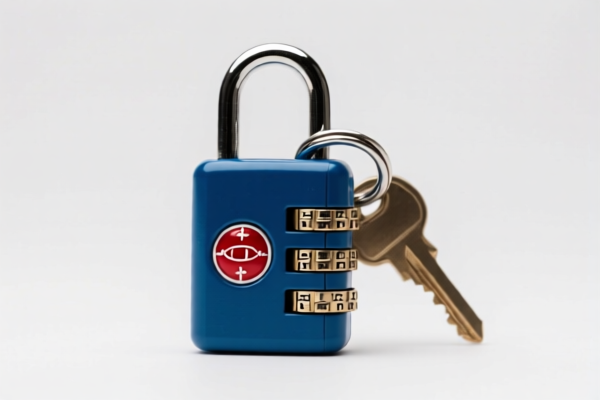
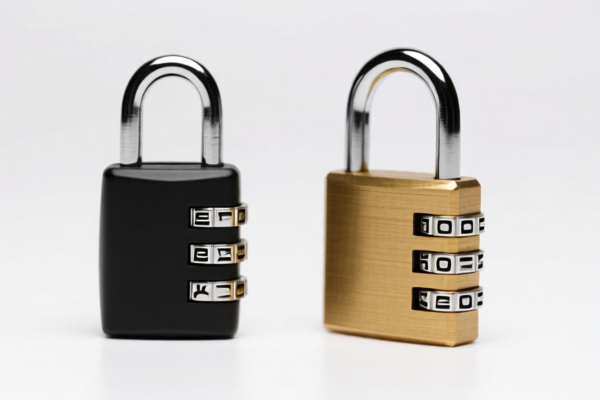
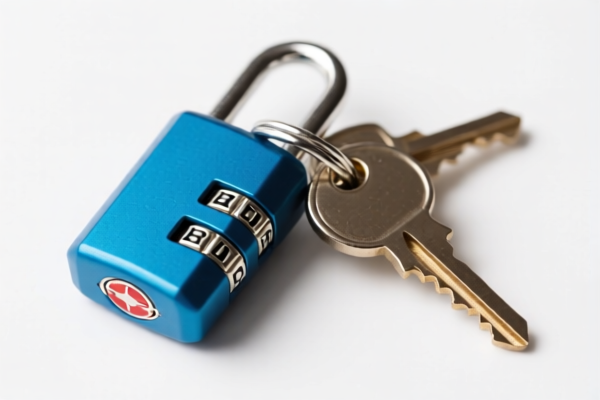

AI Analysis
🛡️ Cage Key Blocker Bags (Anti-Theft Security Pouches)
🌐 HS Code Reference & Customs Clearance Guide | 2026 Latest Tariff Analysis | Professional Logistics Strategy
📌 I. Product Definition & Classification: Do You Truly Understand "Cage Key Blocker Bags"?
Cage Key Blocker Bags, also known as RFID-blocking bags or security pouches, are specialized protective containers designed to prevent unauthorized access to sensitive data stored in contactless cards, keys, and passports. They are primarily used by security personnel, property managers, and high-net-worth individuals.
In international trade, these products are broadly classified as "Made-up Articles of Textile Materials" or "Plastic Articles", depending on the primary material composition and the specific function claimed. However, based on the provided data, we focus on the textile/general miscellaneous category.
⚠️ Key Distinction:
- If the bag is made of textile material (e.g., nylon, polyester, canvas) and contains a blocking layer (metal mesh/film), it generally falls under Chapter 63 (Other made-up articles).
- If it is purely plastic with no textile structure, it might fall under Chapter 39, but the provided data highlights textile-related codes.
- Specific Use Case: If the bag is specifically designed for surgical towels or cotton towels, it would fall under a different subheading (6307.90.89.40). General security bags do NOT qualify for this exception.
📦 II. HS Code Classification Details (2026 Latest Tariff Authority Comparison)
| HS Code | Product Description | Applicable Scenario | Tax Rate (Total) | Base Tax | Additional Tax |
|---|---|---|---|---|---|
6307.90.98.91 |
Other made-up articles, including dress patterns: Other: Other: Other | General RFID-blocking pouches, security bags, generic textile protective cases | 14.5% | 7.0% | 7.5% |
6307.90.89.40 |
Surgical towels; cotton towels of pile or tufted construction... | NOT APPLICABLE for standard security bags. Only for medical/cotton towels. | 0.0% | 0.0% | 0.0% |
🔍 Crucial Reminder:
- Do NOT misclassify a standard Cage Key Blocker Bag as6307.90.89.40. This code is strictly for cotton towels and surgical linens. Using this code for a security bag will lead to customs rejection, penalties, and potential fraud accusations.
- The correct classification for most textile-based security bags is6307.90.98.91, which carries a 14.5% total tax.
- "Other made-up articles" is a residual category for textile goods not specified elsewhere.
💰 III. 2026 Latest Tariff Rate Detailed Explanation (Including Surcharge, Policy Surcharge)
✅ Applicable Country: United States (US)
✅ Country of Origin: China (CN)
✅ Effective Date: November 10, 2025 onwards (for subsequent imports)
🎯 1. 6307.90.98.91 —— General Textile Made-up Articles (Including Security Bags)
| Item | Content |
|---|---|
| Base Tariff | 7.0% (ad valorem) |
| Section 301 Surcharge | +7.5% (Additional tariffs on Chinese goods) |
| Total Tax Rate | 14.5% |
| Tax Calculation | CIF Value × 14.5% |
| De Minimis Exemption | ❌ Not Applicable (Most textile/security items do not qualify for de minimis under current US-China trade rules) |
| Legal Basis Path | HTSUS:6307.90.98.91 → Section 301 Footnote |
📌 Explanation:
- The 7.0% is the standard Most Favored Nation (MFN) duty for "other made-up articles."
- The 7.5% is the Section 301 additional duty imposed on goods originating from China.
- Total 14.5% is a moderate-to-high tariff compared to electronics, but standard for textile/miscellaneous goods from China.
- Warning: There is no "0% tax" option for this product unless it is mistakenly declared as a cotton towel (which is illegal and high-risk).
🛠️ IV. Customs Clearance Practical Advice (Real-World Pitfall Avoidance Guide)
✅ 1. Required Documentation Checklist (Non-negotiable)
| Document | Must Provide | Explanation |
|---|---|---|
| ✅ Product Specification Sheet | ✔️ | Must specify material (e.g., 100% Polyester with aluminum layer), dimensions, and RFID-blocking frequency (e.g., 13.56 MHz). |
| ✅ Product Photos (Clear) | ✔️ | Show the bag’s interior blocking layer, zipper, and branding. |
| ✅ Commercial Invoice | ✔️ | Must clearly state: "Cage Key Blocker Bag, RFID Blocking, Textile Material, HS Code 6307.90.98.91" |
| ✅ Packing List | ✔️ | Detail the number of bags per carton, total weight, and volume. |
| ✅ Material Composition Statement | ✔️ | Declare the % of textile vs. metal/plastic components. If textile is >50%, Chapter 63 applies. |
✅ 2. Declaration Tips (Key Mantra)
🔥 "Material First, Function Second, No Towel Lie!"
| Scenario | Correct Declaration | Wrong Action |
|---|---|---|
| Standard Security Bag | 6307.90.98.91 |
Misdeclaring as 6307.90.89.40 (Towels) → HIGH RISK |
| Plastic Bag Only | Check Chapter 39 (e.g., 3926.90) |
Forcing Chapter 63 when no textile is present |
| Bag with Metal Keys Inside | Declare as "Empty Bag" if keys are not part of the sale | Combining goods incorrectly → Complex Tariff Calculation |
✅ 3. Special Situation Handling
| Situation | Handling Advice |
|---|---|
| OEM Custom Bags | Provide client’s design patent or authorization to prove legitimacy. |
| Mixed Material Bags | If the bag is 50% textile, 50% plastic, classify based on essential character (usually textile for pouches). |
| Samples | If value is low, check if de minimis applies (usually $800 USD for US imports), but Section 301 may still apply if origin is China. |
| Security Certification | If the bag has FIPS 140-2 or other security certifications, include them in the declaration to show professionalism. |
🌍 V. Global Market Customs Comparison (2026 Latest)
| Country/Region | Recommended HS Code | Tariff | Certification Requirements | Notes |
|---|---|---|---|---|
| 🇺🇸 USA | 6307.90.98.91 |
14.5% | None specific | Section 301 applies. High risk of misclassification. |
| 🇨🇳 China | 6307.90.98.91 |
7.0% | None | Lower tariff if imported back to China. |
| 🇪🇺 EU | 6307.90.98 |
6.5% | CE (if electronic components involved) | No Section 301 equivalent, but anti-dumping checks may apply. |
| 🇬🇧 UK | 6307.90.98 |
6.5% | UKCA | Post-Brexit rules apply. |
| 🇦🇺 Australia | 6307.90.98 |
5.0% | N/A | Lower tariff than US. |
📌 Conclusion:
- USA is the most expensive market due to the 7.5% Section 301 surcharge.
- EU/UK/Australia are more favorable with rates around 5-6.5%.
- Never declare a security bag as a towel to save tax. The penalty for false declaration is far greater than the 14.5% duty.
📌 VI. Common Errors & Pitfall Guide (Lessons Learned)
❌ Error 1: Declaring a textile security bag as 6307.90.89.40 (Cotton Towels)
👉 Consequence: Customs will detect the mismatch (bag vs. towel). Fines, seizure, and loss of import privileges.
👉 Why it’s wrong: The description explicitly says "Surgical towels; cotton towels." A security bag is neither.
❌ Error 2: Ignoring the "Made-up Article" nature
👉 Consequence: If declared as raw fabric, it falls under Chapter 52/54, which may have different duties and stricter regulations.
👉 Fix: Always declare as "Made-up" if it is sewn/assembled.
❌ Error 3: Under-declaring value
👉 Consequence: If the bag is worth $10 but declared as $1 to avoid the 14.5% tax, customs audits will catch this.
👉 Fix: Accurate invoicing is key.
✅ Correct Practice:
"RFID Blocking Bag, Polyester with Metal Mesh Lining, Black, 10x15cm, HS Code 6307.90.98.91, Country of Origin: China"
🎯 VII. Conclusion: Professional Declaration, Time-Saving, Cost-Efficient!
🎯 Remember the Mantra:
🔹 "Textile Bag, 6307, 14.5% Tax, No Towel Lie!"
🔹 "HS Code determines duty, 14.5% is real, fake towel declaration is a sin!"
📌 Tip:
If your security bags are originating from Vietnam, Mexico, Thailand, or Malaysia, you MAY avoid the Section 301 7.5% surcharge, reducing the total tax to 7.0% (Base only).
✅ Recommendation: Consider supply chain diversification to non-China origins if volume is high.
✅ Apply for Advance Ruling if unsure about material classification.
📣 Immediate Action:
📞 Contact a licensed customs broker + Provide product photos + Verify material composition
🚀 Let your security bags clear smoothly, reduce costs, and boost profits!
✨ Professional Customs Clearance Starts with Accurate Classification!
💼 Every cent of your cost deserves precise calculation!
Customer Reviews
About HS Code Classification
The Harmonized System (HS) is an internationally standardized nomenclature developed by the World Customs Organization (WCO) to classify traded products. Over 200 countries use the HS system as the basis for customs tariffs, trade statistics, and import/export regulations.
Each HS code follows a hierarchical structure:
- Chapter (2 digits) — Broad category of goods (e.g., Chapter 84: Machinery and Mechanical Appliances)
- Heading (4 digits) — More specific grouping within the chapter
- Subheading (6 digits) — Internationally standardized breakdown, used by all WCO member countries
- National subdivisions (8-10 digits) — Country-specific extensions for further classification, such as US HTSUS 10-digit codes
Correct HS code classification is essential for smooth customs clearance, accurate duty payment, and compliance with trade regulations. Misclassification can lead to customs delays, overpayment of duties, or penalties.
When importing from CN to US, the applicable tariff rates may include:
- Most-Favored-Nation (MFN) rate — The standard duty rate applied to WTO members
- General rate — Applied to countries without trade agreements
- Trade remedy duties — Additional tariffs such as Section 301 (anti-dumping), Section 232 (national security), or countervailing duties
The information provided on this page is for reference purposes only. For official classification, please consult with your local customs authority or a licensed customs broker.