Cake Baking Pan
CN → US| HS Code | Tariff Rate | Origin | Destination | Doc |
|---|---|---|---|---|
| 7323930035 | 62.0% | CN | US | Official Doc |
| 6912004890 | 19.8% | CN | US | Official Doc |
| 7323915020 | 15.3% | CN | US | Official Doc |
| 3924102000 | 24.0% | CN | US | Official Doc |
| 3924104000 | 13.4% | CN | US | Official Doc |
Product Images
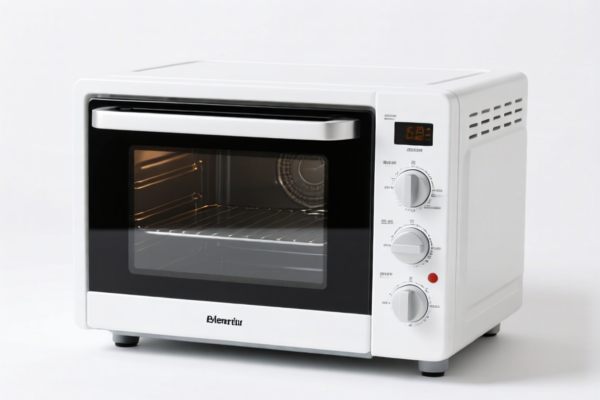
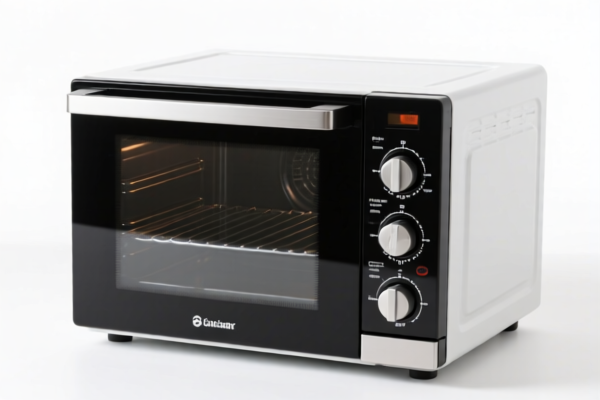
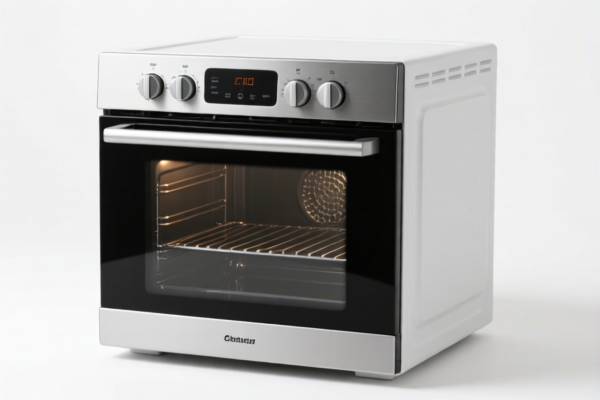

AI Analysis
🎂 Cake Baking Pans: The Ultimate HS Code & Tax Guide for US Imports
🌐 HS Code Reference & Customs Clearance Guide | 2026 Latest Tariff Analysis | Professional Clearance Strategy
📌 I. Product Definition & Classification: What Exactly is a "Cake Baking Pan"?
A "Cake Baking Pan" is a generic term covering various molds and trays used in baking. However, in international trade (specifically US Customs), the material composition dictates the HS Code, the duty rate, and the applicable "Section 301" or "122"附加 tariffs. There is no single HS Code for all baking pans; misclassification can lead to severe penalties or unexpected costs.
The data below categorizes Cake Baking Pans based on Material and Function.
📦 II. HS Code Classification Details (Authoritative 2026 Reference)
| HS Code | Product Description | Material/Type | Key Identification Features |
|---|---|---|---|
7323.93.00.35 |
Stainless Steel Baking Accessories | Stainless Steel | Shiny, metallic, magnetic/non-magnetic stainless steel molds. |
7323.91.50.20 |
Cast Iron or Metal Baking Accessories | Cast Iron / Non-Stick Metal | Heavy, often pre-seasoned or coated with non-stick metal alloys. |
6912.00.48.90 |
Ceramic or Stone Baking Ware | Ceramic / Porcelain / Stone | Non-porous or glazed ceramic, clay, or stone molds. Not pure porcelain tableware. |
3924.10.20.00 |
Plastic or Silicone Kitchenware | Plastic / Silicone | Flexible silicone mats, rigid plastic molds. Often labeled "Food Grade". |
3924.10.40.00 |
Plastic Tableware & Kitchenware | Plastic | Rigid plastic containers or molds, specifically classified under plastic tableware. |
🔍 Key Distinction:
- Metal (7323) vs. Plastic (3924): This is the most critical split. Metal pans fall under Chapter 73, while plastic/silicone fall under Chapter 39.
- Ceramic (6912): Must be made of ceramic materials (clay-based). If it looks like ceramic but is made of plastic, it is 3924.
- Function: All items listed are specifically for baking/cooking (kitchenware), not for serving (which might fall under 7323.93.80 or 3924.10.90).
💰 III. 2026 Tariff Rate Breakdown (Including Surcharges & Policy Add-ons)
✅ Applicable Country: United States (US)
✅ Origin: China (CN)
✅ Effective Date: Current rates apply as per latest IEEPA & Section 301 updates.
🎯 1. 7323.93.00.35 —— Stainless Steel Cake Pan
| Item | Content |
|---|---|
| Base Duty Rate | 2.0% |
| Section 301 / 122 Surcharge | 0.0% (Base) + 10% (Sec 301) + 50% (Steel/Aluminum/Copper Product Surcharge) |
| Total Effective Tax Rate | 62.0% |
| Tax Calculation | CIF Value × 62.0% |
| Legal Basis Path | USITC:7323.93.00.35 → FOOTNOTE:122(Steel) → IEEPA:9903.01.25 |
📌 Explanation:
- This is the highest tax bracket for metal pans.
- The 50% surcharge applies because this is classified under "Steel, Aluminum, and Copper Products" (Section 232/122 related measures).
- Plus a standard 10% Section 301 tariff.
- Total: 62%. This makes stainless steel imports from China extremely expensive.
🎯 2. 7323.91.50.20 —— Cast Iron / Metal Cake Pan
| Item | Content |
|---|---|
| Base Duty Rate | 5.3% |
| Section 301 / 122 Surcharge | 0.0% (Base) + 10% (Sec 301) + 0% (Special Metal Exemption/Note) |
| Total Effective Tax Rate | 15.3% |
| Tax Calculation | CIF Value × 15.3% |
| Legal Basis Path | USITC:7323.91.50.20 → FOOTNOTE:122 |
📌 Explanation:
- Cast iron pans often fall under a different subheading than stainless steel.
- Note: The 50% steel surcharge does not apply here (or is applied differently depending on the specific 10-digit classification interpretation).
- Total: 15.3% (5.3% Base + 10% Sec 301). This is significantly cheaper than stainless steel.
🎯 3. 6912.00.48.90 —— Ceramic Cake Pan
| Item | Content |
|---|---|
| Base Duty Rate | 9.8% |
| Section 301 Surcharge | 10% |
| Total Effective Tax Rate | 19.8% |
| Tax Calculation | CIF Value × 19.8% |
| Legal Basis Path | USITC:6912.00.48.90 → IEEPA:9903.01.24 |
📌 Explanation:
- Ceramic goods are subject to a higher base rate than steel.
- However, they do not incur the 50% "Steel/Aluminum" surcharge.
- Total: 19.8%. A moderate cost option.
🎯 4. 3924.10.20.00 —— Plastic or Silicone Cake Pan
| Item | Content |
|---|---|
| Base Duty Rate | 6.5% |
| Section 301 Surcharge | 7.5% |
| Section 301 (Additional) | 10% |
| Total Effective Tax Rate | 24.0% |
| Tax Calculation | CIF Value × 24.0% |
| Legal Basis Path | USITC:3924.10.20.00 → IEEPA:9903.01.24 + IEEPA:9903.01.25 |
📌 Explanation:
- Silicone/plastic kitchenware has a moderate base rate.
- It is subject to two layers of Section 301 tariffs in some classifications (7.5% + 10%).
- Total: 24.0%. Higher than cast iron, but lower than stainless steel.
🎯 5. 3924.10.40.00 —— Plastic Cake Pan (Tableware Class)
| Item | Content |
|---|---|
| Base Duty Rate | 3.4% |
| Section 301 Surcharge | 0.0% |
| Section 301 (Additional) | 10% |
| Total Effective Tax Rate | 13.4% |
| Tax Calculation | CIF Value × 13.4% |
| Legal Basis Path | USITC:3924.10.40.00 → IEEPA:9903.01.25 |
📌 Explanation:
- This classification assumes the item is treated as general "Plastic Tableware".
- Lowest Base Rate (3.4%).
- Only one layer of 10% Section 301 tariff applies.
- Total: 13.4%. This is the most cost-effective option if the product qualifies under this specific 10-digit code.
🛠️ IV. Customs Clearance Practical Advice (Avoiding Pitfalls)
✅ 1. Preparation Checklist (All Required)
| Document | Mandatory? | Description |
|---|---|---|
| ✅ Product Specification Sheet | ✔️ | Must clearly state Material (e.g., "100% Silicone," "Stainless Steel 304," "Ceramic"). |
| ✅ Product Photos | ✔️ | Clear images of the pan, including texture, flexibility (for silicone), and any labels. |
| ✅ Commercial Invoice | ✔️ | Description must match HS Code definition. Avoid vague terms like "Kitchen Tool." Use "Silicone Cake Mold." |
| ✅ Bill of Lading / Packing List | ✔️ | Ensure weight and volume are accurate. |
| ✅ Origin Certificate | ✔️ | To verify country of origin (China triggers the surcharges above). |
✅ 2. Declaration Strategy (Key Mnemonic)
🔥 "Material First, HS Code Second, Tax Savings Third!"
| Scenario | Correct HS Code | Estimated Total Tax | Wrong Approach | Consequence |
|---|---|---|---|---|
| Stainless Steel Pan | 7323.93.00.35 |
62.0% | Declare as 7323.91 (Cast Iron) |
Audit failure, back taxes + penalties. |
| Silicone Pan | 3924.10.20.00 |
24.0% | Declare as 3924.10.40 (Plastic Tableware) |
Possible dispute if item is rigid plastic vs. flexible silicone. |
| Plastic Pan (Rigid) | 3924.10.40.00 |
13.4% | Declare as 3924.10.20 |
Overpaying 10.6% unnecessarily. |
| Ceramic Pan | 6912.00.48.90 |
19.8% | Declare as 6911 (Porcelain Tableware) |
Different duty rate, potential misclassification. |
✅ 3. Special Cases
| Case | Handling Advice |
|---|---|
| Mixed Material Pans (e.g., Silicone base + Metal handle) | Declare based on the essential character (usually the main body material). Provide detailed BOM (Bill of Materials). |
| Set of Pans (Metal pan + Silicone liner) | If sold together, declare as a set. Ensure the primary function (baking) and material are clear. |
| OEM / Private Label | Provide authorization letters if brand is restricted. |
| Food Safety Compliance | Ensure products meet FDA standards for food contact surfaces (especially for Silicone 3924 and Plastic 3924). |
🌍 V. Global Market Comparison (2026 Overview)
| Country/Region | Recommended HS Code | Approx. Total Tax (China Origin) | Notes |
|---|---|---|---|
| 🇺🇸 USA | Varies by Material (See Above) | 13.4% – 62.0% | High Section 301/122 tariffs. Material matters most. |
| 🇨🇳 China | Varies | 5% – 10% | No Section 301 tariffs. Lower base duties. |
| 🇪🇺 EU | Varies (e.g., 7323, 6912) | 0% – 6.5% | No Section 301. VAT applies separately. |
| 🇬🇧 UK | Varies | 0% – 6.5% | Post-Brexit tariffs similar to EU. |
📌 Conclusion:
- USA is the most expensive market due to Trade War Tariffs.
- Stainless Steel (7323.93) is the most penalized (62%).
- Plastic Tableware (3924.10.40) is the cheapest entry (13.4%).
📌 VI. Common Errors & Pitfalls (Lessons Learned)
❌ Error 1: Declaring all baking pans under one generic HS Code.
👉 Result: Customs rejects the entry or demands detailed classification.
❌ Error 2: Ignoring the 50% Steel Surcharge for stainless steel.
👉 Result: Unexpected $50,000+ bill for a container of stainless pans.
❌ Error 3: Misidentifying Silicone as Plastic.
👉 Result: Wrong HS Code (3924.10.20 vs 3924.10.40), leading to tax disputes.
❌ Error 4: Not providing Material Composition on the Invoice.
👉 Result: Customs classifies under the worst-case scenario (highest duty).
✅ Best Practice:
Always specify the exact material in the commercial invoice:
- "Stainless Steel 304 Baking Pan"
- "Food Grade Silicone Cake Mold"
- "Cast Iron Non-Stick Baking Pan"
🎯 VII. Conclusion: Professional Declaration, Cost Savings!
🎯 Remember the Key Rates:
🔹 Stainless Steel: 62% (Avoid if possible, or source from non-China origin)
🔹 Cast Iron: 15.3% (Best metal option)
🔹 Ceramic: 19.8% (Steady cost)
🔹 Silicone: 24.0% (Flexible, popular)
🔹 Plastic (Tableware): 13.4% (Lowest cost)
📌 Tip:
If you are importing Plastic or Silicone pans, double-check if they qualify for 3924.10.40.00 (13.4%) instead of 3924.10.20.00 (24.0%). The 10.6% savings is significant for large volumes.
📣 Immediate Action:
📞 Contact your customs broker with product photos and material specs BEFORE shipment.
🚀 Apply for an Advance Ruling if you have high-volume imports to lock in the HS Code and duty rate.
✨ Professional clearance starts with accurate classification!
💼 Every percent saved is pure profit!
Customer Reviews
About HS Code Classification
The Harmonized System (HS) is an internationally standardized nomenclature developed by the World Customs Organization (WCO) to classify traded products. Over 200 countries use the HS system as the basis for customs tariffs, trade statistics, and import/export regulations.
Each HS code follows a hierarchical structure:
- Chapter (2 digits) — Broad category of goods (e.g., Chapter 84: Machinery and Mechanical Appliances)
- Heading (4 digits) — More specific grouping within the chapter
- Subheading (6 digits) — Internationally standardized breakdown, used by all WCO member countries
- National subdivisions (8-10 digits) — Country-specific extensions for further classification, such as US HTSUS 10-digit codes
Correct HS code classification is essential for smooth customs clearance, accurate duty payment, and compliance with trade regulations. Misclassification can lead to customs delays, overpayment of duties, or penalties.
When importing from CN to US, the applicable tariff rates may include:
- Most-Favored-Nation (MFN) rate — The standard duty rate applied to WTO members
- General rate — Applied to countries without trade agreements
- Trade remedy duties — Additional tariffs such as Section 301 (anti-dumping), Section 232 (national security), or countervailing duties
The information provided on this page is for reference purposes only. For official classification, please consult with your local customs authority or a licensed customs broker.