Cake Ball
CN → US| HS Code | Tariff Rate | Origin | Destination | Doc |
|---|---|---|---|---|
| 1806310049 | 23.1% | CN | US | Official Doc |
| 1806909011 | 23.5% | CN | US | Official Doc |
Product Images
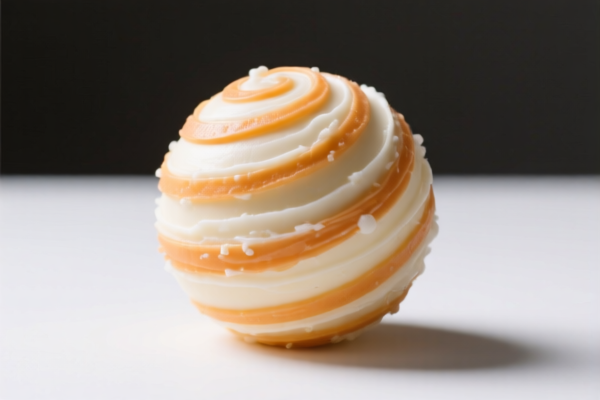

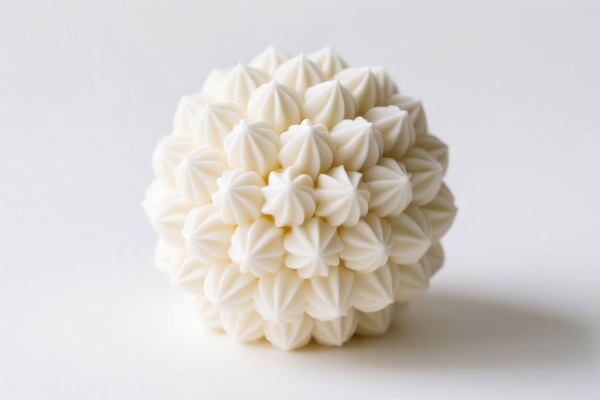
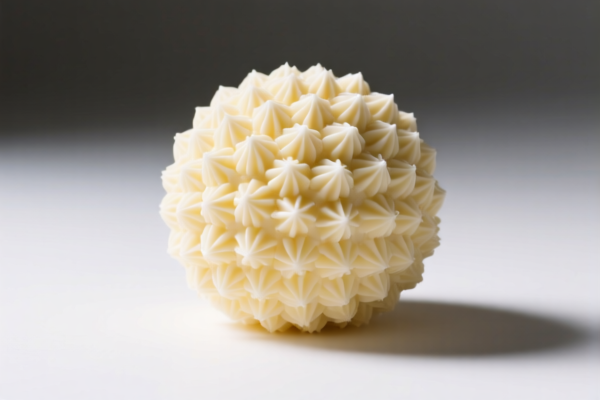
AI Analysis
🍰 Cake Ball (Chocolate & Cocoa Confections)
🌐 HS Code Reference & Customs Clearance Guide | 2026 Latest Tariff Analysis | Professional Clearance Strategy
📌 I. Product Definition & Classification: Do You Really Know "Cake Ball"?
Cake Balls (often referred to as "Cake Pops" or chocolate-covered confectionery balls) are small, bite-sized desserts typically made from crumbled cake mixed with frosting, rolled into spheres, and dipped in chocolate or coated with candy melts. In international trade, these fall under the broader category of "Chocolate and other food preparations containing cocoa."
However, the exact HS Code depends heavily on the filling and structure:
1. Filled Confectionery (Blocks/Slabs/Bars):
If the product is solid chocolate or cocoa-based confectionery in the form of blocks, slabs, or bars—even if filled—is classified under 1806.31.
2. Other Confectionery (Containing Peanuts):
If the product contains peanuts or peanut products, it falls under a different subheading within 1806.90.
⚠️ Key Distinction Point:
- If the product is filled chocolate/cocoa confectionery in bar/block form → 1806.31.00.49
- If the product contains peanuts/peanut products → 1806.90.90.11
📦 II. HS Code Classification Details (2026 Latest Tariff Authority Comparison)
| HS Code | Product Description | Applicable Scenario | Contains Peanuts? |
|---|---|---|---|
1806.31.00.49 |
Chocolate & other food preparations containing cocoa: Other, in blocks, slabs or bars: Filled Confectionery: Other | Solid chocolate/cocoa balls, cake balls without peanut filling, filled truffles | ❌ No (or negligible) |
1806.90.90.11 |
Chocolate & other food preparations containing cocoa: Other: Other: Other: Other: Other Confectionery: Containing peanuts or peanut products | Cake balls with peanut butter filling, peanut-coated confections, mixes containing significant peanut content | ✅ Yes |
🔍 Important Reminder:
- 1806.31.00.49 applies to filled confectionery (like cake balls, truffles, or filled chocolates) that do not contain peanuts as a primary ingredient. - 1806.90.90.11 is specifically for products containing peanuts or peanut products. If your cake ball has a peanut center or coating, this code must be used. - Misclassification can lead to significant tax discrepancies and customs delays.
💰 III. 2026 Latest Tariff Rate Details (Including Additional Duties & Policy Surcharges)
✅ Applicable Country: United States (US)
✅ Country of Origin: China (CN)
✅ Effective Date: 2025–2026 (Current as of latest tariff schedule)
🎯 1. 1806.31.00.49 —— Filled Confectionery (No Peanuts)
| Item | Content |
|---|---|
| Base Tariff Rate | 0.0% (ad valorem) |
| Section 301 Additional Tariff | 0.0% |
| Total Tax Rate | 0.0% |
| Tax Calculation | CIF Value × 0.0% = $0 |
| De Minimis Eligibility | ❌ N/A (Rate is 0%, so no burden) |
| Legal Basis Path | USITC:1806.31.00.49 → Section 301: Footnote 9903.88.01 (No additional duty applies to this specific confectionery subheading) |
📌 Explanation:
- Chocolate-based filled confectionery (like cake balls, truffles, or filled bars) under 1806.31.00.49 currently enjoys zero tariff under both the base rate and Section 301 additional duties. - This makes it a cost-effective product for export to the US from China. - However, proper documentation is still required to prove it does not contain peanuts.
🎯 2. 1806.90.90.11 —— Other Confectionery Containing Peanuts
| Item | Content |
|---|---|
| Base Tariff Rate | 6.0% (ad valorem) |
| Section 301 Additional Tariff | 7.5% |
| Total Tax Rate | 13.5% |
| Tax Calculation | CIF Value × 13.5% |
| De Minimis Eligibility | ❌ Not eligible for de minimis if declared as commercial shipment |
| Legal Basis Path | USITC:1806.90.90.11 → Section 301: Footnote 9903.88.01 |
📌 Explanation:
- Products containing peanuts face a higher tariff burden due to both base tariffs and additional duties. - Base Rate 6.0% + Additional Rate 7.5% = 13.5% total. - This applies to all chocolate/cocoa confectionery containing peanuts, including peanut-filled cake balls, peanut clusters, or mixed nut confections. - Note: If the peanut content is minimal (e.g., garnish only), consult with a customs broker to determine if it still qualifies for 1806.90.90.11.
🛠️ IV. Customs Clearance Practical Advice (Real-World Pitfall Guide)
✅ 1. Required Documentation Checklist (Non-negotiable)
| Document | Required? | Explanation |
|---|---|---|
| ✅ Product Specification Sheet | ✔️ | Must clearly state ingredients, especially peanut content. |
| ✅ Ingredient List | ✔️ | Detailed breakdown by weight percentage. |
| ✅ Product Photos (Packaging & Interior) | ✔️ | Show cross-section if filled. |
| ✅ Commercial Invoice | ✔️ | Must accurately describe product as "Cake Ball" or "Chocolate Confectionery" with correct HS Code. |
| ✅ Packing List | ✔️ | Net weight, gross weight, number of units. |
| ✅ Certificate of Origin (CO) | ✔️ | If claiming any preferential treatment (though none available for US-China). |
| ✅ FDA Registration | ✔️ | Mandatory for all food products entering the US. |
✅ 2. Declaration Tips (Key Mantras)
🔥 “Declare Accurately, Avoid Peanuts Misclassification, Save 13.5%!”
| Scenario | Correct Declaration | Wrong Practice |
|---|---|---|
| Cake Ball without peanuts | 1806.31.00.49 |
Misdeclaring as 1806.90.90.11 → Pay 13.5% unnecessarily |
| Cake Ball with peanut filling | 1806.90.90.11 |
Misdeclaring as 1806.31.00.49 → Smuggling risk + penalties |
| Mixed Assortment (Some with, some without peanuts) | Split shipment or declare highest rate | Mixed declaration → Customs audit + delays |
✅ 3. Special Case Handling
| Case | Handling Advice |
|---|---|
| OEM Custom Cake Balls | Provide customer order + ingredient spec to prove peanut content (or lack thereof). |
| Peanut Allergy Warning | Even if peanuts are present in trace amounts, declare under 1806.90.90.11 to avoid penalties. |
| FDA Compliance | Ensure facility is registered with FDA. Food products are strictly regulated. |
| Labeling Requirements | Must include allergen statement ("Contains Peanuts") if applicable. |
🌍 V. Global Market Comparison (2026 Latest)
| Country/Region | Recommended HS Code | Tariff | Certification | Notes |
|---|---|---|---|---|
| 🇺🇸 USA | 1806.31.00.49 (No Peanut) |
0.0% | FDA Registration | Zero duty, easy clearance |
| 🇺🇸 USA | 1806.90.90.11 (With Peanut) |
13.5% | FDA Registration | Higher cost, strict allergen labeling |
| 🇪🇺 EU | 1806.31 / 1806.90 |
0%–7.5% | CE, Allergen Labeling | No Section 301 duties |
| 🇨🇳 China | 1806.31 / 1806.90 |
10%–20% | CIQ | Import duties apply |
📌 Conclusion:
- USA offers 0% duty for peanut-free chocolate confectionery, making it highly competitive. - Peanut-containing products face 13.5% total duty, increasing costs significantly. - Accurate ingredient declaration is critical to avoid overpaying or facing penalties.
📌 VI. Common Mistakes & Pitfall Guide (Lessons Learned)
❌ Mistake 1: Declaring peanut-filled cake balls as 1806.31.00.49
👉 Consequence: Underpayment of taxes + potential penalties + detention
❌ Mistake 2: Not separating peanut and non-peanut products in mixed shipments
👉 Consequence: Customs audit, delay, or forced reclassification
❌ Mistake 3: Failing to register with FDA
👉 Consequence: Shipment rejected or destroyed at port
❌ Mistake 4: Vague product descriptions like "Sweet Candy"
👉 Consequence: Customs reclassification + higher tariffs + delays
✅ Correct Approach:
“Chocolate-Covered Cake Ball, 10g, Peanut-Free, FDA Registered Facility, HS Code 1806.31.00.49”
🎯 VII. Conclusion: Precise Declaration, Efficient Clearance, Cost Optimization!
🎯 Remember the Mantra:
🔹 “No Peanut? 0% Duty. Peanut? 13.5%. Declare Clearly, Avoid Fears!”
🔹 “HS Code Determines Duty, 13.5% Gap, One Step Wrong, Costs Soar!”
📌 Pro Tip:
If your product is peanut-free, always emphasize this in documentation to secure 0% duty.
For peanut-containing products, budget for 13.5% total duty and ensure allergen labeling compliance.
Pre-clearance consultation with a customs broker is highly recommended for mixed or complex products.
📣 Take Action Now:
📞 Contact a licensed customs broker + Provide ingredient specs + Verify FDA registration
🚀 Ensure your Cake Balls clear customs smoothly, reduce costs, and boost profits!
✨ Professional Clearance Starts with Accurate Classification!
💼 Every cent of your cost deserves precise calculation!
Customer Reviews
About HS Code Classification
The Harmonized System (HS) is an internationally standardized nomenclature developed by the World Customs Organization (WCO) to classify traded products. Over 200 countries use the HS system as the basis for customs tariffs, trade statistics, and import/export regulations.
Each HS code follows a hierarchical structure:
- Chapter (2 digits) — Broad category of goods (e.g., Chapter 84: Machinery and Mechanical Appliances)
- Heading (4 digits) — More specific grouping within the chapter
- Subheading (6 digits) — Internationally standardized breakdown, used by all WCO member countries
- National subdivisions (8-10 digits) — Country-specific extensions for further classification, such as US HTSUS 10-digit codes
Correct HS code classification is essential for smooth customs clearance, accurate duty payment, and compliance with trade regulations. Misclassification can lead to customs delays, overpayment of duties, or penalties.
When importing from CN to US, the applicable tariff rates may include:
- Most-Favored-Nation (MFN) rate — The standard duty rate applied to WTO members
- General rate — Applied to countries without trade agreements
- Trade remedy duties — Additional tariffs such as Section 301 (anti-dumping), Section 232 (national security), or countervailing duties
The information provided on this page is for reference purposes only. For official classification, please consult with your local customs authority or a licensed customs broker.