Cake Box
CN → US| HS Code | Tariff Rate | Origin | Destination | Doc |
|---|---|---|---|---|
| 4819100020 | 35.0% | CN | US | Official Doc |
| 4819200020 | 35.0% | CN | US | Official Doc |
| 4823610020 | 35.0% | CN | US | Official Doc |
| 4823690020 | 35.0% | CN | US | Official Doc |
| 3923102000 | 35.0% | CN | US | Official Doc |
| 3923109000 | 38.0% | CN | US | Official Doc |
| 1905909090 | 22.0% | CN | US | Official Doc |
| 1905901090 | 35.0% | CN | US | Official Doc |
Product Images
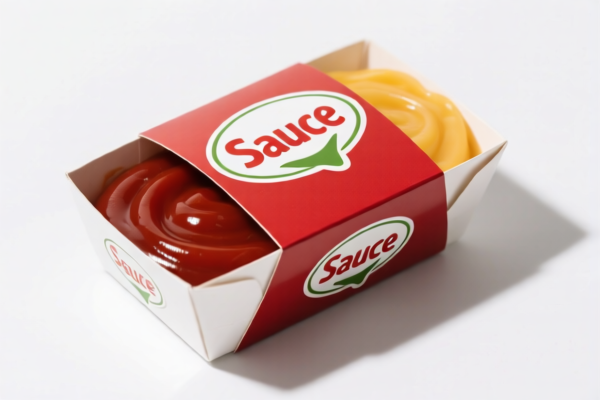
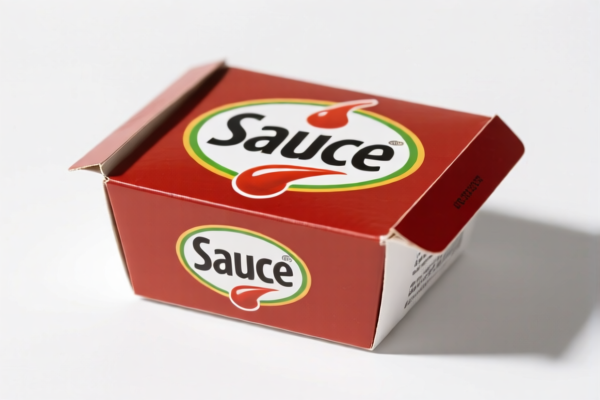


AI Analysis
🍰 Cake Box (Sanitary Food & Beverage Containers)
🌐 HS Code Reference & Customs Clearance Guide | 2024/2025 Latest Tariff Analysis | Professional Customs Strategy
📌 1. Product Definition & Classification: Do You Know "Cake Box" Really?
A Cake Box is a primary packaging item used for the conveyance and protection of baked goods, specifically cakes, pastries, and other bakers' wares. In international trade, it is classified under Chapter 48 (Paper, paperboard, cellulose wadding and webs of cellulose fibers) as "Trays, dishes, plates, cups and the like, of paper or paperboard" or "Cartons, boxes, cases... of corrugated paper or paperboard".
Key Distinction:
- If the box is specially shaped or fitted for food containment (e.g., round nested containers, specific cake tiers), it falls under Subheading 4823 (Cut-to-size/shaped articles).
- If the box is a standard corrugated or folding carton used for shipping/packing, it falls under Subheading 4819 (Packing containers).
- Critical Note: The definition explicitly includes "Sanitary food and beverage containers", meaning cake boxes designed for direct food contact or hygiene-sensitive transport are prioritized under specific food-grade HS codes.
📦 2. HS Code Classification Details (Based on Provided DATA)
| HS Code | Product Description | Applicable Scenario | Material Type |
|---|---|---|---|
4819.10.00.20 |
Cartons, boxes... of corrugated paper or paperboard: Sanitary food and beverage containers | Standard corrugated cake boxes for shipping/delivery | Corrugated Paperboard |
4819.20.00.20 |
Folding cartons... of non-corrugated paper or paperboard: Sanitary food and beverage containers | Luxury/folding cake boxes (e.g., birthday cake boxes) | Non-corrugated Paperboard |
4823.61.00.20 |
Other articles...: Trays, dishes...: Of bamboo: Cups and round nested food containers | Premium/Luxury cake boxes made of Bamboo (Eco-friendly) | Bamboo Pulp/Paper |
4823.69.00.20 |
Other articles...: Trays, dishes...: Other: Cups and round nested food containers | Generic round nested cake containers (non-bamboo) | Standard Paper/Paperboard |
🔍 Key Clarification:
-4823.61.00.20is specific to Bamboo material. If your cake box is made of regular paperboard, do not use this code.
-4823.69.00.20covers "Other" round nested containers (standard paper/paperboard).
-4819.10&4819.20cover general packing containers. Use these if the box is primarily for shipping logistics rather than direct food presentation, though "Sanitary food and beverage containers" note appears in both, suggesting food-grade corrugated/folding boxes can also fall here.
💰 3. Tariff Rate Details (Based on Provided DATA)
✅ Origin: China (CN)
✅ Destination: United States (US) (Inferred from tax structure)
✅ Validity: Current rates as per provided data
🎯 1. 4819.10.00.20 —— Corrugated Cake Box (Sanitary Food Container)
| Item | Detail |
|---|---|
| Base Tariff | 0.0% |
| Additional Tariff | 25.0% |
| Total Tariff | 25.0% |
| Tax Detail | Base: 0.0% + Additional: 25.0% |
| Legal Basis | Section 301 Tariffs (Likely) |
📌 Explanation:
- Corrugated paperboard cake boxes are subject to a 25% additional tariff.
- Although the base rate is 0%, the 25% surcharge significantly impacts cost.
🎯 2. 4819.20.00.20 —— Folding Cartons (Sanitary Food Container)
| Item | Detail |
|---|---|
| Base Tariff | 0.0% |
| Additional Tariff | 25.0% |
| Total Tariff | 25.0% |
| Tax Detail | Base: 0.0% + Additional: 25.0% |
| Legal Basis | Section 301 Tariffs (Likely) |
📌 Explanation:
- Folding cartons (non-corrugated) for food use also face a 25% additional tariff.
- Same tax burden as corrugated boxes.
🎯 3. 4823.61.00.20 —— Bamboo Cake Box (Round Nested/Food Container)
| Item | Detail |
|---|---|
| Base Tariff | 0.0% |
| Additional Tariff | 0.0% |
| Total Tariff | 0.0% |
| Tax Detail | Base: 0.0% + Additional: 0.0% |
| Legal Basis | Exempt from Additional Tariffs |
📌 Explanation:
- Bamboo-based cake boxes enjoy 0% total tariff.
- This is a major cost advantage for eco-friendly packaging.
- Condition: Must be clearly made of bamboo (paper pulp/paperboard from bamboo).
🎯 4. 4823.69.00.20 —— Other Paper Cake Box (Round Nested)
| Item | Detail |
|---|---|
| Base Tariff | 0.0% |
| Additional Tariff | 25.0% |
| Total Tariff | 25.0% |
| Tax Detail | Base: 0.0% + Additional: 25.0% |
| Legal Basis | Section 301 Tariffs (Likely) |
📌 Explanation:
- Standard paper/paperboard round nested cake containers (non-bamboo) face a 25% additional tariff.
🛠️ 4. Customs Clearance Practical Advice (Avoid Pitfalls)
✅ 1. Material Declaration is Critical
| Material | Recommended HS Code | Tariff Risk |
|---|---|---|
| Corrugated Paperboard | 4819.10.00.20 |
25% |
| Folding Paperboard | 4819.20.00.20 |
25% |
| Bamboo | 4823.61.00.20 |
0% ⭐ |
| Regular Paper/Paperboard | 4823.69.00.20 |
25% |
📌 Key Tip:
- If you are using bamboo-based paperboard, ensure your Bill of Lading and Commercial Invoice explicitly state "Made of Bamboo" or "Bamboo Pulp".
- Misdeclaring bamboo as regular paperboard could lead to 25% underpayment and penalties.
✅ 2. "Sanitary Food and Beverage Container" Specification
- For
4819.10.00.20and4819.20.00.20, the description must include "Sanitary food and beverage containers" to match the HS code definition. - Include FDA compliance or food-grade certification in your documentation to justify the "sanitary" nature.
✅ 3. Packaging vs. Product
- Do not mix cake boxes with the cakes themselves in a way that confuses the HS code.
- If shipping empty cake boxes, declare them as packaging materials (HS Code above).
- If shipping cakes in boxes, the cake itself may have a different HS Code (e.g.,
1905.90.90.90or1905.90.10.90), but the box is still classified separately if declared.
🌍 5. Global Market Comparison (Based on Provided DATA)
| Market | HS Code Example | Total Tariff | Notes |
|---|---|---|---|
| 🇺🇸 USA | 4823.61.00.20 (Bamboo) |
0.0% | Best Option |
| 🇺🇸 USA | 4819.10.00.20 (Corrugated) |
25.0% | High cost |
| 🇺🇸 USA | 4823.69.00.20 (Paper) |
25.0% | High cost |
| 🇪🇺 EU | (Not in DATA) | N/A | EU tariffs vary; check local rules |
| 🇨🇳 China | (Not in DATA) | N/A | Import tariffs to China may differ |
📌 Conclusion:
- Bamboo-based cake boxes are the most cost-effective for the US market due to 0% tariff.
- Standard paper/paperboard boxes incur a 25% surcharge.
📌 6. Common Errors & Pitfalls (Blood-Lesson Guide)
❌ Error 1: Declaring Bamboo Boxes as Regular Paperboard
👉 Consequence: Pay 25% tariff instead of 0% → Unnecessary Cost!
❌ Error 2: Using 4823.69.00.20 for Corrugated Boxes
👉 Consequence: Misclassification → Possible detention or fine. Use 4819.10.00.20 instead.
❌ Error 3: Omitting "Sanitary Food Container" in Description
👉 Consequence: Customs may classify under general paper boxes with higher duties or require additional proof.
✅ Correct Practice:
"Corrugated Cardboard Cake Box, Sanitary Food Container, 12x12x6 inch, Empty, FDA Compliant"
OR
"Bamboo Pulp Round Cake Box, Food Grade, Eco-Friendly, Empty"
🎯 7. Conclusion: Professional Clearance, Save Costs!
🎯 Remember the Rule:
🔹 "Bamboo is Zero, Paper is Twenty-Five!"
🔹 "Sanitary Food Container, Declare it Right!"
📌 Tips:
- If you are exporting to the US, strongly consider switching to bamboo-based packaging to save 25% in tariffs.
- Ensure all documentation clearly states "Food Grade" and "Sanitary" for corrugated/folding boxes.
- Use Advance Ruling if unsure about material composition (e.g., bamboo vs. regular paper).
📣 Action Now:
📞 Review your packaging supplier's material composition.
🚀 If using bamboo, update your HS Code to4823.61.00.20and enjoy 0% Tariff!
💼 Your every dollar saved, deserves precise calculation!
Customer Reviews
About HS Code Classification
The Harmonized System (HS) is an internationally standardized nomenclature developed by the World Customs Organization (WCO) to classify traded products. Over 200 countries use the HS system as the basis for customs tariffs, trade statistics, and import/export regulations.
Each HS code follows a hierarchical structure:
- Chapter (2 digits) — Broad category of goods (e.g., Chapter 84: Machinery and Mechanical Appliances)
- Heading (4 digits) — More specific grouping within the chapter
- Subheading (6 digits) — Internationally standardized breakdown, used by all WCO member countries
- National subdivisions (8-10 digits) — Country-specific extensions for further classification, such as US HTSUS 10-digit codes
Correct HS code classification is essential for smooth customs clearance, accurate duty payment, and compliance with trade regulations. Misclassification can lead to customs delays, overpayment of duties, or penalties.
When importing from CN to US, the applicable tariff rates may include:
- Most-Favored-Nation (MFN) rate — The standard duty rate applied to WTO members
- General rate — Applied to countries without trade agreements
- Trade remedy duties — Additional tariffs such as Section 301 (anti-dumping), Section 232 (national security), or countervailing duties
The information provided on this page is for reference purposes only. For official classification, please consult with your local customs authority or a licensed customs broker.