Cake Decorating Machine
CN → US| HS Code | Tariff Rate | Origin | Destination | Doc |
|---|---|---|---|---|
| 8210000000 | 38.7% | CN | US | Official Doc |
| 8438100010 | 17.5% | CN | US | Official Doc |
| 8479896500 | 20.3% | CN | US | Official Doc |
| 8438100090 | 17.5% | CN | US | Official Doc |
| 8479820080 | 35.0% | CN | US | Official Doc |
Product Images
AI Analysis
🍰 Cake Decorating Machine (Baking & Food Preparation Machinery)
🌐 HS Code Reference & Customs Clearance Guide | 2026 Latest Tariff Breakdown | Strategic Compliance Strategy
📌 I. Product Definition & Classification: Decoding the "Cake Decorating Machine"
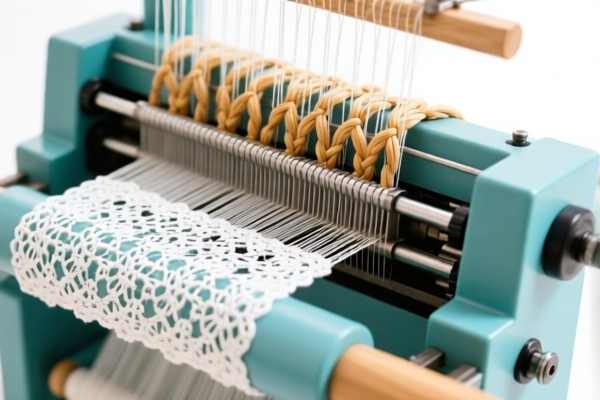
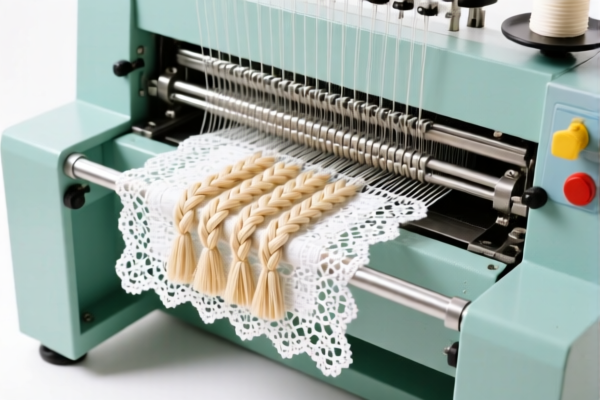
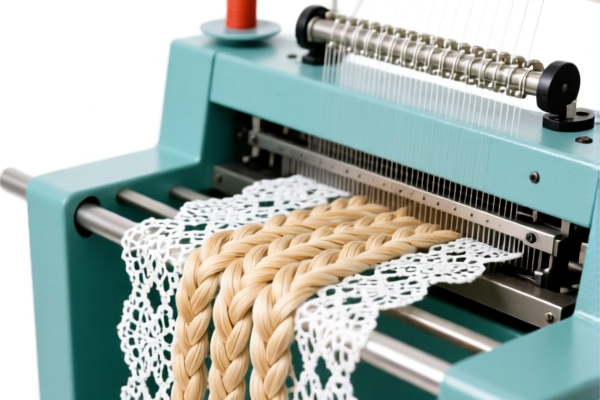
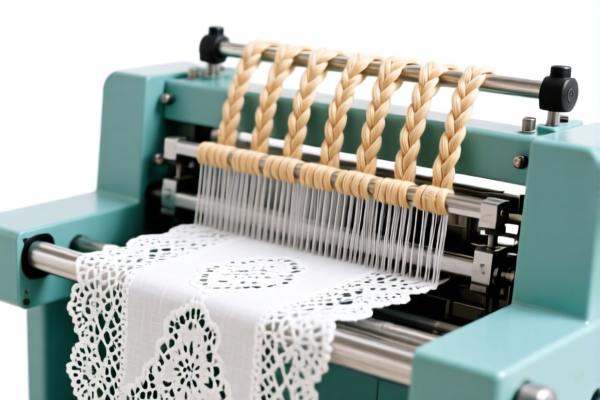
A Cake Decorating Machine is a specialized apparatus used in commercial bakeries, confectioneries, and food processing plants to apply frosting, cream, or glaze onto cakes, pastries, and other baked goods with precision and speed. In international trade, its classification depends heavily on its mechanism type and intended industrial scale.
Two Primary Categories: 1. Semi-Automatic/Manual Mechanical Units: Hand-operated or simple mechanical devices for food preparation (e.g., manual cream injectors, simple piping aids). 2. Industrial Food Processing Machinery: Motorized, standalone units with specific functions like mixing, emulsifying, or automated piping, classified under broader machinery headings.
⚠️ Key Classification Distinction:
- If it is a simple manual tool (no motor, purely mechanical) → Likely 8210.00.00.00
- If it is a dedicated baking machine for producing/manufacturing baked goods → Likely 8438.10
- If it is a general-purpose motorized mixing/emulsifying unit → Likely 8479.89 or 8479.82
📦 II. HS Code Classification Details (2026 Latest Tariff Authority Mapping)
| HS Code | Product Description | Applicable Scenario | Motor/Power Source? |
|---|---|---|---|
8210.00.00.00 |
Hand-operated or mechanically operated food preparation/processing tools | Manual cream piping devices, simple mechanical decorators | ❌ No (Manual) |
8438.10.00.10 |
Bread machinery / Baking equipment | Dedicated cake decorating machines as part of a baking production line | ✅ Yes (Baking Specific) |
8479.89.65.00 |
Other machines with self-contained electric motor | Standalone motorized decorating units (general category) | ✅ Yes (General Motorized) |
8438.10.00.90 |
Other machinery for preparing food or beverages (Baking) | Other baking-related machinery not specifically listed as "bread" | ✅ Yes (Baking General) |
8479.82.00.80 |
Mixing, kneading, crushing, grinding, screening, homogenizing, emulsifying, or stirring machines | Machines that primarily emulsify cream or mix icing before piping | ✅ Yes (Mixing/Emulsifying) |
🔍 Critical Note:
- 8210.00.00.00 applies only if the device is strictly manual/mechanical without any electric motor.
- 8438.10 is preferred if the machine is explicitly designed for baking/manufacturing food in a commercial bakery context.
- 8479.82/8479.89 applies if the machine’s primary function is mechanical mixing/emulsification rather than dedicated baking.
💰 III. 2026 Latest Tariff Rate Breakdown (Including Surtaxes & Policy Surcharges)
✅ Applicable Country: United States (US)
✅ Origin: China (CN)
✅ Effective Date: Post-November 2025 (including subsequent imports)
🎯 1. 8210.00.00.00 —— Manual Food Preparation Tools (Hand-Operated)
| Item | Content |
|---|---|
| Base Tariff | 3.7% (ad valorem) |
| Section 301 Surtax | +25.0% |
| 122-Clause Surtax | +10.0% |
| Total Tariff Rate | 38.7% |
| Tax Calculation | CIF Value × 38.7% |
| De Minimis Exemption | ❌ Not Applicable |
| Legal Basis Path | USITC:8210.00.00.00 → FOOTNOTE:301 → IEEPA:122 |
📌 Explanation:
- Although these are "hand tools," they are still subject to Section 301 tariffs (25%) and Section 122 tariffs (10%) if manufactured in China.
- Total burden: 38.7%. High cost for simple tools; consider supply chain relocation if volume is high.
🎯 2. 8438.10.00.10 —— Bread Machinery / Baking Equipment
| Item | Content |
|---|---|
| Base Tariff | 0.0% |
| Section 301 Surtax | +7.5% |
| 122-Clause Surtax | +10.0% |
| Total Tariff Rate | 17.5% |
| Tax Calculation | CIF Value × 17.5% |
| De Minimis Exemption | ❌ Not Applicable |
| Legal Basis Path | USITC:8438.10.00.10 → FOOTNOTE:301.7.5 → IEEPA:122 |
📌 Advantage:
- Lowest tariff among motorized options (17.5%).
- Recommended if the machine can be clearly classified as dedicated baking equipment.
- Requires strong documentation proving it is integral to the baking/manufacturing process.
🎯 3. 8438.10.00.90 —— Other Food/Beverage Preparation Machinery (Baking)
| Item | Content |
|---|---|
| Base Tariff | 0.0% |
| Section 301 Surtax | +7.5% |
| 122-Clause Surtax | +10.0% |
| Total Tariff Rate | 17.5% |
| Tax Calculation | CIF Value × 17.5% |
| De Minimis Exemption | ❌ Not Applicable |
| Legal Basis Path | USITC:8438.10.00.90 → FOOTNOTE:301.7.5 → IEEPA:122 |
📌 Note:
- Same favorable rate as8438.10.00.10.
- Use this if the machine doesn’t fit the strict "bread machinery" definition but is still baking-related.
🎯 4. 8479.89.65.00 —— Other Machines with Self-Contained Electric Motor
| Item | Content |
|---|---|
| Base Tariff | 2.8% |
| Section 301 Surtax | +7.5% |
| 122-Clause Surtax | +10.0% |
| Total Tariff Rate | 20.3% |
| Tax Calculation | CIF Value × 20.3% |
| De Minimis Exemption | ❌ Not Applicable |
| Legal Basis Path | USITC:8479.89.65.00 → FOOTNOTE:301.7.5 → IEEPA:122 |
📌 Scenario:
- For standalone motorized decorating machines that don’t fit neatly into "baking machinery" (8438).
- Slightly higher than baking-specific codes but still moderate.
🎯 5. 8479.82.00.80 —— Mixing/Emulsifying/Stirring Machines
| Item | Content |
|---|---|
| Base Tariff | 0.0% |
| Section 301 Surtax | +25.0% |
| 122-Clause Surtax | +10.0% |
| Total Tariff Rate | 35.0% |
| Tax Calculation | CIF Value × 35.0% |
| De Minimis Exemption | ❌ Not Applicable |
| Legal Basis Path | USITC:8479.82.00.80 → FOOTNOTE:301 → IEEPA:122 |
📌 Caution:
- If Customs views the machine primarily as a mixer/emulsifier (for cream/icing) rather than a baker’s machine, it falls here.
- High tariff (35%) due to 25% Section 301 surtax. Avoid this classification if possible.
🛠️ IV. Customs Clearance Practical Advice (Battle-Tested Pitfall Avoidance)
✅ 1. Documentation Checklist (Non-Negotiable)
| Document | Mandatory? | Purpose |
|---|---|---|
| ✅ Product Specification Sheet | ✔️ | Detail function: Is it for piping, mixing, or baking? |
| ✅ Circuit Diagram / Internal Structure | ✔️ | Prove presence/absence of motor |
| ✅ Product Photos (Front, Side, Label) | ✔️ | Show brand, model, voltage, power |
| ✅ Usage Manual / Marketing Brochure | ✔️ | Prove intended use: "Baking" vs. "General Mixing" |
| ✅ Commercial Invoice | ✔️ | Use precise description: "Cake Decorating Machine for Bakery Use" |
| ✅ Certificate of Origin (CO) | ✔️ | Required for tariff calculation and potential exemptions |
| ✅ Packaging List | ✔️ | Clarify if parts are shipped separately |
✅ 2. Declaration Strategy (Key Mantra)
🔥 "Define Function, Prove Baking, Avoid General Mixing!"
| Scenario | Correct Declaration | Wrong Declaration | Consequence |
|---|---|---|---|
| Machine is for baking line | 8438.10.00.10/90 (17.5%) |
Call it "Food Mixer" | Misclassification → 35%+ |
| Machine is manual | 8210.00.00.00 (38.7%) |
Call it "Electric Mixer" | Higher tariff + scrutiny |
| Machine has motor, general use | 8479.89.65.00 (20.3%) |
Claim "Baking Machine" | Dispute risk if not bakery-specific |
| Parts only | Declare individually | Lump sum as "Machine" | Delays, penalties |
📌 Pro Tip:
- Emphasize "Bakery Equipment" or "Baking Production Line Component" in descriptions.
- Avoid vague terms like "Food Appliance" or "Kitchen Tool" unless it’s truly manual.
✅ 3. Special Cases Handling
| Situation | Handling Advice |
|---|---|
| OEM Custom Machine | Provide client design specs to prove specific baking function |
| Machine with Touch Screen | Still qualify as 8438 if core function is baking/decorating |
| Portable vs. Standalone | Portability doesn’t change HS Code if function is identical |
| Dual-Function (Mixing + Piping) | Argue for 8438 (Baking) as primary function, not 8479.82 (Mixing) |
🌍 V. Global Market Comparison (2026 Update)
| Country/Region | Recommended HS Code | Tariff Rate | Certification | Notes |
|---|---|---|---|---|
| 🇺🇸 USA | 8438.10.00.10/90 |
17.5% (CN) | FCC, UL (if electric) | Lowest US rate if classified as baking |
| 🇨🇳 China | 8438.10.00.10 |
~10-15% | CCC | Lower import duty, but domestic competition high |
| 🇪🇺 EU | 8438.10.00 |
~3-4% | CE, RoHS | No Section 301-style tariffs |
| 🇬🇧 UK | 8438.10.00 |
~3-4% | UKCA, CE | Post-Brexit alignment with EU |
| 🇯🇵 Japan | 8438.10.00 |
~0-5% | PSE | Very low tariffs |
📌 Conclusion:
- USA is the most expensive market due to 301/122 tariffs.
- EU/Asia have lower tariffs, but certification (CE, CCC) is critical.
- Strategic Move: If targeting US, ensure baking-specific classification to lock in 17.5% vs. 35%+.
📌 VI. Common Mistakes & Pitfalls (Lessons Learned)
❌ Mistake 1: Calling a motorized machine a "Manual Tool"
👉 Result: Customs detects motor → Reclassified to 8479/8438 → Back taxes + penalties.
❌ Mistake 2: Declaring as "Food Mixer" (8479.82)
👉 Result: 35% tariff instead of 17.5% → Cost increase of ~17.5% on CIF value.
❌ Mistake 3: Ignoring 122-Clause Tariff
👉 Result: Underpayment by 10% → Audit, fines, and delay.
❌ Mistake 4: Inconsistent Product Descriptions
👉 Result: Customs怀疑 intent → Hold for inspection.
✅ Best Practice:
“Commercial Cake Decorating Machine for Bakery Use, Model XYZ, 220V/50Hz, Electric, Designed for Frosting Application on Cakes”
🎯 VII. Conclusion: Precision Classification, Cost Optimization
🎯 Remember the Mantra:
🔹 "Baking Specific = 17.5% | General Motor = 20.3% | Mixing = 35% | Manual = 38.7%"
🔹 "Prove Baking Function, Avoid Mixing Classification!"
📌 Tips:
- If your machine is assembled in Vietnam, Malaysia, or Thailand, you may avoid US Section 301 tariffs entirely.
- Apply for Advance Ruling (Pre-classification) with CBP for definitive HS Code confirmation.
- Keep technical documents ready to prove "Baking" vs. "General Mixing."
📣 Immediate Action:
📞 Engage a licensed Customs Broker
📂 Submit Product Specs + Photos + Use Case
🚀 Secure the 17.5% Tariff Rate for Your Cake Decorating Machine!
✨ Professional Clearance Starts with Accurate Classification!
💼 Every Percent of Tariff Saved is Profit Gained!
Customer Reviews
About HS Code Classification
The Harmonized System (HS) is an internationally standardized nomenclature developed by the World Customs Organization (WCO) to classify traded products. Over 200 countries use the HS system as the basis for customs tariffs, trade statistics, and import/export regulations.
Each HS code follows a hierarchical structure:
- Chapter (2 digits) — Broad category of goods (e.g., Chapter 84: Machinery and Mechanical Appliances)
- Heading (4 digits) — More specific grouping within the chapter
- Subheading (6 digits) — Internationally standardized breakdown, used by all WCO member countries
- National subdivisions (8-10 digits) — Country-specific extensions for further classification, such as US HTSUS 10-digit codes
Correct HS code classification is essential for smooth customs clearance, accurate duty payment, and compliance with trade regulations. Misclassification can lead to customs delays, overpayment of duties, or penalties.
When importing from CN to US, the applicable tariff rates may include:
- Most-Favored-Nation (MFN) rate — The standard duty rate applied to WTO members
- General rate — Applied to countries without trade agreements
- Trade remedy duties — Additional tariffs such as Section 301 (anti-dumping), Section 232 (national security), or countervailing duties
The information provided on this page is for reference purposes only. For official classification, please consult with your local customs authority or a licensed customs broker.