Cake Paper Cup
CN → US| HS Code | Tariff Rate | Origin | Destination | Doc |
|---|---|---|---|---|
| 4823610020 | 35.0% | CN | US | Official Doc |
| 4819502000 | 35.0% | CN | US | Official Doc |
| 4823690020 | 35.0% | CN | US | Official Doc |
| 4819504060 | 35.0% | CN | US | Official Doc |
| 4823610020 | 35.0% | CN | US | Official Doc |
Product Images
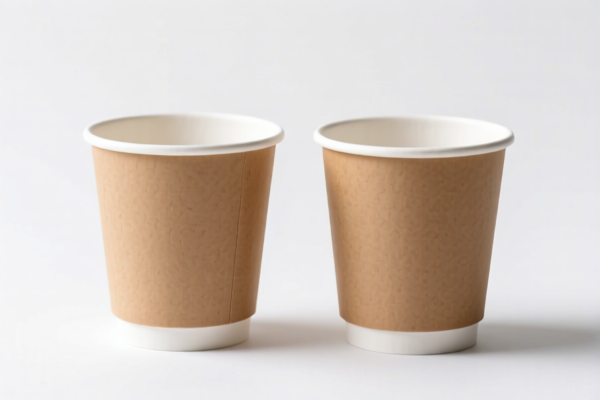
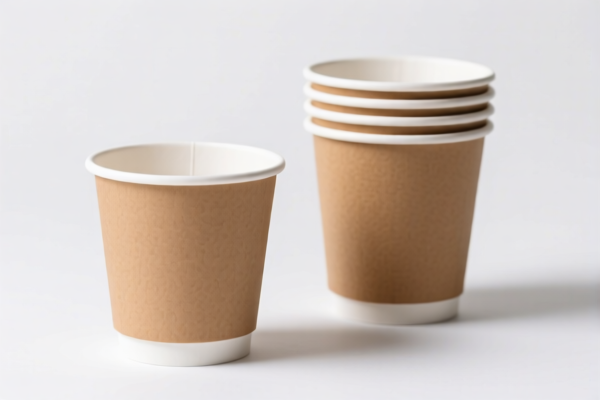
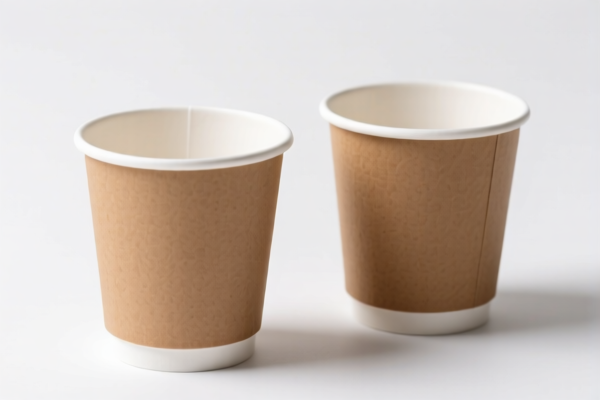
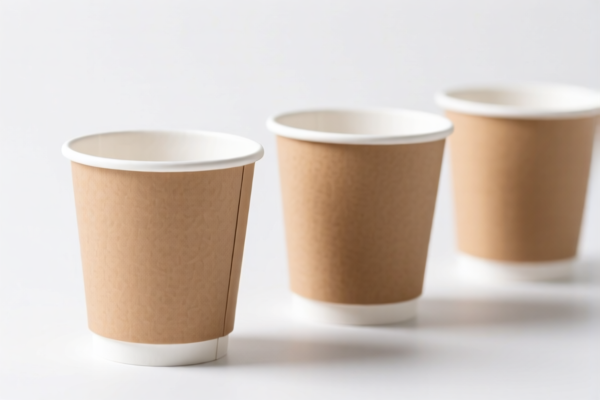
AI Analysis
🧁 Cake Paper Cup (Paper Cake Liners)
🌐 HS Code Reference & Customs Clearance Guide | 2026 Latest Tariff Analysis | Professional Clearance Strategy
📌 I. Product Definition & Classification: What Exactly is a "Cake Paper Cup"?
Paper Cake Cups, also known as cake liners, muffin cups, or paper trays, are disposable food containers made primarily from paper. They are designed to hold cake batter or baked goods, ensuring easy removal and hygiene. In international trade, despite the consistent product type, they are classified under different HS codes based on specific morphological descriptions and functional definitions provided in the tariff schedule.
⚠️ Key Classification Insight:
- The classification depends heavily on whether the item is described as a "Cup/Form", a "Tray", or a "Packaging Container". - All listed HS codes below are subject to the same total tax rate due to identical tariff provisions for Chinese-origin goods, but the legal basis varies by specific subheading.
📦 II. HS Code Classification Details (2026 Latest Tariff Authority Reference)
| HS Code | Product Description & Morphology | Primary Application | Key Differentiator |
|---|---|---|---|
4823.61.00.20 |
Paper Cake Cup, Material: Paper, Form: Cup & Food Container | General cake baking, standard liners | Classified as "Cup" (杯) within Chapter 48.23 |
4819.50.20.00 |
Paper Cake Cup, Material: Paper, Form: Cup/Container | Cake food container usage | Classified under "Other Paper Containers" in Chapter 48.19 |
4823.69.00.20 |
Paper Cake Cup, Material: Paper, Form & Use: Cup & Circular Nested Food Container | Nested/multi-layer cake liners | Specific mention of "Circular Nested" (圆形嵌套) structure |
4819.50.40.60 |
Paper Cake Cup, Material: Paper, Form: Packaging Container | Broader packaging category | Classified broadly as "Other Packaging Containers" (其他包装容器) |
4823.61.00.20 |
Paper Cake Tray (Linens), Material: Paper, Form: Tray, Use: Food Container | Reusable or heavy-duty paper trays | Described specifically as "Tray" (托) rather than just "Cup" |
🔍 Critical Note:
- Although4823.61.00.20appears twice, it covers both "Cup" and "Tray" forms within the same subheading logic for this specific product type. -4819codes focus more on the packaging aspect, while4823codes focus on the cut paper products aspect. - All these codes carry the exact same tax burden.
💰 III. 2026 Latest Tariff Rate Details (Including Surcharges & Policy Add-ons)
✅ Applicable Country: United States (US)
✅ Origin: China (CN)
✅ Effective Time: 2025 Nov 10 onwards (including subsequent imports)
🎯 Total Tax Rate: 35.0%
(Applicable to ALL listed HS Codes above)
| Tax Component | Rate | Legal Basis / Explanation |
|---|---|---|
| Base Tariff (MFN) | 0.0% | Standard Most-Favored-Nation rate for these paper products is typically low or zero. |
| Section 301 Surcharge | +25.0% | Additional tariff imposed on Chinese goods under US Trade Law Section 301. |
| Section 122 Tariff | +10.0% | Specific tariff clause (often associated with broader trade measures or emergency provisions) applied to this category. |
| Total Effective Rate | 35.0% | Sum of 0% + 25% + 10%. |
| Calculation Basis | CIF Value | Tax is calculated on the Cost, Insurance, and Freight value of the shipment. |
| De Minimis Eligibility | ❌ Denied | These items are not eligible for the $800 de minimis exemption due to the high effective tariff rate and specific trade restrictions. |
📌 Detailed Breakdown:
- "Base Tariff: 0.0%": The underlying Harmonized System duty is negligible.
- "Additional Tariff: 25.0%": This is the core Section 301 penalty targeting Chinese manufacturing.
- "Section 122 Tariff: 10%": This specific 10% add-on is critical; even if one argues for a lower base, this clause locks in the extra cost.
- Result: Every single shipment of cake paper cups from China faces a 35% total tax burden.
🛠️ IV. Customs Clearance Practical Advice (Real-World Pitfall Avoidance)
✅ 1. Essential Documentation Checklist (Non-Negotiable)
| Document | Required? | Purpose |
|---|---|---|
| ✅ Product Specification Sheet | ✔️ | Must clearly state: Material (Paper), Usage (Food Container), Form (Cup/Tray). |
| ✅ Commercial Invoice | ✔️ | Must list the exact HS Code and describe the item as "Paper Cake Cup/Liner" – do not use vague terms like "Party Supplies". |
| ✅ Certificate of Origin (CO) | ✔️ | Essential to prove Chinese origin (which triggers the 35% tax). If shipped from Vietnam/Malaysia with minimal processing, this could change the tariff. |
| ✅ Packaging List | ✔️ | Detail the quantity and weight. Paper cups are lightweight but bulky; ensure volumetric weight is calculated correctly if shipping by air/express. |
| ✅ FDA Food Contact Statement | ✔️ | Since these are food containers, proof that the paper is food-grade (FDA compliant) is mandatory for US import. |
✅ 2. Classification Strategy (Key Tips)
🔥 "Be Specific, Avoid Ambiguity!"
| Scenario | Recommended HS Code | Why? |
|---|---|---|
| Standard Round Liners | 4823.61.00.20 |
Most common classification; "Cup" form is clear. |
| Nested/Multi-layer Packs | 4823.69.00.20 |
If the product is specifically sold as "nested" units, this description fits better. |
| Bulk Packaging Described as "Container" | 4819.50.20.00 |
Use if the invoice emphasizes the "packaging container" role over the "cup" form. |
⚠️ Warning: Do not mix descriptions. If you claim it's a "Tray" (
4823.61.00.20) but describe it as a "Packaging Box" in the invoice, customs may flag it for misdeclaration.
✅ 3. Special Considerations
| Issue | Advice |
|---|---|
| Food Safety Compliance | Ensure the paper is treated with food-safe coatings (e.g., PLA or PE). Non-compliant paper may be rejected by FDA and Customs simultaneously. |
| De Minimis Exemption | Do not attempt to use the $800 de minimis exemption (Section 321) for this item if it is shipped as commercial cargo. The 35% tax makes it financially viable only to declare properly. For small parcels, consult a broker, but generally, high-tariff goods are scrutinized. |
| Volume vs. Weight | Paper cups are light but have high volumetric weight. Use compact packing to reduce shipping costs, which indirectly lowers the absolute tax amount (since tax is on CIF). |
🌍 V. Global Market Comparison (2026 Snapshot)
| Market | HS Code | Base Tariff | US-Specific Surcharges | Total Effective Rate | Notes |
|---|---|---|---|---|---|
| 🇺🇸 USA | 4823.61.00.20 |
0% | +25% (Sec 301) +10% (Sec 122) | 35% | High barrier for Chinese goods. |
| 🇨🇳 China | 4823.61.00.20 |
10-12%* | None | ~10-12% | Import duty for foreign paper cups. |
| 🇪🇺 EU | 4823.61.00 |
6.5% | None | 6.5% | No Section 301/122 equivalents. |
| 🇯🇵 Japan | 4823.61.00 |
8.0% | None | 8.0% | Standard MFN rate applies. |
📌 Conclusion:
- The US market is uniquely expensive for Chinese-origin cake paper cups due to the cumulative 35% tax. - Competitors from Vietnam, Thailand, or Malaysia may enjoy 0% or low tariffs in the US, giving them a significant price advantage. - Strategy: If targeting the US, consider sourcing from non-China countries or absorbing the cost via higher retail pricing.
📌 VI. Common Mistakes & Pitfalls (Lessons Learned)
❌ Mistake 1: Declaring as "Paper Packaging" without specifying "Food Contact"
👉 Consequence: Customs may demand additional FDA documentation, causing delays.
✅ Fix: Always include "Food Grade" or "FDA Compliant" in the description.
❌ Mistake 2: Using vague terms like "Party Supplies"
👉 Consequence: Customs may assign a default higher tariff code or flag for misclassification.
✅ Fix: Use precise terms: "Paper Cake Liners" or "Paper Cake Cups".
❌ Mistake 3: Ignoring the 10% Section 122 Tariff
👉 Consequence: Underestimating landed cost by 10%, leading to profit margin erosion.
✅ Fix: Always budget for the full 35% total tax rate.
❌ Mistake 4: Attempting De Minimis for Large Shipments
👉 Consequence: Rejection by CBP, forced formal entry, and potential penalties.
✅ Fix: File a formal entry if the shipment value exceeds de minimis thresholds or if the goods are high-risk/high-tariff.
🎯 VII. Conclusion: Professional Clearance, Cost Efficiency
🎯 Key Takeaway:
🔹 "35% Tax is Inevitable for CN Origin!"
🔹 "Food Safety Docs are Mandatory!"
🔹 "Choose the Most Precise HS Code to Avoid Scrutiny!"
📌 Pro Tip:
If you are a US importer, consider diversifying suppliers to countries with FTAs (Free Trade Agreements) with the US (e.g., Vietnam, Malaysia) to avoid the 35% tariff burden.
For small sample shipments, ensure they are truly personal use and not commercial samples to mitigate risks, though CBP is increasingly strict on high-tariff goods.
📣 Immediate Action:
📞 Engage a Licensed Customs Broker: To file the correct entry and ensure FDA compliance.
📄 Prepare FDA Notification: Ensure your supplier provides the necessary food contact substance documentation.
💰 Calculate Landed Cost: Include the 35% tax in your pricing model to maintain profitability.
✨ Professional Customs Clearance Starts with Accurate Classification!
💼 Your Profit Margin Depends on Every Cent of Tariff Savings!
Customer Reviews
About HS Code Classification
The Harmonized System (HS) is an internationally standardized nomenclature developed by the World Customs Organization (WCO) to classify traded products. Over 200 countries use the HS system as the basis for customs tariffs, trade statistics, and import/export regulations.
Each HS code follows a hierarchical structure:
- Chapter (2 digits) — Broad category of goods (e.g., Chapter 84: Machinery and Mechanical Appliances)
- Heading (4 digits) — More specific grouping within the chapter
- Subheading (6 digits) — Internationally standardized breakdown, used by all WCO member countries
- National subdivisions (8-10 digits) — Country-specific extensions for further classification, such as US HTSUS 10-digit codes
Correct HS code classification is essential for smooth customs clearance, accurate duty payment, and compliance with trade regulations. Misclassification can lead to customs delays, overpayment of duties, or penalties.
When importing from CN to US, the applicable tariff rates may include:
- Most-Favored-Nation (MFN) rate — The standard duty rate applied to WTO members
- General rate — Applied to countries without trade agreements
- Trade remedy duties — Additional tariffs such as Section 301 (anti-dumping), Section 232 (national security), or countervailing duties
The information provided on this page is for reference purposes only. For official classification, please consult with your local customs authority or a licensed customs broker.