Cake Paper Tray
CN → US| HS Code | Tariff Rate | Origin | Destination | Doc |
|---|---|---|---|---|
| 4823610020 | 35.0% | CN | US | Official Doc |
| 4823690040 | 35.0% | CN | US | Official Doc |
| 4819100020 | 35.0% | CN | US | Official Doc |
| 4819200020 | 35.0% | CN | US | Official Doc |
| 4823690020 | 35.0% | CN | US | Official Doc |
Product Images
AI Analysis
🍰 Paper Cake Trays (Paper Molds & Baking Cups)
🌐 HS Code Reference & Customs Clearance Guide | 2026 Latest Tariff Analysis | Professional Entry Strategies for US Imports
📌 I. Product Definition & Classification: Do You Know What "Cake Tray" Really Is?
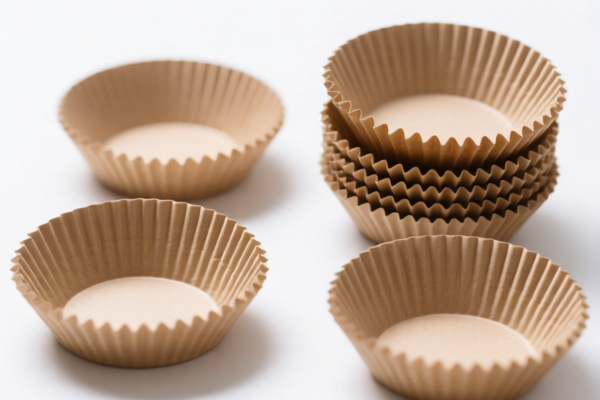
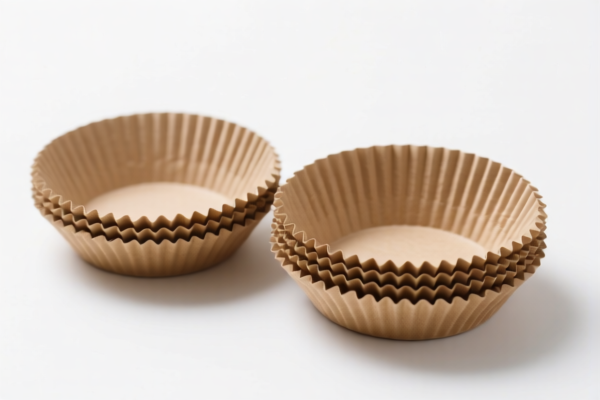
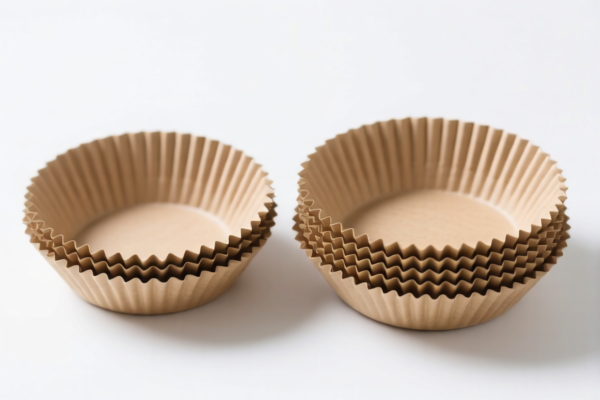
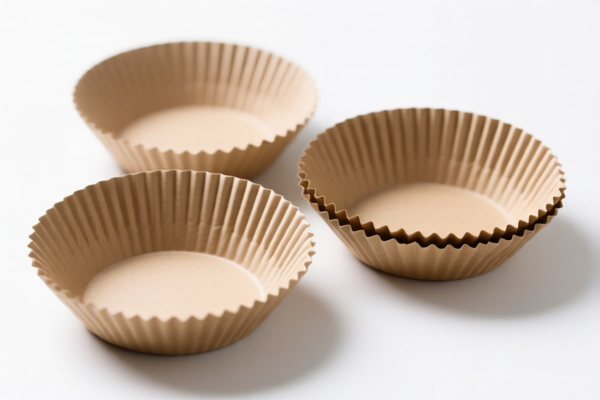
Paper cake trays, also known as cupcake liners, baking cups, or pastry cases, are disposable food containers made primarily from paper. In international trade, they are generally classified based on their manufacturing process and specific structure (e.g., pleated vs. non-pleated, wax-coated vs. uncoated).
However, HS Codes in the US Harmonized Tariff Schedule (HTSUS) can be tricky. Depending on whether the tray is considered a simple paper sheet product, a molded paper product, or a specific paper packaging item, it may fall under different codes. Below is the breakdown based on the provided data, which highlights that multiple HS codes are often applicable depending on the specific physical description and customs officer’s interpretation.
⚠️ Key Distinction Point:
- If the tray is molded or has a complex pleated structure specifically for holding baked goods, it often falls under 4823.69 (Other shaped paper items).
- If it is simply folded or cut from paper sheet stock, it may fall under 4819 (Paper packaging).
- Crucial Note: Under current US trade policies (Section 301 and IEEPA), ALL these codes attract significant additional tariffs for Chinese-origin goods.
📦 II. HS Code Classification Details (2026 Latest Tariff Reference)
Based on the provided data, here are the five potential HS Codes for "Paper Cake Trays." Note that while the descriptions vary slightly, the tax implications remain identical due to the specific tariff structure applied.
| HS Code | Product Description (From Data) | Specific Characteristics | Classification Logic |
|---|---|---|---|
| 4823.61.00.20 | Paper cake tray | Material: Paper; Form: Tray; Use: Food container | Classified as "Trays" of paper or paperboard. |
| 4823.69.00.40 | Paper cake tray | Material: Paper; Form: Tray; Category: Trays/dishes | "Other" shaped paper articles (non-peculiar to 4823.61). |
| 4819.10.00.20 | Paper cake tray | Material: Paper (Corrugated/Board); Use: Food hygiene container | Classified under "Corrugated paper/paperboard boxes/cases" if applicable, or general paper packaging. |
| 4819.20.00.20 | Paper cake tray | Material: Paper (Non-corrugated); Form: Tray/Container; Use: Holding cakes | Classified under "Folded cardboard boxes, sacks, etc." or other paper packaging not elsewhere specified. |
| 4823.69.00.20 | Paper cake cup | Material: Paper; Form/Use: Cup & Food container | Classified as "Other shaped paper articles," specifically cups. |
🔍 Critical Insight:
- The US Customs and Border Protection (CBP) may classify these under 4823 (Shaped/Molded Paper) or 4819 (Paper Packaging) depending on the exact manufacturing method (molding vs. die-cutting).
- Do not assume one code fits all. Provide detailed product specifications to your broker to determine the most accurate fit, but prepare for the same high tariff rate regardless of the choice.
💰 III. 2026 Latest Tariff Rate Breakdown (Including Surcharges)
✅ Applicable Country: United States (US)
✅ Origin: China (CN)
✅ Effective Date: Current trade policies (Section 301 + IEEPA)
🎯 1. Common Tariff Structure for All Listed Codes
| Item | Content | Details |
|---|---|---|
| Basic MFN Rate | 0.0% | Standard Most Favored Nation duty for paper products is often 0%. |
| Section 301 Surcharge | +25.0% | Additional duty imposed under US Trade Act Section 301 on Chinese goods. |
| 122 Clause / IEEPA | +10.0% | Additional duty under the International Emergency Economic Powers Act (IEEPA), often referred to as "122 Clause" or specific executive orders targeting China. |
| Total Effective Rate | 35.0% | Sum of all duties (0% + 25% + 10%). |
| Tax Calculation | CIF Value × 35% | Duty is calculated on the Cost, Insurance, and Freight value. |
| De Minimis Exemption | ❌ NOT APPLICABLE | Package clearance < $800 is NOT exempt for these goods from Section 301/IEEPA tariffs. |
| Legal Basis Path | Section 301: Footnote 9903.88.01 + IEEPA: 9903.01.25 |
📌 Explanation:
- Section 301 (25%): This is the primary "trade war" tariff. It applies to a wide range of Chinese imports, including paper products.
- IEEPA/122 Clause (10%): This additional layer further increases the cost.
- Total 35%: This is a high tariff rate. For a $10,000 shipment, you will pay $3,500 in duties alone.
- No De Minimis: Unlike some other categories, paper cake trays do not benefit from the de minimis (Section 321) exemption for small packages entering the US.
🛠️ IV. Customs Clearance Practical Advice (Pitfall Avoidance Guide)
✅ 1. Documentation Checklist (Must-Haves)
| Document | Required | Reason |
|---|---|---|
| Commercial Invoice | ✔️ | Must clearly state: "Paper Cake Trays/Liners," Material: Paper, HS Code. |
| Product Specifications | ✔️ | Detail if molded, die-cut, wax-coated, or uncoated. Helps CBP verify classification. |
| Material Certificate | ✔️ | Proof that it is 100% paper (not plastic-coated heavily, which might change the HS code). |
| FDA Food Contact Compliance | ✔️ | Crucial for food containers. Provide FDA compliance statement or test reports to avoid FDA hold. |
| Packing List | ✔️ | Accurate weight and quantity. |
✅ 2. Declaration Tips
🔥 “Clear Description, Accurate HS, FDA Ready!”
| Scenario | Correct Action | Wrong Action |
|---|---|---|
| Standard Paper Liners | Declare as "Paper Baking Cups" under 4823.69.00.20 or 4823.61.00.20. | Using vague terms like "Gift Box" or "Packaging" → Risk of misclassification. |
| Wax-Coated Trays | Still typically Paper (4823/4819), but specify coating. | Classifying as Plastic (3926) → Wrong duty rate, potential penalty. |
| Mixed Shipments | Separate HS codes if different materials (e.g., paper vs. foil-lined paper). | Combining into one vague line item → CBP may split and assess duties on all. |
| Origin Marking | Must mark "Made in China." | Unmarked goods → Seizure risk. |
✅ 3. Special Considerations
| Situation | Handling Advice |
|---|---|
| FDA Compliance | Paper food contact materials must comply with FDA 21 CFR. Ensure supplier provides a Food Contact Substance (FCS) compliance letter. |
| Sustainability Claims | If claiming "Compostable" or "Recycled," have supporting documentation. CBP may ask for proof to avoid false advertising claims. |
| High Value Shipments | For large volumes, consider applying for an Exclusion under Section 301 (though difficult for paper products now). |
| Small E-commerce | Even for small parcels, be aware that the 35% duty applies. Factor this into your landed cost calculation. |
🌍 V. Global Market Comparison (2026 Latest)
| Country/Region | Recommended HS Code | Basic Duty | Additional Duties (China) | Total Cost Impact | Notes |
|---|---|---|---|---|---|
| 🇺🇸 USA | 4823.69 / 4819 | 0% | +35% (25% Sec 301 + 10% IEEPA) | Very High | No de minimis exemption. |
| 🇨🇳 China | 4823.69 / 4819 | ~5-10% | 0% | Moderate | Domestic production is strong. |
| 🇪🇺 EU | 4823.69 / 4819 | ~4-6% | 0% (No general punitive tariffs) | Low-Moderate | VAT applies separately. |
| 🇬🇧 UK | 4823.69 / 4819 | ~4-6% | 0% | Low-Moderate | Post-Brexit rules apply. |
| 🇦🇺 Australia | 4823.69 / 4819 | ~5% | 0% | Low | GST applies. |
📌 Conclusion:
- The USA is the most challenging market for Chinese paper cake trays due to the 35% combined tariff.
- EU, UK, and Australia do not impose these specific punitive tariffs on paper products, making them more cost-competitive alternatives if sourcing from China.
📌 VI. Common Mistakes & Pitfalls (Lessons Learned)
❌ Mistake 1: Assuming "Paper Packaging" gets a low duty rate without adding surcharges.
👉 Result: Underestimating landed cost by 35%. Budget accurately!
❌ Mistake 2: Not providing FDA compliance documents.
👉 Result: Cargo held at US ports by FDA. Delays and storage fees.
❌ Mistake 3: Declaring as "Gift Wrapping" or "Decorative Paper" to avoid scrutiny.
👉 Result: Misdeclaration. Fines and potential seizure.
❌ Mistake 4: Ignoring the "122 Clause" (IEEPA).
👉 Result: Unexpected 10% charge on top of the 25%. Profit margin erosion.
✅ Correct Approach:
"Declare as 'Paper Baking Cups/Liners,' HS Code 4823.69.00.20 (or similar), Origin China, with FDA Compliance Attached. Calculate Landed Cost with 35% Duty."
🎯 VII. Conclusion: Professional Clearance, Cost Control, Efficiency!
🎯 Remember the Key Takeaways:
🔹 "35% is the floor for US imports from China." (0% basic + 25% Sec 301 + 10% IEEPA)
🔹 "No de minimis exemption." Small packages pay the full duty.
🔹 "FDA is non-negotiable." Food contact materials must be compliant.
📌 Pro Tip:
If you are importing large volumes, consult a licensed customs broker to determine if 4819 or 4823 is the more favorable classification for your specific product structure (though tax is the same, compliance risk may vary). Also, explore third-party logistics (3PL) options in non-US hubs to optimize supply chain costs.
📣 Immediate Action:
📞 Contact a Customs Broker + Provide FDA Docs + Budget for 35% Duty
🚀 Clear your cargo smoothly, protect your margins, and grow your business!
✨ Professional Clearance Starts with Accurate Classification!
💼 Every cent of cost deserves precision!
Customer Reviews
About HS Code Classification
The Harmonized System (HS) is an internationally standardized nomenclature developed by the World Customs Organization (WCO) to classify traded products. Over 200 countries use the HS system as the basis for customs tariffs, trade statistics, and import/export regulations.
Each HS code follows a hierarchical structure:
- Chapter (2 digits) — Broad category of goods (e.g., Chapter 84: Machinery and Mechanical Appliances)
- Heading (4 digits) — More specific grouping within the chapter
- Subheading (6 digits) — Internationally standardized breakdown, used by all WCO member countries
- National subdivisions (8-10 digits) — Country-specific extensions for further classification, such as US HTSUS 10-digit codes
Correct HS code classification is essential for smooth customs clearance, accurate duty payment, and compliance with trade regulations. Misclassification can lead to customs delays, overpayment of duties, or penalties.
When importing from CN to US, the applicable tariff rates may include:
- Most-Favored-Nation (MFN) rate — The standard duty rate applied to WTO members
- General rate — Applied to countries without trade agreements
- Trade remedy duties — Additional tariffs such as Section 301 (anti-dumping), Section 232 (national security), or countervailing duties
The information provided on this page is for reference purposes only. For official classification, please consult with your local customs authority or a licensed customs broker.