Cake Power Strip
CN → US| HS Code | Tariff Rate | Origin | Destination | Doc |
|---|---|---|---|---|
| 8544429010 | 87.6% | CN | US | Official Doc |
| 8536908585 | 85.0% | CN | US | Official Doc |
| 8544429090 | 87.6% | CN | US | Official Doc |
| 8536308000 | 35.0% | CN | US | Official Doc |
| 8537109120 | 37.7% | CN | US | Official Doc |
| 8537109170 | 37.7% | CN | US | Official Doc |
Product Images
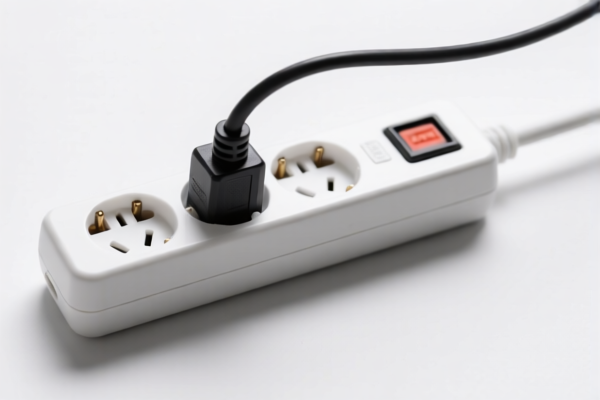
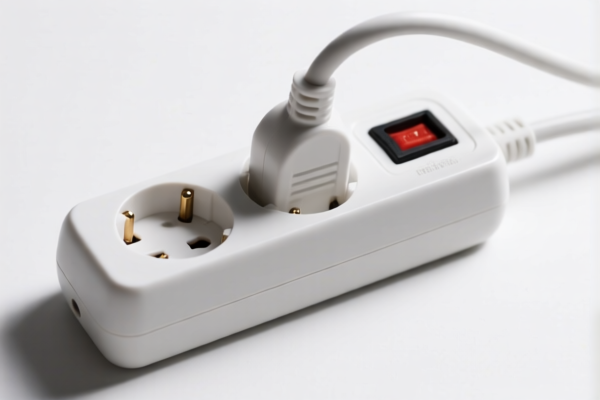
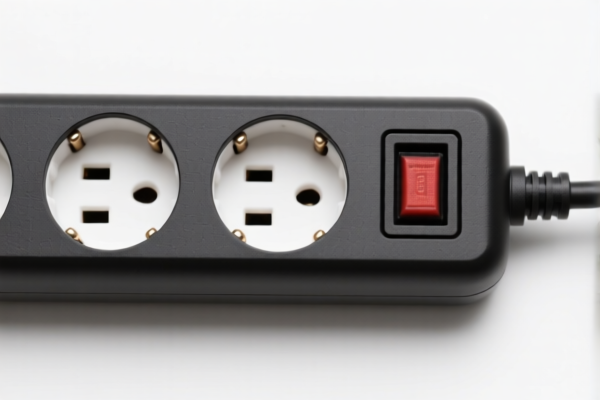
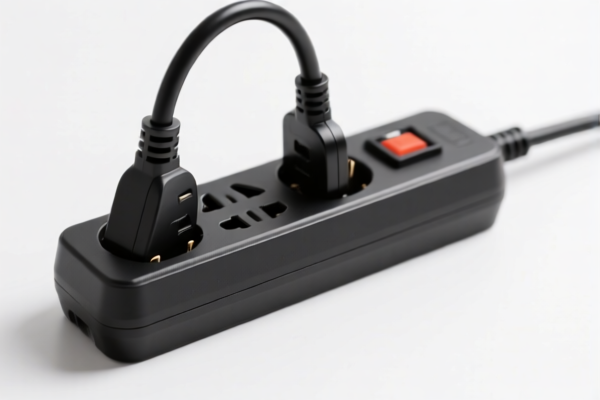
AI Analysis
🍰 Cake Power Strip (Multi-Outlet Extension Cord)
🌐 HS Code Reference & Customs Clearance Guide | 2026 Latest Tariff Analysis | Professional-Level Customs Strategy
📌 I. Product Definition & Classification: What Exactly is a "Cake Power Strip"?
A "Cake Power Strip" (commonly known as a power strip, surge protector, or extension cord) is a household or industrial electrical accessory used to distribute power from a single source to multiple devices. In international trade, its classification depends heavily on its physical structure and electrical function:
- Insulated Conductors with Connectors: If viewed as a cable assembly with plugs and sockets at the ends.
- Circuit Connection Apparatus: If viewed primarily as a device that connects and distributes electricity (switches, sockets).
- Distribution Boards: If it contains complex switching mechanisms or circuit protection features.
⚠️ Key Distinction Point:
- If it is primarily seen as an insulated wire with connectors (plug + cable + socket) → 8544.42
- If it is primarily seen as a circuit connection device (voltage ≤ 1,000V, containing switches/sockets) → 8536.90 or 8537.10
📦 II. HS Code Classification Details (2026 Latest Tariff Authority Comparison)
Based on the provided data, here are the six potential HS Codes for "Cake Power Strip":
| HS Code | Product Description | Summary of Classification Logic | Applicable Scenario |
|---|---|---|---|
8544.42.90.10 |
Insulated electric conductors, with connectors, for a voltage ≤ 1,000 V | Shape-Based: Regarded as an extension cord with connectors (plug + cable). | Simple extension cords, basic power strips |
8536.90.85.85 |
Electrical apparatus for making connections to or in electrical circuits, for a voltage ≤ 1,000 V | Function-Based: Regarded as a circuit connection device (socket/switch assembly). | Power strips with sockets, treated as "Other" connection devices |
8544.42.90.90 |
Insulated electric conductors, with connectors, for a voltage ≤ 1,000 V | Shape-Based: "Other" insulated conductors with connectors. No material conflict. | Similar to .10 but potentially different sub-category for specific connector types |
8536.30.80.00 |
Circuit protection apparatus (e.g., fuses, switches) | Component-Based: Regarded as part of circuit protection/connection equipment under switches. | Power strips with built-in surge protection or switches, categorized under "Other" |
8537.10.91.20 |
Boards, panels, consoles, desks, cabinets, and other bases | Assembly-Based: Regarded as a power distribution board/panel containing switches and conductive components. | Complex power strips with switches, surge protection, and distribution functions |
8537.10.91.70 |
Boards, panels, consoles, desks, cabinets, and other bases | Assembly-Based: Power distribution equipment, voltage ≤ 1,000V, plastic/metal body. | Same as .20, focusing on the "panel/board" aspect of the power strip housing |
🔍 Key Reminder:
- 8544.42: Focuses on the wire/cable aspect. Often applies to simple extension cords. - 8536/8537: Focuses on the switch/socket/distribution aspect. Often applies to power strips with switches, surge protection, or complex sockets. - Customs Discretion: The choice between 8544 (conductor) and 8536/8537 (apparatus/panel) is the most critical decision point, affecting tariffs significantly.
💰 III. 2026 Latest Tariff Rate Breakdown (Including Surtaxes, Policy Add-ons)
✅ Applicable Country: United States (US)
✅ Origin: China (CN)
✅ Effective Date: Ongoing (Includes Section 301, IEEPA, etc.)
🎯 1. 8544.42.90.10 & 8544.42.90.90 —— Insulated Conductors (Extension Cords)
| Item | Content |
|---|---|
| Base Tariff | 2.6% |
| Section 301 Surtax | +25.0% |
| Section 122 Tariff | +10.0% (Specific to certain steel/aluminum/copper products, if applicable) |
| Copper/Aluminum Surtax | +50.0% (If significant metal content triggers specific clauses) |
| Total Tariff | 87.6% |
| Tax Calculation | CIF Value × 87.6% |
| De Minimis Eligibility | ❌ No (Subject to high duties) |
| Legal Basis | Base Tariff + USITC Section 301 + IEEPA Section 122 + Metal-specific tariffs |
📌 Explanation:
- Base 2.6%: Standard MFN rate for insulated conductors. - 25% Section 301: Standard trade war tariff on Chinese goods in this category. - 10% Section 122: National security tariff for certain industrial products. - 50% Copper/Aluminum: If the power strip's conductive parts are deemed to fall under specific metal tariffs, this surcharge applies. - Total 87.6%: Extremely high. Requires careful valuation and potential exemption claims if applicable.
🎯 2. 8536.90.85.85 —— Other Circuit Connection Apparatus
| Item | Content |
|---|---|
| Base Tariff | 0.0% |
| Section 301 Surtax | +25.0% |
| Section 122 Tariff | +10.0% (Copper/Aluminum products surcharge) |
| Total Tariff | 85.0% |
| Tax Calculation | CIF Value × 85.0% |
| De Minimis Eligibility | ❌ No |
| Legal Basis | Base Tariff (0%) + Section 301 (25%) + Metal Surtax (50%?) Note: Data shows 85% total, implying 25% + 10% + 50% = 85% |
📌 Explanation:
- Base 0%: Many electrical apparatus have lower base rates. - Total 85.0%: Still very high due to the cumulative effect of Section 301 and metal-related surcharges.
🎯 3. 8536.30.80.00 —— Circuit Protection/Connection (Switches)
| Item | Content |
|---|---|
| Base Tariff | 0.0% |
| Section 301 Surtax | +25.0% |
| Section 122 Tariff | +10.0% |
| Total Tariff | 35.0% |
| Tax Calculation | CIF Value × 35.0% |
| De Minimis Eligibility | ❌ No |
| Legal Basis | Base Tariff (0%) + Section 301 (25%) + Section 122 (10%) |
📌 Explanation:
- Total 35.0%: Significantly lower than the 85%+ rates. This is the most cost-effective classification if the power strip is considered a "switch/connection device" rather than a conductor or distribution panel. - No Copper/Aluminum Surtax: This classification may avoid the additional 50% metal surcharge.
🎯 4. 8537.10.91.20 & 8537.10.91.70 —— Power Distribution Panels/Boards
| Item | Content |
|---|---|
| Base Tariff | 2.7% |
| Section 301 Surtax | +25.0% |
| Section 122 Tariff | +10.0% |
| Total Tariff | 37.7% |
| Tax Calculation | CIF Value × 37.7% |
| De Minimis Eligibility | ❌ No |
| Legal Basis | Base Tariff (2.7%) + Section 301 (25%) + Section 122 (10%) |
📌 Explanation:
- Total 37.7%: Also significantly lower than the 85%+ rates. If the power strip is considered a "distribution board" with switches, this rate applies. - Slight Premium over 8536.30: Base tariff is 2.7% vs 0.0%, but still much better than 85%.
🛠️ IV. Customs Clearance Practical Advice (Real-World Pitfall Avoidance Guide)
✅ 1. Preparation Checklist (Missing Items Will Cause Delays)
| Document | Required | Description |
|---|---|---|
| ✅ Product Specifications | ✔️ | Voltage, current, number of outlets, cable length, materials (plastic/metal). |
| ✅ Circuit Diagram/Structure | ✔️ | Critical to distinguish between "conductor" (8544) and "apparatus/panel" (8536/8537). |
| ✅ Product Photos | ✔️ | Clear images of plug, cable, sockets, switches, and labeling. |
| ✅ Certifications | ✔️ | UL, ETL, CE, FCC (if applicable). Essential for electrical safety compliance. |
| ✅ Commercial Invoice | ✔️ | Clearly state "Power Strip" or "Extension Cord" and HS Code. |
| ✅ Packing List | ✔️ | Detail components to avoid being split into separate shipments. |
✅ 2. Declaration Strategy (Key Mnemonic)
🔥 "Function over Form, Switches Lower the Cost!"
| Scenario | Correct Declaration | Incorrect Action |
|---|---|---|
| Simple Extension Cord (no switch) | 8544.42.90.10 (87.6%) |
Misdeclare as 8536.30 to save tax → High Risk |
| Power Strip with Switches/Protection | 8536.30.80.00 (35.0%) |
Misdeclare as 8544.42 → Pay 50% more tax |
| Complex Distribution Unit | 8537.10.91.20 (37.7%) |
Misdeclare as 8536.90 → Pay 47% more tax |
| Any Power Strip | Do NOT split into wire + socket | Split declaration → High duties on each part |
✅ 3. Special Handling Tips
| Situation | Recommendation |
|---|---|
| OEM Customization | Provide design drawings to prove "switch/connection" function if aiming for 35% rate. |
| Material Composition | If copper/aluminum content is high, be aware of the potential 50% surcharge under 8544/8536.90. |
| Safety Certifications | Ensure UL/ETL certificates are valid. Lack thereof can lead to rejection or destruction. |
| Pre-Ruling Application | Apply for US CBP Advance Ruling before shipment to confirm the correct HS Code and avoid surprise duties. |
🌍 V. Global Customs Comparison (2026 Latest)
| Country/Region | Recommended HS Code | Tariff (China Origin) | Certification | Notes |
|---|---|---|---|---|
| 🇺🇸 USA | 8536.30.80.00 |
35.0% | UL/ETL, FCC | Lowest risk/tax among options if classified correctly. Avoid 8544 due to 87.6%. |
| 🇨🇳 China | 8536.30.80.00 |
~5-10% | CCC, RoHS | No US surtaxes. |
| 🇪🇺 EU | 8536.30.80.00 |
~0-2% | CE, RoHS | No US-style surtaxes. |
| 🇬🇧 UK | 8536.30.80.00 |
~0-2% | UKCA, RoHS | Post-Brexit standards. |
| 🇦🇺 Australia | 8536.30.80.00 |
~5% | RCM, SAA | No major surtaxes. |
📌 Conclusion:
- The US is the critical market due to the high surtaxes (Section 301, IEEPA, etc.). - Classification as8536.30.80.00(35.0%) is significantly better than8544.42(87.6%) or8537.10(37.7%). - Ensure the product has switches or circuit protection to justify the8536.30classification.
📌 VI. Common Errors & Pitfalls (Lessons Learned)
❌ Error 1: Declaring a switch-equipped power strip as 8544.42.90.10 (Extension Cord).
👉 Consequence: Pay 87.6% instead of 35.0%. Overpayment of $52.6 per $100 value!
❌ Error 2: Declaring a simple cord as 8536.30.80.00 without switches/protection.
👉 Consequence: Customs may reclassify it, leading to back taxes, penalties, and delays.
❌ Error 3: Ignoring the Copper/Aluminum Surtax.
👉 Consequence: If the power strip has significant metal content, the 50% surcharge under Section 122 may apply, pushing rates to 85%+.
✅ Correct Practice:
"Power Strip, 6-Outlet, 125V, 15A, with Surge Protection and ON/OFF Switch, Plastic Housing, UL Certified, Model XYZ"
🎯 VII. Conclusion: Professional Declaration Saves Money!
🎯 Remember the Mnemonic:
🔹 "Switches Save Taxes: 35% vs 87.6%!"
🔹 "Don't be just a wire; be a device!"
🔹 "Get a Pre-Ruling for the US – Avoid the 87.6% Trap!"
📌 Pro Tip:
If your power strips are originating from Vietnam, Mexico, or Thailand, you may qualify for IEEPA Exemptions or lower duties under USMCA/ASEAN FTAs.
Recommend applying for a CBP Advance Ruling before shipping to the US to lock in the lower 35.0% rate if your product qualifies.
📣 Immediate Action:
📞 Contact a Professional Customs Broker + Provide Product Specs + Apply for CBP Advance Ruling
🚀 Let your power strips clear customs smoothly, minimize tax costs, and maximize profits!
✨ Professional Customs Clearance Starts with Accurate Classification!
💼 Every Cent of Your Cost Deserves Precise Calculation!
Customer Reviews
About HS Code Classification
The Harmonized System (HS) is an internationally standardized nomenclature developed by the World Customs Organization (WCO) to classify traded products. Over 200 countries use the HS system as the basis for customs tariffs, trade statistics, and import/export regulations.
Each HS code follows a hierarchical structure:
- Chapter (2 digits) — Broad category of goods (e.g., Chapter 84: Machinery and Mechanical Appliances)
- Heading (4 digits) — More specific grouping within the chapter
- Subheading (6 digits) — Internationally standardized breakdown, used by all WCO member countries
- National subdivisions (8-10 digits) — Country-specific extensions for further classification, such as US HTSUS 10-digit codes
Correct HS code classification is essential for smooth customs clearance, accurate duty payment, and compliance with trade regulations. Misclassification can lead to customs delays, overpayment of duties, or penalties.
When importing from CN to US, the applicable tariff rates may include:
- Most-Favored-Nation (MFN) rate — The standard duty rate applied to WTO members
- General rate — Applied to countries without trade agreements
- Trade remedy duties — Additional tariffs such as Section 301 (anti-dumping), Section 232 (national security), or countervailing duties
The information provided on this page is for reference purposes only. For official classification, please consult with your local customs authority or a licensed customs broker.