Cake Push Bucket
CN → US| HS Code | Tariff Rate | Origin | Destination | Doc |
|---|---|---|---|---|
| 3924103000 | 22.8% | CN | US | Official Doc |
| 3923900014 | 38.0% | CN | US | Official Doc |
| 6911104100 | 16.3% | CN | US | Official Doc |
| 3924104000 | 13.4% | CN | US | Official Doc |
| 3923900012 | 38.0% | CN | US | Official Doc |
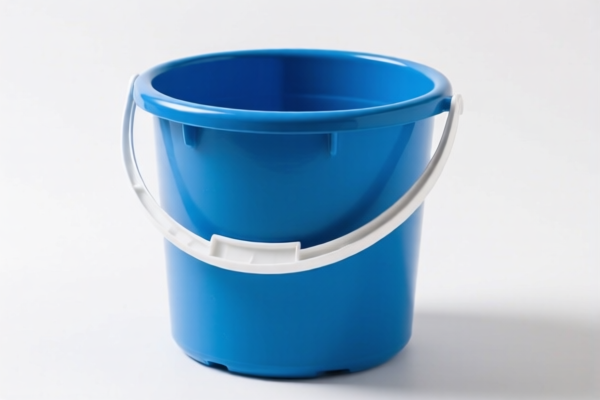
Product Images


AI Analysis
🍰 Cake Push Bucket (Cake Pusher/Server)
🌐 HS Code Reference & Customs Clearance Guide | 2026 Latest Tariff Analysis | Professional Clearance Strategy
📌 I. Product Definition & Classification: Do You Really Understand the "Cake Push Bucket"?
The Cake Push Bucket (often referred to as a Cake Server, Spatula, or Pusher) is a specialized kitchen utensil used to serve, lift, or push cakes and pastries. In international trade, its classification depends heavily on material and primary function:
- Kitchen Utensil (Plastic/Metal): Used for serving or handling food, categorized under kitchenware.
- Packaging Container (Plastic): If the item is a rigid "bucket" used primarily for storing or transporting cakes (packaging), it falls under packaging goods.
- Ceramic Tableware: If made of ceramic/porcelain, it is classified as tableware.
⚠️ Key Distinction:
- If the item is a utensil (handle + blade/pusher) for serving → Chapter 39 (Plastic) or Chapter 69 (Ceramic).
- If the item is a container (bucket/jar) for packaging → Chapter 39 (Plastic Packaging).
- Material is critical: Plastic items face high Section 301/IEEPA tariffs; Ceramic items face lower or no Section 301 tariffs.
📦 II. HS Code Classification Details (2026 Latest Tariff Authority Comparison)
| HS Code | Product Description | Application Scenario | Material | Tax Rate (US/China) |
|---|---|---|---|---|
3924.10.30.00 |
Plastic tableware/kitchenware, not elsewhere specified | Plastic cake servers, spatulas, pushers | Plastic | 22.8% |
3923.90.00.14 |
Plastic articles for packaging, not elsewhere specified | Plastic cake buckets, storage containers | Plastic | 38.0% |
6911.10.41.00 |
Tableware of porcelain or china | Ceramic cake servers or ceramic serving buckets | Ceramic | 16.3% |
3924.10.40.00 |
Plastic tableware/kitchenware (specific sub-category) | Plastic cake pushers, kitchen utensils | Plastic | 13.4% |
3923.90.00.12 |
Plastic articles for packaging, not elsewhere specified | Plastic packaging buckets | Plastic | 38.0% |
🔍 Key Reminder:
- Plastic Utensils (3924.10.30.00/3924.10.40.00) are generally lower tax than Plastic Packaging (3923.90.00.14) if the item can be argued as a utensil.
- Ceramic (6911.10.41.00) offers a middle-ground tariff but requires strict material proof.
- Packaging vs. Utensil: If the "bucket" has a handle and is used to push/slide cake onto a plate, argue for Utensil (3924). If it’s a rigid box for transport, it’s Packaging (3923).
💰 III. 2026 Latest Tariff Rate Details (Including Surcharges & Policy Add-ons)
✅ Applicable Country: United States (US)
✅ Origin: China (CN)
✅ Effective Date: From November 10, 2025 (including subsequent imports)
🎯 1. 3924.10.30.00 — Plastic Tableware/Kitchenware (General)
| Item | Content |
|---|---|
| Base Tariff | 5.3% (Ad Valorem) |
| Section 301 Surcharge | +7.5% (USITC Footnote) |
| IEEPA Surcharge | +10% (China-specific, effective Nov 10, 2025) |
| Total Rate | 22.8% |
| Tax Calculation | CIF Value × 22.8% |
| De Minimis Eligibility | ❌ No (High tariff items excluded) |
| Legal Basis Path | IEEPA:9903.01.25 → USITC:3924.10.30.00 → FOOTNOTE:301 |
📌 Explanation:
- Base rate is moderate (5.3%).
- IEEPA 10% is a fixed surcharge on Chinese plastic goods.
- Section 301 7.5% is the specific retaliatory tariff.
- Total 22.8% is manageable but significant for low-margin plastic goods.
🎯 2. 3923.90.00.14 — Plastic Packaging Articles (Other)
| Item | Content |
|---|---|
| Base Tariff | 3.0% (Ad Valorem) |
| Section 301 Surcharge | +25.0% (High Rate Category) |
| IEEPA Surcharge | +10% |
| Total Rate | 38.0% |
| Tax Calculation | CIF Value × 38.0% |
| De Minimis Eligibility | ❌ No |
| Legal Basis Path | IEEPA:9903.01.25 → USITC:3923.90.00.14 → FOOTNOTE:301 |
📌 Warning:
- Although base tariff is low (3.0%), the Section 301 rate is 25%, not 7.5%!
- This is because packaging goods often fall under higher punitive categories.
- Total 38.0% is extremely high. Must avoid if possible.
🎯 3. 6911.10.41.00 — Ceramic Tableware (Porcelain/China)
| Item | Content |
|---|---|
| Base Tariff | 6.3% (Ad Valorem) |
| Section 301 Surcharge | 0.0% (Exempt) |
| IEEPA Surcharge | +10% |
| Total Rate | 16.3% |
| Tax Calculation | CIF Value × 16.3% |
| De Minimis Eligibility | ❌ No (But lower overall cost) |
| Legal Basis Path | IEEPA:9903.01.24 → USITC:6911.10.41.00 |
📌 Advantage:
- No Section 301 tariff for ceramics (as of current lists).
- Only IEEPA 10% applies.
- Total 16.3% is the lowest among plastic options and competitive against metal.
🎯 4. 3924.10.40.00 — Plastic Tableware (Specific Sub-category)
| Item | Content |
|---|---|
| Base Tariff | 3.4% (Ad Valorem) |
| Section 301 Surcharge | 0.0% (Exempt/Low Rate) |
| IEEPA Surcharge | +10% |
| Total Rate | 13.4% |
| Tax Calculation | CIF Value × 13.4% |
| De Minimis Eligibility | ❌ No |
| Legal Basis Path | IEEPA:9903.01.24 → USITC:3924.10.40.00 |
📌 Best Plastic Option:
- If your product can be classified under 3924.10.40.00 instead of .30.00, you save 9.4% (22.8% vs 13.4%).
- Requires precise description to match this specific sub-heading (e.g., "Plastic Kitchen Utensils").
🎯 5. 3923.90.00.12 — Plastic Packaging Articles (Other)
| Item | Content |
|---|---|
| Base Tariff | 3.0% (Ad Valorem) |
| Section 301 Surcharge | +25.0% |
| IEEPA Surcharge | +10% |
| Total Rate | 38.0% |
| Tax Calculation | CIF Value × 38.0% |
| De Minimis Eligibility | ❌ No |
| Legal Basis Path | IEEPA:9903.01.25 → USITC:3923.90.00.12 → FOOTNOTE:301 |
📌 Same as #2: High punitive tariff. Avoid if product can be reclassified as utensil.
🛠️ IV. Customs Clearance Practical Advice (Real-World Pitfall Guide)
✅ 1. Preparation Checklist (All Items Required)
| Document | Must Provide | Description |
|---|---|---|
| ✅ Product Specs | ✔️ | Material composition, dimensions, usage method |
| ✅ Product Photos | ✔️ | Clear images showing handle, shape, and usage context |
| ✅ Commercial Invoice | ✔️ | Explicitly state "Plastic Cake Server" or "Ceramic Tableware" |
| ✅ Packing List | ✔️ | Detailed packing info |
| ✅ Certificate of Origin | ✔️ | To confirm Chinese origin |
| ✅ Material Proof | ✔️ | If claiming Ceramic, provide lab test or material declaration |
✅ 2. Declaration Strategy (Key Mantra)
🔥 "Material First, Function Second, Name Precise, Tax Lower!"
| Scenario | Correct Declaration | Wrong Practice |
|---|---|---|
| Plastic Cake Server | 3924.10.40.00 (Plastic Tableware) |
Declare as "Packaging" → 38% |
| Ceramic Cake Server | 6911.10.41.00 (Ceramic Tableware) |
Declare as "Plastic" → 13.4% or 22.8% |
| Plastic Cake Bucket (Storage) | 3923.90.00.14 (Packaging) |
Declare as "Utensil" → Risk of correction + 38% |
| Metal Cake Server | (Not in Data, but typically 6.8%) | Misclassify as Plastic → 22.8% |
📌 Tip:
- If the item has a handle and is used for serving, strongly argue for Chapter 39 (Plastic Tableware) under 3924, not 3923 (Packaging).
- 3924.10.40.00 is the cheapest plastic option (13.4%). Ensure your product description matches this specific sub-code.
✅ 3. Special Cases
| Situation | Handling Advice |
|---|---|
| Mixed Material (Plastic Handle + Metal Blade) | Usually classified by essential character. If plastic dominates, use 3924. |
| Gift Set (Bucket + Cake) | Declare separately. Bucket as 3924 or 3923, Cake as food. |
| Ceramic vs. Porcelain | 6911.10.41.00 is for porcelain/china. If vitrified stoneware, might differ. Provide material test. |
| OEM Custom Design | Provide design drawings to prove it’s a utensil, not just a generic box. |
🌍 V. Global Market Clearance Comparison (2026 Latest)
| Country/Region | Recommended HS Code | Tariff (China Origin) | Certification | Notes |
|---|---|---|---|---|
| 🇺🇸 USA | 3924.10.40.00 |
13.4% (Plastic) / 16.3% (Ceramic) | FDA (if food contact) | Plastic packaging hits 38% |
| 🇨🇳 China | 3924.10.40.00 |
5-10% | GB Standard | No Section 301 |
| 🇪🇺 EU | 3924.10 |
0-6.5% | LFGB/FDA | No punitive tariffs |
| 🇬🇧 UK | 3924.10 |
0-6.5% | UKCA | Post-Brexit rules apply |
📌 Conclusion:
- USA is the most challenging market due to IEEPA and Section 301.
- Ceramic (6911.10.41.00) is tax-efficient in the US (16.3%) vs Plastic Packaging (38%).
- Plastic Utensils (3924.10.40.00) are the best plastic choice (13.4%).
📌 VI. Common Errors & Pitfall Guide (Blood & Tears Lessons)
❌ Mistake 1: Classifying a Plastic Cake Server as Packaging (3923)
👉 Result: Tax jumps from 13.4% to 38.0% → Profit wiped out!
❌ Mistake 2: Declaring Ceramic items as Plastic
👉 Result: Overpaying taxes. Ceramic (16.3%) vs Plastic (13.4%) is close, but if plastic classification is wrong, risk penalties.
❌ Mistake 3: Using vague terms like "Container" for a Serving Utensil
👉 Result: Customs may reclassify as packaging → 38% Tax.
❌ Mistake 4: Ignoring IEEPA 10%
👉 Result: Underestimating cost. All Chinese plastic/ceramic goods face this.
✅ Correct Practice:
"Plastic Cake Server, Handle Type, Kitchen Utensil, Model XYZ, FDA Compliant"
HS Code:3924.10.40.00
Tax: 13.4%
🎯 VII. Conclusion: Precise Classification Saves Money!
🎯 Remember the Mantra:
🔹 "Utensil vs Packaging, 25% Tariff Gap!"
🔹 "Plastic Packaging = 38%, Plastic Utensil = 13.4%!"
🔹 "Ceramic = 16.3%, No Section 301, Safe Choice!"
📌 Pro Tip:
If your product can be classified under 3924.10.40.00, ensure your commercial invoice and product description explicitly state "Kitchen Utensil" or "Cake Server", NOT "Bucket" or "Packaging Container".
If material is Ceramic, use 6911.10.41.00 for a balanced 16.3% rate.
📣 Immediate Action:
📞 Consult a customs broker to verify
3924.10.40.00eligibility.
📄 Provide product photos and material composition.
🚀 Optimize your supply chain for 13.4% - 16.3% tariffs, not 38%!
✨ Professional Clearance Starts with Accurate Classification!
💼 Every Percent Saved is Pure Profit!
Customer Reviews
About HS Code Classification
The Harmonized System (HS) is an internationally standardized nomenclature developed by the World Customs Organization (WCO) to classify traded products. Over 200 countries use the HS system as the basis for customs tariffs, trade statistics, and import/export regulations.
Each HS code follows a hierarchical structure:
- Chapter (2 digits) — Broad category of goods (e.g., Chapter 84: Machinery and Mechanical Appliances)
- Heading (4 digits) — More specific grouping within the chapter
- Subheading (6 digits) — Internationally standardized breakdown, used by all WCO member countries
- National subdivisions (8-10 digits) — Country-specific extensions for further classification, such as US HTSUS 10-digit codes
Correct HS code classification is essential for smooth customs clearance, accurate duty payment, and compliance with trade regulations. Misclassification can lead to customs delays, overpayment of duties, or penalties.
When importing from CN to US, the applicable tariff rates may include:
- Most-Favored-Nation (MFN) rate — The standard duty rate applied to WTO members
- General rate — Applied to countries without trade agreements
- Trade remedy duties — Additional tariffs such as Section 301 (anti-dumping), Section 232 (national security), or countervailing duties
The information provided on this page is for reference purposes only. For official classification, please consult with your local customs authority or a licensed customs broker.