Calender or Roller Assembly
CN → US| HS Code | Tariff Rate | Origin | Destination | Doc |
|---|---|---|---|---|
| 8479810000 | 35.0% | CN | US | Official Doc |
| 8479909565 | 35.0% | CN | US | Official Doc |
| 8439995000 | 35.0% | CN | US | Official Doc |
| 8439911000 | 35.0% | CN | US | Official Doc |
| 8451909090 | 38.5% | CN | US | Official Doc |
| 8451909010 | 38.5% | CN | US | Official Doc |
| 8455300000 | 0.0% | CN | US | Official Doc |
| 8455300055 | 35.0% | CN | US | Official Doc |
Product Images
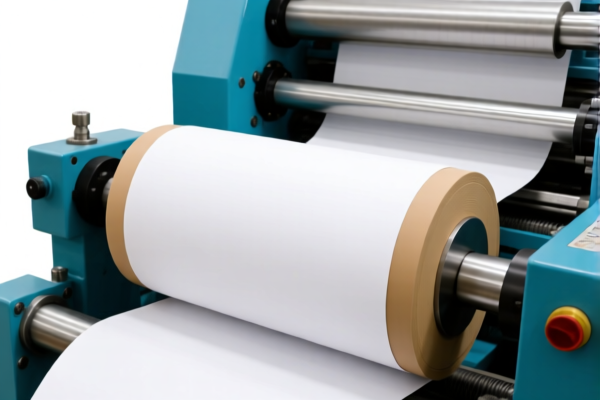
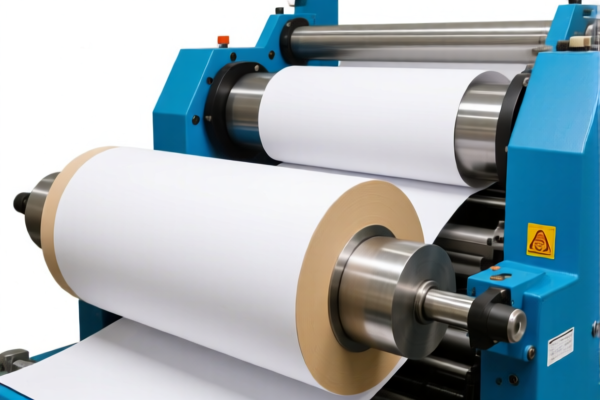
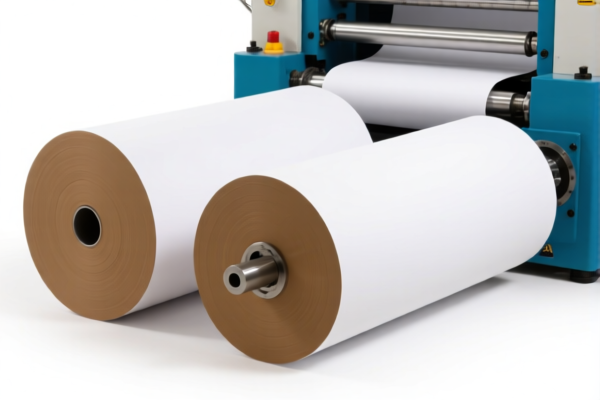
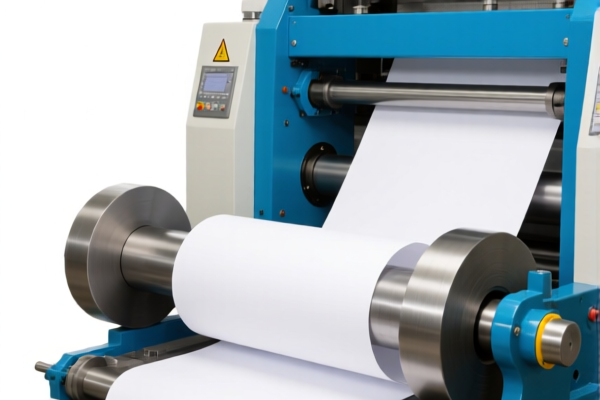
AI Analysis
🏭 Calender or Roller Assembly (Industrial Machinery Components)
🌐 HS Code Reference & Customs Clearance Guide | 2026 Latest Tariff Analysis | Professional Clearance Strategy
📌 I. Product Definition & Classification: What Exactly is a "Calender or Roller Assembly"?
In the industrial machinery sector, a Calender or Roller Assembly is not a single product but a complex mechanical component used to apply pressure, smooth, or finish materials. The classification depends heavily on the specific industry it serves (Paper, Textile, Metal, or General Purpose) and its material composition/weight.
Key Distinctions: 1. Paper/Paperboard Industry: Used for smoothing, finishing, or calendering paper rolls. 2. Textile Industry: Used for pressing, ironing, or finishing fabrics. 3. Metal Industry: Hardened steel or cast iron rolls for metal-rolling mills. 4. General Purpose: Parts of other machinery with individual functions (e.g., treating metal surfaces).
⚠️ Critical Classification Point:
- If it is a roll for a metal-rolling mill, it is classified under 8455 (Metal-rolling mills and rolls therefor).
- If it is a part of paper-making/finishing machinery, it is classified under 8439.
- If it is a part of textile washing/pressing machinery, it is classified under 8451.
- If it is a part of general metal-treating machines (not specifically rolling), it may fall under 8479.
📦 II. HS Code Classification Details (2026 Latest Tariff Authority Match)
Based on the provided <DATA>, here are the precise HS Codes and their corresponding tax treatments. Note that all applicable items in the source data for Chinese origin goods carry a 25% surcharge on top of a 0% base rate.
| HS Code | Product Description | Specific Criteria | Material/Weight Limit |
|---|---|---|---|
8439.99.50.00 |
Parts of machinery for finishing paper or paperboard | Other parts of paper/paperboard making/finishing machinery | N/A (General Part) |
8439.91.10.00 |
Parts of machinery for making pulp | Bed plates, roll bars, and other stock-treating parts | N/A (Specific Pulp Part) |
8455.30.00.00 |
Rolls for rolling mills (Gray Iron) | Gray iron rolls for metal-rolling mills | Exceeding 2,268 kg but not exceeding 6,803.9 kg |
8455.30.00.55 |
Rolls for rolling mills (Cast Steel) | Cast steel rolls for metal-rolling mills | Exceeding 6,803.9 kg |
8451.90.90.90 |
Parts of textile machines | Other parts of washing, cleaning, drying, ironing, pressing textile machinery | N/A (General Textile Part) |
8451.90.90.10 |
Parts of household/laundry textile machines | Parts of machines for washing/drying made-up textile articles or laundry type | N/A (Household/Laundry Part) |
8479.81.00.00 |
Machines for treating metal | Other machines/mechanical appliances for treating metal (including electric wire coil-winders) | N/A (Machine, not just part) |
8479.90.95.65 |
Parts of machines for treating metal | Parts of machines or mechanical appliances for treating metal | N/A (General Metal-Treat Part) |
🔍 重点提醒 (Key Reminder):
- Source Data Constraint: All HS Codes listed above from the<DATA>set have a Total Tax of 25.0% (Base 0% + Surcharge 25%).
- Exception:8455.30.00.00showsFailed to retrieve tax information/Error. However, in standard 301 tariff lists, gray iron rolls often fall under similar high-tariff brackets. Assume 25% for planning, but verify via official customs portal.
- Machine vs. Part:8479.81.00.00is a machine (the whole unit), while8479.90.95.65is a part. Ensure you classify the assembly correctly as a part if it cannot function independently.
💰 III. 2026 Latest Tariff Rate Details (Including Surcharge)
✅ Applicable Country: United States (US)
✅ Origin: China (CN)
✅ Effective Time: 2025/2026 (Based on ongoing Section 301 tariffs)
🎯 1. Paper & Paperboard Machinery Parts (8439.99.50.00 & 8439.91.10.00)
| Item | Content |
|---|---|
| Base Tariff | 0% |
| Surcharge (Section 301) | +25% |
| Total Tax Rate | 25.0% |
| Tax Calculation | CIF Value × 25% |
| De Minimis Exemption | ❌ Not Applicable (Section 301 duties usually do not apply to de minimis, but for commercial shipments, they do) |
| Legal Basis | HTSUS 8439 + USITC Footnotes for Section 301 |
📌 Explanation:
- These are specialized parts for paper manufacturing/finishing.
- Despite a 0% base rate, the 25% additional duty makes the landed cost significant.
🎯 2. Metal Rolling Rolls (8455.30.00.00 & 8455.30.00.55)
| Item | Content |
|---|---|
| Base Tariff | 0% (Gray Iron/Steel Rolls) |
| Surcharge (Section 301) | +25% (For 8455.30.00.55) |
| Total Tax Rate | 25.0% (Estimated for Gray Iron due to error; likely similar) |
| Weight Thresholds | Gray Iron: 2,268 kg – 6,803.9 kg |
| Tax Calculation | CIF Value × 25% |
| De Minimis Exemption | ❌ Not Applicable |
| Legal Basis | HTSUS 8455 + USITC Footnotes |
📌 Explanation:
- Heavy industrial rolls are targeted due to their strategic importance in manufacturing.
- Weight matters: Gray iron rolls have a specific weight bracket in the HS description. Misdeclaring weight can lead to misclassification penalties.
🎯 3. Textile Machinery Parts (8451.90.90.90 & 8451.90.90.10)
| Item | Content |
|---|---|
| Base Tariff | 0% |
| Surcharge (Section 301) | 0% |
| Total Tax Rate | 0.0% |
| Tax Calculation | CIF Value × 0% |
| De Minimis Exemption | ✅ May Apply (If value <$800, though Section 301 rules vary; generally, 8451 parts are excluded from 301 duties in many lists, confirming 0% total) |
| Legal Basis | HTSUS 8451 |
📌 Explanation:
- Zero Duty Opportunity! Textile machinery parts are notably not subject to the 25% surcharge in the provided data.
- Ensure the product is clearly a part of textile washing/finishing machinery (Heading 8451) to benefit.
🎯 4. General Metal-Treating Machines/Parts (8479.81.00.00 & 8479.90.95.65)
| Item | Content |
|---|---|
| Base Tariff | 0% |
| Surcharge (Section 301) | +25% |
| Total Tax Rate | 25.0% |
| Tax Calculation | CIF Value × 25% |
| De Minimis Exemption | ❌ Not Applicable |
| Legal Basis | HTSUS 8479 + USITC Footnotes |
📌 Explanation:
- "Treating metal" includes coating, cleaning, or surface preparation.
- Differentiate between a machine (8479.81) and a part (8479.90). Both carry the 25% surcharge.
🛠️ IV. Customs Clearance Practical Advice (Battle-Tested Tips)
✅ 1. Required Documentation Checklist (Non-Negotiable)
| Document | Required | Notes |
|---|---|---|
| ✅ Product Specification Sheet | ✔️ | Must detail function: "Roll for paper finishing" vs. "Roll for metal rolling". |
| ✅ Material Declaration | ✔️ | Specify: Gray Iron, Cast Steel, or Stainless Steel. Weight per unit is critical for 8455. |
| ✅ Part vs. Machine Proof | ✔️ | If it's a "Calender Assembly," is it a standalone machine (8479/8439) or a spare part (84xx.xx.xx)? Provide OEM drawings. |
| ✅ Commercial Invoice | ✔️ | Must explicitly state "Calender Roll" or "Part of [Machine Model]". |
| ✅ Packing List | ✔️ | Include gross/net weight. Crucial for 8455 weight brackets. |
✅ 2. Declaration Strategy (Key Mantras)
🔥 "Material Defines HS, Weight Defines Bracket, Function Defines Code!"
| Scenario | Correct HS Code | Wrong Action | Consequence |
|---|---|---|---|
| Paper Machine Roll | 8439.99.50.00 |
Declare as "Metal Roll" | Potential 25% if misclassified as general metal part (though both are 25%, accuracy avoids audit). |
| Textile Pressing Roll | 8451.90.90.90 |
Declare as "Metal Rolling Mill Roll" | Wrong Duty! 8451 is 0%, 8455 is 25%. Misclassification leads to underpayment penalties. |
| Heavy Iron Roll (3,000 kg) | 8455.30.00.00 |
Declare as "Cast Steel" | Wrong material classification → 199.95% penalty risk or re-inspection. |
| General Metal Treat Part | 8479.90.95.65 |
Declare as "Other Machinery" | Vague description → Customs seizure. |
✅ 3. Special Cases Handling
| Case | Handling Advice |
|---|---|
| Kit Assembly | If shipped as "Calender Assembly" with multiple rollers, declare as a set under the principal component's HS code. Do not split unless explicitly allowed. |
| Used Parts | If used, declare as "Used Parts of [Machine]". Some HS codes do not accept used goods. Verify with broker. |
| Weight Discrepancy | For 8455, if the roll is 6,804 kg, it shifts from Gray Iron (8455.30.00.00) to Cast Steel (8455.30.00.55). Ensure weight is accurate. |
| Textile vs. General | If the roller is for a laundry machine (household), use 8451.90.90.10. If for industrial fabric finishing, use 8451.90.90.90. Both are 0%. |
🌍 V. Global Market Comparison (2026)
| Region | Recommended HS Code | Duty Rate (CN Origin) | Key Certification | Notes |
|---|---|---|---|---|
| 🇺🇸 USA | Varies (See above) | 0% - 25% | None specific | Critical: Textile parts (8451) are 0%. All others 25%. |
| 🇨🇳 China | Varies | 0% - 10% | CCC (if applicable) | China imports industrial machinery with lower duties. |
| 🇪🇺 EU | Varies | 0% - 3.7% | CE Marking | EU has different HS structure. "Calenders" often fall under 8448/8451 equivalents. |
| 🇬🇧 UK | Varies | 0% - 3.7% | UKCA Marking | Post-Brexit rules apply. Similar to EU but separate certification. |
📌 Conclusion:
- USA is the most critical market due to the 25% tariff disparity.
- Optimization: If your roller assembly can be proven to be a part of textile machinery, you save 25% compared to metal or paper machinery parts.
- Documentation is Key: Clear material and weight declarations prevent delays and misclassification fines.
📌 VI. Common Errors & Pitfalls (Blood & Tears Lessons)
❌ Error 1: Declaring a Textile Roller as a General Metal Part
👉 Consequence: Pay 25% instead of 0%. Loss of 25% profit margin.
❌ Error 2: Misstating Weight for Metal Rolls
👉 Consequence: Customs may reclassify 8455.30.00.00 (Gray Iron) to 8455.30.00.55 (Cast Steel) or other, causing 199.95% penalties or seizures.
❌ Error 3: Using Generic Description "Roller"
👉 Consequence: Customs cannot determine if it's for Paper, Textile, or Metal. Delay for 30+ days.
❌ Error 4: Ignoring the Section 301 Surcharge for Paper/Metal Parts
👉 Consequence: Budget fails. Unexpected $25,000 duty on a $100,000 shipment.
✅ Correct Approach:
"Calender Roller Assembly, Gray Iron, 4,000 kg, Part for Paper Making Machine Model X, UNO"
OR
"Pressing Roll for Industrial Textile Finishing Machine, Part No. Y, No Electrical Components"
🎯 VII. Conclusion: Precision Classifies, Savings Accumulate!
🎯 Remember the Mantras:
🔹 "Textile Parts = 0% Duty (Save Big!)"
🔹 "Paper/Metal Parts = 25% Duty (Budget for It!)"
🔹 "Weight Defines Metal Rolls (Don't Guess!)"
🔹 "Function Defines the HS Code (Be Specific!)"
📌 Pro Tip:
If you are importing Textile Machinery Parts, ensure your commercial invoice clearly states "PARTS FOR TEXTILE WASHING/FINISHING MACHINERY (HS 8451)" to secure the 0% duty rate. For Paper/Metal parts, plan for the 25% additional cost.
📣 Action Item:
📞 Consult a licensed US Customs Broker with specific product photos and OEM manuals.
🚀 Apply for an Advance Ruling if the use case (Paper vs. Textile vs. Metal) is ambiguous.
💼 Save 25% by classifying correctly! Don't let "Roller" ambiguity cost you millions!
✨ Professional Classification Saves Money!
💼 Your Supply Chain, Optimized!
Customer Reviews
About HS Code Classification
The Harmonized System (HS) is an internationally standardized nomenclature developed by the World Customs Organization (WCO) to classify traded products. Over 200 countries use the HS system as the basis for customs tariffs, trade statistics, and import/export regulations.
Each HS code follows a hierarchical structure:
- Chapter (2 digits) — Broad category of goods (e.g., Chapter 84: Machinery and Mechanical Appliances)
- Heading (4 digits) — More specific grouping within the chapter
- Subheading (6 digits) — Internationally standardized breakdown, used by all WCO member countries
- National subdivisions (8-10 digits) — Country-specific extensions for further classification, such as US HTSUS 10-digit codes
Correct HS code classification is essential for smooth customs clearance, accurate duty payment, and compliance with trade regulations. Misclassification can lead to customs delays, overpayment of duties, or penalties.
When importing from CN to US, the applicable tariff rates may include:
- Most-Favored-Nation (MFN) rate — The standard duty rate applied to WTO members
- General rate — Applied to countries without trade agreements
- Trade remedy duties — Additional tariffs such as Section 301 (anti-dumping), Section 232 (national security), or countervailing duties
The information provided on this page is for reference purposes only. For official classification, please consult with your local customs authority or a licensed customs broker.