Calender or Roller Components
CN → US| HS Code | Tariff Rate | Origin | Destination | Doc |
|---|---|---|---|---|
| 8442509000 | 17.5% | CN | US | Official Doc |
| 8479909560 | 35.0% | CN | US | Official Doc |
| 8483908080 | 37.8% | CN | US | Official Doc |
| 8479909565 | 35.0% | CN | US | Official Doc |
| 8442400000 | 35.0% | CN | US | Official Doc |
Product Images
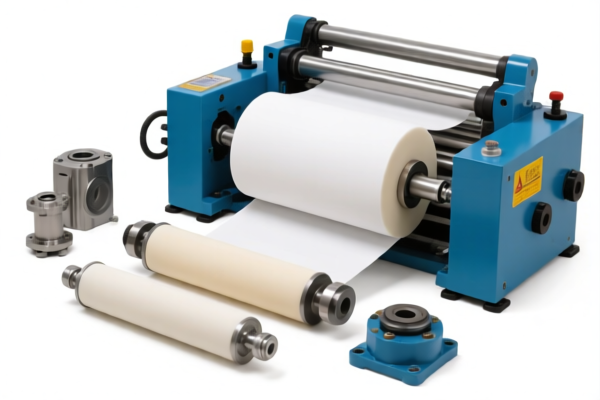
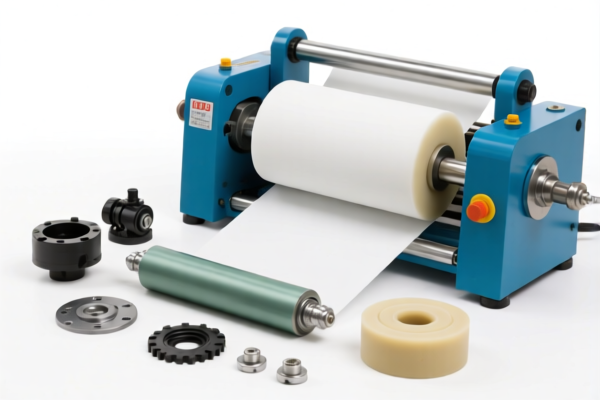
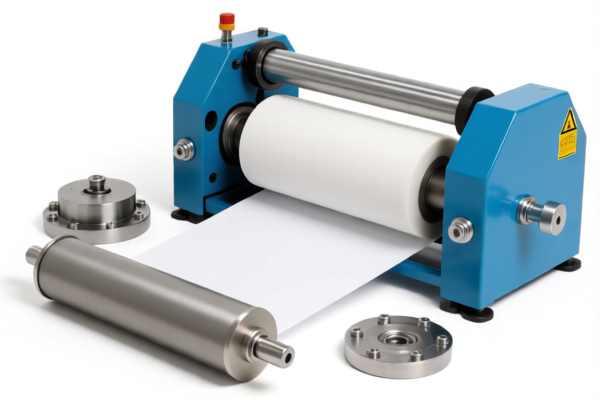
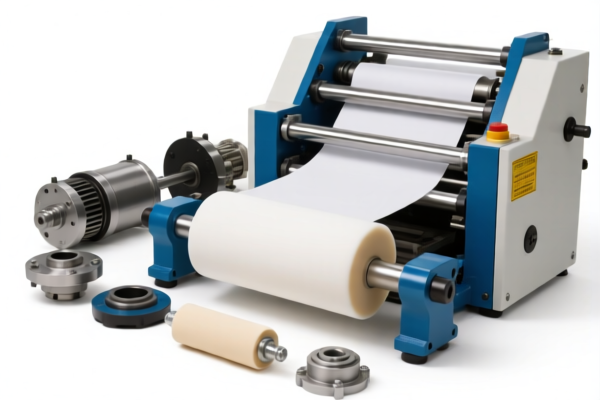
AI Analysis
⚙️ Calender or Roller Components: The High-Stakes Classification Matrix
🌐 HS Code Reference & Clearance Guide | 2026 Latest Tariff Analysis | Critical Compliance Strategy
📌 I. Product Definition & The "Part" Trap: Why Classification is Complex
"Calender or Roller Components" is a generic technical term that masks a critical trade compliance risk. In international trade, "parts" are not classified by what they look like, but by what machine they serve.
A roller part for a paper press (Printing) has a 0% base tariff.
A roller part for a metal smelter or wood processor can trigger a 35–37.8% total tariff.
⚠️ The Critical Distinction:
You cannot simply declare "Calender Part." You must identify the principal machine this component belongs to. Misclassification here triggers severe duty hikes and potential seizures.
📦 II. HS Code Classification Matrix (2026 Authorized Codes)
Based on the provided dataset, there are 5 distinct classification paths. Each leads to a drastically different tax burden.
| HS Code | Product Summary (Principal Machine) | Base Duty | 301/Add'l Duty | Sec 122 Duty | TOTAL TAX |
|---|---|---|---|---|---|
| 8442.50.90.00 | Parts of Printing Cylinders & Components | 0.0% | 7.5% | 10.0% | 17.5% |
| 8479.90.95.60 | Parts of Wood/Fiber Processing Machines | 0.0% | 25.0% | 10.0% | 35.0% |
| 8483.90.80.80 | Parts of Transmission/Mechanical Devices | 2.8% | 25.0% | 10.0% | 37.8% |
| 8479.90.95.65 | Parts of Metal Processing Machinery | 0.0% | 25.0% | 10.0% | 35.0% |
| 8442.40.00.00 | Mechanical Parts of Cylinder/Printing Components | 0.0% | 25.0% | 10.0% | 35.0% |
🔍 Key Observation:
- Best Case:8442.50.90.00(17.5% Total). This applies ONLY if the part is for a printing cylinder assembly.
- Worst Case:8483.90.80.80(37.8% Total). This applies to general transmission parts, which often catch generic roller shafts or bearings incorrectly.
- The "25%" Trap: HS Codes ending in8479and8442.40all have a 25% Section 301/Add'l Duty. This is the most common pitfall for manufacturers claiming "general mechanical parts."
💰 III. Detailed Tariff Breakdown & Legal Basis
✅ Scope: Imports into the USA from China (CN).
✅ Effective Date: Post-November 2025 Rules.
🎯 1. The "Low-Tax" Option: 8442.50.90.00
Description: Parts of printing cylinders and other printing components. * Base Rate: 0.0% * Add'l Duty (Sec 301): 7.5% * Section 122 Duty: 10.0% * Total Effective Rate: 17.5% * Legal Logic: This is the only code in the list with a reduced additional duty (7.5% vs 25%). It is reserved strictly for the printing industry's core components.
🎯 2. The "High-Tax" Printing Option: 8442.40.00.00
Description: Mechanical parts of cylinder printing machines. * Base Rate: 0.0% * Add'l Duty (Sec 301): 25.0% * Section 122 Duty: 10.0% * Total Effective Rate: 35.0% * Warning: Despite being a "printing" component, this specific subheading attracts the full 25% penalty. Do not assume all printing parts get the lower 7.5% rate.
🎯 3. The "Industrial Processing" Options: 8479.90.95.60 & .65
Description: Parts for Wood/Fiber machinery (.60) and Metal Processing machinery (.65).
* Base Rate: 0.0%
* Add'l Duty (Sec 301): 25.0%
* Section 122 Duty: 10.0%
* Total Effective Rate: 35.0%
* Applicability: If your roller is used in a paper mill (wood pulp processing) or a steel mill, you fall here. Note that 8479 is a "catch-all" for other machines, making classification difficult without clear machine documentation.
🎯 4. The "Generic Mechanical" Option: 8483.90.80.80
Description: Parts of transmission shafts, bearings, gears, etc. * Base Rate: 2.8% * Add'l Duty (Sec 301): 25.0% * Section 122 Duty: 10.0% * Total Effective Rate: 37.8% * Risk: This is the highest tax rate in the dataset. It applies if the component is classified as a generic "transmission part" (like a shaft or gear) rather than a specific machine part. Customs often defaults to this if the machine purpose is unclear.
🛠️ IV. Clearance Strategy & Risk Mitigation
✅ 1. Documentation is King (Avoid the 25% Trap)
To qualify for the lower 17.5% rate under 8442.50.90.00, you must prove the part is for a printing cylinder.
| Document | Requirement | Why It Matters |
|---|---|---|
| Technical Drawings | Must show fitment with a printing cylinder assembly. | Proves it is not a generic roller or wood-press part. |
| Bill of Materials (BOM) | List the principal machine model. | Customs needs to link the part to an 8442 machine. |
| User Manual/Manual Excerpt | Highlight the section on "Printing Cylinder Maintenance." | Strongest evidence for HS 8442 classification. |
| Product Photo | Show unique features (e.g., engraving patterns for ink). | Distinguishes from plain rollers used in wood/metal processing. |
✅ 2. Declaration Wording (Precision Matters)
❌ BAD: "Calender Roller Part," "Steel Roller," "Machine Part."
(Result: Customs may default to 8483.90.80.80 @ 37.8%)✅ GOOD: "Precision Steel Part for Offset Printing Cylinder, Model XYZ, Compatible with [Printer Brand] Press."
(Result: Supports classification under 8442.50.90.00 @ 17.5%)
✅ 3. The "Section 122" Reality Check
Regardless of the HS code chosen from the list above, ALL items are subject to a 10% Section 122 duty. * This is a specific trade remedy duty. * It is added on top of the base and 301 tariffs. * No exemptions are listed for this specific 10% in the provided data.
🌍 V. Global Market Comparison (USA Focus)
| Market | HS Code Logic | Approx. Total Duty | Key Risk |
|---|---|---|---|
| 🇺🇸 USA (China Origin) | Strict Machine-Specific Parts | 17.5% – 37.8% | High volatility. Wrong classification = Heavy Penalty. |
| 🇪🇺 EU | Usually 8442 or 8483 | ~0-4% | No Section 122 or 301. Much cheaper if not for US tariffs. |
| 🇨🇳 China (Export) | Variable | Varies | Focus on destination market rules. |
📌 Conclusion: The US market is the most expensive for calender/roller components due to the叠加 (stacking) of Base + Section 301 + Section 122 duties.
📌 VI. Common Mistakes & Blood-Lesson Guide
❌ Mistake 1: Declaring all rollers as "Parts of Printing Machines."
👉 Reality: If it’s for a wood press (like a plywood calender), it’s 8479 → 35.0%.
👉 Fix: Identify the end-use machine, not just the industry.
❌ Mistake 2: Using "Generic Mechanical Part" for shafts/gears.
👉 Reality: This triggers 8483 → 37.8%.
👉 Fix: If it’s integral to a specific machine, declare it as a part of that machine.
❌ Mistake 3: Ignoring Section 122.
👉 Reality: It’s a flat 10% on top of everything.
👉 Fix: Factor this into your FOB/CIF pricing immediately.
🎯 VII. Final Recommendation: Optimize Your Classification
🎯 Strategy for Maximum Savings: 1. Audit your parts: Are they truly for Printing Cylinders (8442.50)? If yes, you save significant duty vs. generic classifications. 2. Document Fitment: Have engineers sign off on drawings showing the part belongs to an 8442 machine. 3. Avoid "Generic" Terms: Never use "Calender Part" in isolation. Always specify "Part for [Specific Machine Type]."
🔹 Golden Rule:
"If it prints, it’s 8442. If it processes metal/wood, it’s 8479. If it just turns, it’s 8483. Choose wisely, or pay 37.8%!"
📣 Immediate Action Item:
📞 Consult your customs broker with the Technical Manual of the principal machine.
🚀 Request a Binding Ruling (US CBP) if the part is new or ambiguous to lock in the lower tax rate.
💼 Do not guess the HS Code—the difference between 17.5% and 37.8% is 20.3% of the value. That is pure profit loss.
✨ Precision Classification. Lower Duties. Faster Clearance.
💼 Your Component’s Destiny is Written in the HS Code.
Customer Reviews
About HS Code Classification
The Harmonized System (HS) is an internationally standardized nomenclature developed by the World Customs Organization (WCO) to classify traded products. Over 200 countries use the HS system as the basis for customs tariffs, trade statistics, and import/export regulations.
Each HS code follows a hierarchical structure:
- Chapter (2 digits) — Broad category of goods (e.g., Chapter 84: Machinery and Mechanical Appliances)
- Heading (4 digits) — More specific grouping within the chapter
- Subheading (6 digits) — Internationally standardized breakdown, used by all WCO member countries
- National subdivisions (8-10 digits) — Country-specific extensions for further classification, such as US HTSUS 10-digit codes
Correct HS code classification is essential for smooth customs clearance, accurate duty payment, and compliance with trade regulations. Misclassification can lead to customs delays, overpayment of duties, or penalties.
When importing from CN to US, the applicable tariff rates may include:
- Most-Favored-Nation (MFN) rate — The standard duty rate applied to WTO members
- General rate — Applied to countries without trade agreements
- Trade remedy duties — Additional tariffs such as Section 301 (anti-dumping), Section 232 (national security), or countervailing duties
The information provided on this page is for reference purposes only. For official classification, please consult with your local customs authority or a licensed customs broker.