Calibrator
CN → US| HS Code | Tariff Rate | Origin | Destination | Doc |
|---|---|---|---|---|
| 9031200000 | 36.7% | CN | US | Official Doc |
| 9027894560 | 35.0% | CN | US | Official Doc |
| 9027504060 | 35.0% | CN | US | Official Doc |
| 8479896500 | 20.3% | CN | US | Official Doc |
| 8479899599 | 87.5% | CN | US | Official Doc |
Product Images
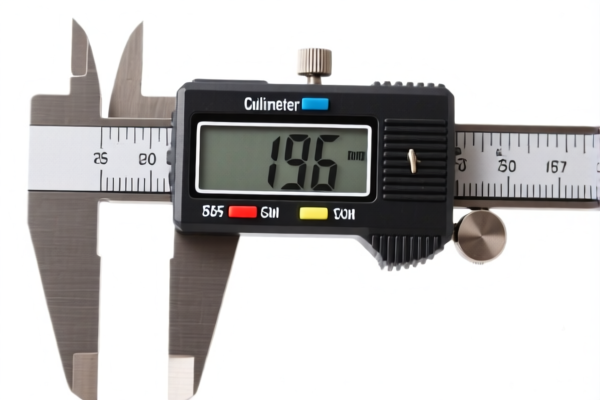
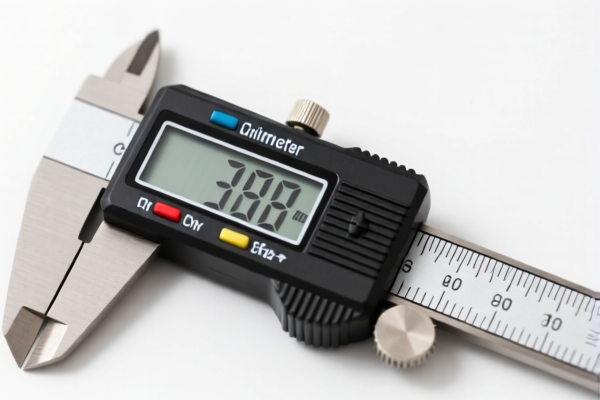
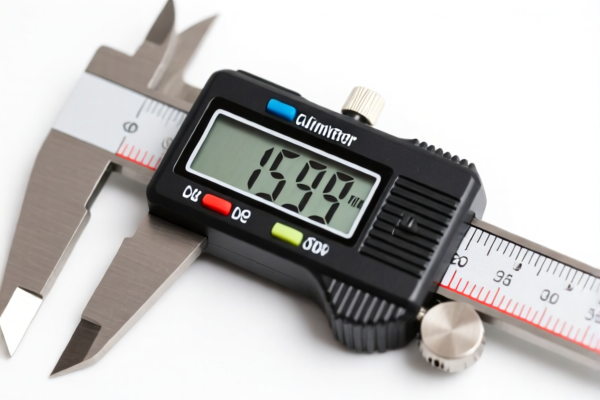
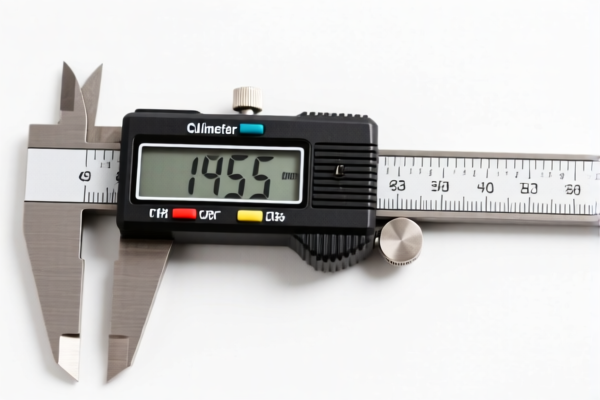
AI Analysis
⚖️ Calibrators: Precision, Control & High-Stakes Tariffs
🌐 HS Code Reference & Clearance Guide | 2026 Latest Tariff Analysis | Professional Customs Strategy
📌 I. Product Definition & Classification: What Exactly is a “Calibrator”?
In industrial and scientific contexts, a Calibrator is a device used to set, adjust, or verify the accuracy of measuring instruments, sensors, or control systems. Unlike simple measuring devices, calibrators often serve as reference standards or control mechanisms.
Internationally, they are classified based on their primary function: - Measurement/Inspection Instruments: If primarily used to measure or calibrate other instruments (e.g., pressure calibrators, electrical calibrators). - Process Control/Industrial Machinery: If primarily used to control a process or machine function (e.g., automated calibration stations, motor-driven control units).
⚠️ Key Distinction:
- If it’s a standalone precision instrument for metrology → Likely Chapter 90 (9031 or 9027).
- If it’s a mechanical/electrical device with independent function → Likely Chapter 84 (8479).
📦 II. HS Code Classification Details (2026 Latest Tariff Alignment)
Based on the provided data, here are the four possible HS Code classifications for "Calibrators," ranked by relevance and tax implications:
| HS Code | Product Description | Functional Attribute | Total Tax Rate (China Origin to US) |
|---|---|---|---|
9031.20.00.00 |
Control/Calibration Equipment (Test Benches & Measuring Instruments) | Metrology & Inspection | 36.7% |
9027.89.45.60 |
Physical Analysis Instruments (Control/Measurement) | Physical Analysis Devices | 35.0% |
9027.50.40.60 |
Electrical Instruments/Devices (Control/Calibration) | Electrical Measurement | 35.0% |
8479.89.65.00 |
Machinery with Independent Function (Motor-driven) | Mechanical/Electrical Control | 20.3% |
8479.89.95.99 |
Machinery & Mechanical Appliances (Generic/Residual) | General Industrial Machinery | 87.5% |
🔍 Critical Insight:
- HS 9031.20.00.00 is the most precise fit for "Calibrators" as a metrology tool.
- HS 8479.89.65.00 offers the lowest tariff but requires the device to be classified as a "machine with independent function" rather than a precision instrument.
- HS 8479.89.95.99 is a dangerous "catch-all" with extremely high tariffs due to steel/aluminum content penalties. Avoid unless no other fit exists.
💰 III. 2026 Tariff Rate Breakdown (Detailed Tax Clauses)
✅ Applicable Country: United States (US)
✅ Origin: China (CN)
✅ Effective Date: Ongoing (including subsequent imports)
🎯 1. 9031.20.00.00 — Control/Calibration Equipment (Recommended for Precision Instruments)
| Item | Detail |
|---|---|
| Base Tariff | 1.7% (Ad Valorem) |
| Section 301 Tariff | +25.0% |
| Section 122 Tariff | +10.0% |
| Total Effective Rate | 36.7% |
| De Minimis Eligibility | ❌ Denied (High risk of seizure/confiscation under Section 321) |
| Legal Basis Path | USITC:9031.20.00.00 → Section 301: Footnote 9903.88.01 → IEEPA:9903.01.25 |
📌 Explanation:
- This code falls under "Inspecting, Testing, Measuring, or Controlling Equipment."
- The 25% Section 301 tariff is the standard penalty for Chinese-origin goods in this category.
- The 10% Section 122 tariff may apply depending on specific trade remedy actions.
- Total: 36.7%. This is a high-cost classification but accurate for true calibration equipment.
🎯 2. 9027.89.45.60 — Physical Analysis Instruments (Control/Measurement)
| Item | Detail |
|---|---|
| Base Tariff | 0.0% |
| Section 301 Tariff | +25.0% |
| Section 122 Tariff | +10.0% |
| Total Effective Rate | 35.0% |
| De Minimis Eligibility | ❌ Denied |
| Legal Basis Path | USITC:9027.89.45.60 → Section 301 → IEEPA |
📌 Explanation:
- If the calibrator is used for physical analysis (e.g., temperature, pressure, gas analysis), this code applies.
- 0% base tariff makes it slightly cheaper than 9031.20, but the 35% total is still significant.
- Suitable for sensor calibration or environmental testing equipment.
🎯 3. 9027.50.40.60 — Electrical Instruments (Control/Calibration)
| Item | Detail |
|---|---|
| Base Tariff | 0.0% |
| Section 301 Tariff | +25.0% |
| Section 122 Tariff | +10.0% |
| Total Effective Rate | 35.0% |
| De Minimis Eligibility | ❌ Denied |
| Legal Basis Path | USITC:9027.50.40.60 → Section 301 → IEEPA |
📌 Explanation:
- Ideal for electrical calibrators (e.g., voltage, current, resistance).
- No base tariff makes it competitive, but the 301/122 surcharges dominate the cost.
- Ensure the device is primarily electrical and not mechanical.
🎯 4. 8479.89.65.00 — Machinery with Independent Function (Lowest Tax Option)
| Item | Detail |
|---|---|
| Base Tariff | 2.8% |
| Section 301 Tariff | +7.5% |
| Section 122 Tariff | +10.0% |
| Total Effective Rate | 20.3% |
| De Minimis Eligibility | ❌ Denied |
| Legal Basis Path | USITC:8479.89.65.00 → Section 301 (Lower Bracket) → IEEPA |
📌 Explanation:
- This is the most cost-effective classification IF the device can be argued as a "machine with independent function" (e.g., an automated calibration station with motors and mechanical actuators) rather than a precision instrument.
- Lower Section 301 rate (7.5%) vs. 25% for Chapter 90 codes.
- Risk: Customs may reclassify it as a measuring instrument (Chapter 90) if it lacks mechanical independence.
🎯 5. 8479.89.95.99 — Generic Machinery (Avoid This!)
| Item | Detail |
|---|---|
| Base Tariff | 2.5% |
| Section 301 Tariff | +25.0% |
| Section 122 Tariff | +10.0% |
| Steel/Aluminum Penalty | +50.0% |
| Total Effective Rate | 87.5% |
| De Minimis Eligibility | ❌ Denied |
| Legal Basis Path | USITC:8479.89.95.99 → Section 301 → IEEPA → Steel/Aluminum Tariffs |
🚫 WARNING:
- This is a residual code for machinery not specified elsewhere.
- The 50% additional tariff on steel/aluminum content makes this prohibitively expensive.
- Never use this code unless the device is purely mechanical with no electrical control and no precision measurement function.
🛠️ IV. Clearance Practical Advice (Battle-Tested Strategies)
✅ 1. Documentation Checklist (Non-Negotiable)
| Document | Required? | Notes |
|---|---|---|
| ✅ Product Specification Sheet | ✔️ | Must clearly state: "Calibration Function," "Measurement Range," "Accuracy" |
| ✅ Circuit Diagram/Block Diagram | ✔️ | Proves if it’s an electronic instrument (Ch 90) or machine (Ch 84) |
| ✅ Product Photos | ✔️ | Show all ports, display screens, mechanical parts |
| ✅ Third-Party Calibration Certificate | ✔️ | Validates the device’s purpose as a "calibrator" |
| ✅ Commercial Invoice | ✔️ | Use precise description: "Electronic Calibrator, Model XYZ, for Precision Measurement" |
| ✅ Country of Origin Certificate | ✔️ | Essential for 301/122 tariff calculation |
✅ 2. Classification Strategy (Key Decision Matrix)
🔥 “Function Dictates Code, Code Dictates Cost!”
| Scenario | Recommended HS Code | Why? |
|---|---|---|
| Precision Electronic Calibrator (e.g., multimeter calibrator) | 9027.50.40.60 |
Fits "Electrical Instrument" definition. 35% tax. |
| Physical Parameter Calibrator (e.g., pressure, temp) | 9027.89.45.60 |
Fits "Physical Analysis Instrument." 35% tax. |
| General Calibration/Test Bench | 9031.20.00.00 |
Fits "Test Bench" & "Control/Calibration." 36.7% tax. |
| Automated Calibration Machine (Motor-driven, robotic) | 8479.89.65.00 |
Argue "Independent Mechanical Function." 20.3% tax. |
| Generic Mechanical Device (No precision, no electronics) | 8479.89.95.99 |
❌ Avoid. 87.5% tax. |
📌 Pro Tip:
- If the device has motors, gears, or robotic arms performing calibration, push for HS 8479.89.65.00.
- If it’s a static reference standard (e.g., a voltage source), stick to HS 9027/9031.
✅ 3. Special Case Handling
| Scenario | Action |
|---|---|
| OEM Calibration Station | Provide customer specs + automation diagrams to support HS 8479 classification. |
| Hybrid Device (Measure + Control) | Argue primary function. If control dominates → HS 8479. If measurement dominates → HS 9031. |
| Low-Value Samples | ❌ No De Minimis Exemption. Even $1 items are subject to 20-36% tariffs. |
| Steel/Aluminum Content | Avoid HS 8479.89.95.99. Ensure minimal ferrous materials if possible. |
🌍 V. Global Market Comparison (2026 Update)
| Market | Recommended HS Code | Effective Tariff | Notes |
|---|---|---|---|
| 🇺🇸 USA | 9031.20.00.00 or 8479.89.65.00 |
36.7% or 20.3% | High 301/122 tariffs. Pre-ruling recommended. |
| 🇨🇳 China | 9031.20.00.00 |
~5-10% | No Section 301. Lower cost. |
| 🇪🇺 EU | 9031.20.00.00 |
~0-2.5% | No punitive tariffs. CE marking required. |
| 🇬🇧 UK | 9031.20.00.00 |
~0-2.5% | Post-Brexit tariffs apply. UKCA marking. |
| 🇯🇵 Japan | 9031.20.00.00 |
~0-3% | Low tariffs. JIS certification helpful. |
📌 Conclusion:
- USA is the most expensive market due to 301/122 tariffs.
- EU/UK/Japan offer significantly lower costs. Consider supply chain diversification if US market is primary.
📌 VI. Common Mistakes & Pitfalls (Learn from Others’ Errors)
❌ Mistake 1: Declaring a precision calibrator as "Machine Tool" (HS 8466)
👉 Result: Customs reclassification to HS 9031 → Back taxes + penalties.
❌ Mistake 2: Using HS 8479.89.95.99 to avoid higher tariffs
👉 Result: 87.5% tariff due to steel/aluminum penalty. Disaster.
❌ Mistake 3: Ignoring Section 122 tariffs
👉 Result: Underestimating total cost by 10%. Budget accordingly.
❌ Mistake 4: Failing to provide circuit diagrams
👉 Result: Customs assumes "general machinery" → Higher duty or delay.
✅ Best Practice:
"Electronic Calibrator, Model XYZ, 0.1% Accuracy, for Voltage/Current Measurement, FCC Certified, CN Origin"
🎯 VII. Final Recommendations: Save Money, Clear Faster
🎯 Strategic Takeaways: 1. Pre-Rule: Apply for CBP Advance Ruling for HS 8479.89.65.00 if the device has mechanical components. Save ~16% in tariffs. 2. Documentation: Always include functional descriptions that emphasize "control" or "mechanical automation" if targeting Chapter 84. 3. Cost Planning: Budget 36.7% for precision instruments or 20.3% for automated machines. Do not assume 0% base tariff means low total cost. 4. Supply Chain: If targeting the US, consider final assembly in Vietnam/Mexico to avoid Section 301/122 tariffs (if origin rules permit).
📣 Immediate Action:
📞 Consult a Customs Broker to file for a Pre-Classification Ruling.
📄 Prepare Technical Datasheets highlighting functional autonomy.
🚀 Optimize your supply chain to mitigate 301/122 tariff impacts.
✨ Precision Classification = Precision Savings!
💼 Your Profit Margin Depends on Your HS Code Accuracy!
Customer Reviews
About HS Code Classification
The Harmonized System (HS) is an internationally standardized nomenclature developed by the World Customs Organization (WCO) to classify traded products. Over 200 countries use the HS system as the basis for customs tariffs, trade statistics, and import/export regulations.
Each HS code follows a hierarchical structure:
- Chapter (2 digits) — Broad category of goods (e.g., Chapter 84: Machinery and Mechanical Appliances)
- Heading (4 digits) — More specific grouping within the chapter
- Subheading (6 digits) — Internationally standardized breakdown, used by all WCO member countries
- National subdivisions (8-10 digits) — Country-specific extensions for further classification, such as US HTSUS 10-digit codes
Correct HS code classification is essential for smooth customs clearance, accurate duty payment, and compliance with trade regulations. Misclassification can lead to customs delays, overpayment of duties, or penalties.
When importing from CN to US, the applicable tariff rates may include:
- Most-Favored-Nation (MFN) rate — The standard duty rate applied to WTO members
- General rate — Applied to countries without trade agreements
- Trade remedy duties — Additional tariffs such as Section 301 (anti-dumping), Section 232 (national security), or countervailing duties
The information provided on this page is for reference purposes only. For official classification, please consult with your local customs authority or a licensed customs broker.