Camcorder
CN → US| HS Code | Tariff Rate | Origin | Destination | Doc |
|---|---|---|---|---|
| 8525893000 | 35.0% | CN | US | Official Doc |
| 8543706000 | 35.0% | CN | US | Official Doc |
| 8525895050 | 35.0% | CN | US | Official Doc |
| 9013809100 | 22.0% | CN | US | Official Doc |
| 9013105000 | 22.8% | CN | US | Official Doc |
Product Images
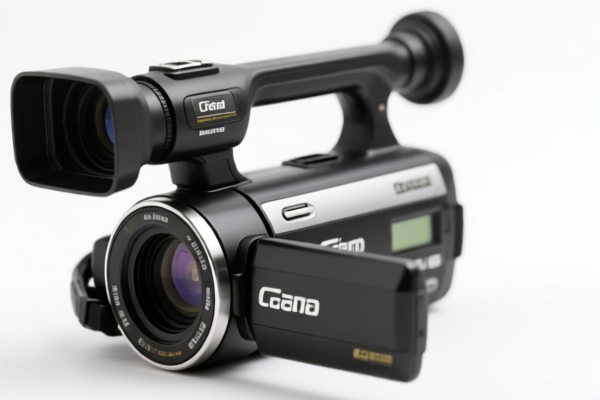
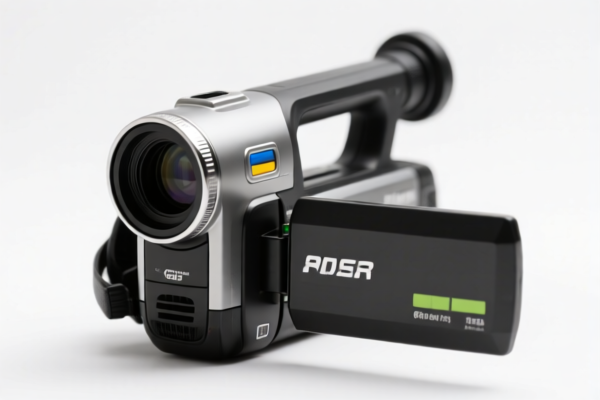
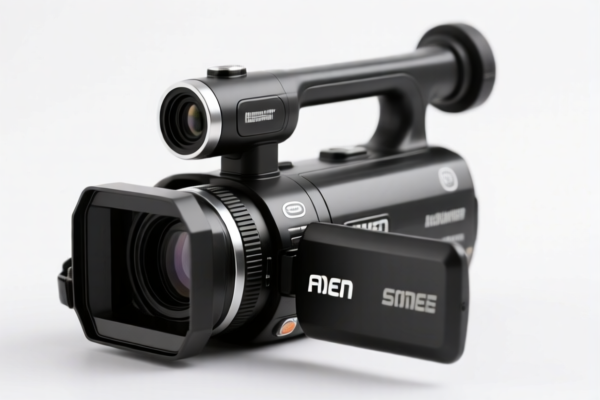
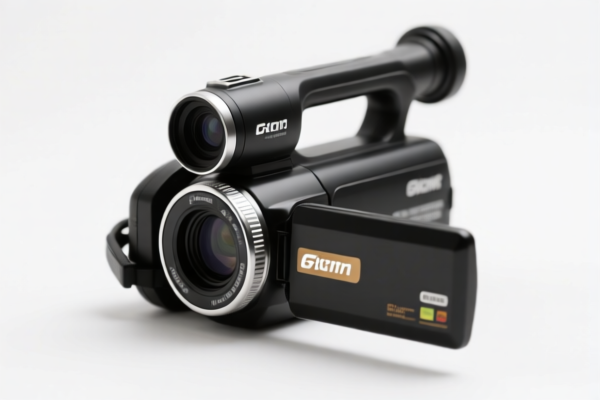
AI Analysis
📷 Camcorder (Video Cameras / Imaging Devices)
🌐 HS Code Reference & Customs Clearance Guide | 2026 Latest Tariff Analysis | Professional Entry Strategy
📌 Part 1: Product Definition & Classification: What Exactly is a "Camcorder"?
A camcorder, in the context of international trade, is generally defined as an imaging acquisition device. It is not a single, rigidly defined category but rather a functional device that can be classified differently depending on its internal components, primary function, and technical architecture.
In US Customs and Border Protection (CBP) terminology, the classification hinges on whether the device is viewed primarily as: 1. Image Acquisition Hardware (Electronic/Video Equipment): Focusing on the sensor and electronic circuitry. 2. Optical Instrumentation (Optical Equipment): Focusing on the lens, light transmission, and optical mechanics.
⚠️ Key Distinction Point:
- If the device is described as a "camera," "webcam," or "video capture module" with emphasis on electronic imaging sensors (CMOS/CCD) → It tends toward Chapter 85 (Electrical Machinery).
- If the device is described as an "optical instrument," "lens assembly," or "imaging apparatus" with emphasis on optical precision and light control → It tends toward Chapter 90 (Optical Instruments).
📦 Part 2: HS Code Classification Details (2026 Latest Tariff Authorities)
Based on the provided data, here are the 6 specific HS Codes identified for Camcorders/Imaging Devices, along with their logical justifications:
| HS Code | Product Description & Logic | Primary Classification Basis |
|---|---|---|
8525.89.30.00 |
Imaging Acquisition Device: Classified as an image capture device, consistent with TV camera usage, implying both optical and electronic components. | Chapter 85: Electronic/Video Equipment |
8543.70.60.00 |
Electronic Imaging Apparatus: Considered an appliance requiring connection to a specific network or instrument, treating it as a general electrical apparatus. | Chapter 85: Electrical Machinery/Apparatus |
8525.89.50.50 |
Broadcast/Transmission Camera: Classified as an image capture device fitting the definition of broadcast or TV transmission equipment/cameras. | Chapter 85: Broadcasting Equipment |
9013.80.91.00 |
Optical Imaging Equipment: Classified as an optical instrument within the category of "Lasers and other optical appliances," focusing on optical properties. | Chapter 90: Optical Instruments |
9013.10.50.00 |
Other Optical Appliances: A "catch-all" category for other optical devices, fitting the definition of general optical imaging equipment. | Chapter 90: Optical Instruments (Catch-all) |
8543.70.98.60 |
Independent Electronic Device: Treated as a machine/device with independent functions, compatible with "Other machines and apparatus." | Chapter 85: Other Electrical Machinery |
🔍 Critical Observation:
- The classification is highly dependent on the technical description provided in the commercial invoice and product specs.
- Chapter 85 codes (8525,8543) generally attract higher total tariffs (35%-37.6%) due to significant trade remedy duties (Section 301 & IEEPA).
- Chapter 90 codes (9013) attract lower total tariffs (22%-22.8%), as the optical duty rates are lower, though still subject to additional levies.
💰 Part 3: 2026 Latest Tariff Rate Breakdown (Detailed)
✅ Applicable Country: United States (US)
✅ Country of Origin: China (CN)
✅ Effective Time: 2025-11-10 onwards (including subsequent imports)
🎯 1. High-Tariff Group: Chapter 85 (Electronic/Video Focus)
These codes carry the highest tax burden due to the combination of Section 301 tariffs and IEEPA tariffs.
A. 8525.89.30.00 & 8525.89.50.50 (Imaging/Broadcast Cameras)
B. 8543.70.60.00 (Electronic Imaging Apparatus)
C. 8543.70.98.60 (Independent Electronic Device)
| Item | Content |
|---|---|
| Basic Duty Rate | 0.0% (for 8525/8543 types) OR 2.6% (for 8543.70.98.60) |
| Section 301 Additional Duty | +25.0% (Uniformly applied across these codes) |
| IEEPA Additional Duty | +10.0% (Against Chinese/HK products, effective Nov 2025) |
| Total Tax Rate | 35.0% (for Basic 0%) 37.6% (for Basic 2.6%) |
| Tax Calculation | CIF Value × 35.0% or 37.6% |
| De Minimis Exemption | ❌ NOT Eligible (deny_de_minimis) |
📌 Explanation:
- The 25% is the standard USITC Section 301 tariff for Chinese electrical machinery.
- The 10% is the IEEPA tariff.
- Total 35%-37.6% is a very high barrier. Proper classification is critical to avoid overpayment, but also to avoid misclassification penalties.
🎯 2. Lower-Tariff Group: Chapter 90 (Optical Focus)
These codes benefit from lower base tariffs, resulting in a significantly lower total tax burden.
A. 9013.80.91.00 (Other Optical Appliances)
B. 9013.10.50.00 (Other Optical Appliances - Catch-all)
| Item | Content |
|---|---|
| Basic Duty Rate | 4.5% (for 9013.80.91.00) 5.3% (for 9013.10.50.00) |
| Section 301 Additional Duty | +7.5% (Note: Optics often have a reduced 301 rate compared to electronics) |
| IEEPA Additional Duty | +10.0% (Applied to Chinese products) |
| Total Tax Rate | 22.0% (for Basic 4.5%) 22.8% (for Basic 5.3%) |
| Tax Calculation | CIF Value × 22.0% or 22.8% |
| De Minimis Exemption | ❌ NOT Eligible (deny_de_minimis) |
📌 Explanation:
- The key difference is the Section 301 rate. For many optical instruments, the additional duty is only 7.5% instead of 25%.
- Combined with the 10% IEEPA tax, the total is ~22%, which is ~13-15 percentage points lower than the electronic classification.
- Strategy: If the camcorder can be legally justified as an "optical instrument" rather than an "electronic machine," this offers substantial savings.
🛠️ Part 4: Customs Clearance Practical Advice (Pitfall Avoidance)
✅ 1. Preparation Checklist (Missing Documents = Delays)
| Document | Required | Explanation |
|---|---|---|
| ✅ Product Specification Sheet | ✔️ | Must detail sensor type (CMOS/CCD), lens specs, resolution, and whether it includes video processing units. |
| ✅ Circuit Diagram / Schematic | ✔️ | Critical for distinguishing between 85 (Electronic) and 90 (Optical). If the circuit is complex and video-processing heavy, 85 is more likely. |
| ✅ Product Photos (Clear) | ✔️ | Show the device, ports, and label. Helps CBP verify it's a "camera" and not a toy or a simple lens. |
| ✅ Third-Party Test Reports | ✔️ | FCC, CE, RoHS, or UL reports. |
| ✅ Commercial Invoice | ✔️ | Must clearly state "Camcorder" or "Video Camera." Avoid vague terms like "Device" or "Gadget." |
| ✅ Certificate of Origin (CO) | ✔️ | Required to apply IEEPA and Section 301 duties correctly. |
✅ 2. Declaration Strategy (Key Mantras)
🔥 “Function Dictates Code, Optics vs. Electronics, Choose Wisely!”
| Scenario | Recommended HS Code | Risk if Misclassified |
|---|---|---|
| Standard Digital Camcorder (Video processing + Lens) | 8525.89.30.00 or 8525.89.50.50 |
If declared as 9013, risk of penalty for misclassification (Electronics > Optics). |
| Webcam / Capture Device (Connects to PC) | 8543.70.60.00 |
Low risk, but high tax (35%). |
| High-End Optical Camera (Emphasis on Lens/Mechanics) | 9013.80.91.00 |
If declared as 8525, you overpay tax. If 9013 is rejected, you pay back taxes + interest. |
| Industrial Imaging Sensor (No housing) | 8543.70.98.60 |
Often used for modular components. |
💡 Pro Tip:
- CBP Pre-Ruling: Given the large difference between 22% and 37.6%, it is highly recommended to apply for a Binding Ruling from US CBP if the product is on the borderline between Optical and Electronic.
- Description Matters: If you want to argue for9013, your marketing materials and specs should emphasize optical precision, lens quality, and imaging physics, not just "digital video recording."
✅ 3. Special Cases
| Case | Handling Advice |
|---|---|
| Hybrid Devices (e.g., Action Cameras with WiFi) | Still likely 8525 because of the primary function of video capture + digital transmission. |
| Professional Broadcast Cameras | Definitely 8525.89.50.50 (Broadcast equipment). |
| Simple USB Webcams | Likely 8543.70.60.00 or 8525.89.30.00. |
🌍 Part 5: Global Market Comparison (2026)
| Market | Recommended HS Code | Est. Tariff (China Origin) | Notes |
|---|---|---|---|
| 🇺🇸 USA | 8525 or 9013 |
22% - 37.6% | Heavy Section 301 & IEEPA taxes. Optical (9013) is cheaper. |
| 🇨🇳 China | 8525 |
~5-10% | No Section 301. Standard import duties. |
| 🇪🇺 EU | 8525 |
0-5% | No IEEPA/301. Standard CET applies. |
| 🇯🇵 Japan | 8525 |
0-3% | Free trade agreements may apply. |
📌 Conclusion:
- The US market is the most expensive for Chinese camcorders due to the 35-37.6% tariff wall for electronic classifications.
- Optical classification (9013) saves roughly 13-15% in duties.
- Compliance is key: Misclassification can lead to severe penalties.
📌 Part 6: Common Mistakes & Pitfalls
❌ Mistake 1: Declaring a complex digital camcorder as "Optical Instrument" (9013) without strong technical justification.
👉 Result: CBP rejects, reclassifies to 8525, and charges back taxes + interest.
❌ Mistake 2: Assuming "Webcam" is cheap.
👉 Result: Webcams often fall under 8543.70.60.00 with a 35% total tax rate.
❌ Mistake 3: Ignoring IEEPA 10%.
👉 Result: Even if Section 301 is lower for optics, the 10% IEEPA is always added for Chinese goods.
✅ Correct Approach:
"Digital Video Camera, Model XYZ, CMOS Sensor, 4K Resolution, with Interchangeable Lens, FCC Certified"
🎯 Part 7: Conclusion: Professional Declaration for Cost Savings
🎯 Remember:
🔹 "Optics vs. Electronics: The 13% Difference!"
🔹 "37.6% is the Electronic Trap; 22% is the Optical Opportunity."
🔹 "Pre-Ruling is Worth Every Penny."
📌 Small Tip:
If your camcorder has advanced video processing capabilities, it is safer to declare under Chapter 85. If it is a professional optical device where the lens and sensor are the primary value drivers, argue for Chapter 90.
📣 Immediate Action:
📞 Contact a licensed customs broker.
📄 Provide detailed technical specs emphasizing optical components if aiming for9013.
🚀 Optimize your tariff code and save significant costs!
✨ Professional Customs Clearance Starts with Precise Classification!
💼 Every percentage point counts in your profit margin!
Customer Reviews
About HS Code Classification
The Harmonized System (HS) is an internationally standardized nomenclature developed by the World Customs Organization (WCO) to classify traded products. Over 200 countries use the HS system as the basis for customs tariffs, trade statistics, and import/export regulations.
Each HS code follows a hierarchical structure:
- Chapter (2 digits) — Broad category of goods (e.g., Chapter 84: Machinery and Mechanical Appliances)
- Heading (4 digits) — More specific grouping within the chapter
- Subheading (6 digits) — Internationally standardized breakdown, used by all WCO member countries
- National subdivisions (8-10 digits) — Country-specific extensions for further classification, such as US HTSUS 10-digit codes
Correct HS code classification is essential for smooth customs clearance, accurate duty payment, and compliance with trade regulations. Misclassification can lead to customs delays, overpayment of duties, or penalties.
When importing from CN to US, the applicable tariff rates may include:
- Most-Favored-Nation (MFN) rate — The standard duty rate applied to WTO members
- General rate — Applied to countries without trade agreements
- Trade remedy duties — Additional tariffs such as Section 301 (anti-dumping), Section 232 (national security), or countervailing duties
The information provided on this page is for reference purposes only. For official classification, please consult with your local customs authority or a licensed customs broker.