Camera Shell
CN → US| HS Code | Tariff Rate | Origin | Destination | Doc |
|---|---|---|---|---|
| 3926905000 | 21.3% | CN | US | Official Doc |
| 3926909989 | 22.8% | CN | US | Official Doc |
| 9006910001 | 23.3% | CN | US | Official Doc |
| 9006990000 | 21.4% | CN | US | Official Doc |
| 8473309100 | 35.0% | CN | US | Official Doc |
Product Images

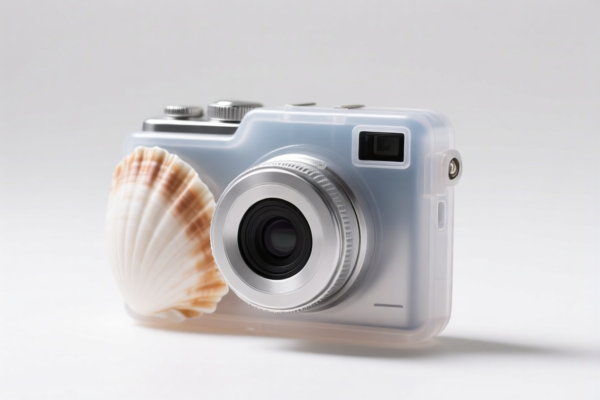


AI Analysis
📸 Camera Shell (Plastic Housing/Casing)
🌐 HS Code Reference & Customs Clearance Guide | 2024/2025 Latest Tariff Analysis | Professional-Level Strategy
📌 I. Product Definition & Classification: What Exactly Is a "Camera Shell"?
A Camera Shell refers to the external protective casing, housing, or cover of a camera. In international trade, its classification depends heavily on whether it is considered a "Plastic Article" in its own right or a "Part/Accessory" of the camera itself.
⚠️ Key Distinction Point:
- If the shell is a generic plastic component not specifically designed for a particular machine (or classified under general plastic goods) →归入 Chapter 39 (Plastics).
- If the shell is a specific part/attachment of a camera (optical equipment or machine) →归入 Chapter 90 (Optical/Medical) or Chapter 84 (Machinery).
📦 II. HS Code Classification Details (2024/2025 Latest Tariff Concordance)
| HS Code | Product Description | Application Scenario | Total Tax Rate* | Tax Breakdown |
|---|---|---|---|---|
3926.90.50.00 |
Plastic camera shell; classified as "Other articles of plastics". Generic plastic casing. | Generic plastic covers, non-specific plastic housing. | 21.3% | Base: 3.8% Add-on (301): 7.5% Section 122: 10% |
3926.90.99.89 |
Plastic camera shell; classified under the fallback category for other plastic articles. | Generic plastic parts not meeting specific sub-headings. | 22.8% | Base: 5.3% Add-on (301): 7.5% Section 122: 10% |
9006.91.00.01 |
Plastic camera shell; classified as a Part/Accessory of a Camera. | Specific housing designed for optical cameras (9006). | 23.3% | Base: 5.8% Add-on (301): 7.5% Section 122: 10% |
9006.99.00.00 |
Plastic camera shell; classified as Other Parts/Accessories for cameras. | Fallback category for camera parts/accessories. | 21.4% | Base: 3.9% Add-on (301): 7.5% Section 122: 10% |
8473.30.91.00 |
Plastic camera shell; classified as a Part of Automatic Data Processing Machines (8471). | Camera integrated with computing machinery (e.g., digital camera bodies with mainboards). | 35.0% | Base: 0.0% Add-on (301): 25.0% Section 122: 10% |
🔍 Critical Insight:
- Lowest Base Tax:8473.30.91.00has 0% base, but suffers from a massive 25% Section 301 Add-on, leading to the highest total rate (35%).
- Most Common for Pure Plastic:3926.90.50.00offers a balance of low base tax (3.8%) and moderate add-ons.
- Risk of High Rates: Misclassifying a camera part as a "computer part" (8473) can double your costs due to the 25% penalty rate.
💰 III. 2024/2025 Latest Tariff Rate Breakdown (Including Surcharges & Policy Add-ons)
✅ Applicable Country: United States (US)
✅ Country of Origin: China (CN)
✅ Effective Time: Current tariffs apply (Section 301 & Section 122).
🎯 1. 3926.90.50.00 —— Plastic Camera Shell (General Plastic Article)
| Item | Detail |
|---|---|
| Base Duty | 3.8% (ad valorem) |
| USITC Add-on (Section 301) | +7.5% |
| Section 122 Surcharge | +10% |
| Total Effective Rate | 21.3% |
| Calculation Method | CIF Value × 21.3% |
| De Minimis Eligibility | ❌ No (Subject to full duty) |
| Legal Path | USITC:3926.90.50.00 → Section 301 → Section 122 |
📌 Analysis:
- This is often the most cost-effective classification for pure plastic housings that are not uniquely designed for a specific high-value optical system.
- The base tax is very low (3.8%), making it attractive for high-volume, low-margin plastic goods.
🎯 2. 3926.90.99.89 —— Plastic Camera Shell (Fallback Plastic Category)
| Item | Detail |
|---|---|
| Base Duty | 5.3% |
| USITC Add-on (Section 301) | +7.5% |
| Section 122 Surcharge | +10% |
| Total Effective Rate | 22.8% |
| Calculation Method | CIF Value × 22.8% |
| De Minimis Eligibility | ❌ No |
| Legal Path | USITC:3926.90.99.89 → Section 301 → Section 122 |
📌 Analysis:
- Slightly higher base tax than 3926.90.50.00. Use this only if the product doesn’t fit the specific description of 3926.90.50.00.
🎯 3. 9006.91.00.01 & 9006.99.00.00 —— Parts of Cameras (Optical Equipment)
| Item | Detail |
|---|---|
| Base Duty | 5.8% (9006.91) or 3.9% (9006.99) |
| USITC Add-on (Section 301) | +7.5% |
| Section 122 Surcharge | +10% |
| Total Effective Rate | 23.3% (9006.91) or 21.4% (9006.99) |
| Calculation Method | CIF Value × Rate |
| De Minimis Eligibility | ❌ No |
📌 Analysis:
- Classifying as a camera part implies it is essential to the function of an optical camera.
-9006.99.00.00(21.4%) is very competitive, nearly matching the best plastic rate, but carries higher risk if the shell is deemed "generic."
🎯 4. 8473.30.91.00 —— Part of Automatic Data Processing Machines
| Item | Detail |
|---|---|
| Base Duty | 0.0% |
| USITC Add-on (Section 301) | +25.0% |
| Section 122 Surcharge | +10% |
| Total Effective Rate | 35.0% |
| Calculation Method | CIF Value × 35.0% |
| De Minimis Eligibility | ❌ No |
📌 WARNING:
- This is the highest cost option.
- Only use if the "camera shell" is strictly defined as a part of a computer/server/mainframe system (e.g., internal chassis for a specialized imaging computer).
- The 25% Section 301 penalty makes this highly undesirable for standard camera shells.
🛠️ IV. Customs Clearance Practical Advice (Battle-Tested Pitfall Avoidance)
✅ 1. Required Documentation Checklist (Non-Negotiable)
| Document | Mandatory? | Explanation |
|---|---|---|
| ✅ Product Specifications | ✔️ | Must detail material (Plastic), dimensions, and non-functionality (i.e., it has no electronics). |
| ✅ Technical Drawings | ✔️ | Show that the shell is a passive component, not an active electronic part. |
| ✅ Clear Photos | ✔️ | Show the shell alone, without cameras or electronic boards inside. |
| ✅ Commercial Invoice | ✔️ | Description should match HS Code (e.g., "Plastic Camera Housing, Not Electronic"). |
| ✅ Packing List | ✔️ | Ensure no mixed shipments with electronic parts that could trigger reclassification to 8473 or 9006. |
✅ 2. Declaration Strategy (Key Mantra)
🔥 "Plastic is Plastic, Parts are Parts. Don't mix Chips with Cases!"
| Scenario | Correct Declaration | Wrong Practice |
|---|---|---|
| Generic Plastic Shell | 3926.90.50.00 |
Misdeclaring as "Camera Part" → Higher scrutiny |
| Specific Camera Housing | 9006.99.00.00 |
Misdeclaring as "Plastic Toy" → Fraud risk |
| Shell for Computer/Server | 8473.30.91.00 (Only if applicable) |
Using 8473 for standard digital cameras → 35% Tax! |
| Mixed Shipment (Shell + PCB) | Split Declaration | Packing shell and PCB together → Entire shipment may be taxed at highest rate |
✅ 3. Special Circumstances Handling
| Situation | Handling Advice |
|---|---|
| OEM Custom Shells | Provide design drawings to prove specificity. If it fits only one camera model, 9006 is safer but requires proof. |
| Shell with Electronics | If it contains a battery, LED, or circuit, it is NOT a shell under Chapter 39. It becomes an electronic device. |
| Kit Assembly | If shipping shell + camera body together, declare as Camera (9006.xx.00) under the main product rule. |
🌍 V. Global Main Market Comparison (2024/2025 Latest)
| Country/Region | Recommended HS Code | Tariff (Approx.) | Certification | Remarks |
|---|---|---|---|---|
| 🇺🇸 USA | 3926.90.50.00 or 9006.99.00.00 |
21.3% - 21.4% | FCC (if electronic), RoHS | Section 301 & 122 apply. Avoid 8473 (35%). |
| 🇨🇳 China | 3926.90.50.00 |
5-8% | CCC (if applicable) | No Section 301 penalties. |
| 🇪🇺 EU | 3926.90.99 or 9006.99 |
0-4% (often 0) | CE, RoHS | No high add-ons like US. |
| 🇬🇧 UK | 3926.90.99 |
4-6% | UKCA, RoHS | Post-Brexit rules apply. |
| 🇯🇵 Japan | 3926.90.99 or 9006.99 |
5-10% | PSE (if electronic) | Stable tariff environment. |
📌 Conclusion:
- USA is the most complex market due to Section 301 and Section 122.
- Optimization Goal: In the US, strive for3926.90.50.00(21.3%) or9006.99.00.00(21.4%).
- Avoid8473.30.91.00unless you are 100% sure the product is a part of a computer, not a camera.
📌 VI. Common Errors & Pitfall Guide (Lessons from Blood & Tears)
❌ Mistake 1: Classifying a digital camera body shell as 8473.30.91.00 (Computer Part)
👉 Consequence: You pay 35% instead of ~21%. Loss of 14% margin!
❌ Mistake 2: Declaring a specialized lens hood as "Plastic Article" (3926) when it's a Camera Part (9006)
👉 Consequence: Low risk, but if audited, you may face penalties for misclassification. However, tax difference is minimal (~1-2%).
❌ Mistake 3: Mixing Shells with Electronic Modules in one HS Code
👉 Consequence: Customs may reclassify the entire batch as an Electronic Device, potentially triggering higher duties or import licenses.
✅ Correct Approach:
"Plastic Camera Housing, Unpainted, No Electronic Components, Model XYZ, For Use With Digital Camera ABC"
🎯 VII. Conclusion: Professional Declaration, Save Cost, Ensure Compliance!
🎯 Remember the Mantra:
🔹 "Plastic Shell = Chapter 39 (Low Base); Camera Part = Chapter 90 (Safe); Computer Part = Chapter 84 (High Penalty)."
🔹 "Section 301 is the Killer. Avoid 25% Add-on at all costs!"
🔹 "HS Code Defines Your Tax. One Wrong Digit, Thousands Lost."
📌 Pro Tip:
If your camera shell is exported to the US, consider applying for an Exclusion under Section 301 if available (though currently limited for plastics), or ensure your supply chain origin is not China to bypass the 7.5%-25% add-ons.
📣 Immediate Action:
📞 Contact a Professional Customs Broker + Provide Product Photos + Apply for Advance Ruling (ACE) if value is high.
🚀 Let your camera shells pass through smoothly, legally, and profitably!
✨ Professional Clearance Starts with Accurate Classification!
💼 Every Percent of Tax Saved is Pure Profit!
Customer Reviews
About HS Code Classification
The Harmonized System (HS) is an internationally standardized nomenclature developed by the World Customs Organization (WCO) to classify traded products. Over 200 countries use the HS system as the basis for customs tariffs, trade statistics, and import/export regulations.
Each HS code follows a hierarchical structure:
- Chapter (2 digits) — Broad category of goods (e.g., Chapter 84: Machinery and Mechanical Appliances)
- Heading (4 digits) — More specific grouping within the chapter
- Subheading (6 digits) — Internationally standardized breakdown, used by all WCO member countries
- National subdivisions (8-10 digits) — Country-specific extensions for further classification, such as US HTSUS 10-digit codes
Correct HS code classification is essential for smooth customs clearance, accurate duty payment, and compliance with trade regulations. Misclassification can lead to customs delays, overpayment of duties, or penalties.
When importing from CN to US, the applicable tariff rates may include:
- Most-Favored-Nation (MFN) rate — The standard duty rate applied to WTO members
- General rate — Applied to countries without trade agreements
- Trade remedy duties — Additional tariffs such as Section 301 (anti-dumping), Section 232 (national security), or countervailing duties
The information provided on this page is for reference purposes only. For official classification, please consult with your local customs authority or a licensed customs broker.