Camo Netting
CN → US| HS Code | Tariff Rate | Origin | Destination | Doc |
|---|---|---|---|---|
| 6310102010 | 17.5% | CN | US | Official Doc |
| 6310102020 | 17.5% | CN | US | Official Doc |
| 6307909891 | 24.5% | CN | US | Official Doc |
| 6307908995 | 17.0% | CN | US | Official Doc |
Product Images
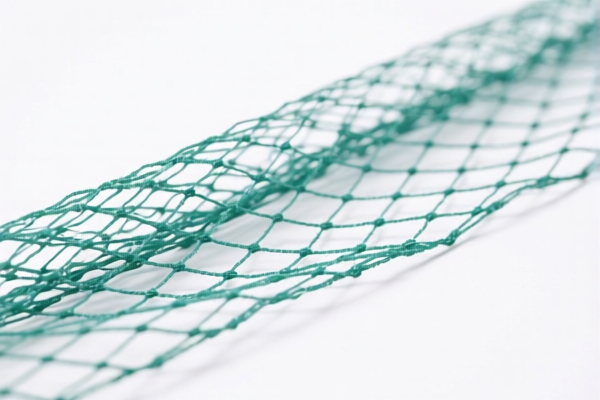
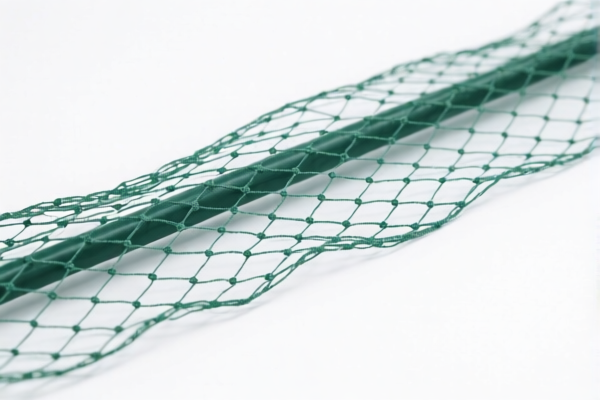
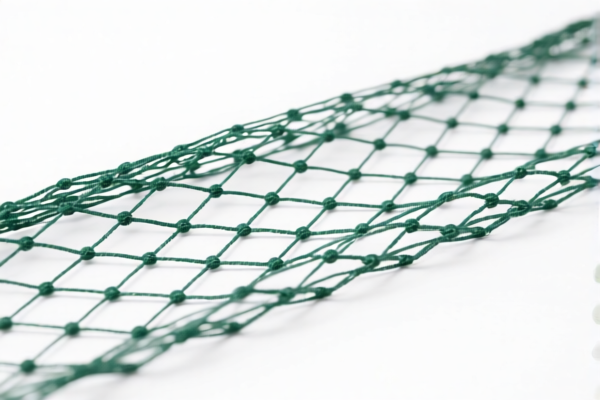

AI Analysis
🌿 Camo Netting (Camouflage Nets)
🌐 HS Code Reference & Customs Clearance Guide | 2026 Latest Tariff Analysis | Professional Clearance Strategy
📌 I. Product Definition & Classification: Do You Really Understand "Camo Netting"?
Camo Netting, or camouflage netting, is a textile product designed to conceal objects or personnel by breaking up their outline and matching surrounding environments. It is widely used in military applications, wildlife observation, agriculture, and outdoor sports.
In international trade, camo netting is typically classified based on its material composition (Cotton vs. Man-made Fibers) and state (New vs. Used/Scrap). It generally falls under Chapter 63: Other Made Up Textile Articles.
⚠️ Key Distinction:
- If the netting is used, scrap, or waste (torn, dirty, discarded) → It is classified under Heading 6310 (Waste, rags, scrap).
- If the netting is new (intact, clean, for reuse) → It is classified under Heading 6307 (Other made-up articles).
- Crucial Note: Do not classify under Heading 5607 (Twine/Rope) unless it is strictly twisted cordage; nets are "made-up articles."
📦 II. HS Code Classification Details (2026 Latest Tariff Authority Comparison)
Based on the provided data, here are the specific HS Codes for Camo Netting and related textile materials:
| HS Code | Product Description | Applicable Scenario | Condition |
|---|---|---|---|
6307.90.98.91 |
Other made up articles, including dress patterns: Other | New Camo Netting | For general use, hunting, military (Non-Surgical) |
6307.90.89.95 |
Other made up articles... Surgical towels; cotton towels... Pillow shells... | Cotton Textile Shells/Blanks | Specifically for cotton pillow shells or quilts (Not typical camo netting, but related cotton textile waste/article) |
6310.10.20.10 |
Used or new rags, scrap twine... of textile materials: Of cotton | Used/Scrap Camo Netting | Used, torn, or discarded camo netting made of Cotton |
6310.10.20.20 |
Used or new rags, scrap twine... of textile materials: Of man-made fibers | Used/Scrap Camo Netting | Used, torn, or discarded camo netting made of Man-made fibers (Nylon/Polyester) |
🔍 Critical Reminder:
- New vs. Used: Customs will inspect the condition. If you declare "New" but the netting is dirty/torn, it may be reclassified as6310(Scrap), changing the tax rate.
- Material Declaration: You must specify if the netting is Cotton or Man-made (Polyester/Nylon), as this determines the subheading in 6310.
💰 III. 2026 Latest Tariff Rate Details (Including Additional Taxes)
✅ Applicable Country: United States (US)
✅ Origin: China (CN)
✅ Effective Date: Current Rates Apply (Per Provided Data)
🎯 1. 6307.90.98.91 —— New Camo Netting (Other Made-Up Articles)
| Item | Content |
|---|---|
| Base Tariff | 7.0% (Ad Valorem) |
| Additional Tariff (Section 301) | +7.5% |
| Total Tax Rate | 14.5% |
| Tax Calculation | CIF Value × 14.5% |
| De Minimis Exemption | ❌ Not Applicable (Value must exceed $800 for de minimis, but tariffs still apply if cleared; however, de minimis usually refers to duty-free entry under $800. Note: Section 301 tariffs often negate de minimis benefits for high-value shipments, but for <$800, they may be exempt. For clarity, this rate applies to standard commercial entries.) |
| Legal Basis | General Section 301 tariffs apply to certain textile articles. |
📌 Explanation:
- This is the standard rate for new, intact camouflage nets (e.g., for hunting blinds, military use).
- The 14.5% total rate includes the standard MFN rate (7.0%) and the additional China-specific tariff (7.5%).
🎯 2. 6310.10.20.10 —— Used/Scrap Camo Netting (Cotton)
| Item | Content |
|---|---|
| Base Tariff | 0.0% |
| Additional Tariff (Section 301) | +7.5% |
| Total Tax Rate | 7.5% |
| Tax Calculation | CIF Value × 7.5% |
| De Minimis Exemption | ❌ Not Applicable (Section 301 tariffs generally do not apply to de minimis shipments <$800, but for commercial imports, it applies.) |
| Legal Basis | Textile waste/scrap category. |
📌 Explanation:
- If the camo netting is used, torn, or considered waste, it falls under this code.
- The base duty is 0%, but the additional tariff of 7.5% applies due to its origin.
🎯 3. 6310.10.20.20 —— Used/Scrap Camo Netting (Man-Made Fibers)
| Item | Content |
|---|---|
| Base Tariff | 0.0% |
| Additional Tariff (Section 301) | +7.5% |
| Total Tax Rate | 7.5% |
| Tax Calculation | CIF Value × 7.5% |
| De Minimis Exemption | ❌ Not Applicable |
| Legal Basis | Textile waste/scrap category. |
📌 Explanation:
- Most modern camo nets are made of Nylon or Polyester (Man-Made Fibers).
- If these are used or scrap, they fall here with a 7.5% total tariff.
🎯 4. 6307.90.89.95 —— Cotton Textile Shells (Pillow/Quilt)
| Item | Content |
|---|---|
| Base Tariff | 0.0% |
| Additional Tariff | 0.0% |
| Total Tax Rate | 0.0% |
| Tax Calculation | CIF Value × 0.0% |
| De Minimis Exemption | ✅ Applicable (If <$800, likely duty-free) |
| Legal Basis | Specific exemption for certain cotton pillow/quilt shells. |
📌 Explanation:
- Not typically used for Camo Netting. This code is for cotton pillow shells or quilt covers.
- Do NOT use this code for camo nets unless you are importing raw cotton textile blanks specifically classified as pillow shells, which is rare for netting. Misclassification here could lead to penalties.
🛠️ IV. Customs Clearance Practical Advice (Real-World Pitfall Guide)
✅ 1. Preparation Checklist (Must-Have Documents)
| Document | Required | Description |
|---|---|---|
| ✅ Product Photos | ✔️ | Clear images showing netting structure, mesh size, and material tags. |
| ✅ Material Composition Certificate | ✔️ | Must state % Cotton vs. % Polyester/Nylon. Critical for 6310 classification. |
| ✅ Condition Declaration | ✔️ | Explicitly state: "New" or "Used/Scrap". If used, provide photos showing wear/dirt. |
| ✅ Commercial Invoice | ✔️ | Must clearly describe item as "Camouflage Netting" and specify material. |
| ✅ Packing List | ✔️ | Detail weight and dimensions. |
✅ 2. Declaration Strategy (Key Mantra)
🔥 "New is 6307, Scrap is 6310; Material Matters, Condition is Key!"
| Scenario | Correct HS Code | Error to Avoid |
|---|---|---|
| New, Intact Netting | 6307.90.98.91 (14.5% Tax) |
Misdeclaring as Scrap (6310) to save tax → Penalty/Fraud |
| Used, Torn Netting | 6310.10.20.xx (7.5% Tax) |
Misdeclaring as New (6307) → Overpayment (though less risky, still inaccurate) |
| Cotton Netting | 6310.10.20.10 |
Forgetting to specify material → Customs may assign higher default rate |
| Polyester Netting | 6310.10.20.20 |
Confusing with 6307 if used |
✅ 3. Special Handling
| Situation | Recommendation |
|---|---|
| Military Use | Ensure no restricted end-use restrictions apply. Camo nets for military use may require additional documentation or licenses in some countries. |
| OEM Custom Nets | Provide design specifications. If the netting is custom-shaped, it still falls under 6307.90 (Other made-up articles). |
| Mixed Materials | If netting contains both cotton and synthetic fibers, classify based on the principal material (usually synthetic for modern nets). |
| De Minimis (<$800) | For shipments under $800, Section 301 tariffs (7.5%) may be exempt depending on current policy. Check current de minimis rules! |
🌍 V. Global Market Comparison (2026)
| Country/Region | Recommended HS Code | Tariff (China Origin) | Notes |
|---|---|---|---|
| 🇺🇸 USA | 6307.90.98.91 (New) |
14.5% | Includes 7.5% Section 301 tariff |
| 🇺🇸 USA | 6310.10.20.20 (Used/Scrap) |
7.5% | Lower base rate, but additional tariff applies |
| 🇨🇳 China | 6307.90 |
Varies (Usually lower) | Import duties into China are different; consult local customs. |
| 🇪🇺 EU | 6307.90 |
Varies (Often 4-6%) | No Section 301 equivalent, but anti-dumping may apply for some textiles. |
📌 Conclusion:
- The US imposes a significant additional tariff (7.5%) on Chinese textile articles, pushing the total to 14.5% for new camo nets.
- Used/Scrap nets enjoy a 0% base rate but still face the 7.5% additional tariff.
- No significant duty advantage for used nets in the US, but the calculation base might be lower if declared as scrap value.
📌 VI. Common Errors & Pitfalls (Blood Lessons)
❌ Error 1: Declaring New camo nets as Scrap to avoid the 7% base duty.
👉 Consequence: Customs inspection reveals new condition → Penalty for misdeclaration + Back Taxes.
❌ Error 2: Not specifying Material (Cotton vs. Synthetic) for used nets.
👉 Consequence: Customs may assign the wrong subheading or hold the shipment for clarification → Delay.
❌ Error 3: Using 6307.90.89.95 for Camo Nets.
👉 Consequence: This code is for cotton pillow/quilt shells. Camo nets are not pillows → Misclassification.
✅ Correct Practice:
"Camouflage Netting, Polyester, New, Mesh Size 5cm, Military Grade, HS Code: 6307.90.98.91"
🎯 VII. Conclusion: Precise Classification Saves Money!
🎯 Remember the Mantra:
🔹 "New is 14.5%, Scrap is 7.5%; Check Material, Check Condition!"
🔹 "Don't call a net a pillow; HS Code 6307.90.89.95 is NOT for nets!"
📌 Pro Tip:
If your camo nets are < $800 per shipment, investigate De Minimis eligibility. Under current US rules, Section 301 tariffs may be exempt for de minimis shipments, but policy changes frequently. Always verify with a customs broker for shipments under $800.
📣 Immediate Action:
📞 Contact a licensed customs broker + Provide product photos + Specify Material and Condition
🚀 Ensure smooth clearance, avoid penalties, and optimize your tariff costs!
✨ Professional Clearance Starts with Accurate Classification!
💼 Your every dollar of cost is worth precise calculation!
Customer Reviews
About HS Code Classification
The Harmonized System (HS) is an internationally standardized nomenclature developed by the World Customs Organization (WCO) to classify traded products. Over 200 countries use the HS system as the basis for customs tariffs, trade statistics, and import/export regulations.
Each HS code follows a hierarchical structure:
- Chapter (2 digits) — Broad category of goods (e.g., Chapter 84: Machinery and Mechanical Appliances)
- Heading (4 digits) — More specific grouping within the chapter
- Subheading (6 digits) — Internationally standardized breakdown, used by all WCO member countries
- National subdivisions (8-10 digits) — Country-specific extensions for further classification, such as US HTSUS 10-digit codes
Correct HS code classification is essential for smooth customs clearance, accurate duty payment, and compliance with trade regulations. Misclassification can lead to customs delays, overpayment of duties, or penalties.
When importing from CN to US, the applicable tariff rates may include:
- Most-Favored-Nation (MFN) rate — The standard duty rate applied to WTO members
- General rate — Applied to countries without trade agreements
- Trade remedy duties — Additional tariffs such as Section 301 (anti-dumping), Section 232 (national security), or countervailing duties
The information provided on this page is for reference purposes only. For official classification, please consult with your local customs authority or a licensed customs broker.