Camping Egg Rack
CN → US| HS Code | Tariff Rate | Origin | Destination | Doc |
|---|---|---|---|---|
| 3924905650 | 20.9% | CN | US | Official Doc |
| 7615107180 | 63.1% | CN | US | Official Doc |
| 3924104000 | 13.4% | CN | US | Official Doc |
| 7615109100 | 70.6% | CN | US | Official Doc |
Product Images


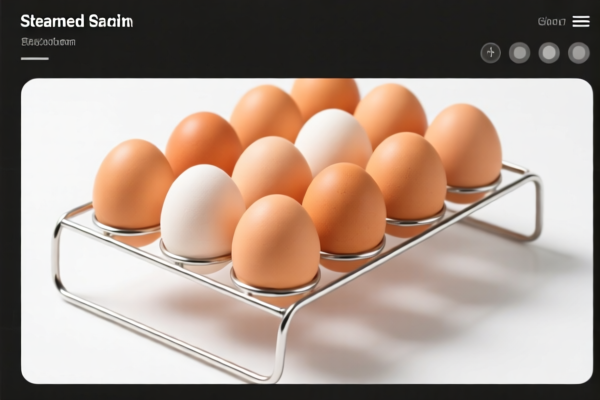

AI Analysis
🥚 Camping Egg Rack (Portable Kitchen Storage & Holder)
🌐 HS Code Reference & Customs Clearance Guide | 2026 Latest Tariff Analysis | Professional Clearance Strategy 📌 I. Product Definition & Classification: What Exactly is a "Camping Egg Rack"?
The "Camping Egg Rack" is a multifunctional kitchen accessory designed for outdoor enthusiasts, campers, and home users. In international trade, its classification depends heavily on the material composition and specific structural design. It generally falls into two main categories:
Plastic Storage/Holders (HS 3924): Non-metallic racks, often injection-molded, used for organizing eggs or other items in the kitchen. Aluminum/Metal Cookware & Accessories (HS 7615): Durable, lightweight metal racks designed for outdoor cooking equipment, specifically categorized under aluminum kitchen utensils.
⚠️ Key Distinction Point:
- If the material is Plastic (e.g., PP, PE) and used for storage/holding → Classified under Chapter 39.
- If the material is Aluminum/Metal and used for cooking/holding food → Classified under Chapter 76 (Aluminum Articles).
📦 II. HS Code Classification Details (2026 Latest Tariff Authority Comparison)
Based on the inferred characteristics of "Camping Egg Rack," here are the possible classifications:
| HS Code | Product Description | Application Scenario | Material Inference | Tax Rate (Total) |
|---|---|---|---|---|
3924.90.56.50 |
Other plastic tableware/kitchenware (e.g., racks, shelves) | Home storage, kitchen organization | Plastic | 20.9% |
7615.10.71.80 |
Aluminum kitchen utensils (other) | Outdoor camping cookware, aluminum racks | Aluminum/Metal | 63.1% |
3924.10.40.00 |
Other plastic tableware (e.g., egg holders, dishes) | Plastic egg containers/holders | Plastic or Metal (Summary says Plastic/Metal, but HS is Plastic) | 13.4% |
7615.10.91.00 |
Other aluminum articles (household items) | Household aluminum racks/holders | Aluminum | 70.6% |
🔍 Key Reminder:
- Plastic Items (3924): Lower tariff burden (13.4% - 20.9%). Suitable for general storage.
- Aluminum Items (7615): Significantly higher tariff burden (63.1% - 70.6%) due to specific US trade measures on steel, aluminum, and copper products.
- Misclassification Risk: Declaring an aluminum rack as plastic to save taxes is considered fraud and will lead to severe penalties.
💰 III. 2026 Latest Tariff Rate Breakdown (Including Surcharges & Policy Add-ons)
✅ Applicable Country: United States (US)
✅ Origin: China (CN)
✅ Effective Date: Current rates apply (Note: High tariffs on aluminum/steel are active)
🎯 1. 3924.90.56.50 & 3924.10.40.00 —— Plastic Tableware/Kitchenware
| Item | Details |
|---|---|
| Base Tariff | 3.4% (Standard MFN rate for plastic articles) |
| Section 301 Surcharge (421/122) | 0.0% - 7.5% (Varies by specific sub-heading and policy updates) |
| Section 232/122 Clause Tariff | 10% (Specific clause mentioned in data for some plastic items) |
| Total Tax Rate | 13.4% - 20.9% |
| Calculation | CIF Value × Total Rate |
| De Minimis Exemption | ⚠️ Check Policy: Many plastic kitchen items may be subject to additional scrutiny or exclusions depending on the specific 2026 update. Generally, Section 301 items are not exempt from de minimis if specifically listed, but verify current CBP rules. |
| Legal Basis Path | HTSUS:3924.90.56.50 / 3924.10.40.00 → Section 301 Footnotes |
📌 Explanation:
- Plastic items face lower tariffs compared to metals.
- The "122 Clause Tariff" of 10% mentioned in the data applies to specific classifications, while others may have 0% surcharge.
- Total Effective Rate: ~20.9% for general plastic racks, ~13.4% for specific egg holders.
🎯 2. 7615.10.71.80 & 7615.10.91.00 —— Aluminum Kitchen Utensils/Household Articles
| Item | Details |
|---|---|
| Base Tariff | 3.1% (Standard MFN rate for aluminum articles) |
| Section 301 Surcharge | 0.0% - 7.5% |
| Section 232/Steel-Alt-Copper Surcharge | 50% (Critical: US imposes a 50% surcharge on steel, aluminum, and copper products from China) |
| Section 122 Clause Tariff | 10% (Additional specific clause) |
| Total Tax Rate | 63.1% - 70.6% |
| Calculation | CIF Value × Total Rate |
| De Minimis Exemption | ❌ NO (Aluminum products are high-risk for customs audits and surcharges) |
| Legal Basis Path | HTSUS:7615.10.71.80 / 7615.10.91.00 → Section 232 (Steel/Aluminum) + IEEPA/Section 301 |
📌 Explanation:
- High Tariff Alert: The 50% surcharge on aluminum products is the dominant factor.
- Base tariff (3.1%) + 7.5% (if applicable) + 10% (122 clause) + 50% (Aluminum Surcharge) = ~70.6%.
- This makes aluminum camping racks extremely expensive to import into the US from China.
🛠️ IV. Customs Clearance Practical Advice (Pitfall Avoidance Guide)
✅ 1. Required Documentation Checklist
| Document | Must Provide | Notes |
|---|---|---|
| ✅ Product Specifications | ✔️ | Detailed description: Material (Plastic/Aluminum), Dimensions, Weight, Packaging |
| ✅ Material Declaration | ✔️ | Critical: Must explicitly state "100% Plastic" or "Aluminum Alloy" with percentage. |
| ✅ Product Photos | ✔️ | Clear images of the rack, labels, and packaging. Show usage context (e.g., holding eggs). |
| ✅ Commercial Invoice | ✔️ | Accurate value, HS Code, and Country of Origin (China). |
| ✅ Packing List | ✔️ | Net/Gross weight, number of units. |
| ✅ Origin Certificate | ✔️ | To prove origin for tariff calculations. |
✅ 2. Declaration Tips (Key Mantras)
🔥 "Material is King, HS Code is Destiny, Aluminum is Expensive!"
| Scenario | Correct Declaration | Wrong Practice |
|---|---|---|
| Plastic Egg Rack | 3924.90.56.50 or 3924.10.40.00 |
Declare as "Aluminum" → 70.6% Tax |
| Aluminum Camping Rack | 7615.10.71.80 |
Declare as "Plastic" → Fraud, Penalties, Seizure |
| Mixed Material Item | Determine main function/material | Vague description → Customs Audit Delay |
✅ 3. Special Case Handling
| Situation | Handling Advice |
|---|---|
| OEM Custom Racks | Provide design drawings to prove material composition. |
| Plastic with Metal Parts | If metal parts are <50% by weight/value, it may still be classified under Plastic, but consult a customs broker. |
| Aluminum Racks | Cost-Benefit Analysis: Consider if the profit margin can absorb the 63-70% tax. Look for duty drawbacks or exemptions if applicable. |
| De Minimis (Section 321) | Check if the specific HS Code is excluded from de minimis. High-tariff items often lose this benefit. |
🌍 V. Global Market Customs Comparison (2026 Latest)
| Country/Region | Recommended HS Code | Tariff (China Origin) | Certification | Notes |
|---|---|---|---|---|
| 🇺🇸 USA | 3924.90.56.50 (Plastic) / 7615.10.71.80 (Aluminum) |
13.4%-20.9% (Plastic) 63.1%-70.6% (Aluminum) |
FDA (if food contact), FCC (if electronic) | High Aluminum Surcharges |
| 🇨🇳 China | 3924.90.56.50 / 7615.10.71.80 |
~0-10% | CCC (if applicable) | Low import duty |
| 🇪🇺 EU | 3924.10.40.00 / 7615.10.71.80 |
0-4.5% | LFGB, REACH | No Section 301/232 surcharges |
| 🇬🇧 UK | Similar to EU | 0-4.5% | UKCA | Post-Brexit rules apply |
📌 Conclusion:
- USA: Avoid Aluminum if possible due to 50% surcharge. Plastic is cost-effective.
- EU/UK/Asia: Tariffs are much lower for both materials. Aluminum is competitive.
📌 VI. Common Errors & Pitfalls (Lessons Learned)
❌ Error 1: Declaring Aluminum Racks as Plastic to Save Taxes
👉 Consequence: Customs audit, fines, penalty up to 40% of value, and potential criminal charges.
❌ Error 2: Vague Material Description ("Mixed Material")
👉 Consequence: Customs will use the highest applicable tariff (Aluminum) → 70.6% Tax.
❌ Error 3: Ignoring Section 232 on Aluminum
👉 Consequence: Unexpected 50% surcharge on top of existing duties → Profit Margin Erased.
❌ Error 4: Incorrect Product Name ("Kitchenware" vs. "Camping Gear")
👉 Consequence: May trigger additional anti-dumping duties or stricter scrutiny. Use "Egg Holder/Rack" for clarity.
✅ Correct Practice:
"Plastic Egg Holder Rack, Non-Dispersible, for Kitchen Use, Model XYZ, BPA-Free, FDA Compliant"
OR
"Aluminum Camping Egg Rack, Anodized, Lightweight, Outdoor Cookware Accessory, Model ABC"
🎯 VII. Conclusion: Professional Declaration, Cost Optimization
🎯 Remember the Mantra:
🔹 "Plastic = 15%, Aluminum = 70%. Material is Everything."
🔹 "HS Code Determines Tax, Misclassification Costs You Everything."
📌 Tips:
- If you are selling Aluminum Camping Racks in the US, re-evaluate your pricing strategy immediately. The 63-70% tax is substantial.
- Consider sourcing from non-China origins (e.g., Vietnam, India) to avoid Section 301/232 surcharges.
- Always apply for a Binding Tariff Information (BTI) or Ruling from US CBP if unsure about the classification.
📣 Immediate Action:
📞 Consult a Licensed Customs Broker
📋 Submit Material Test Reports
🚀 Optimize Supply Chain to Reduce Tariff Burden
✨ Professional Clearance Starts with Accurate Classification!
💼 Every Dollar Saved in Tariffs is Pure Profit!
Customer Reviews
About HS Code Classification
The Harmonized System (HS) is an internationally standardized nomenclature developed by the World Customs Organization (WCO) to classify traded products. Over 200 countries use the HS system as the basis for customs tariffs, trade statistics, and import/export regulations.
Each HS code follows a hierarchical structure:
- Chapter (2 digits) — Broad category of goods (e.g., Chapter 84: Machinery and Mechanical Appliances)
- Heading (4 digits) — More specific grouping within the chapter
- Subheading (6 digits) — Internationally standardized breakdown, used by all WCO member countries
- National subdivisions (8-10 digits) — Country-specific extensions for further classification, such as US HTSUS 10-digit codes
Correct HS code classification is essential for smooth customs clearance, accurate duty payment, and compliance with trade regulations. Misclassification can lead to customs delays, overpayment of duties, or penalties.
When importing from CN to US, the applicable tariff rates may include:
- Most-Favored-Nation (MFN) rate — The standard duty rate applied to WTO members
- General rate — Applied to countries without trade agreements
- Trade remedy duties — Additional tariffs such as Section 301 (anti-dumping), Section 232 (national security), or countervailing duties
The information provided on this page is for reference purposes only. For official classification, please consult with your local customs authority or a licensed customs broker.