Camping Stool
CN → US| HS Code | Tariff Rate | Origin | Destination | Doc |
|---|---|---|---|---|
| 9401790025 | 35.0% | CN | US | Official Doc |
| 9401790035 | 35.0% | CN | US | Official Doc |
| 9401790015 | 35.0% | CN | US | Official Doc |
| 9401790025 | 35.0% | CN | US | Official Doc |
Product Images
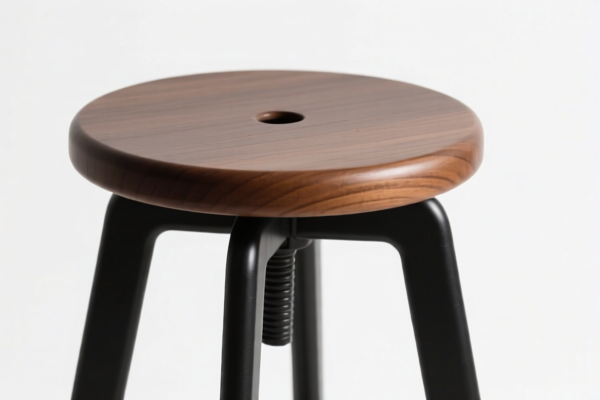
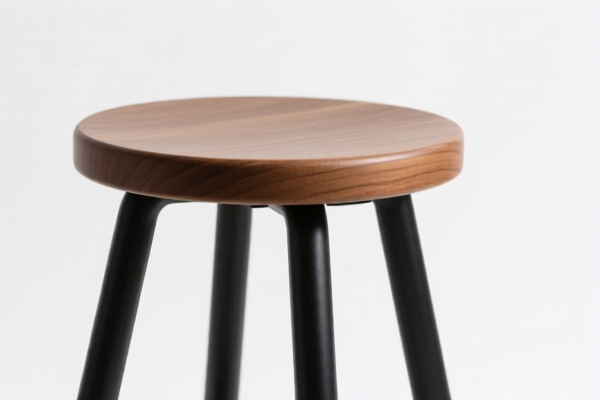
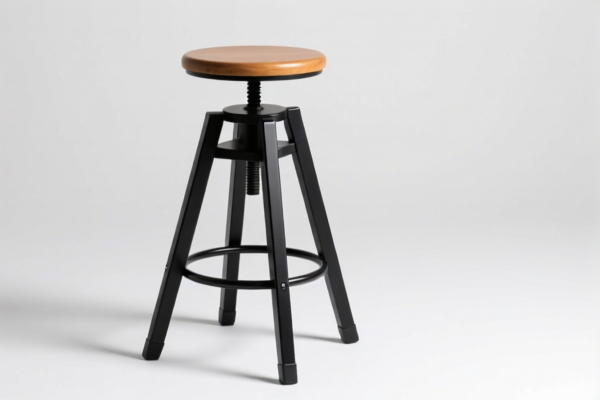
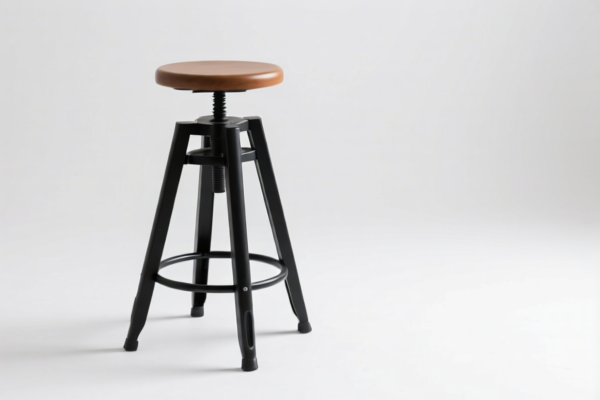
AI Analysis
🪑 Camping Stool (Outdoor Seating)
🌐 HS Code Reference & Customs Clearance Guide | 2026 Latest Tariff Analysis | Professional Level Strategy
📌 I. Product Definition & Classification: Do You Really Understand "Camping Stools"?
The Camping Stool is a versatile outdoor furniture item designed for portable, temporary seating in recreational settings. In international trade, it is primarily classified under Chapter 94 (Furniture), specifically focusing on seating articles.
Key Classification Logic:
1. Function: It is a seat (stool/chair).
2. Material: While the input name "Camping Stool" does not explicitly state the material, customs classification often relies on common sense inference for such generic terms. For camping gear, the frame is typically metal (aluminum or steel) due to durability and weight requirements, and the seat is often textile or simple plastic.
3. Usage: "Camping" implies outdoor or home/outdoor hybrid usage.
⚠️ Critical Distinction:
- If the stool is made of wood, it would fall under a different subheading.
- If the stool has mechanical reclining functions, it might fall under 9401.69.
- However, for standard non-reclining, metal-frame camping stools, the consensus among the provided data points to 9401.79.00 (Other seats with metal frames).
📦 II. HS Code Classification Details (2026 Latest Tariff Authoritative Comparison)
Based on the provided data, the following HS Codes are identified as matching candidates. Note that 9401.79.00.25 appears twice with slightly different summaries, but they refer to the same code.
| HS Code | Product Description | Matching Basis Summary | Total Tax Rate |
|---|---|---|---|
9401.79.00.25 |
Other seats with metal frames (Outdoor/Home Use) | 1. Usage: Outdoor/Home seating (folding camping chair). 2. Material: Inferred metal frame (common for camping chairs). 3. Fit: No conflict with "Other metal frame seats." |
35.0% |
9401.79.00.35 |
Other Outdoor Seats (Metal Frame) | 1. Usage: "Camping" = Outdoor. 2. Form: Stool/Folding Chair = Seat. 3. Material: Inferred metal frame, consistent with "Other outdoor seats." |
35.0% |
9401.79.00.15 |
Seats with Metal Frames & Textile Surfaces | 1. Usage: "Wild Camping" → Outdoor. 2. Form: "Stool" → Seat. 3. Material: Inferred metal frame + textile seat (common construction). |
35.0% |
9401.79.00.25 |
Other Seats (Metal Frame - Generic) | 1. Form: Seat. 2. Usage: Inferred outdoor/home use. 3. Material: Since material isn't specified, it's assumed to not conflict with "metal frame" rules under the "Other/Other" category. |
35.0% |
🔍 Key Takeaway:
All identified HS codes fall under 9401.79 (Other seats with metal frames). The specific 8-digit codes (.15, .25, .35) represent nuanced sub-categories based on exact material composition (e.g., presence of textile) or specific outdoor designation, but all carry the same total tax burden in this scenario.
💰 III. 2026 Latest Tariff Rate Breakdown (Including Surcharges & Policy Add-ons)
✅ Applicable Country: United States (US)
✅ Origin: China (CN) (Inferred from tax details mentioning "122 Clause" and typical US-China trade context)
✅ Effective Time: Ongoing (2025-2026 Period)
🎯 1. 9401.79.00.15 / .25 / .35 —— Other Seats with Metal Frames
| Item | Content |
|---|---|
| Base Tariff | 0.0% (ad valorem) |
| Section 301 Surcharge (USITC) | +25.0% (Standard 301 Tariff for most furniture/seats) |
| Section 122 Tariff (IEEPA/Other) | +10.0% (Specific "122 Clause" surcharge mentioned in data) |
| Total Tariff Rate | 35.0% |
| Tax Calculation | CIF Value × 35% |
| De Minimis Eligibility | ❌ Not Eligible (High tariffs typically void de minimis benefits for China-origin goods) |
| Legal Basis Path | USITC:9401.79.00.XX → 301_Tariff:25% → 122_Claus:10% |
📌 Explanation:
- Base Tariff (0%): Standard MFN rate for this HS code is zero.
- 301 Surcharge (25%): This is the significant tariff imposed under Section 301 of the Trade Act of 1974 on Chinese imports.
- 122 Clause (10%): The data explicitly mentions a "122 Clause Tariff." In US customs context, this likely refers to specific enforcement actions or additional duties under IEEPA (International Emergency Economic Powers Act) or specific trade remedy measures targeting certain Chinese goods.
- Total 35%: This is a very high effective tariff rate. Importers must budget significantly for landed costs.
🛠️ IV. Customs Clearance Practical Advice (Battle-Tested Pitfall Guide)
✅ 1. Documentation Checklist (Non-Negotiable)
| Document | Required | Explanation |
|---|---|---|
| ✅ Product Specification Sheet | ✔️ | Must clearly state Material Composition (e.g., "Aluminum Frame, Polyester Seat"). This is crucial to confirm the "Metal Frame" assumption. |
| ✅ Product Photos | ✔️ | Show the joint structure and material texture to prove it's a metal frame, not wood or plastic. |
| ✅ Commercial Invoice | ✔️ | Must accurately describe the goods as "Camping Stool, Metal Frame, Outdoor Use." |
| ✅ Packing List | ✔️ | Detail quantity and weight. |
| ✅ Country of Origin Certificate | ✔️ | To confirm CN origin (triggering the 35% tariff) or other origins (potentially lower). |
✅ 2. Declaration Strategy (Key Mantra)
🔥 “Specify Material, Declare Metal, Avoid ‘Plastic’ Traps!”
| Scenario | Correct Declaration | Wrong Approach | Consequence |
|---|---|---|---|
| Metal Frame Stool | 9401.79.00.25 (or .15/.35) |
Misdeclaring as "Plastic Chair" (9401.40) | If found to be metal, Retrospective Duty + Penalties. If plastic, rate might differ, but misdeclaration is fraud. |
| Wood Frame Stool | 9401.61 or 9401.69 |
Declaring as Metal Frame | Wrong HS Code, leads to audit and potential Seizure. |
| Generic "Camping Stool" | Provide Material Breakdown | Leaving material blank | Customs may assign a higher default rate or demand sample testing, causing Delays. |
| Set with Table | Declare Separately | "Camping Set" | Bundling may complicate classification. Better to list "1x Camping Stool, 1x Camping Table" separately. |
✅ 3. Special Considerations
| Situation | Handling Advice |
|---|---|
| Material Ambiguity | If the stool has a fabric seat and metal frame, 9401.79.00.15 is the most precise match. If the frame is aluminum, it still falls under "metal frames." |
| Reclining Feature | If the stool reclines (adjustable back), it is NOT 9401.79. It would likely be 9401.69 (Other seats with wooden frames) or 9401.40 (Plastic), depending on the primary material. Check for reclining mechanisms! |
| Plastic Frames | If the "Camping Stool" is made of plastic, do NOT use 9401.79. Use 9401.40.00.80 (Plastic seats). Tax rates may differ. |
| Origin Diversification | If sourced from Vietnam/Mexico, the 301 Surcharge (25%) and 122 Clause (10%) may NOT apply. Total Tax could drop to ~5-10%. |
🌍 V. Global Market Clearance Comparison (2026 Latest)
| Country/Region | Recommended HS Code | Base Tariff | 301/Additional Tariff | Total Est. Rate | Notes |
|---|---|---|---|---|---|
| 🇺🇸 USA | 9401.79.00.25 |
0% | +35% (25% + 10%) | 35% | High Cost. Verify material strictly. |
| 🇨🇳 China | 9401.79.00.25 |
5% | 0% | 5% | No US trade wars. |
| 🇪🇺 EU | 9401.79.00 |
0% | 0% | 0% | Generally duty-free for furniture. |
| 🇬🇧 UK | 9401.79.00 |
0% | 0% | 0% | Post-Brexit alignment with EU for many items. |
| 🇦🇺 Australia | 9401.79.00 |
5% | 0% | 5% | No major surcharges. |
📌 Conclusion:
- The US market is the most expensive for Chinese-origin camping stools due to the 35% total tariff.
- EU and UK are the most cost-effective for clearance.
- Supply Chain Strategy: If targeting the US, consider sourcing from non-China origins (e.g., Vietnam, India) to avoid the 35% surcharge.
📌 VI. Common Errors & Pitfall Guide (Lessons Learned)
❌ Error 1: Assuming all "Camping Stools" are the same.
👉 Consequence: If you have a wooden camping stool but declare it as metal (9401.79), you risk duty evasion allegations if the wood tariff is different, or misclassification penalties.
👉 Fix: Always verify the primary structural material.
❌ Error 2: Ignoring the "122 Clause" in US imports.
👉 Consequence: Underestimating landed cost by 10%.
👉 Fix: Include the 10% additional duty in your cost model for China-origin goods.
❌ Error 3: Failing to distinguish between "Stool" and "Reclining Chair".
👉 Consequence: A reclining chair is often classified differently (e.g., 9401.61/69). Misclassification leads to incorrect duty payment.
👉 Fix: Check if the backrest adjusts. If yes, it’s not a simple stool.
❌ Error 4: Using vague descriptions like "Garden Chair".
👉 Consequence: Customs may assign a higher default duty or hold the shipment for material verification.
👉 Fix: Use precise terms: "Folding Camping Stool, Aluminum Frame, Textile Seat."
✅ Correct Declaration Example:
"Camping Stool, Model XYZ, Folding, Metal (Aluminum) Frame, Fabric Seat, Outdoor Use, Made in China."
🎯 VII. Conclusion: Professional Declaration, Cost Control, Efficiency!
🎯 Remember the Mantra:
🔹 “Metal Frame, 35% Tax in US; Wood/Plastic, Check Other Codes!”
🔹 “Material Matters: Verify Frame, Verify Seat, Avoid 35% Pitfall!”
🔹 “China Origin = 35% Total. Non-China = Save Big.”
📌 Pro Tip:
If you are importing into the US, consider applying for a Pre-Ruling (Advance Ruling) from CBP if your product is complex (e.g., mixed materials). This provides legal certainty on the HS Code and tariff rate.
For China-origin goods, the 35% tariff is a significant cost driver. Evaluate if alternative sourcing (Vietnam, Mexico) is viable to reduce costs to <10%.
📣 Take Action Now:
📞 Contact your freight forwarder with the exact material breakdown.
📄 Prepare your Commercial Invoice with precise product descriptions.
🚀 Optimize your supply chain to mitigate the 35% US tariff burden!
✨ Professional Clearance Starts with Accurate Classification!
💼 Every Percent of Tariff Saved is Pure Profit!
Customer Reviews
About HS Code Classification
The Harmonized System (HS) is an internationally standardized nomenclature developed by the World Customs Organization (WCO) to classify traded products. Over 200 countries use the HS system as the basis for customs tariffs, trade statistics, and import/export regulations.
Each HS code follows a hierarchical structure:
- Chapter (2 digits) — Broad category of goods (e.g., Chapter 84: Machinery and Mechanical Appliances)
- Heading (4 digits) — More specific grouping within the chapter
- Subheading (6 digits) — Internationally standardized breakdown, used by all WCO member countries
- National subdivisions (8-10 digits) — Country-specific extensions for further classification, such as US HTSUS 10-digit codes
Correct HS code classification is essential for smooth customs clearance, accurate duty payment, and compliance with trade regulations. Misclassification can lead to customs delays, overpayment of duties, or penalties.
When importing from CN to US, the applicable tariff rates may include:
- Most-Favored-Nation (MFN) rate — The standard duty rate applied to WTO members
- General rate — Applied to countries without trade agreements
- Trade remedy duties — Additional tariffs such as Section 301 (anti-dumping), Section 232 (national security), or countervailing duties
The information provided on this page is for reference purposes only. For official classification, please consult with your local customs authority or a licensed customs broker.