Can Opener Set
CN → US| HS Code | Tariff Rate | Origin | Destination | Doc |
|---|---|---|---|---|
| 8438800000 | 35.0% | CN | US | Official Doc |
| 8509805040 | 14.2% | CN | US | Official Doc |
| 8438909090 | 37.8% | CN | US | Official Doc |
| 8438800000 | 35.0% | CN | US | Official Doc |
| 8509805040 | 14.2% | CN | US | Official Doc |
Product Images
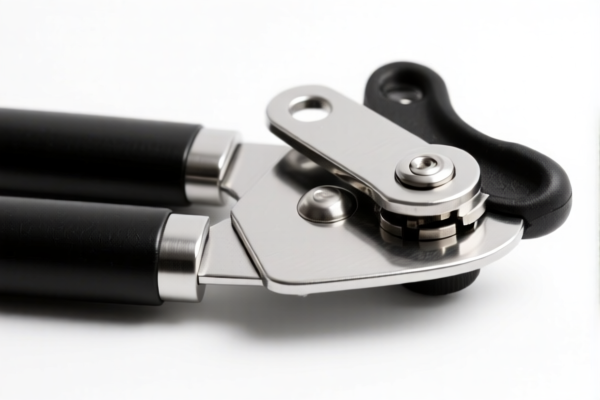
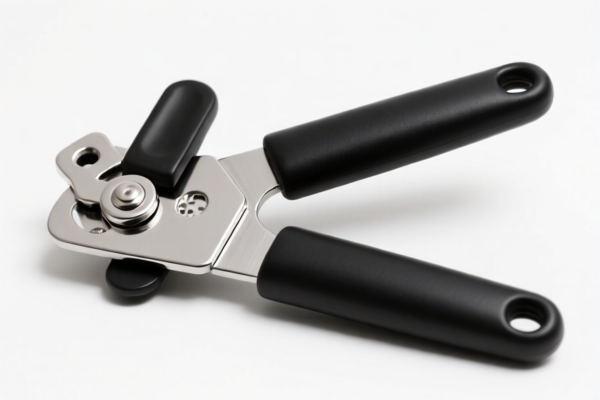
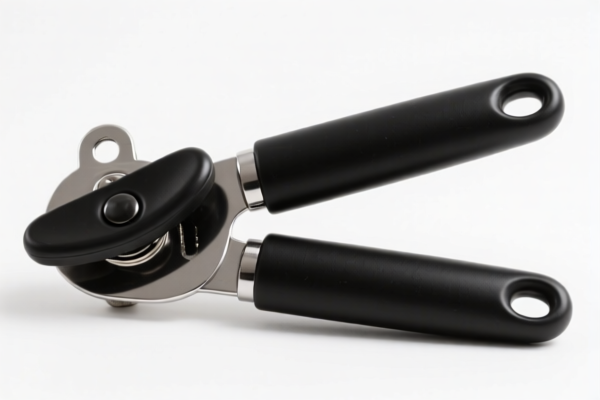
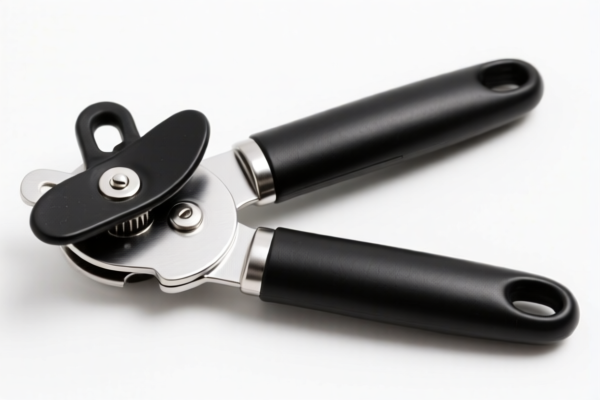
AI Analysis
🥫 Can Opener Set (电动/手动开罐器套装)
🌐 HS Code Reference & Clearance Guide | 2026 Latest Tariff Analysis | Professional Clearance Strategy
📌 I. Product Definition & Classification: What Exactly Is a "Can Opener Set"?
A "Can Opener Set" typically refers to a collection of tools or devices designed for opening canned goods. In international trade, the classification hinges critically on the power source and industrial vs. household use. The key distinction lies between electric openers (often classified under household appliances) and industrial processing machinery or parts thereof.
⚠️ Key Distinction:
- If the device is Electric and intended for household or general portable use → It aligns with 8509.80.50.40 (Electrical appliances with self-contained electric motor).
- If the device is used for Industrial Food/D beverage preparation (mass production lines) → It aligns with 8438.80.00.00 (Machinery for industrial preparation of food or beverages).
- If the item is a Set (multiple components) or Parts (blades, shafts) → Classification may shift to parts of machinery or specific appliance sets.
📦 II. HS Code Classification Details (2026 Latest Tariff Authority Mapping)
Based on the provided data, here are the precise mappings for Can Opener Sets:
| HS Code | Product Description | Application Scenario | Tax Rate (Total) |
|---|---|---|---|
8509.80.50.40 |
Electric Can Openers | Portable electric can openers; sets with electric openers. Function matches "electrical appliances with self-contained motor." | 14.2% |
8438.80.00.00 |
Industrial Food/Beverage Machinery | Industrial preparation machinery. Includes can opener sets if used in industrial contexts or categorized broadly under food processing equipment. | 35.0% |
8438.90.90.90 |
Parts of Industrial Machinery | Spare parts such as blades, drive shafts, or housings for industrial food preparation machinery. | 37.8% |
🔍 Critical Note:
-8509.80.50.40is the most favorable rate for household/portable electric can openers.
-8438.80.00.00is for industrial-grade machinery.
-8438.90.90.90applies only to parts (not complete units).
💰 III. 2026 Latest Tariff Rate Breakdown (Including Surcharges & Policy Add-ons)
✅ Applicable Country: United States (US)
✅ Origin: China (CN)
✅ Effective Time: Post-2025 policies (Including subsequent imports)
🎯 1. 8509.80.50.40 —— Electric Can Openers (Household/Portable)
| Item | Content |
|---|---|
| Base Tariff | 4.2% (Ad valorem) |
| Section 301 Surcharge | 0.0% (No additional Section 301 tariff listed in this specific mapping) |
| Section 122 Tariff | +10% (Specific to this classification in the provided data) |
| Total Tariff Rate | 14.2% |
| Tax Calculation | CIF Value × 14.2% |
| De Minimis Eligibility | ✅ Possible (Lower base rate may facilitate lower-value shipments, but check current $800 threshold rules) |
| Legal Basis Path | USITC:8509.80.50.40 → Section 122: 10% |
📌 Interpretation:
- This is the most cost-effective classification for electric can openers.
- The 0% Section 301 rate is significant compared to other categories.
- The 10% Section 122 tariff is the primary additional cost.
🎯 2. 8438.80.00.00 —— Industrial Food Preparation Machinery
| Item | Content |
|---|---|
| Base Tariff | 0.0% (Ad valorem) |
| Section 301 Surcharge | +25.0% |
| Section 122 Tariff | +10.0% |
| Total Tariff Rate | 35.0% |
| Tax Calculation | CIF Value × 35.0% |
| De Minimis Eligibility | ❌ Unlikely (High tariff burden suggests commercial import) |
| Legal Basis Path | USITC:8438.80.00.00 → Section 301: 25% → Section 122: 10% |
📌 Interpretation:
- Despite a 0% base tariff, the 25% Section 301 surcharge makes this category expensive.
- Only suitable for industrial-scale food processing equipment.
🎯 3. 8438.90.90.90 —— Parts of Industrial Machinery
| Item | Content |
|---|---|
| Base Tariff | 2.8% |
| Section 301 Surcharge | +25.0% |
| Section 122 Tariff | +10.0% |
| Total Tariff Rate | 37.8% |
| Tax Calculation | CIF Value × 37.8% |
| De Minimis Eligibility | ❌ No |
| Legal Basis Path | USITC:8438.90.90.90 → Section 301: 25% → Section 122: 10% |
📌 Interpretation:
- Highest tariff burden.
- Only for replacement parts (blades, shafts, housings).
🛠️ IV. Clearance Practical Advice (Practical Pitfall Avoidance Guide)
✅ 1. Documentation Checklist (Non-negotiable)
| Document | Required | Description |
|---|---|---|
| ✅ Product Specification Sheet | ✔️ | Must clearly state: Electric vs. Manual, Voltage, Power, Intended Use (Household vs. Industrial). |
| ✅ Product Photos (Labeled) | ✔️ | Show the complete set, including any blades, handles, or electric motors. |
| ✅ Commercial Invoice | ✔️ | Must specify "Can Opener Set" and include HS Code. |
| ✅ Packaging List | ✔️ | Detail items in the set to avoid "parts-only" classification if sold as a complete unit. |
| ✅ Certifications (FCC/UL) | ✔️ | Mandatory for electric models (8509 classification). |
✅ 2. Declaration Tips (Key Mnemonic)
🔥 “Electric Goes to 8509, Industrial to 8438, Parts to 8439!”
| Scenario | Correct Declaration | Wrong Practice |
|---|---|---|
| Portable Electric Can Opener | 8509.80.50.40 (14.2%) |
Misdeclare as Industrial → 35% |
| Manual Can Opener (No Motor) | Not explicitly in data, but likely 8213 | Force into 8509 → Rejected |
| Industrial Food Machine Opener | 8438.80.00.00 (35.0%) |
Misdeclare as Electric → Underpayment |
| Replacement Blades/Shafts | 8438.90.90.90 (37.8%) |
Declare as complete machine → Overpayment |
✅ 3. Special Cases
| Situation | Handling Advice |
|---|---|
| Mixed Sets (Electric + Manual Tools) | Declare as Electric Can Opener Set if the electric component is the primary value/function. Use 8509.80.50.40. |
| Industrial Bulk Supply | If sold to factories for continuous processing, use 8438.80.00.00. Provide proof of industrial end-use. |
| Spare Parts Shipments | Only declare as 8438.90.90.90 if no complete machine is included. Clearly label as "Parts Only." |
🌍 V. Global Market Clearance Comparison (2026 Latest)
| Country/Region | Recommended HS Code | Tariff (China Origin) | Certification Required | Notes |
|---|---|---|---|---|
| 🇺🇸 USA | 8509.80.50.40 |
14.2% (Electric) | FCC + UL | Best rate for household electric openers. |
| 🇺🇸 USA | 8438.80.00.00 |
35.0% (Industrial) | None | High tax for industrial machinery. |
| 🇨🇳 China | 8509.80.50.40 |
~5-7% | CCC | Lower export/import taxes domestically. |
| 🇪🇺 EU | 8509.80 |
0-6% | CE + RoHS | No Section 301/122 equivalents. |
| 🇬🇧 UK | 8509.80 |
0-4% | UKCA | Post-Brexit rules apply. |
📌 Conclusion:
- USA is the most complex market due to Section 122 (10%) and potential Section 301 (25%) tariffs.
- Electric Can Openers (8509) are significantly cheaper to import into the US (14.2%) than Industrial Machinery (8438, 35.0%).
📌 VI. Common Mistakes & Pitfall Avoidance (Blood & Tears Lessons)
❌ Mistake 1: Declaring an Electric Can Opener as Industrial Machinery
👉 Consequence: Pay 35% instead of 14.2%. Overpay by 20.8% on CIF value.
❌ Mistake 2: Declaring Parts (blades) as a Complete Set
👉 Consequence: Customs may reject or reclassify, leading to delays and potential 37.8% rate if deemed industrial parts.
❌ Mistake 3: Missing FCC Certification for Electric Models
👉 Consequence: Detention/Seizure by CBP. No clearance without FCC compliance for electrical appliances.
❌ Mistake 4: Using "Can Opener" without specifying Electric/Manual
👉 Consequence: Customs asks for clarification, causing 60+ day delays.
✅ Correct Approach:
"Electric Can Opener Set, Household Use, 120V, 60Hz, FCC Certified, Model XYZ."
🎯 VII. Conclusion: Professional Declaration Saves Money!
🎯 Remember the Mnemonic:
🔹 "Electric = 14.2%, Industrial = 35%, Parts = 37.8%"
🔹 "HS Code Determines Cost, Wrong Code Costs You!"
📌 Pro Tip:
If you are importing Household Electric Can Openers, ensure your invoice and product description clearly state "Household Use" and "Electric" to qualify for 8509.80.50.40. Avoid vague terms like "Kitchen Tool" which may trigger closer scrutiny.
📣 Immediate Action:
📞 Contact a Licensed Customs Broker
📤 Provide Product Specs + FCC Cert + Clear Photos
🚀 Ensure Smooth Clearance, Minimize Duties, Maximize Profit!
✨ Professional Clearance Starts with Accurate Classification!
💼 Every Percentage Point Counts!
Customer Reviews
About HS Code Classification
The Harmonized System (HS) is an internationally standardized nomenclature developed by the World Customs Organization (WCO) to classify traded products. Over 200 countries use the HS system as the basis for customs tariffs, trade statistics, and import/export regulations.
Each HS code follows a hierarchical structure:
- Chapter (2 digits) — Broad category of goods (e.g., Chapter 84: Machinery and Mechanical Appliances)
- Heading (4 digits) — More specific grouping within the chapter
- Subheading (6 digits) — Internationally standardized breakdown, used by all WCO member countries
- National subdivisions (8-10 digits) — Country-specific extensions for further classification, such as US HTSUS 10-digit codes
Correct HS code classification is essential for smooth customs clearance, accurate duty payment, and compliance with trade regulations. Misclassification can lead to customs delays, overpayment of duties, or penalties.
When importing from CN to US, the applicable tariff rates may include:
- Most-Favored-Nation (MFN) rate — The standard duty rate applied to WTO members
- General rate — Applied to countries without trade agreements
- Trade remedy duties — Additional tariffs such as Section 301 (anti-dumping), Section 232 (national security), or countervailing duties
The information provided on this page is for reference purposes only. For official classification, please consult with your local customs authority or a licensed customs broker.