Candy Bowl
CN → US| HS Code | Tariff Rate | Origin | Destination | Doc |
|---|---|---|---|---|
| 3924104000 | 13.4% | CN | US | Official Doc |
| 3926904000 | 12.8% | CN | US | Official Doc |
| 3924102000 | 24.0% | CN | US | Official Doc |
| 3926901000 | 20.9% | CN | US | Official Doc |
| 3924104000 | 13.4% | CN | US | Official Doc |
Product Images
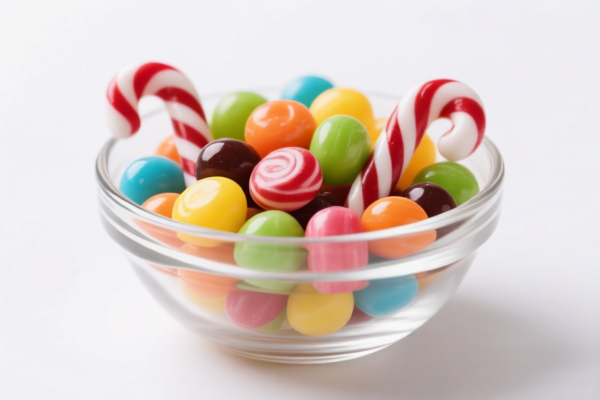
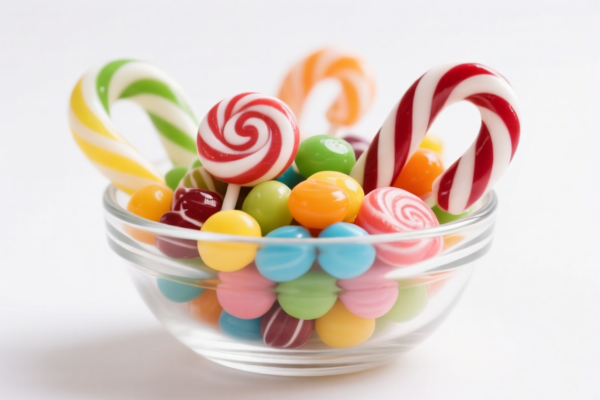
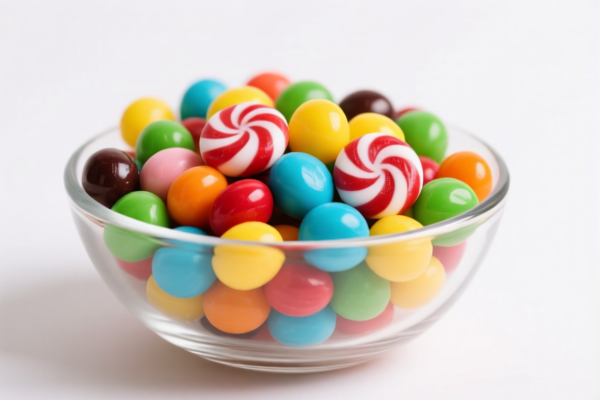
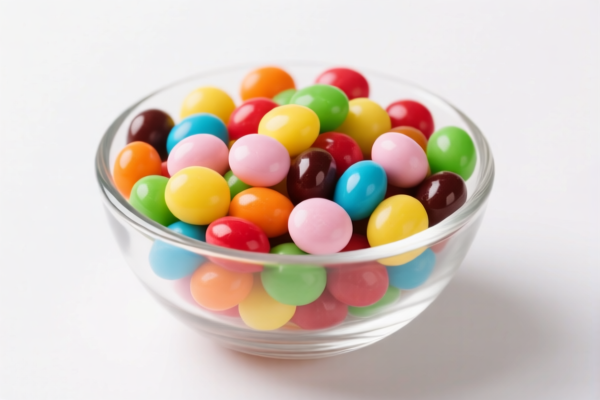
AI Analysis
🍬 Candy Bowl (Plastic Confectionery Containers)
🌐 HS Code Reference & Customs Clearance Guide | 2026 Latest Tariff Analysis | Professional Clearance Strategy
📌 I. Product Definition & Classification: What Exactly is a "Candy Bowl"?
In international trade, a "Candy Bowl" is generally classified under Chapter 39 (Plastics and Articles Thereof). However, the specific HS Code and resulting Tax Rate depend heavily on its intended use, shape, and legal definition as "tableware" vs. "general plastic container."
Key Distinction:
"Tableware" (Plastic Cutlery/Tableware): If the item is explicitly designed or marketed as eating/drinking vessels (bowls for serving candy/food), it falls under Heading 3924.
"Other Plastic Articles": If the item is a generic storage container, craft material, or not clearly defined as "tableware," it may fall under Heading 3926.
⚠️ Critical Warning:
Misclassification between 3924 (Tableware) and 3926 (Other) can lead to significant tax discrepancies due to different "Section 301" (Trade War) tariffs and "Section 122" duties.
📦 II. HS Code Classification Details (Based on Provided Data)
The following HS Codes are derived strictly from the provided <DATA> set. Each code has a distinct tax profile.
| HS Code | Product Description (Summary) | Key Classification Factor | Total Tax Rate |
|---|---|---|---|
3924.10.40.00 |
Plastic tableware, bowls for holding candy | Explicitly defined as Tableware | 13.4% |
3926.90.40.00 |
Other plastic products, container in the form of a bowl | Classified as General Plastic Product | 12.8% |
3924.10.20.00 |
Plastic tableware and sugar bowls | Classified as Tableware (Higher Base Tariff) | 24.0% |
3926.90.10.00 |
Plastic articles, container class, e.g., bowls | Classified as General Plastic Product (Other) | 20.9% |
3924.10.40.00 |
Plastic candy bowl, belongs to tableware category | Explicitly defined as Tableware | 13.4% |
🔍 Note on Duplication:
HS Code3924.10.40.00appears twice in the data with slightly different summaries ("Plastic tableware..." vs. "Plastic candy bowl..."). Both carry the same tax rate of 13.4%. This suggests this is the most favorable and standard classification for plastic candy bowls classified as tableware.
💰 III. 2026 Latest Tariff Rate Breakdown (Detailed Policy Analysis)
✅ Applicable Country: United States (US)
✅ Origin: China (CN)
✅ Effective Time: Current Trade Policies (Section 301 & 122)
🎯 1. The "Sweet Spot" Classification: 3924.10.40.00
(Plastic Tableware / Candy Bowl)
| Item | Detail |
|---|---|
| Base Tariff | 3.4% |
| Section 301 Add-on | 0.0% (Note: This code shows 0% additional trade war tariff in the provided data) |
| Section 122 Tariff | 10.0% |
| Total Tax Rate | 13.4% |
| Legal Basis Path | HTSUS:3924.10.40.00 → Base 3.4% + Sec 301 0.0% + Sec 122 10.0% |
📌 Explanation:
- This is the lowest tax rate among the "Tableware" (3924) categories.
- Section 122 (often related to national security or specific trade remedies) adds a flat 10%.
- Crucially, the data indicates 0% Section 301 tariff for this specific sub-heading, making it highly competitive.
🎯 2. The "General Plastic" Alternative: 3926.90.40.00
(Other Plastic Products / Bowl-shaped Container)
| Item | Detail |
|---|---|
| Base Tariff | 2.8% |
| Section 301 Add-on | 0.0% |
| Section 122 Tariff | 10.0% |
| Total Tax Rate | 12.8% |
| Legal Basis Path | HTSUS:3926.90.40.00 → Base 2.8% + Sec 301 0.0% + Sec 122 10.0% |
📌 Explanation:
- This is the absolute lowest tax rate (12.8%) in the entire dataset.
- However, it requires the product to be classified as "Other Plastic Products" rather than "Tableware."
- Risk: Customs may reclassify this as tableware if the product is clearly designed for food service, potentially triggering higher duties.
🎯 3. The "High Cost" Tableware: 3924.10.20.00
(Plastic Tableware & Sugar Bowls)
| Item | Detail |
|---|---|
| Base Tariff | 6.5% |
| Section 301 Add-on | 7.5% |
| Section 122 Tariff | 10.0% |
| Total Tax Rate | 24.0% |
| Legal Basis Path | HTSUS:3924.10.20.00 → Base 6.5% + Sec 301 7.5% + Sec 122 10.0% |
📌 Explanation:
- Avoid this code if possible. It has the highest total tax (24.0%).
- The Section 301 tariff is 7.5%, unlike the 0% in the favorable codes.
- This code seems to apply to specific types of tableware (e.g., sugar bowls) that are subject to stricter trade penalties.
🎯 4. The "Other Plastic" Penalty: 3926.90.10.00
(Plastic Articles, Container Class)
| Item | Detail |
|---|---|
| Base Tariff | 3.4% |
| Section 301 Add-on | 7.5% |
| Section 122 Tariff | 10.0% |
| Total Tax Rate | 20.9% |
| Legal Basis Path | HTSUS:3926.90.10.00 → Base 3.4% + Sec 301 7.5% + Sec 122 10.0% |
📌 Explanation:
- Although the base tariff is low (3.4%), the 7.5% Section 301 tariff pushes the total to 20.9%.
- Use only if3924classifications are rejected and3926.90.40.00is not applicable.
🛠️ IV. Customs Clearance Practical Advice (Pitfall Avoidance Guide)
✅ 1. Documentation Checklist (Must-Haves)
| Document | Required? | Purpose |
|---|---|---|
| ✅ Product Specifications | ✔️ | Define dimensions, material (e.g., PP, PE), and intended use (candy serving). |
| ✅ Product Photos | ✔️ | Show the bowl shape, lid (if any), and any "Tableware" markings. |
| ✅ Commercial Invoice | ✔️ | Clearly state "Plastic Candy Bowl" or "Plastic Tableware". Avoid vague terms like "Plastic Container." |
| ✅ Origin Certificate | ✔️ | To confirm Country of Origin (CN) for accurate Section 301/122 application. |
| ✅ FDA Compliance Doc | ✔️ | If claimed as "Food Contact," ensure FDA LFGB or similar certification is attached to avoid rejection. |
✅ 2. Declaration Strategy (Key Tips)
🔥 "Choose the Right Heading: 3924 for Tableware, 3926 for Containers. Watch the 301 Tariff!"
| Scenario | Recommended HS Code | Tax Rate | Reason |
|---|---|---|---|
| Best Case | 3924.10.40.00 |
13.4% | Lowest tableware tax; 0% Sec 301. |
| Aggressive Lower Tax | 3926.90.40.00 |
12.8% | Lowest overall tax; but higher risk of reclassification. |
| High Risk Avoidance | 3924.10.20.00 |
24.0% | AVOID unless specifically required by customs for sugar bowls. |
| Fallback Option | 3926.90.10.00 |
20.9% | Higher due to 7.5% Sec 301. |
✅ 3. Special Circumstances
| Situation | Handling Advice |
|---|---|
| Product is "Food Contact" | Ensure the declaration mentions "Food Safe" or "FDA Compliant" to support 3924 (Tableware) classification. |
| Product is for Decor Only | If not for food, you might argue for 3926, but customs often defaults to 3924 if it looks like tableware. |
| Mixed Container (Bowl + Lid) | Declare as a set. The primary purpose (bowl) determines the HS Code. |
| Customs Audit | If audited, provide photos showing the bowl's use for candy/food to justify 3924.10.40.00. |
🌍 V. Global Market Comparison (2026 Update)
| Market | Recommended HS Code | Tax Rate | Notes |
|---|---|---|---|
| 🇺🇸 USA | 3924.10.40.00 |
13.4% | Best balance of low tax and clear classification. |
| 🇨🇳 China | 3924.10.40.00 |
Varies | Import duties apply; check latest Chinese tariff schedule. |
| 🇪🇺 EU | 3924.10 |
~5-7% | No Section 122/301 equivalents; simpler structure. |
| 🇬🇧 UK | 3924.10 |
~5-7% | Post-Brexit tariffs apply; no US-style add-ons. |
📌 Conclusion:
- USA is the most complex market due to Section 301 and Section 122 tariffs.
-3924.10.40.00is the optimal choice for plastic candy bowls in the US, offering a balance of legal safety and low tax (13.4%).
-3926.90.40.00(12.8%) is tempting but risky; only use if you have strong evidence it is not "tableware."
📌 VI. Common Errors & Pitfalls (Lessons Learned)
❌ Error 1: Classifying a "Plastic Candy Bowl" as 3924.10.20.00
👉 Result: 24.0% Tax (7.5% higher than necessary).
Fix: Ensure the description specifies "Candy Bowl" or "Tableware" to qualify for 3924.10.40.00.
❌ Error 2: Using 3926.90.40.00 without proof
👉 Result: Customs reclassifies as 3924, leading to back taxes + penalties.
Fix: Only use 3926 if the item is clearly not for food service (e.g., craft bowl, decorative-only).
❌ Error 3: Ignoring Section 122 Tariff
👉 Result: Underpayment of 10%.
Fix: Remember, Section 122 (10%) applies to ALL codes in this dataset.
✅ Correct Declaration Example:
"Plastic Candy Bowl, Food Grade, White, 10oz, Plastic Tableware, Model CB-100, Made in China"
🎯 VII. Conclusion: Professional Declaration, Cost Optimization!
🎯 Remember the Rule:
🔹 "Tableware 3924 is Key, 40.00 is Best for Candy."
🔹 "Avoid 20.00 Subheading, Save 10.6% Instantly."
🔹 "Section 122 is Always 10%, Plan Your Budget!"
📌 Pro Tip:
If your candy bowls are OEM/Custom, include product images and FDA compliance docs with the entry. This strengthens the case for
3924.10.40.00(13.4%) over the higher-taxed3924.10.20.00(24.0%).
📣 Immediate Action:
📞 Verify HS Code: Confirm
3924.10.40.00with your customs broker.
📄 Prepare Docs: FDA Compliance + Product Photos.
🚀 Clear Customs Smoothly: Avoid the 24% tax trap!
✨ Professional Customs Clearance Starts with Accurate Classification!
💼 Your Profit Margin Depends on the Right HS Code!
Customer Reviews
About HS Code Classification
The Harmonized System (HS) is an internationally standardized nomenclature developed by the World Customs Organization (WCO) to classify traded products. Over 200 countries use the HS system as the basis for customs tariffs, trade statistics, and import/export regulations.
Each HS code follows a hierarchical structure:
- Chapter (2 digits) — Broad category of goods (e.g., Chapter 84: Machinery and Mechanical Appliances)
- Heading (4 digits) — More specific grouping within the chapter
- Subheading (6 digits) — Internationally standardized breakdown, used by all WCO member countries
- National subdivisions (8-10 digits) — Country-specific extensions for further classification, such as US HTSUS 10-digit codes
Correct HS code classification is essential for smooth customs clearance, accurate duty payment, and compliance with trade regulations. Misclassification can lead to customs delays, overpayment of duties, or penalties.
When importing from CN to US, the applicable tariff rates may include:
- Most-Favored-Nation (MFN) rate — The standard duty rate applied to WTO members
- General rate — Applied to countries without trade agreements
- Trade remedy duties — Additional tariffs such as Section 301 (anti-dumping), Section 232 (national security), or countervailing duties
The information provided on this page is for reference purposes only. For official classification, please consult with your local customs authority or a licensed customs broker.