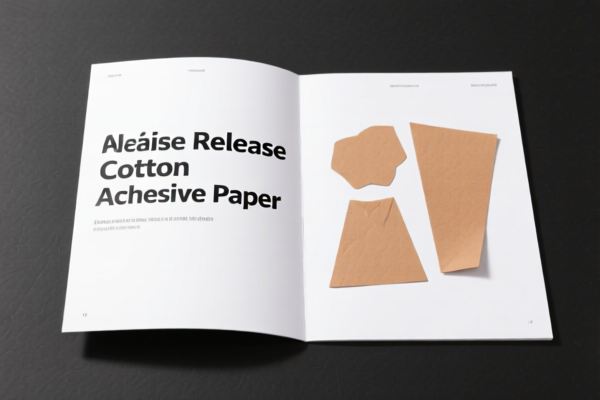
Canson Infinite Cotton Rag Paper
CN → US| HS Code | Tariff Rate | Origin | Destination | Doc |
|---|---|---|---|---|
| 4823901000 | 35.0% | CN | US | Official Doc |
| 4823908680 | 35.0% | CN | US | Official Doc |
Product Images



AI Analysis
📜 Canson Infinite Cotton Rag Paper (Archival Quality Paper)
🌐 HS Code Reference & Customs Clearance Guide | 2026 Latest Tariff Analysis | Professional Customs Strategy
📌 I. Product Definition & Classification: Do You Really Understand "Fine Art Paper"?
Canson Infinite Cotton Rag Paper is a premium, acid-free, archival-quality paper made from 100% cotton fibers. It is widely used in fine art printing, museum archives, and high-end photographic outputs. In international trade, it is classified based on its form (cut to size/shape) and material (cellulose fibers/paper pulp).
Key Distinction: - Raw Rolls: If imported as large rolls not cut to specific sizes, it might fall under different headings (e.g., Chapter 48.02). - Cut Sheets: Since the provided data explicitly mentions "cut to size or shape" (such as A4, A3, or custom dimensions for art printing), it falls under Heading 48.23.
⚠️ Critical Clarification:
- If the paper is cut into specific sizes (e.g., 12x12 inches, A4) for retail or professional use → HS Code 4823.
- If the paper is in uncut rolls → This data does not apply (likely HS 4802 or 4804).
- Assumption: Based on the provided<DATA>, we are dealing with cut sheets or pre-shaped paper articles.
📦 II. HS Code Classification Details (Based on Provided Data)
The provided data limits us to two specific HS Codes under Chapter 48.23 ("Other paper... cut to size or shape"). Both codes attract the same tariff rate, but they differ slightly in subheading hierarchy.
| HS Code | Product Description (Official) | Applicability | Material Composition |
|---|---|---|---|
4823.90.10.00 |
Other paper, paperboard, cellulose wadding and webs...: Other: Of paper pulp | General cut-to-size paper products not further specified in other subheadings. | 100% Cotton (Cellulose Fiber/Pulp) |
4823.90.86.80 |
Other paper, paperboard...: Other: Other: Other: Other: Other Other | Other articles of paper pulp/paper, not elsewhere specified. | 100% Cotton (Cellulose Fiber/Pulp) |
🔍 Key Insight:
- Both codes apply to Canson Cotton Rag if it is cut to size.
- The distinction between4823.90.10.00and4823.90.86.80is often administrative or based on specific national sub-hierarchy preferences. However, the tax outcome is identical in this dataset.
- Cotton Paper is classified as "Paper Pulp" or "Cellulose Fibers" because cotton is a natural cellulose fiber. It is not classified as textiles in this context when processed into paper sheets.
💰 III. 2026 Latest Tariff Rate Breakdown (Including Additional Duties)
✅ Applicable Market: Likely USA (Due to the specific "25% Additional Duty" structure common in US-China trade data provided).
✅ Origin: Assumed China (CN) or Subject to Section 301/Trade War Measures.
✅ Effective Date: As per provided data.
🎯 1. 4823.90.10.00 —— Cut-to-Size Paper of Paper Pulp
| Item | Content |
|---|---|
| Base Tariff | 0.0% (Most Favored Nation / General Rate) |
| Additional Duty (Section 301/Trade) | +25.0% |
| Total Tax Rate | 25.0% |
| Tax Calculation | CIF Value × 25% |
| De Minimis Exemption | ❌ Not Applicable for Section 301 goods (De Minimis typically does not apply to Section 301 tariffs). |
| Legal Basis | HS 4823.90.10.00 → Section 301 Footnotes (e.g., HTSUS 9903.88.01) |
📌 Explanation:
- Base Tariff 0%: Under normal MFN terms, paper products often have low or zero base duties.
- 25% Additional Duty: This is the critical cost driver. If the goods are of Chinese origin and not exempted, an additional 25% is levied on top of the base rate.
- Total Effective Rate: 25% regardless of whether you choose10.00or86.80in the provided data.
🎯 2. 4823.90.86.80 —— Other Paper Articles
| Item | Content |
|---|---|
| Base Tariff | 0.0% |
| Additional Duty (Section 301/Trade) | +25.0% |
| Total Tax Rate | 25.0% |
| Tax Calculation | CIF Value × 25% |
| De Minimis Exemption | ❌ Not Applicable |
| Legal Basis | HS 4823.90.86.80 → Section 301 Footnotes |
📌 Note:
- Same tax outcome. No cost advantage in choosing one HS code over the other based on this data.
🛠️ IV. Customs Clearance Practical Advice (Pitfall Avoidance Guide)
✅ 1. Documentation Checklist (Non-Negotiable)
| Document | Must Provide | Purpose |
|---|---|---|
| ✅ Product Specification Sheet | ✔️ | Must state: "100% Cotton," "Acid-Free," "Archival Quality," "Cut to Size." |
| ✅ Commercial Invoice | ✔️ | Clearly describe as "Canson Infinite Cotton Rag Paper Sheets, Cut to Size." Avoid vague terms like "Paper." |
| ✅ Packing List | ✔️ | Detail sheet sizes (e.g., A4, 12x12), weight, and quantity. |
| ✅ Origin Certificate | ✔️ | To prove country of origin. If Chinese, Section 301 tariffs apply unless exempt. |
| ✅ Labeling | ✔️ | Must show content (100% Cotton), manufacturer, and size. |
✅ 2. Classification Strategy
| Scenario | Recommended HS Code | Tax Rate | Why? |
|---|---|---|---|
| Cut Sheets (Retail/Pro) | 4823.90.10.00 or 4823.90.86.80 |
25% | Both codes match the "cut to size" description. 4823.90.10.00 is often preferred for general paper pulp articles. |
| Uncut Rolls | Not in Data (Likely 4802/4804) | Varies | Do NOT use 4823 codes for rolls. Misclassification leads to penalties. |
| Paperboard/Cardstock | Not Applicable | N/A | Cotton Rag is paper, not paperboard. Do not misclassify as 4810/4813. |
🔥 "Rule of Thumb":
"If it's cut, use 4823. If it's roll, use 4802/4804. Tax is 25% on Chinese cotton paper sheets."
✅ 3. Special Considerations for Cotton Rag Paper
- Material Definition: Cotton rag is cellulose fiber. Do not classify as textile (Chapter 50-63). It is a paper product.
- Archival Claims: While marketing claims "Archival," customs looks at physical composition. 100% cotton = paper pulp.
- Volume Discounts: If importing large volumes, consider Exclusion Lists for Section 301. Check if Canson Cotton Rag has an exclusion code (e.g., 8419, 8421, etc., though rare for paper).
🌍 V. Global Market Comparison (2026 Context)
| Market | Recommended HS Code | Base Tax | Additional Tax | Total Tax | Notes |
|---|---|---|---|---|---|
| 🇺🇸 USA | 4823.90.10.00 |
0% | +25% (Section 301) | 25% | High duty for Chinese-origin cotton paper. |
| 🇨🇳 China | 4823.90.10.00 |
6-10% | 0% | 6-10% | Import duty for foreign paper. |
| 🇪🇺 EU | 4823.90.80 |
6.5% | 0% | 6.5% | No additional tariffs for Chinese paper (unlike US). |
| 🇬🇧 UK | 4823.90.80 |
6.5% | 0% | 6.5% | Post-Brexit, aligns with EU rates. |
📌 Conclusion:
- USA is the most expensive market for Chinese-origin cotton rag paper due to the 25% Section 301 tariff.
- EU/UK offers lower duties, making it more competitive for European clients.
📌 VI. Common Mistakes & Pitfalls
❌ Mistake 1: Classifying cut cotton paper as Textile (HS 50-63).
👉 Consequence: Rejection by customs, misclassification penalties, and delayed clearance.
✅ Fix: Use HS 4823 (Paper Products).
❌ Mistake 2: Claiming De Minimis exemption for Section 301 goods.
👉 Consequence: If shipped via postal/courier, goods may be seized or duties charged upon entry.
✅ Fix: Prepare for full duty payment.
❌ Mistake 3: Using "Paper" as a generic description on Invoice.
👉 Consequence: Customs may assign a higher default duty or require additional inspection.
✅ Fix: Use "Cotton Rag Paper, Cut to Size, 100% Cellulose Fiber."
🎯 VII. Conclusion: Cost-Effective Clearance Strategy
🎯 Key Takeaway:
🔹 "Cotton Rag = Paper Pulp (HS 4823). Cut to Size = 25% Additional Tax (USA). Don't De Minimis Exempt."
🔹 "Choose4823.90.10.00for simplicity. Tax is 25% Total for US imports."
📌 Pro Tip:
If you are importing large volumes into the US, check if your specific Canson product line is on the Section 301 Exclusion List. Some paper products may have exemptions. If not, factor the 25% duty into your pricing strategy.
📣 Immediate Action:
📞 Verify Origin: Confirm if the cotton rag is from China. If from Thailand or Vietnam, 0% Additional Duty may apply (subject to rules of origin).
📄 Label Correctly: "100% Cotton Paper, Cut to Size."
🚀 Plan for 25% Duty in your landed cost calculation for US imports.
✨ Professional Clearance Starts with Accurate Classification!
💼 Every Percentage Point Counts in Global Trade!
Customer Reviews
About HS Code Classification
The Harmonized System (HS) is an internationally standardized nomenclature developed by the World Customs Organization (WCO) to classify traded products. Over 200 countries use the HS system as the basis for customs tariffs, trade statistics, and import/export regulations.
Each HS code follows a hierarchical structure:
- Chapter (2 digits) — Broad category of goods (e.g., Chapter 84: Machinery and Mechanical Appliances)
- Heading (4 digits) — More specific grouping within the chapter
- Subheading (6 digits) — Internationally standardized breakdown, used by all WCO member countries
- National subdivisions (8-10 digits) — Country-specific extensions for further classification, such as US HTSUS 10-digit codes
Correct HS code classification is essential for smooth customs clearance, accurate duty payment, and compliance with trade regulations. Misclassification can lead to customs delays, overpayment of duties, or penalties.
When importing from CN to US, the applicable tariff rates may include:
- Most-Favored-Nation (MFN) rate — The standard duty rate applied to WTO members
- General rate — Applied to countries without trade agreements
- Trade remedy duties — Additional tariffs such as Section 301 (anti-dumping), Section 232 (national security), or countervailing duties
The information provided on this page is for reference purposes only. For official classification, please consult with your local customs authority or a licensed customs broker.