Canvas Bag
CN → US| HS Code | Tariff Rate | Origin | Destination | Doc |
|---|---|---|---|---|
| 4202929100 | 52.6% | CN | US | Official Doc |
| 4202926091 | 41.3% | CN | US | Official Doc |
| 4202923120 | 52.6% | CN | US | Official Doc |
| 4202921500 | 41.3% | CN | US | Official Doc |
| 4202329300 | 52.6% | CN | US | Official Doc |
Product Images
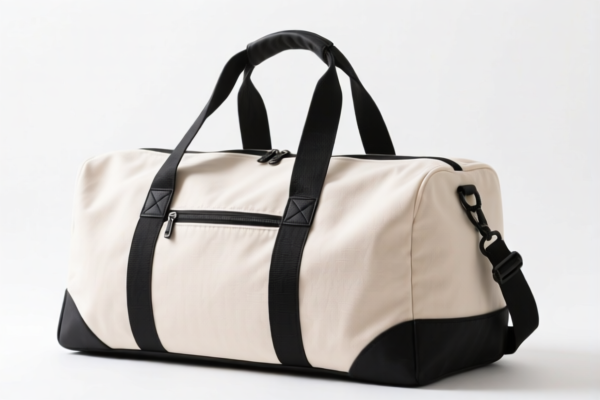
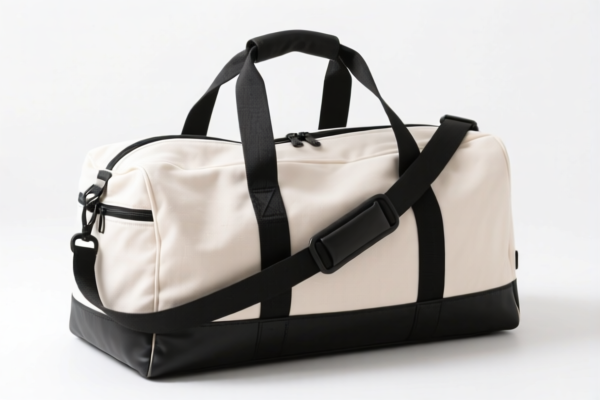
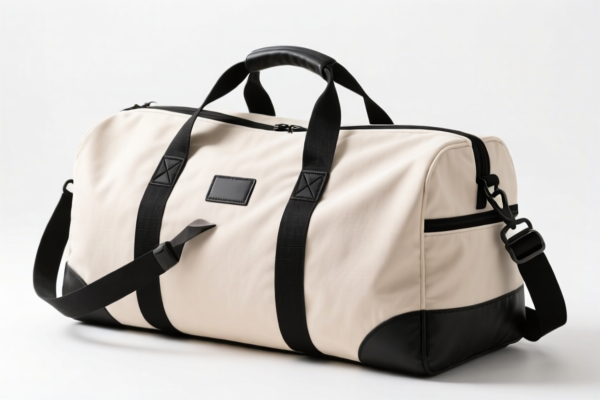
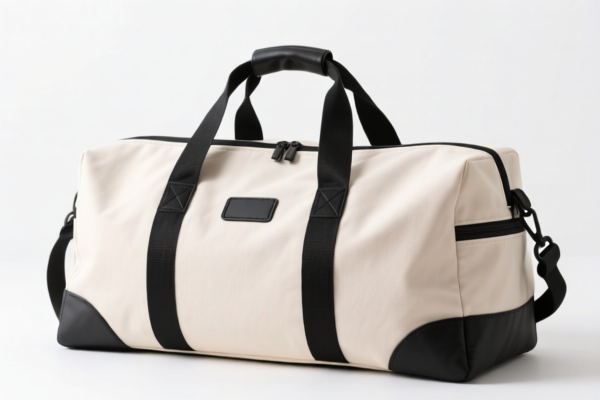
AI Analysis
👜 Canvas Bag & Textile Luggage (Comprehensive HS Code & Tariff Guide 2026)
🌐 HS Code Reference & Customs Clearance Guide | Latest 2026 Tariff Analysis | Professional Clearance Strategy
📌 I. Product Definition & Classification: Do You Really Know "Canvas Bags"?
"Canvas Bag" is a generic term in international trade, but in customs classification, the specific material composition and product form determine the HS Code, which drastically affects the tax burden. In the provided data, these products are classified under Chapter 42 (Articles of Leather; Related Articles), specifically headings 4202 (Trunks, suitcases, vanity cases... handbags, shopping bags...).
Key Classification Logic: 1. By Form: Are they Tote Bags, Backpacks, or Wallets? 2. By Material: Is it "Other Textile Materials" (mixed fabrics, synthetic fibers) or "Vegetable Fibers" (specifically Cotton)? * Note: In HS Code 4202.92, items made of textile materials (including cotton blends or synthetics) often fall into higher duty brackets compared to those explicitly defined under specific vegetable fiber subheadings in this dataset context.
⚠️ Critical Distinction:
- "Textile Material" (e.g., Polyester, Nylon, Cotton/Poly Blend): Generally classified under 4202.92.91 or 4202.92.31 → Higher Base Tax (17.6%).
- "Vegetable Fiber" (Pure Cotton specified as such): Classified under 4202.92.60 or 4202.92.15 → Lower Base Tax (6.3%).
- Warning: Do not assume "Canvas = Cotton = Low Tax." If it's a cotton-poly blend, it’s often treated as "Other Textile Materials" (17.6% base).
📦 II. HS Code Classification Details (2026 Latest Tariff Reference)
Based strictly on the provided data, here are the five specific HS Codes for Canvas Bags:
| HS Code | Product Summary | Material/Form Details | Base Tax Rate |
|---|---|---|---|
| 4202.92.91.00 | Canvas Tote Bag | Textile Material (e.g., Cotton/Man-made Fiber Blend), Form: Bag | 17.6% |
| 4202.92.60.91 | Canvas Tote Bag | Cotton-made, Form: Other containers (excluding retail jewelry boxes) | 6.3% |
| 4202.92.31.20 | Canvas Backpack | Textile Material or Man-made Fiber, Form: Backpack | 17.6% |
| 4202.92.15.00 | Canvas Backpack | Cotton-made Vegetable Fiber, Form: Travel/Sports Bags | 6.3% |
| 4202.32.93.00 | Canvas Wallet | Textile Material, Form: Wallet/Container | 17.6% |
🔍 Focus Point:
- Notice the 11.3% difference in Base Tax (17.6% vs. 6.3%) between "Textile/Mixed" and "Cotton-made" items. - All items share the same Additional Taxes: 25% (Section 301) + 10% (Section 122/IEEPA) = 35% Additional.
💰 III. 2026 Latest Tariff Rate Breakdown (Including Surcharges & Policy Add-ons)
✅ Applicable Country: United States (US)
✅ Origin: China (CN) (Implied by "Section 122" and 25% tariff structure typical for CN-US trade)
✅ Effective Time: Current 2026 Tariff Structure
🎯 1. High Base Tax Category (17.6% Base)
Codes: 4202.92.91.00 (Tote), 4202.92.31.20 (Backpack), 4202.32.93.00 (Wallet)
| Item | Content |
|---|---|
| Base Tariff | 17.6% (Ad Valorem) |
| Section 301 Surcharge | +25.0% (USITC Footnote for China origin) |
| Section 122 / IEEPA Surcharge | +10.0% (Specific trade action tariffs) |
| Total Tariff Rate | 52.6% |
| Tax Calculation | CIF Value × 52.6% |
| De Minimis Eligibility | ❌ No (Value > $800 threshold applies full duties) |
| Legal Basis Path | HTSUS:4202.92.91 → USITC:301_Footnote → IEEPA:Section_122 |
📌 Explanation:
- The 17.6% Base Tax applies to bags made of general "Textile Materials" or "Man-made Fibers." - The 35% Additional Tax (25% + 10%) is mandatory for Chinese-origin goods. - Total 52.6% makes this a high-cost category for profit margins.
🎯 2. Low Base Tax Category (6.3% Base)
Codes: 4202.92.60.91 (Cotton Tote), 4202.92.15.00 (Cotton Backpack)
| Item | Content |
|---|---|
| Base Tariff | 6.3% (Ad Valorem) |
| Section 301 Surcharge | +25.0% (USITC Footnote for China origin) |
| Section 122 / IEEPA Surcharge | +10.0% (Specific trade action tariffs) |
| Total Tariff Rate | 41.3% |
| Tax Calculation | CIF Value × 41.3% |
| De Minimis Eligibility | ❌ No |
| Legal Basis Path | HTSUS:4202.92.15 → USITC:301_Footnote → IEEPA:Section_122 |
📌 Explanation:
- The 6.3% Base Tax applies only if the product is explicitly declared as "Cotton-made" or "Vegetable Fiber" under the specific subheadings. - Total 41.3% is still significant, but 11.3% cheaper than the textile category. - Strategy: If your bag is 100% Cotton, ensure your commercial invoice and material description explicitly state "100% Cotton" to justify this lower rate. If it is "Canvas" (which is often a blend), customs may scrutinize it and reclassify it to 52.6%.
🛠️ IV. Customs Clearance Practical Advice (Pitfall Avoidance Guide)
✅ 1. Documentation Checklist (Non-negotiable)
| Document | Must Provide | Reason |
|---|---|---|
| Commercial Invoice | ✔️ | Must specify Material Composition (e.g., "100% Cotton" vs. "Polyester Blend"). Ambiguity leads to reclassification to 17.6%. |
| Product Specs Sheet | ✔️ | Details weave type, weight, and lining material. |
| Material Test Report | ✔️ | Third-party lab report confirming fiber content (Cotton vs. Synthetic). Crucial for claiming 6.3% base tax. |
| Photos | ✔️ | Clear images of labels, seams, and any "Made in China" tags. |
| Bill of Lading | ✔️ | Must match invoice quantities and values. |
✅ 2. Declaration Tips (Key Mnemonics)
🔥 "Material Dictates Base, Form Dictates Code, Add 35% Always!"
| Scenario | Correct Declaration | Error to Avoid |
|---|---|---|
| 100% Cotton Canvas | "Canvas Tote, 100% Cotton" → 4202.92.60.91 (6.3% Base) |
Labeling just "Canvas" → Risk of 4202.92.91 (17.6% Base) |
| Cotton/Poly Blend | "Canvas Tote, 65% Cotton/35% Polyester" → 4202.92.91.00 (17.6% Base) |
Claiming 100% Cotton → Customs rejection & penalties |
| Backpack | "Canvas Backpack, Textile" → 4202.92.31.20 (17.6% Base) |
Declaring as "Plastic Bag" → Misclassification |
| Wallet | "Canvas Wallet, Textile" → 4202.32.93.00 (17.6% Base) |
Declaring as "Apparel" → Wrong Chapter |
✅ 3. Special Cases & Handling
| Situation | Handling Advice |
|---|---|
| "Canvas" Ambiguity | If "Canvas" is a blend, you must pay 17.6% base. Do not try to claim 6.3% without proof. |
| Lining Material | If the outer layer is cotton but lining is synthetic, check HTS notes. Usually, the outer material determines classification in Chapter 42. |
| Retail Jewelry Box Exclusion | Code 4202.92.60.91 explicitly excludes "retail jewelry boxes." Ensure your bag is not shaped/packaged like a jewelry box. |
| Seasonal Items | Bags are often seasonal. Ensure arrival dates avoid port congestion, as clearance delays compound the high tax cost. |
🌍 V. Global Market Comparison (2026 Context)
| Country/Region | Recommended HS Code | Total Tariff (China Origin) | Notes |
|---|---|---|---|
| 🇺🇸 USA | 4202.92.xxxx |
41.3% - 52.6% | High due to 301 + 122 tariffs. Material proof is key. |
| 🇨🇳 China (Import) | 4202.92.xxxx |
~10-15% | Lower base rates, no Section 301/122. |
| 🇪🇺 EU | 4202.92.xxxx |
~12% | No Section 301/122. Standard MFN rates apply. |
| 🇬🇧 UK | 4202.92.xxxx |
~12% | Post-Brexit tariff schedules similar to EU. |
📌 Conclusion:
- The US market is the most challenging for canvas bags due to the layered tariff structure (Base + 301 + 122). - Strategy: If sourcing from China, optimize material declaration (pure cotton if possible) to save 11.3% on the base tax. - For EU/UK, focus on CE/Fair Trade certifications as tariff is less of a pain point.
📌 VI. Common Errors & Pitfalls (Lessons Learned)
❌ Error 1: Declaring "Canvas" without material breakdown.
👉 Consequence: Customs defaults to "Other Textile Materials" → 17.6% Base Tax (52.6% Total).
✅ Fix: Provide a lab test report for fiber content.
❌ Error 2: Confusing "Backpack" with "Sports Bag" in Chapter 63.
👉 Consequence: Misclassification. Chapter 42 (Leather/Textile Articles) is correct for structured bags; Chapter 63 is for unstructured sacks.
✅ Fix: Use HS 4202 for structured backpacks/totes.
❌ Error 3: Ignoring Section 122 Tariff.
👉 Consequence: Budgeting for only 25% tax, but actual duty is 52.6%. Profit margin wiped out.
✅ Fix: Always add +10% to your cost calculation for US imports from China.
🎯 VII. Conclusion: Professional Declaration, Cost Control, Efficiency
🎯 Remember the Mantra:
🔹 "Material defines the Base, 35% is the Additional Tax, Proof of Cotton Saves You 11.3%!"
🔹 "Total Tax = Base (6.3% or 17.6%) + 35%. Don't guess, test!"
📌 Pro Tip:
If your canvas bags are made in Vietnam, Indonesia, or India, you may avoid the 25% Section 301 and 10% Section 122 tariffs.
Result: Only Base Tax applies (6.3% or 17.6%).
👉 This is a massive saving! Consider supply chain diversification if volumes are high.
📣 Immediate Action:
📞 Contact your freight forwarder + Request Material Test Report + Pre-classify HS Code
🚀 Let your Canvas Bags Clear Smoothly, Maximize Profits, and Avoid Surprises!
✨ Professional Clearance Starts with Precise Classification!
💼 Every Percent of Tax Saved is Pure Profit!
Customer Reviews
About HS Code Classification
The Harmonized System (HS) is an internationally standardized nomenclature developed by the World Customs Organization (WCO) to classify traded products. Over 200 countries use the HS system as the basis for customs tariffs, trade statistics, and import/export regulations.
Each HS code follows a hierarchical structure:
- Chapter (2 digits) — Broad category of goods (e.g., Chapter 84: Machinery and Mechanical Appliances)
- Heading (4 digits) — More specific grouping within the chapter
- Subheading (6 digits) — Internationally standardized breakdown, used by all WCO member countries
- National subdivisions (8-10 digits) — Country-specific extensions for further classification, such as US HTSUS 10-digit codes
Correct HS code classification is essential for smooth customs clearance, accurate duty payment, and compliance with trade regulations. Misclassification can lead to customs delays, overpayment of duties, or penalties.
When importing from CN to US, the applicable tariff rates may include:
- Most-Favored-Nation (MFN) rate — The standard duty rate applied to WTO members
- General rate — Applied to countries without trade agreements
- Trade remedy duties — Additional tariffs such as Section 301 (anti-dumping), Section 232 (national security), or countervailing duties
The information provided on this page is for reference purposes only. For official classification, please consult with your local customs authority or a licensed customs broker.