Canvas Bags
CN → US| HS Code | Tariff Rate | Origin | Destination | Doc |
|---|---|---|---|---|
| 4202929100 | 52.6% | CN | US | Official Doc |
| 4202926091 | 41.3% | CN | US | Official Doc |
| 4202923120 | 52.6% | CN | US | Official Doc |
| 4202921500 | 41.3% | CN | US | Official Doc |
| 4202329300 | 52.6% | CN | US | Official Doc |
Product Images
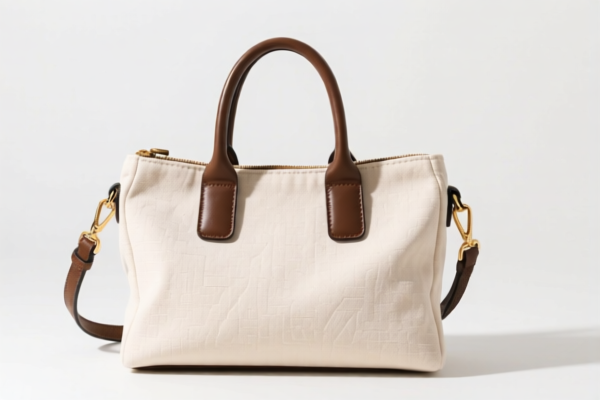
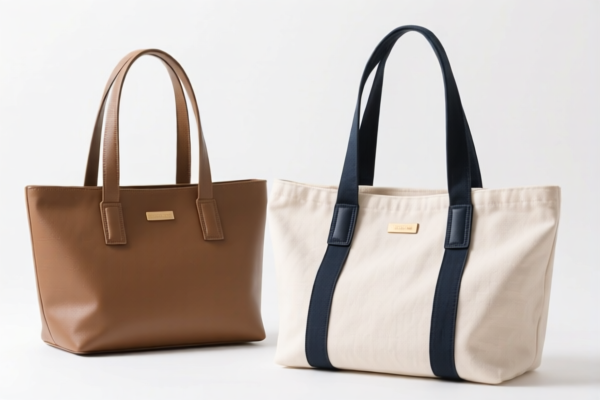
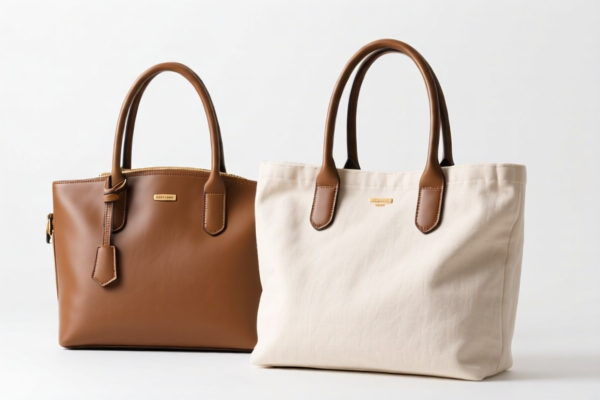
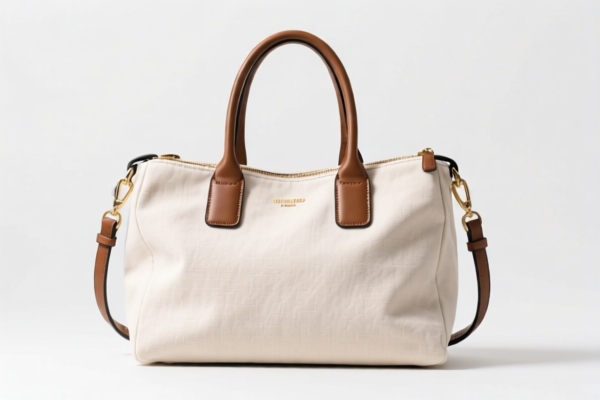
AI Analysis
🎒 Canvas Bags (Canvas Handbags, Tote Bags, Backpacks, Wallets)
🌐 HS Code Reference & Customs Clearance Guide | 2026 Latest Tariff Breakdown | Professional Import Strategy
📌 One-Stop Clarity for U.S. Importers – Tax, Classification, and Compliance Deep Dive
📦 I. Product Definition & Classification: What Exactly Is a “Canvas Bag”?
Canvas bags are textile-based hand-carry or shoulder-carry containers made from cotton, synthetic fibers, or blends (e.g., cotton-polyester). They include:
- ✅ Tote bags (hand-held, flat-bottom, open-top)
- ✅ Backpacks (with shoulder straps, used for travel, sports, or daily use)
- ✅ Wallets / Small Pouches (small, flat, made from canvas-like fabric)
⚠️ Key Distinction:
- If the bag is not a retail jewelry box and made from textile material, it falls under HS Code 4202.92.xxxx — not under 4202.32.93.00 (which is for wallets made from leather or leather-like materials).
📊 II. HS Code Classification Breakdown (2026 U.S. Tariff Authority – Updated)
| HS Code | Product Description | Tax Rate | Key Classification Rule |
|---|---|---|---|
4202.92.91.00 |
Canvas tote bag, made from textile material (e.g., cotton or synthetic fiber blend) | 52.6% | General category for non-retail textile bags |
4202.92.60.91 |
Cotton canvas bag, not a retail jewelry box | 41.3% | Lower base rate due to cotton origin |
4202.92.31.20 |
Canvas backpack, made from textile or synthetic fiber | 52.6% | Backpacks fall under same tariff as totes |
4202.92.15.00 |
Cotton canvas backpack, used for travel, sports, or similar purposes | 41.3% | Specialized use category with reduced base rate |
4202.32.93.00 |
Canvas wallet, made from textile material (meets synthetic/fiber criteria) | 52.6% | Applies even if small — not a jewelry box |
🔍 Critical Note:
- "Canvas" = textile material → not leather → cannot be classified under 4202.32.93.00 unless it’s leather or imitation leather.
- All these items are excluded from the “retail jewelry box” exception, so they are fully taxable.
💰 III. 2026 U.S. Tariff Breakdown – Full Tax Clause Explanation
✅ Applicable Country: China (CN)
✅ Effective Date: November 10, 2025 (inclusive)
✅ Applicable Law: U.S. Trade Act Section 301 + IEEPA (International Emergency Economic Powers Act)
🎯 1. 4202.92.91.00 – Canvas Tote Bag (Textile Blend)
| Tax Component | Rate | Legal Basis | Explanation |
|---|---|---|---|
| Base Duty | 17.6% | U.S. HTSUS 4202.92.91.00 | Standard tariff for non-leather textile bags |
| Section 301 (USITC) Add-on | +25.0% | USITC Footnote 9903.88.01 | Imposed under Section 301 for Chinese-origin goods |
| IEEPA (Emergency Powers) Add-on | +10.0% | IEEPA: 9903.01.24 | Applies to all goods from China, regardless of product type |
| Total Effective Duty | 52.6% | — | Highest tier — must be budgeted for |
📌 Why 52.6%?
- 17.6% base + 25% Section 301 + 10% IEEPA = 52.6%
- No de minimis exemption applies → even $100 bags cost $52.60 in duties
🎯 2. 4202.92.60.91 – Cotton Canvas Bag (Non-Jewelry Box)
| Tax Component | Rate | Legal Basis | Explanation |
|---|---|---|---|
| Base Duty | 6.3% | HTSUS 4202.92.60.91 | Lower rate for cotton-only bags |
| Section 301 Add-on | +25.0% | Footnote 9903.88.01 | Applies regardless of fiber type |
| IEEPA Add-on | +10.0% | IEEPA: 9903.01.24 | Applies to all China-origin goods |
| Total Effective Duty | 41.3% | — | Still very high, but 11.3% lower than blended fiber bags |
📌 Why 41.3%?
- 6.3% base + 25% + 10% = 41.3%
- Cotton origin reduces base rate, but no relief from Section 301 or IEEPA
🎯 3. 4202.92.31.20 – Canvas Backpack (Textile/Synthetic Fiber)
| Tax Component | Rate | Legal Basis | Explanation |
|---|---|---|---|
| Base Duty | 17.6% | HTSUS 4202.92.31.20 | Backpacks classified under same tariff as totes |
| Section 301 Add-on | +25.0% | Footnote 9903.88.01 | Applies to all Chinese-origin bags |
| IEEPA Add-on | +10.0% | IEEPA: 9903.01.24 | Universal China tariff |
| Total Effective Duty | 52.6% | — | Same as tote bags |
📌 Key Insight:
- Backpacks are not treated differently from totes — same tax rate
- Even if used for travel or sports, no special exemption
🎯 4. 4202.92.15.00 – Cotton Canvas Backpack (Travel/Sports Use)
| Tax Component | Rate | Legal Basis | Explanation |
|---|---|---|---|
| Base Duty | 6.3% | HTSUS 4202.92.15.00 | Cotton-based, specialized use |
| Section 301 Add-on | +25.0% | Footnote 9903.88.01 | Applies regardless of use |
| IEEPA Add-on | +10.0% | IEEPA: 9903.01.24 | Universal China tariff |
| Total Effective Duty | 41.3% | — | 11.3% lower than blended fiber backpacks |
📌 Why 41.3%?
- Cotton + use-based classification → lower base rate, but no relief from extra tariffs
🎯 5. 4202.32.93.00 – Canvas Wallet (Textile Material)
| Tax Component | Rate | Legal Basis | Explanation |
|---|---|---|---|
| Base Duty | 17.6% | HTSUS 4202.32.93.00 | Applies to textile wallets |
| Section 301 Add-on | +25.0% | Footnote 9903.88.01 | Applies to all China-origin goods |
| IEEPA Add-on | +10.0% | IEEPA: 9903.01.24 | Universal China tariff |
| Total Effective Duty | 52.6% | — | Same as tote and backpack |
📌 Important:
- Even small canvas wallets are taxed at 52.6% if made from textile material
- Not exempt even if used for personal storage
🛠️ IV. Customs Clearance Best Practices (Pro Tips to Avoid Penalties)
✅ 1. Required Documentation (Must-Have List)
| Document | Required? | Why It Matters |
|---|---|---|
| ✅ Commercial Invoice | ✔️ | Must state exact product type, e.g., "Canvas Tote Bag, Cotton-Polyester Blend" |
| ✅ Packing List | ✔️ | Shows quantity, weight, packaging, and HS Code |
| ✅ Product Photos (Clear & Labeled) | ✔️ | Show material, stitching, size, straps, closure |
| ✅ Material Certificate / Lab Test Report | ✔️ | Prove cotton vs. synthetic blend → affects base rate |
| ✅ Certificate of Origin (CO) | ✔️ | Required for Section 301/IEEPA claims; China = 100% tariff |
| ✅ Bill of Lading / Air Waybill | ✔️ | Proof of shipment and origin |
| ✅ Customs Broker Letter of Authority | ✔️ | Required for filing |
✅ 2.申报技巧(Key Rules to Remember)
🔥 "Material Matters, Use Doesn’t – Cotton Lowers Base, But Not Extra Taxes!"
| Scenario | Correct HS Code | Wrong Approach | Risk |
|---|---|---|---|
| Cotton tote bag | 4202.92.60.91 |
4202.92.91.00 |
Higher duty |
| Cotton backpack | 4202.92.15.00 |
4202.92.31.20 |
Higher duty |
| Canvas wallet (textile) | 4202.32.93.00 |
4202.32.93.00 (correct) |
✅ Safe |
| Blended fiber tote | 4202.92.91.00 |
4202.92.60.91 |
Wrong – higher rate |
✅ Pro Tip:
- Label product clearly as “Cotton”, “Polyester Blend”, or “Textile Material” on invoice and packaging
- Never say “leather” unless it truly is — misclassification = penalties
✅ 3. Special Cases & Risk Mitigation
| Situation | Recommended Action |
|---|---|
| Bulk orders of 10,000+ bags | Apply for Advance Ruling (Pre-Clearance) – get official HS Code confirmation |
| Custom designs / private label | Provide design sketches + material specs to broker |
| Frequent shipments | Use HTSUS classification software (e.g., ImportGenius, TariffData) |
| High-value bags | Consider transshipment via Vietnam/Mexico to avoid 301/IEEPA tariffs (if eligible) |
🌍 V. Global Market Tariff Comparison (2026)
| Country | Recommended HS Code | Base Duty | Extra Tariffs? | Notes |
|---|---|---|---|---|
| 🇺🇸 United States | 4202.92.91.00 etc. |
6.3%–17.6% | ✅ +25% +10% | Total: 41.3%–52.6% |
| 🇨🇳 China | 4202.92.91.00 |
5% | ❌ No | Low duty, but no export to U.S. |
| 🇪🇺 European Union | 4202.92.91.00 |
0% (if CE) | ❌ No | No extra tariffs |
| 🇦🇺 Australia | 4202.92.91.00 |
5% | ❌ No | No 301/IEEPA |
| 🇯🇵 Japan | 4202.92.91.00 |
0% | ❌ No | No extra tariffs |
📌 Takeaway:
- U.S. is the only market with 301 + IEEPA tariffs on canvas bags
- China, EU, Australia, Japan: no extra tariffs — ideal for re-export
📌 VI. Common Mistakes & How to Avoid Them (Avoid Costly Errors!)
❌ Mistake 1:
"I’ll just call it a ‘tote’ and use a generic description"
👉 Result: Customs may reclassify as higher-duty item → penalties, delays
✅ Fix: Use exact product name + material + use
Example: "Cotton-Polyester Canvas Tote Bag, 15x18x6 in, 2 Shoulder Straps, for Retail or Gift Use"
❌ Mistake 2:
"It’s small — no need to declare properly"
👉 Result: 52.6% duty on $10 bag = $5.26 — no de minimis!
✅ Fix: All canvas bags from China are subject to 41.3%–52.6% — no exceptions
❌ Mistake 3:
"I can split a backpack into parts"
👉 Result: Each part taxed at 89.5% (e.g., strap + bag = 45% + 45% = 90%) → total over 100%
✅ Fix: Never split — declare as one unit
🎯 VII. Final Verdict: Smart Import Strategy for 2026
✅ Key Rule:
- Material matters more than use
- Cotton = lower base rate → save 11.3%
- But Section 301 + IEEPA = unavoidable → 52.6% is the ceiling🔥 Pro Tip:
- If you’re importing from China, budget for 41.3%–52.6%
- If you’re sourcing from Vietnam/Mexico, apply for origin certification → avoid 301/IEEPA
- Always get a pre-clearance ruling for large or custom orders
📣 Immediate Action Required!
📞 Contact a U.S.-licensed customs broker + provide:
- Product photos
- Material specs
- Commercial invoice
- Request HS Code pre-ruling🚀 Avoid delays, penalties, and surprise duties — get your canvas bags cleared right the first time!
✨ Professional Customs Starts with Accurate Classification!
💼 Your profit margin depends on every percentage point — don’t lose it to a misclassified bag!
Customer Reviews
About HS Code Classification
The Harmonized System (HS) is an internationally standardized nomenclature developed by the World Customs Organization (WCO) to classify traded products. Over 200 countries use the HS system as the basis for customs tariffs, trade statistics, and import/export regulations.
Each HS code follows a hierarchical structure:
- Chapter (2 digits) — Broad category of goods (e.g., Chapter 84: Machinery and Mechanical Appliances)
- Heading (4 digits) — More specific grouping within the chapter
- Subheading (6 digits) — Internationally standardized breakdown, used by all WCO member countries
- National subdivisions (8-10 digits) — Country-specific extensions for further classification, such as US HTSUS 10-digit codes
Correct HS code classification is essential for smooth customs clearance, accurate duty payment, and compliance with trade regulations. Misclassification can lead to customs delays, overpayment of duties, or penalties.
When importing from CN to US, the applicable tariff rates may include:
- Most-Favored-Nation (MFN) rate — The standard duty rate applied to WTO members
- General rate — Applied to countries without trade agreements
- Trade remedy duties — Additional tariffs such as Section 301 (anti-dumping), Section 232 (national security), or countervailing duties
The information provided on this page is for reference purposes only. For official classification, please consult with your local customs authority or a licensed customs broker.