Canvas Coin Purse
CN → US| HS Code | Tariff Rate | Origin | Destination | Doc |
|---|---|---|---|---|
| 4202329100 | 52.6% | CN | US | Official Doc |
| 4202329300 | 52.6% | CN | US | Official Doc |
| 4202929100 | 52.6% | CN | US | Official Doc |
| 4202926091 | 41.3% | CN | US | Official Doc |
| 4202923120 | 52.6% | CN | US | Official Doc |
Product Images
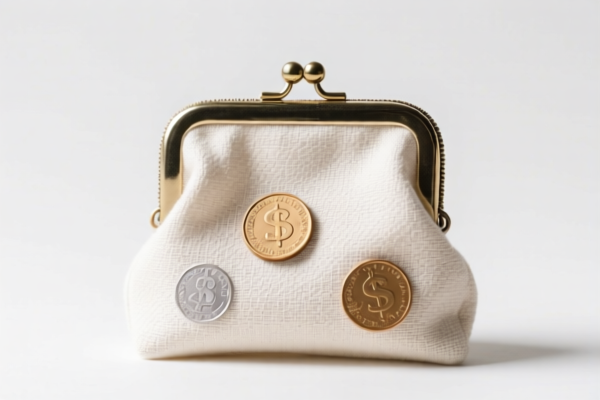
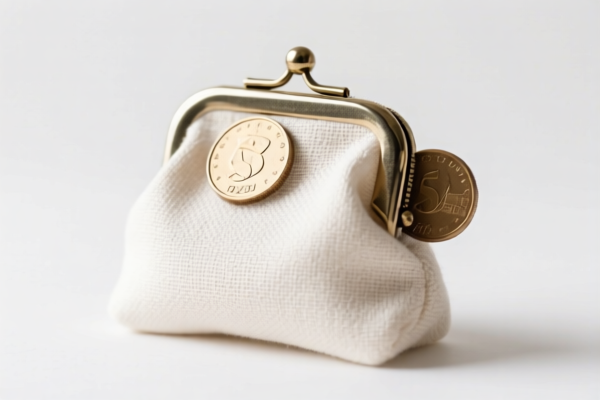
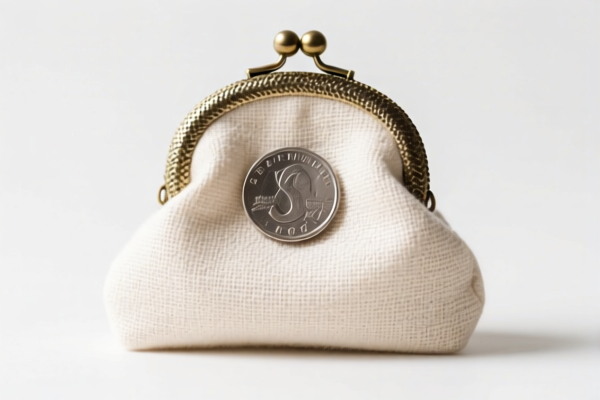

AI Analysis
🎒 Canvas Coin Purse (Canvas Wallets & Small Bags)
🌐 HS Code Reference & Customs Clearance Guide | 2026 Latest Tariff Analysis | Professional Clearance Strategy
📌 1. Product Definition & Classification: Do You Really Know "Canvas Coin Purse"?
A Canvas Coin Purse is typically a small, portable container made of textile materials (cotton, synthetic, or mixed) used for holding coins, cash, or small essentials. In international trade, these items are classified under Chapter 42: Articles of Leather; Travel Goods, Hand Bags and Similar Containers.
The key to accurate classification lies in the material composition and specific use. Canvas products generally fall under two main categories depending on whether they are explicitly "wallets" (for holding cards/currency) or "bags/containers" (general storage).
⚠️ Key Distinction Points:
- If the item is primarily designed as a wallet (for coins/cards/cash) → It falls under 4202.32 (Articles for holding coins or banknotes, or for writing implements).
- If the item is a small bag/pouch (for general storage, not strictly a "wallet" structure) → It falls under 4202.92 (Other articles of bedding or travel goods, including bags).
📦 2. HS Code Classification Details (2026 Latest Tariff Authority Comparison)
| HS Code | Product Description | Material Composition | Application/Use |
|---|---|---|---|
4202.32.91.00 |
Canvas Wallet | Textile Materials | Wallets (Coins, Cash) |
4202.32.93.00 |
Canvas Wallet | Artificial Fibers / Textile Materials | Wallets (Coins, Cash) |
4202.92.91.00 |
Canvas Bag | Artificial Fibers | Bag/Container (General Storage) |
4202.92.60.91 |
Canvas Bag | Cotton | Bag/Container (General Storage) |
4202.92.31.20 |
Canvas Backpack | Textile or Artificial Fibers | Backpack (Shoulder Bag) |
🔍 Critical Reminder:
- All items explicitly described as "Wallet" (even for coins) should preferentially be classified under 4202.32.
- Items described as "Bag", "Pouch", or "Container" without specific "wallet" function should be classified under 4202.92.
- The distinction between "Textile" (Natural/General) and "Artificial Fibers" (Synthetic) can affect the sub-heading, but in this data set, both 4202.32 variants carry the same high tariff rate.
💰 3. 2026 Latest Tariff Rate Details (Including Additional Taxes & Policy Surcharges)
✅ Applicable Country: United States (US)
✅ Country of Origin: China (CN)
✅ Effective Date: Post-November 2025 (Including subsequent imports)
🎯 1. 4202.32.91.00 & 4202.32.93.00 —— Canvas Wallets
| Item | Content |
|---|---|
| Base Tariff Rate | 17.6% (Ad Valorem) |
| Section 301 Additional Tariff | +25.0% (Due to Trade Friction) |
| Section 122 Tariff | +10.0% (Specific Administrative Surcharge) |
| Total Effective Tax Rate | 52.6% |
| Tax Calculation | CIF Value × 52.6% |
| De Minimis Eligibility | ❌ Not Eligible (High tariff rates usually exclude de minimis exemptions for these categories) |
| Legal Basis Path | Base: 17.6% → 301: 25.0% → 122: 10.0% |
📌 Explanation:
- The 17.6% base rate is the standard Most Favored Nation (MFN) rate for textile wallets.
- The 25.0% is the standard Section 301 tariff for Chinese-origin goods in this category.
- The 10.0% is the Section 122 tariff, an additional administrative surcharge.
- Total 52.6% is a very high tariff burden. Cost planning must account for this significant increase.
🎯 2. 4202.92.91.00 —— Canvas Bag (Artificial Fiber)
| Item | Content |
|---|---|
| Base Tariff Rate | 17.6% |
| Section 301 Additional Tariff | +25.0% |
| Section 122 Tariff | +10.0% |
| Total Effective Tax Rate | 52.6% |
| Tax Calculation | CIF Value × 52.6% |
| Legal Basis Path | Base: 17.6% → 301: 25.0% → 122: 10.0% |
📌 Note:
- Identical tariff structure to the wallet if made of artificial fibers/textiles.
- Misclassifying a "Bag" as a "Wallet" or vice versa will not change the rate significantly, but accurate description is still required for customs compliance.
🎯 3. 4202.92.60.91 —— Canvas Bag (Cotton)
| Item | Content |
|---|---|
| Base Tariff Rate | 6.3% |
| Section 301 Additional Tariff | +25.0% |
| Section 122 Tariff | +10.0% |
| Total Effective Tax Rate | 41.3% |
| Tax Calculation | CIF Value × 41.3% |
| Legal Basis Path | Base: 6.3% → 301: 25.0% → 122: 10.0% |
📌 Key Advantage:
- Lower Base Rate: Cotton-based canvas bags have a lower base tariff (6.3%) compared to synthetic/textile wallets/bags (17.6%).
- Total Rate: 41.3%, which is 11.3 percentage points lower than the 52.6% rate for other canvas items.
- Strategy: If the product can be legitimately classified as a "Cotton Canvas Bag" rather than a "Wallet" or "Synthetic Bag," significant tax savings are possible.
🎯 4. 4202.92.31.20 —— Canvas Backpack
| Item | Content |
|---|---|
| Base Tariff Rate | 17.6% |
| Section 301 Additional Tariff | +25.0% |
| Section 122 Tariff | +10.0% |
| Total Effective Tax Rate | 52.6% |
| Legal Basis Path | Base: 17.6% → 301: 25.0% → 122: 10.0% |
📌 Note:
- Backpacks are also subject to the high 52.6% rate.
- Ensure the product is clearly described as a "Backpack" and not a "Hand Bag" or "Wallet," as sub-headings may differ, though rates are similar here.
🛠️ 4. Customs Clearance Practical Advice (Battle-Hardened Pitfall Guide)
✅ 1. Required Documentation Checklist
| Document | Mandatory? | Notes |
|---|---|---|
| ✅ Product Specification Sheet | ✔️ | Must clearly state Material Composition (e.g., "100% Cotton Canvas" vs. "Polyester Canvas"). This is the key differentiator for the 41.3% vs 52.6% rate. |
| ✅ Commercial Invoice | ✔️ | Must explicitly state "Canvas Coin Purse," "Wallet," or "Bag" as per HS code. |
| ✅ Packing List | ✔️ | Include quantity, weight, and dimensions. |
| ✅ Material Certificate | ✔️ | If claiming "Cotton" for the lower rate, provide proof of 100% cotton composition. |
| ✅ Product Photos | ✔️ | Show the item clearly to avoid classification disputes. |
✅ 2. Classification Strategy (Key Tips)
🔥 "Material Dictates Rate: Cotton Saves 11%, Synthetics Cost More!"
| Scenario | Recommended HS Code | Total Tax | Action |
|---|---|---|---|
| 100% Cotton Canvas Bag/Purse | 4202.92.60.91 |
41.3% | ✅ Best Option: Use "Cotton" in description and ensure material certificate matches. |
| Synthetic/Artificial Fiber Wallet | 4202.32.93.00 |
52.6% | ❌ High Cost: Be prepared for higher landed cost. |
| Generic Textile Wallet | 4202.32.91.00 |
52.6% | ❌ High Cost: Standard rate for non-synthetic but non-cotton-specific textile wallets. |
| Backpack | 4202.92.31.20 |
52.6% | ⚠️ High Cost: Same rate as wallets. |
✅ 3. Special Case Handling
| Case | Handling Advice |
|---|---|
| Mixed Material Canvas | If the canvas is a blend (e.g., 80% cotton, 20% polyester), the classification may default to the principal material. If cotton is principal, argue for 4202.92.60.91 (41.3%). If synthetic is principal, it falls to 52.6%. Provide blend ratios. |
| "Coin Purse" vs. "Wallet" | Both fall under 4202.32 if structured as a wallet. The term "Coin Purse" is not a separate HS category. Use "Wallet" or "Pouch for Coins" in description. |
| De Minimis (Section 321) | With tariffs exceeding 20%, de minimis exemption is generally lost or risky. Do not rely on $800 exemption for high-value shipments. Consult a customs broker. |
| Section 122 Tariff | This 10% is an administrative surcharge. It applies regardless of the product type within the chapter. Budget for it. |
🌍 5. Global Market Comparison (2026 Latest)
| Country/Region | Recommended HS Code | Total Tax (China Origin) | Remarks |
|---|---|---|---|
| 🇺🇸 USA | 4202.92.60.91 (Cotton) |
41.3% | Best rate for cotton bags. |
| 🇺🇸 USA | 4202.32.91.00 (Wallet) |
52.6% | High rate for wallets/synthetics. |
| 🇨🇳 China | 4202.92.60.91 |
~6.3% + VAT | Low import tariff for inbound to China. |
| 🇪🇺 EU | 4202.92.60.91 |
~12% | No Section 301/122 surcharges. |
| 🇬🇧 UK | 4202.92.60.91 |
~12% | Post-Brexit tariff structure applies. |
📌 Conclusion:
- USA is the only market with Section 301 (25%) and Section 122 (10%) surcharges, making it the most expensive destination for Chinese-made canvas goods.
- Cotton-based canvas bags (41.3%) are significantly more competitive than synthetic/wallets (52.6%) in the US market.
- Supply Chain Strategy: Consider sourcing cotton canvas materials or products if exporting to the US to leverage the 11.3% tax saving.
📌 6. Common Errors & Pitfalls (Blood & Tears Lessons)
❌ Error 1: Labeling a synthetic wallet as "Cotton" to get the 41.3% rate
👉 Consequence: Customs audit finds material mismatch → Confiscation + Heavy Fines + Delay.
❌ Error 2: Classifying a "Backpack" as a "Wallet" to avoid certain inspections
👉 Consequence: Rate is similar (52.6%), but description mismatch leads to clearance delays and additional inspections.
❌ Error 3: Ignoring the Section 122 10% tariff
👉 Consequence: Underpaying taxes → Back-taxes + Interest upon arrival. Always budget for 52.6% or 41.3%.
❌ Error 4: Using vague terms like "Bag" without material specification
👉 Consequence: Customs may assume the highest base rate (17.6%) for synthetic materials if cotton cannot be proven → Higher tax than necessary.
✅ Correct Practice:
"100% Cotton Canvas Coin Purse, Handmade, No Zipper, 4202.92.60.91"
OR
"Polyester Canvas Wallet, Zipper Closure, 4202.32.93.00"
🎯 7. Conclusion: Precise Classification Saves Thousands!
🎯 Remember the Mantra:
🔹 "Cotton Bag: 41.3% | Synthetic/Wallet: 52.6% | Material is King!"
🔹 "Don't Skip Section 122: It's Always 10%!"
📌 Pro Tip:
If your product is 100% Cotton Canvas, always use 4202.92.60.91 for the US market to save 11.3% in tariffs. Provide Material Certificates to prove cotton content. For synthetic items, accept the 52.6% rate and price accordingly.
📣 Take Action Now:
📞 Contact a Customs Broker to verify material composition.
📦 Update Product Descriptions to include "Cotton" or "Polyester" explicitly.
📉 Re-calculate Landed Costs using 41.3% vs 52.6% to adjust pricing strategies.
✨ Professional Clearance Starts with Accurate Classification!
💼 Every Percent of Tax Saved is Pure Profit!
Customer Reviews
About HS Code Classification
The Harmonized System (HS) is an internationally standardized nomenclature developed by the World Customs Organization (WCO) to classify traded products. Over 200 countries use the HS system as the basis for customs tariffs, trade statistics, and import/export regulations.
Each HS code follows a hierarchical structure:
- Chapter (2 digits) — Broad category of goods (e.g., Chapter 84: Machinery and Mechanical Appliances)
- Heading (4 digits) — More specific grouping within the chapter
- Subheading (6 digits) — Internationally standardized breakdown, used by all WCO member countries
- National subdivisions (8-10 digits) — Country-specific extensions for further classification, such as US HTSUS 10-digit codes
Correct HS code classification is essential for smooth customs clearance, accurate duty payment, and compliance with trade regulations. Misclassification can lead to customs delays, overpayment of duties, or penalties.
When importing from CN to US, the applicable tariff rates may include:
- Most-Favored-Nation (MFN) rate — The standard duty rate applied to WTO members
- General rate — Applied to countries without trade agreements
- Trade remedy duties — Additional tariffs such as Section 301 (anti-dumping), Section 232 (national security), or countervailing duties
The information provided on this page is for reference purposes only. For official classification, please consult with your local customs authority or a licensed customs broker.