Canvas Handbags
CN → US| HS Code | Tariff Rate | Origin | Destination | Doc |
|---|---|---|---|---|
| 4202929100 | 52.6% | CN | US | Official Doc |
| 4202926091 | 41.3% | CN | US | Official Doc |
| 4202923120 | 52.6% | CN | US | Official Doc |
| 4202921500 | 41.3% | CN | US | Official Doc |
| 4202329300 | 52.6% | CN | US | Official Doc |
Product Images
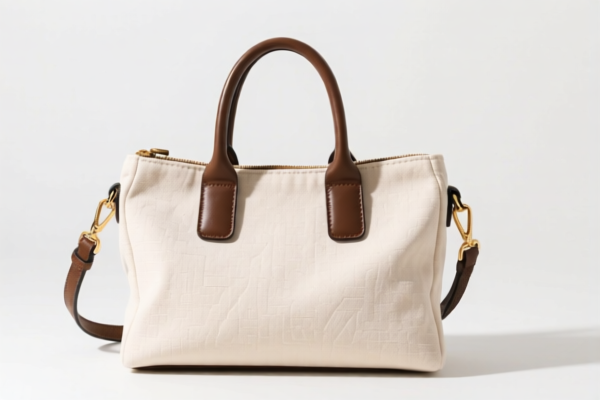
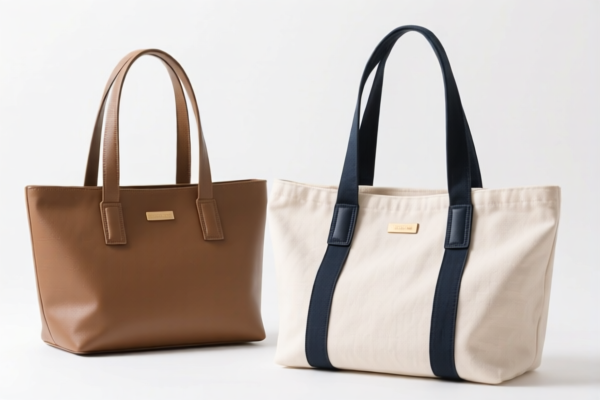
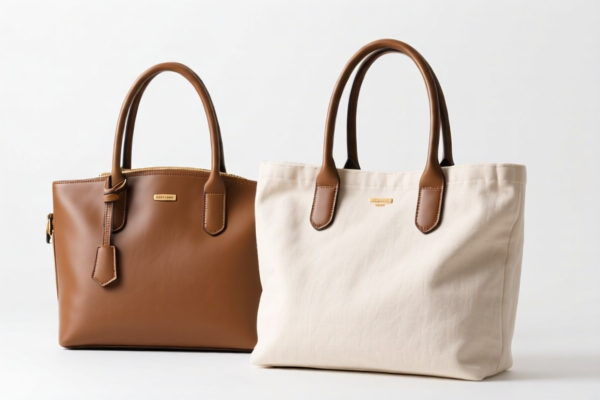
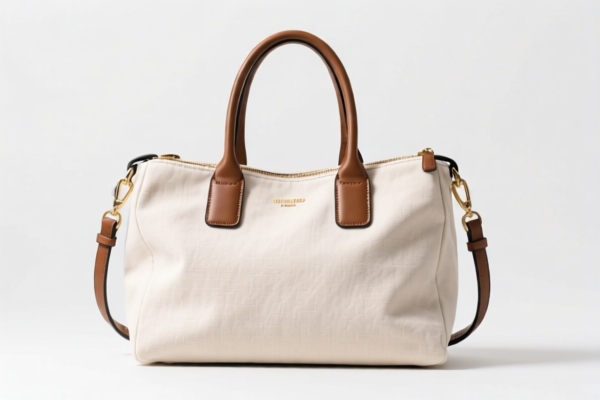
AI Analysis
🎒 Canvas Handbags (Textile Bags & Cases)
🌐 HS Code Reference & Customs Clearance Guide | 2026 Latest Tariff Analysis | Professional Clearance Strategy
📌 I. Product Definition & Classification: What Exactly is a "Canvas Handbag"?
In international trade, "Canvas" is not a single HS code but a material descriptor that determines classification based on composition (Cotton vs. Artificial/Man-made Fiber) and function/form (Handbag, Backpack, Wallet). The key distinction lies in whether the textile is primarily Cotton (Chapter 4202 subheadings ending in .15, .60) or Other Textile Materials (subheadings ending in .91, .31).
⚠️ Critical Distinction Point:
- If the material is Cotton → Usually lower base duty (6.3%), but still subject to surcharges.
- If the material is Artificial Fiber/Other Textile → Higher base duty (17.6%).
- All canvas bags from China to the US are subject to aggressive Section 301 and IEEPA tariffs.
📦 II. HS Code Classification Details (2026 Latest Tariff Authority Comparison)
Based on the provided data, here are the specific classifications for Canvas Bags. Note that while the prompt mentions "Handbags," the data includes backpacks and wallets under the same broader chapter (4202), which is common in customs data aggregation for textile bags.
| HS Code | Product Description | Material Composition | Form/Type | Key Characteristic |
|---|---|---|---|---|
4202.92.91.00 |
Canvas Handbag | Textile Materials (e.g., Artificial Fibers) | Bag Type | General textile bag, non-cotton canvas |
4202.92.60.91 |
Canvas Handbag | Cotton | Other Containers (Not Jewelry Boxes) | Pure cotton canvas bags |
4202.92.31.20 |
Canvas Backpack | Textile Materials or Artificial Fibers | Backpack | Canvas backpacks (non-cotton dominant) |
4202.92.15.00 |
Canvas Backpack | Cotton Plant Fiber | Travel/Sports Bags | Cotton canvas backpacks |
4202.32.93.00 |
Canvas Wallet | Textile Materials | Wallet/Case | Canvas wallet or small case |
🔍 Important Note:
- Cotton vs. Non-Cotton: The base tariff differs significantly (6.3% vs. 17.6%). Misclassifying a cotton bag as "other textile" increases your base cost by 11.3% before surcharges.
- Form Factor: A "Backpack" is classified similarly to a "Handbag" under 4202, but specific subheadings distinguish them. Ensure your commercial invoice matches the physical product (e.g., do not label a backpack as a "handbag").
💰 III. 2026 Latest Tariff Rate Breakdown (Including Surcharges & Policy Add-ons)
✅ Applicable Country: United States (US)
✅ Origin: China (CN)
✅ Effective Time: Current rates apply (Section 301 & IEEPA surcharges are active)
🎯 1. 4202.92.91.00 & 4202.92.31.20 & 4202.32.93.00
(Artificial Fiber / Other Textile Canvas Bags)
| Item | Content |
|---|---|
| Base Tariff | 17.6% |
| Section 301 Surcharge | +25.0% |
| IEEPA Section 122 Surcharge | +10.0% |
| Total Tariff Rate | 52.6% |
| Tax Calculation | CIF Value × 52.6% |
| De Minimis Exemption? | ❌ NO (Section 301 and IEEPA tariffs cannot be bypassed via Section 321 de minimis for China-origin goods in this category) |
| Legal Basis Path | USITC:4202.92.91.00 → SECTION301:Footnote9903.88.01 → IEEPA:122Section |
📌 Explanation:
- The 17.6% is the standard Most Favored Nation (MFN) rate for other textile bags.
- The 25% is the Section 301 tariff imposed on Chinese goods.
- The 10% is an additional IEEPA (International Emergency Economic Powers Act) surcharge, often cited as "Section 122" in specific trade enforcement contexts.
- Total Impact: Over half the value of your goods is tax. Margin erosion is severe.
🎯 2. 4202.92.60.91 & 4202.92.15.00
(Cotton Canvas Bags & Backpacks)
| Item | Content |
|---|---|
| Base Tariff | 6.3% |
| Section 301 Surcharge | +25.0% |
| IEEPA Section 122 Surcharge | +10.0% |
| Total Tariff Rate | 41.3% |
| Tax Calculation | CIF Value × 41.3% |
| De Minimis Exemption? | ❌ NO |
| Legal Basis Path | USITC:4202.92.60.91 → SECTION301:Footnote9903.88.01 → IEEPA:122Section |
📌 Explanation:
- Cotton canvas bags enjoy a lower base rate (6.3% vs 17.6%).
- However, the 25% + 10% surcharges remain identical.
- Total Impact: While still high, this is 11.3% cheaper than the artificial fiber classification.
🛠️ IV. Customs Clearance Practical Advice (Battle-Tested Pitfall Avoidance)
✅ 1. Required Documentation Checklist (Non-Negotiable)
| Document | Mandatory? | Details |
|---|---|---|
| ✅ Commercial Invoice | ✔️ | Must specify "Canvas" and material composition (e.g., "100% Cotton Canvas" vs. "Polyester Canvas"). |
| ✅ Product Photos | ✔️ | Clear images of the bag, labels, and lining. Customs may inspect for "Cotton" vs. "Synthetic." |
| ✅ Material Composition Proof | ✔️ | Lab test reports or supplier declarations proving % of Cotton vs. Synthetic. Crucial for choosing between 6.3% and 17.6% base rates. |
| ✅ Country of Origin | ✔️ | Must explicitly state "Made in China" to trigger correct surcharge application. |
| ✅ Packing List | ✔️ | Detailed list of items per carton. |
✅ 2. Declaration Tips (Key Mantras)
🔥 "Material Defines Base, Form Defines Subheading, Origin Defines Surcharge!"
| Scenario | Correct Declaration | Wrong Action |
|---|---|---|
| Cotton Bag | 4202.92.60.91 (or .15.00 for backpacks) |
Mislabeling as synthetic → Pay 52.6% instead of 41.3% |
| Synthetic Bag | 4202.92.91.00 |
Calling it "Cotton" → Risk of fraud penalties + back taxes |
| Backpack | 4202.92.31.20 (Synthetic) or .15.00 (Cotton) |
Labeling as "Handbag" → Potential scrutiny if form factor doesn't match |
| Wallet | 4202.32.93.00 |
Labeling as "Handbag" → Incorrect subheading, though tariff rate may be similar, it causes entry delays |
✅ 3. Special Cases & Mitigation
| Situation | Handling Advice |
|---|---|
| Mixed Material | If a bag is 55% Cotton / 45% Polyester, it is generally classified as Cotton (6.3% base). Always argue for the higher percentage material to save on base duty. |
| Section 321 (De Minimis) | ❌ DO NOT RELY ON IT. For China-origin textile bags, Section 301 and IEEPA tariffs apply even if the value is under $800. Customs will seize or tax these shipments. |
| Re-export Strategy | Consider transshipment (if legally compliant and not circumvention) or sourcing from Vietnam/Mexico. Origin from non-China countries can avoid the 25% + 10% surcharges entirely. |
🌍 V. Global Market Comparison (2026 Latest)
| Country/Region | Recommended HS Code | Tariff (China Origin) | Key Requirement | Note |
|---|---|---|---|---|
| 🇺🇸 USA | 4202.92.xxxx |
41.3% - 52.6% | IEEPA + Sec 301 | Extremely High Cost |
| 🇨🇳 China | 4202.92.xxxx |
0% - 5% | N/A | No export duty on these items |
| 🇪🇺 EU | 4202.92.xxxx |
~12% - 17% | CE/RoHS (if applicable) | No Section 301 equivalent |
| 🇬🇧 UK | 4202.92.xxxx |
~12% - 17% | UKCA | Post-Brexit trade terms apply |
| 🇦🇺 Australia | 4202.92.xxxx |
~5% - 10% | ACCC | Free Trade Agreement with China (if applicable) |
📌 Conclusion:
- The US market is the most punitive for Chinese canvas bags due to the layered surcharges.
- European/Australian markets offer significantly better margins (~12-17% total vs. 41-52% in the US).
- If your primary market is the US, consider supply chain diversification (e.g., manufacturing in Southeast Asia) to bypass the 35% surcharge burden.
📌 VI. Common Errors & Pitfall Guide (Lessons from the Field)
❌ Error 1: Labeling a Polyester Canvas Bag as "Cotton" to get 6.3% base rate.
👉 Consequence: Customs lab test fails → Penalties + Back Taxes (11.3% difference) + Entry Delay.
❌ Error 2: Assuming De Minimis ($800) applies to Canvas Bags from China.
👉 Consequence: Package Seized or Taxed at the border because IEEPA/Section 301 exemptions were removed/never applied.
❌ Error 3: Mixing Backpacks and Handbags in one shipment without clear distinction.
👉 Consequence: Customs may hold the shipment for Class 4202 vs. 4203 clarification, causing warehouse demurrage fees.
❌ Error 4: Ignoring the "Section 122 IEEPA" tariff in cost calculations.
👉 Consequence: Profit margin miscalculation by 10%. Your break-even point is completely off.
✅ Correct Practice:
"100% Cotton Canvas Handbag, Woven, Lined, with Zipper Closure, Model XYZ, Made in China. HS: 4202.92.60.91. Duty: 6.3% + 35% Surcharges."
🎯 VII. Conclusion: Precision in Classification, Survival in Margin!
🎯 Remember the Mantra:
🔹 "Cotton is King (6.3%), Synthetic is Queen (17.6%), but China Surcharges are the Tyrant (35%)."
🔹 "Don't gamble on De Minimis for China Textiles; it's a trap!"
🔹 "Total Tax = Base + 25% (301) + 10% (IEEPA). Calculate BEFORE you ship!"
📌 Pro Tip:
If your canvas bags are not made in China (e.g., Vietnam, Indonesia, Bangladesh), you can avoid the 35% surcharge entirely, reducing your total tax to just the base rate (5-17%).
Action Item:
📞 Audit your supply chain: Is the cost of shipping from China + 52.6% tax higher than the premium to manufacture in Vietnam?
🚀 Optimize HS Code: Ensure every bag is explicitly labeled with material % to claim the lowest possible base rate (Cotton).
✨ Professional Clearance Starts with Accurate Classification!
💼 Your Margin Depends on These Numbers!
Customer Reviews
About HS Code Classification
The Harmonized System (HS) is an internationally standardized nomenclature developed by the World Customs Organization (WCO) to classify traded products. Over 200 countries use the HS system as the basis for customs tariffs, trade statistics, and import/export regulations.
Each HS code follows a hierarchical structure:
- Chapter (2 digits) — Broad category of goods (e.g., Chapter 84: Machinery and Mechanical Appliances)
- Heading (4 digits) — More specific grouping within the chapter
- Subheading (6 digits) — Internationally standardized breakdown, used by all WCO member countries
- National subdivisions (8-10 digits) — Country-specific extensions for further classification, such as US HTSUS 10-digit codes
Correct HS code classification is essential for smooth customs clearance, accurate duty payment, and compliance with trade regulations. Misclassification can lead to customs delays, overpayment of duties, or penalties.
When importing from CN to US, the applicable tariff rates may include:
- Most-Favored-Nation (MFN) rate — The standard duty rate applied to WTO members
- General rate — Applied to countries without trade agreements
- Trade remedy duties — Additional tariffs such as Section 301 (anti-dumping), Section 232 (national security), or countervailing duties
The information provided on this page is for reference purposes only. For official classification, please consult with your local customs authority or a licensed customs broker.